
 Nillanthan Maha, translated by Jivendran Nadarajah & Athula Vithanage… and courtesy of IDSLANKA.ORG
ONE =නිලාන්දන්: තිස් පස් වසක් රක්නා කළු ජූලියේ උරුමය කුමක්ද?
TWO =නිලාන්දන්: නයාරු ධීවර ගැටුම පිටුපස විජයෝන්මාදයේ සෙවණැලි

Nillanthan Maha, translated by Jivendran Nadarajah & Athula Vithanage… and courtesy of IDSLANKA.ORG
ONE =නිලාන්දන්: තිස් පස් වසක් රක්නා කළු ජූලියේ උරුමය කුමක්ද?
TWO =නිලාන්දන්: නයාරු ධීවර ගැටුම පිටුපස විජයෝන්මාදයේ සෙවණැලි
Filed under accountability, citizen journalism, economic processes, governance, historical interpretation, human rights, landscape wondrous, legal issues, life stories, politIcal discourse, power politics, security, self-reflexivity, Sinhala-Tamil Relations, sri lankan society, Tamil civilians, the imaginary and the real, trauma, unusual people, working class conditions
Neville Ladduwahetty,in The Island, 29 August 2018, where the title runs “Interpreting the 19th Amendment”
The hot topic in town is whether former twice elected Presidents Chandrika Kumaratunga and Mahinda Rajapaksa are qualified to seek reelection under provisions of the 19th Amendment. Dr. Nihal Jayawickrama in a legally well analyzed article titled “Disqualifying Twice Elected Presidents – A Failed Endeavour” (Sunday Island, August 19, 2018) argues that since Parliament did not provide in the 19th Amendment, a disqualification that would apply retrospectively former twice elected Presidents are not disqualified from seeking reelection.

Published on Aug 16, 2018 ==

Alexandra Ma, in UK Business Insider, 17 August 2018, where the title runs “Why the Muslim world isn’t saying anything about China’s repression and ‘cultural cleansing’ of its downtrodden Muslim minority”
China’s crackdown on its Uighur citizens, a mostly-Muslim ethnic minority group, has faced heavy international scrutiny in recent months. In August the United Nations said it was “deeply concerned” by reports that China had forced as many as 1 million Uighurs into internment camps in Xinjiang, western China. In April, the US State Department said it had heard of Uighurs who had “disappeared” or were unexpectedly detained.
Meanwhile, Muslim countries have been deafeningly silent.
 Map showing the projects subsumed under the Belt and Road Initiative as of December 2015. Reuters
Filed under accountability, centre-periphery relations, China and Chinese influences, commoditification, disparagement, foreign policy, growth pole, historical interpretation, human rights, life stories, politIcal discourse, power politics, press freedom & censorship, transport and communications, truth as casualty of war, world events & processes
Preview YouTube video Ancient Sites in Sri Lanka in 4K Ultra HD

Amazing Places on Our Planet….Published on Aug 24, 2018
The major ancient historic sites in Sri Lanka, all UNESCO World Heritage sites: Sacred City of Anuradhapura and Mihintale, Ancient City of Polonnaruwa, Golden Temple of Dambulla, Ancient City of Sigiriya, Sacred City of Kandy. Anuradhapura was capital of Sri Lanka from the 4th century BCE until the end of the 10th century CE. Anuradhapura and the nearby Mihintale are the birthplace of Buddhism in Sri Lanka. Polonnaruwa was the second capital of Sri Lanka, from 1070 to 1310. The Golden Temple of Dambulla is a cave-temple complex, pilgrimage site for 22 centuries, with beautiful mural paintings and statues. Sigiriya (Lion Rock) is an ancient fortress on top of a 200 meter high rock, capital of Sri Lanka for a short time in the 5th century, and Buddhist monastery until the 14th century. Kandy was the last old capital of Sri Lanka. Temple of the Tooth Relic is a famous pilgrimage site in Kandy, keeping the sacred tooth of the Buddha.
Recorded January 2016 in 4K Ultra HD with Sony AX100. Music: Mike Wall – Passage – 1 – Dawn of Light Licensed via ilicensemusic.com ————————————– Continue reading
Michael Roberts
The video report on Lakemba in Sydney by Emma Reynolds is causing a minor stir. My reproduction of the web report in Thuppahi and its circulation drew comments from one George Rupesinghe who challenged her sweeping presentation of “Muslim monoculturalism” and the alleged no-go sites in Lakemba.

Says Rupesinghe: “This Canadian woman came to Oz merely to draw attention to herself. She set out to be deliberately provocative and the police officer very rightly warned her against using her “free speech” rights to incite unrest. Besides the mosque there is a Christian (Uniting) Church on the main street. Another Christian Church just off the main street along the Lakemba Street and a Catholic Church also on Lakemba Street.” Continue reading
Filed under accountability, american imperialism, atrocities, British imperialism, conspiracies, doctoring evidence, Eelam, historical interpretation, human rights, Indian Ocean politics, landscape wondrous, life stories, LTTE, politIcal discourse, power politics, self-reflexivity, Sinhala-Tamil Relations, slanted reportage, sri lankan society, Tamil civilians, tamil refugees, Tamil Tiger fighters, the imaginary and the real, truth as casualty of war, UN reports, unusual people, vengeance, war crimes, war reportage, women in ethnic conflcits, world events & processes
ONE: Wikipedia Notice on Michelle de Kretser
Michelle de Kretser = born 11 November 1957 = an Australian novelist who was born in Sri Lanka (then Ceylon), and moved to Australia in 1972 when she was 14.[1] De Kretser was educated at Methodist College, Colombo and in Methodist College, Colombo,[2] and in Melbourne and Paris.


She worked as an editor for travel guides company Lonely Planet, and while on a sabbatical in 1999, wrote and published her first novel, The Rose Grower. Her second novel, published in 2003, The Hamilton Case was winner of the Tasmania Pacific Prize, the Encore Award (UK) and the Commonwealth Writers Prize (Southeast Asia and Pacific). Her third novel, The Lost Dog, was published in 2007. It was one of 13 books on the long list for the 2008 Man Booker Prize for fiction. From 1989 to 1992 she was a founding editor of the Australian Women’s Book Review. Her fourth novel, Questions of Travel, won several awards, including the 2013 Miles Franklin Award, the Australian Literature Society Gold Medal (ALS Gold Medal), and the 2013 Prime Minister’s Literary Awards for fiction. It was also shortlisted for the 2014 Dublin Impac Literary Award. Her 2017 novel, The Life to Come, was shortlisted for the 2018 Stella Prize.[3]
Filed under Australian culture, australian media, citizen journalism, communal relations, cultural transmission, discrimination, economic processes, education, ethnicity, gender norms, heritage, historical interpretation, landscape wondrous, life stories, literary achievements, modernity & modernization, politIcal discourse, refugees, self-reflexivity, sri lankan society, the imaginary and the real, travelogue, unusual people, world events & processes
I = Jason Steger: “Michelle de Kretser wins her second Miles Franklin award,” Sydney Morning Herald, 27 August 2018
The first time Michelle de Kretser won the Miles Franklin Literary Award she missed out on much of the excitement and fuss – she was overseas at a writers festival and was woken in the middle of the night to hear the good news. On Sunday, however, she was fully rested and firmly ensconced at the Melbourne Writers Festival, ready to pick up the prize for her most recent novel, The Life to Come.
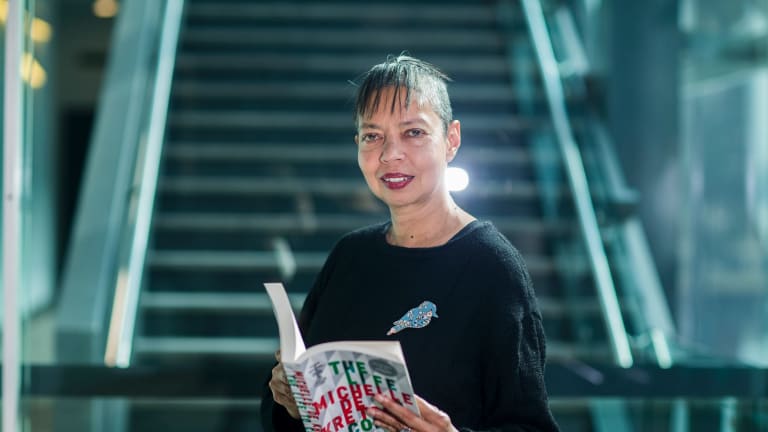 Winner of the 2018 Miles Franklin Literary Award Michelle de Kretser …. Photo: Meredith O’Shea
Filed under communal relations, cultural transmission, disparagement, education, female empowerment, historical interpretation, human rights, landscape wondrous, life stories, literary achievements, performance, pilgrimages, refugees, self-reflexivity, the imaginary and the real, travelogue, unusual people, world events & processes
Tina Edward Gunawardhana, in Daily Mirror, 26 August 2018
Mamma Mia will be staged at the Nelum Pokuna Mahinda Rajapakse Theatre for an eight day run from 22-30 December as part of their international tour and will be their first ever performance in South Asia.

Mamma Mia is Just Craymer’s ingenious vision of staging the story telling magic of Abba’s timeless songs with an enchanting tale of family and friendship unfolding on a Greek island. Mamma Mia’s appeal is such that it has been seen by over 60 million people in 50 productions in 16 different languages worldwide. When it was first released in 2008 Mamma Mia the movie became the highest grossing live action musical film of all times. A sequel Mamma Mia Here we go again had its global release in July 2018. Continue reading
 thuppahi
