Category Archives: social justice

“Be the Change” — An Appraissal of THE ARAGALAYA

Anonymous Pen **

Most people that I know, came to Galle Face on a weekend, waved the National Flag and shouted a few catchy slogans to cleanse their souls, took selfies and went home for a warm shower, had dinner and went to sleep, thinking that they had taken part in some heroic and historic act of Aragalaya.


Continue reading

Leave a comment

Filed under accountability, authoritarian regimes, centre-periphery relations, citizen journalism, democratic measures, disparagement, economic processes, governance, historical interpretation, life stories, meditations, patriotism, political demonstrations, politIcal discourse, power politics, rehabilitation, self-reflexivity, social justice, sri lankan society, tolerance, truth as casualty of war, unusual people, vengeance, welfare & philanthophy, working class conditions

University Federation of Dons condemn Sri Lankan Government’s Actions

Item in The Island, 1 August 2022, where the title runs thus “Dons Condemn Suppression of Aragalaya”

“Tyrannical governments and illegitimate leaders throughout history have led their societies to destruction”

The Federation of University Teachers (FUTA) says that the Wickremasinghe-Rajapaksa government lacks any legitimacy and it should stop taking cover behind the Constitution.In a statement condemning what it termed as “repression of aragalaya activists by the current regime” the university teachers have said that “the tyrannical governments and illegitimate leaders throughout history have led their societies to destruction.”

Continue reading

1 Comment

Filed under accountability, authoritarian regimes, centre-periphery relations, democratic measures, disparagement, education policy, governance, historical interpretation, human rights, landscape wondrous, Left politics, legal issues, life stories, patriotism, performance, political demonstrations, politIcal discourse, self-reflexivity, social justice, sri lankan society, unusual people

From Banda to Gota

Laleen Jayamanne, in The Island, 20 & 27 July 2022 where the title runs thus: “Teargas cinema and Rukmani Devi”

“I have never found anything to excite the people in quite the way this language issue does”–– Prime Minister SWRD Bandaranaike to a journalist.

If true, this observation attributed to Prime Minister SWRD Bandaranaike, is quite chilling in its cynicism. ‘Excitement’ is a political emotion here and SWRD appears to take a distance from it, observing somewhat clinically, how ‘this language issue’ stirs up ‘the people’. Politicians are especially crafty, cunning, when they know how to excite people with ideas that they themselves may or may not truly believe in.

A protester covering the eyes of the Bandaranaike statue at Galle Face

Continue reading

1 Comment

Filed under accountability, anti-racism, art & allure bewitching, centre-periphery relations, citizen journalism, communal relations, cultural transmission, democratic measures, economic processes, education policy, electoral structures, ethnicity, governance, historical interpretation, insurrections, island economy, landscape wondrous, legal issues, life stories, modernity & modernization, nationalism, political demonstrations, politIcal discourse, power politics, press freedom, Rajapaksa regime, security, self-reflexivity, Sinhala-Tamil Relations, social justice, sri lankan society, trauma, truth as casualty of war, vengeance, world events & processes

The Mahaweli Project: The Mother of All Development Schemes in Sri Lanka

Ajit Kanagasundaram

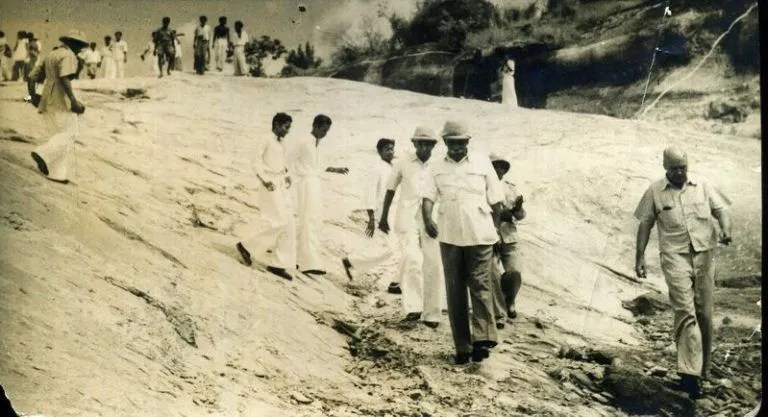
40 years have now elapsed since the launch of the accelerated Mahaweli project, so it is an opportune time to review what was done and the benefits and shortfalls of the project to the nation. This project was the culmination of a 50 yearlong process that started with the rehabilitate ancient irrigation works and settlement of the dry zone lands that was initiated by our first Prime Minister, DS Senanayake, when he was the Agriculture Minister in the State Council during the British Raj. After independence, this moved on to more ambitious projects building large multi-purpose schemes like Gal Oya and Uda Walawe culminating in the accelerated Mahaweli project.

Continue reading

5 Comments

Filed under ancient civilisations, authoritarian regimes, centre-periphery relations, chauvinism, colonisation schemes, communal relations, demography, economic processes, ethnicity, governance, heritage, historical interpretation, island economy, land policies, landscape wondrous, life stories, LTTE, modernity & modernization, Muslims in Lanka, politIcal discourse, power politics, Sinhala-Tamil Relations, social justice, sri lankan society

Pastor Jeyaraj and His Missions within the Lankan Prisons

Sam Premaraja …….. executivenationaldirector.lpf@gmail.com

Dear Friends and Family, Pastor Sivarajasingham Jeyaraj was originally a communicant member of the JDCSI Tellippalai Church (1983-1987) and later at the JDCSI Colombo Church (1987-1991) while I served these churches as the Priest-in-Charge. He was equally involved both in our Churches’ ministries as well as that of Youth For Christ (YFC). He was gifted in theatrical skills, deeply committed to serve the most vulnerable, pursued theological studies at Colombo Theological Seminary in Nugegoda (CTS). He displayed Pastoral Leadership skills with a sound and practical theology in his ministries.

Continue reading

2 Comments

Filed under accountability, cultural transmission, economic processes, landscape wondrous, life stories, meditations, patriotism, performance, politIcal discourse, rehabilitation, self-reflexivity, social justice, sri lankan society, Tamil civilians, unusual people, voluntary workers, working class conditions

Ranil Wickremesinghe in His True Colours

Dr Dayan Jayatilleka in The Island, 23 July 2022, where the title reads “The real Ranil report and Aragalaya 3.0″

Ranil Wickremesinghe is a leader without any popular vote; a ruler without a mandate; a ruler without legitimacy. And yet he seeks to crush the citizens using military and police force. Aragalaya 3.0 must be born as the Resistance against Ranil’s rule and can only end with his political retrenchment.

Actions speak louder than words, as the old saying goes. The actions came from Ranil. Speech is also an action. He sounded belligerent for days. After he was elected by the Rajapaksa majority in Parliament as the leader of this country, and he stopped along the way to thank the military and Police, he was heard to say something disparaging about the Aragalaya. At the Hunupitiya Gangarama Temple, he needlessly criticised the Aragalaya. After he swore in yesterday, he went to the Ministry of Defence where he was greeted by Gota’s closest comrade in arms, (retd) General Kamal Gunaratna, the Secretary/Defence.

Continue reading

3 Comments

Filed under accountability, atrocities, authoritarian regimes, chauvinism, disparagement, economic processes, governance, historical interpretation, legal issues, life stories, performance, political demonstrations, politIcal discourse, power politics, Rajapaksa regime, self-reflexivity, slanted reportage, social justice, sri lankan society, the imaginary and the real, trauma, unusual people, vengeance, world events & processes

Sri Lanka’s Central Bank under the Spotlight

Chandrasena Maliyadde, in Daily Ft, 20 July 2022, with this title “Central Bank, its independence and us”

An expert panel discussion on ‘Surviving the Current Economic Crisis: Ex-Central Bankers in Dialogue’ was held in early June. Some speakers stressed that the need of the hour is an independent Central Bank (CBSL). But its relevance or impact on surviving the current economic crisis was not spelt out. Maybe we ignorant laymen could not understand. Perhaps independence may be for the survival of the Central Bank and its officers who spend time in aiconditioned rooms away from the crisis.

Former Central Bank Governors: Nandalal Weerasinghe, Ajith Cabraal &  WD Lakshman


Continue reading

1 Comment

Filed under accountability, authoritarian regimes, centre-periphery relations, disaster relief team, economic processes, export issues, foreign policy, governance, IMF, Indian Ocean politics, island economy, legal issues, life stories, performance, politIcal discourse, power politics, self-reflexivity, slanted reportage, social justice, sri lankan society, trauma, truth as casualty of war, unusual people, welfare & philanthophy, world events & processes

The ARAGALAYA’s Demands in English

Courtesy of my Aloysian Friend KK De Silva …………with a PIX from his schoolboy days at St Aloysius, Galle

Transcript of the Programme spelt out in Sinhala: viz https://fb.watch/eaarPjDUCc/?fs=e&s=cl

Yesterday we took part in the aragalaya. It was good. Now there is talk about a caretaker government. This is something new to the people & us.

First I must say that we got together irrespective of ethnic differences. Sinhalese, Muslims, Tamils were together as Sri Lankans. In future no one can act differently. I am saying this to those actors. They should listen carefully. There is a set of actors, like the yellow group. There is another set called artistes (kalaakaruwo). There is a fellow wearing a sheet (?) There are others like Bhatiya & Santush. Are they not ashamed? Where were they yesterday. Then there is Iraj. Dont come wearing a cloth. Don’t come this way for shows. You all have been rejected,

Continue reading

2 Comments

Filed under accountability, authoritarian regimes, communal relations, cultural transmission, democratic measures, disparagement, economic processes, education, electoral structures, governance, historical interpretation, island economy, landscape wondrous, Left politics, legal issues, life stories, patriotism, performance, political demonstrations, politIcal discourse, power politics, Rajapaksa regime, security, slanted reportage, social justice, sri lankan society, the imaginary and the real, trauma, truth as casualty of war, unusual people, vengeance, violence of language, working class conditions, world events & processes

Bhavani Fonseka & Sumanthiran in Q and A with Indian Media Outfit

THE PRINT: Jothi Malhotra in Q and A with Bhavani fonseka & MA Sumanthiran …………..  “Why Gotabaya Rajpaksa fled & next steps for Sri Lanka : MA Sumanthiran and Bhavani Fonseka”

#SriLankaCrisis #GotabayaRajpaksa In this edition of #ThePrintDebates, ThePrint’s Senior Consulting Editor Jyoti Malhotra spoke to M. A. Sumanthiran, MP from Jaffna district in Sri Lanka and a member of the Tamil National Alliance and Bhavani Fonseka, a human rights lawyer and political analyst on the volatile situation in Sri Lanka, the flight of Gotabaya Rajpaksa to the Maldives, the future of the country and whether the people are relieved. Watch #ThePrintDebates

ALSO NOTE

1 Comment

Filed under accountability, asylum-seekers, authoritarian regimes, centre-periphery relations, citizen journalism, conspiracies, democratic measures, disparagement, economic processes, electoral structures, governance, historical interpretation, Indian Ocean politics, insurrections, island economy, landscape wondrous, life stories, news fabrication, performance, political demonstrations, politIcal discourse, Rajapaksa regime, security, self-reflexivity, Sinhala-Tamil Relations, slanted reportage, social justice, sri lankan society, taking the piss, trauma, truth as casualty of war, unusual people, working class conditions, world events & processes

Destructive Vengeance Beyond Reason in Sri Lankan Protest

Fair Dinkum

Michael, You may like to circulate this item from RT which aired on Wednesday 13 July 2022. A Russian film crew was given access to the home of Ranil Wickremesinghe and his brother, who lived in a neighbouring house that was also destroyed by protestors according to him, appears describing what occurred, and the damage caused, including the destruction of artworks and 2,600 books which had been handed down from Ranil’s ancestors and which he intended to donate to libraries for future Sri Lankans.

Continue reading

16 Comments

Filed under accountability, atrocities, authoritarian regimes, chauvinism, conspiracies, disparagement, economic processes, governance, historical interpretation, insurrections, island economy, legal issues, life stories, patriotism, performance, politIcal discourse, power politics, security, self-reflexivity, Sinhala-Tamil Relations, social justice, sri lankan society, terrorism, the imaginary and the real, trauma, truth as casualty of war, vengeance, world events & processes