
Professor Chandre Dharmawardena, writing now from Canada, Early September 2026, in an essay entitled “How the 1973 Ceylon-Studies meeting held in Colombo totally missed the bus” … with the highlighting below in BLUE being the work of Michael Roberts [who was one of the organisers of the Ceylon Studies Seminar conference].
Michael Roberts says, harking back to 1973: “I had a chance of chatting with Bishop Lak for a fair amount of time. It was then that the tale of (some of) his efforts to forge amiable discussions among well-meaning personnel in both the Sinhala and Tamil communities, among them several bhikkhus, unfolded, or rather, was unfolded.”
Roberts discusses the 1973 meeting chaired by Mark Cooray. I personally knew or were well acquainted with many of the people (LJMM Cooray, Janice Jiggins, Shanmugathasan etc). However, I did not attend the meeting as many of us in the Science Faculties heard about the event only afterwards. The two-cultures that C. P. Snow referred to existed strongly in Sri Lankan academia.
I will refer to this meeting as the 1973CS-meeting.
Michael Roberts had emphasized in red the following text “The conclusion one can draw is that the politically-active Sinhala people, including many Sinhala Buddhists, simply did not recognise the existence of a serious problem. They were sitting on a claymore mine and blissfully unaware of it.”
I concur completely with him and want to add that even the Tamil speakers and foreign scholars were in the same boat. The main issues did not seem to have got discussed. The usual statements from various preset ideological positions (e.g., Marxist or liberal democratic or anthropological, i.e., caste analysis etc.) seem to have been aired.
The problem is, all this good people, and scholars (foreign and local), except perhaps a few people such as Jane Russell among Western scholars (and people such as Gamini Iriyagolle—a historian and CCS man– among local scholars) , had failed to realize how futile these types of efforts had already become, mainly because those in Peradeniya, and those in Colombo including Bishop Lakshman did not speak or read Tamil and were unaware of the level of polarization, as well as the “sacrificial devotion” that already emerged [among Tamil personnel] by 1973. The 1973CS-meeting or, at a higher level, meetings between the LTTE and GOSL (e.g., later at Timpu) were basically futile, given ground realties.
In hindsight we can say that these anglophone-academics (as well as most of us) under-estimated the coming catastrophe because they (and we) did not read the political pamphlets that were entirely in the Tamil language. Unfortunately, this is still the same today, even with instant machine translation now available via AI.
They did not understand that Colvin R de Silva’s constitution provided an excuse and a reason for the Eelamists to increase political polarization. Following the 1972 constitution, mainstream Tamil political parties formed the Tamil United Front (TUF) (later the TULF). Its youth wing and underground organizations openly declared that peaceful agitation had failed. Colvin who had famously talked of “one-language, two nations, two-languages, one nation” only a few years previously had hatched a monoethnic constitution.
However, in fairness to the SLFP-LSSP government, their policies were nowhere as discriminatory as what was placed on the Chinese minority (30%) in Malaysia by 1970, with clear special rights to Malays (60%) as “Bhumiputra”, with the suppression of English as well as Chinese and having Malay Only as the official language.
However, learning from previous ethnic violence, the Malaysian Chinese minority followed a different (and successful) path completely, eschewing violence and concentrating on capturing power in the financial and mercantile sector of the country, while leaving politics mainly to the Malays. In contrast, the TULF in its Vaddukkoddai resolution opened the door for military action, pitting some 7% of the population (mostly Tamils in the North), against the Sinhalese and Muslims constituting 80% of the population.
I had known Jane Russell to some extent, and she had spent some time in Jaffna and she seem to be in the know. In contrast, I think most of these scholars at the 1973CS-meeting did not know that the militants in the TULF, and their “boys” had already decided to target those “well-meaning” Tamils as Thurogi, (traitors) to the cause of Eelam.
Janice Jiggins was correct in referring to the existing highly unjust discrimination in Tamil society that the Tamil leaders (and most scholars) ignored, while focusing intensely on the political loss of power and resulting discrimination that the elite Tamils were exposed to due to University admissions bill and the 1972 Colvin Constitution. The Caste issue was irrelevant at the burning moment; caste discrimination had existed for millennia and was culturally and politically accepted, while these hits on the power of high-caste Tamils, limited admission of their children to University etc., were previously unheard of and highly visible phenomena that triggered intense grievance among the elite Tamils. They translated these feelings to the masses of Tamils using Ethnic Identity and patriotism to Eelam, and began supporting paramilitary action in their Tamil language propaganda. Chelvanayagam and others began to organize “Makkal Padai” in response.
Most of the “well-meaning” people that Roberts refers to probably did not know the gravity of this rapidly worsening situation. For instance, only a few years before this 1973CS-meeting, in September 1970, shortly after the United Front coalition led by Sirimavo Bandaranaike came to power, Deputy Cultural Minister <b>Somaweera Chandrasiri</b> traveled to Jaffna. During his visit, he delivered a speech making conciliatory remarks regarding ethnic harmony, heavily emphasizing that the Sinhalese and Tamils shared extensive cultural links and historical overlaps. Tamil youth viewed his integrationist and conciliatory rhetoric as a treacherous attempt to dilute Tamil national identity, the Eelam objective, and assimilate them into the majority culture. His car was targeted in a bomb attack while he was touring Jaffna. The device failed to destroy the vehicle or kill the deputy minister, allowing him to escape unscathed.
The attack was carried out by Ponnudurai Sivakumaran, a highly influential figure in early Tamil militancy who belonged to the Tamil Students League (well before the LTTE consolidated power under Prabhakaran). Soon after, Chelvanayagam appeared in a picture with Sivakumaran, establishing his prestige. Sivakumaran would later become famous in militant history when he was surrounded by police in 1974 after a failed bank robbery, he swallowed a cyanide capsule to avoid torture and interrogation. His suicide established the cyanide capsule tradition that Velupillai Prabhakaran later made a mandatory requirement for all LTTE cadres.
By 1973, the Tamil political narrative had already shifted decisively toward justification of violence and Kasi Anandan had begun writing his highly inflammatory, militant poetry. By 1973, his Unarchchik-kavithaigal (highly charged, “spirited” or emotive poetry) was already circulating extensively. His verses were viewed by the state as incitement and sedition, and by Tamil youth as a holy rallying cry. Kasi Anandan wrote scathing poems targeting Tamil politicians who co-operated with the Colombo government (such as the actions surrounding the Somaweera Chandrasiri or Alfred Duraiappah circles). His lines frequently romanticized martyrdom, calling on Tamil youth to offer their lives and take up arms for Tamil Eelam, bloody sacrifice and eliminating thurogi.
By 1973, political literature, student leaflets, and street pamphlets in Jaffna abandoned the rhetoric of “federalism” and “compromise”. The written Tamil word became a vehicle for advocating armed resistance and total secession.
Everyone—Sinhalese, Tamil, or foreigner—who came to the 1973CS-meeting who were “well-meaning” in the sense used by Roberts would have been judged to be “thurogi” by the measures used by the Tamil Student league. Also, as far as I know, no one at this 1973CS-meeting referred to the attempt to blow up Somaweera Chandrasiri as a sign and symptom of the times. Not one of the Tamil contributors mentioned Kasi Anandan. People such as Shanmugathasan, a historian, a Tamil and leader of the Chinese-Wing Communist party, who came to the 1973CS-meeting and uttered his usual Marxist class-based interpretation and utterly failed to see the coming violence and Fascism of the Eelamists. Many Marxists actually became fellow travellers of the Eelamists.
This meeting should have discussed Kasi Anandan, noted, catalogued and evaluated the increasing violence, and even the threat against the Colombo Tamils posed by Eelamists (that Jane Russell noted). The Colombo Tamils were also seen as enemy by the Ultra-nationalist Sinhalese fascists.
The JRJ government allowed the1983 pogrom to go on without rapidly taking action to protect the innocent Tamil civilians. However, according to Sebastian Rasalingam, the 1983 pogrom was not just a pogrom carried out by the JRJ goons alone, but also sponsored by Prabhakaran who knew the propaganda value of the pogrom for his movement. Rasalingam refers to the dubious role of Nadesan, a Colombo police officer during the 1983 pogrom who later became a key LTTEer. Other writers of that era (e.g., Douglas Wickramaratna based in London) have noted that most of the Colombo DIGs were Tamils and they failed to exercise their authority, and that none of them has written their memoires. They could have provided us an inside picture of what actually happened.
The LTTE attack on Buddhist pilgrims in Anuradhapura, the attack on the Temple of the tooth, and even the attack in Aranthalawa were subsequent LTTE attempts to enrage the Sinhalese and create pogroms of Tamils —but by then the Sinhalese had stopped reacting to such provocations. All this requires serious quantitative study by social scientists. But alas, it is likely that these topics will never be studied objectively, as many of the key players would not be alive anymore.
1973 was just two years after the first JVP uprising. The government intelligence knew very well about the rise of youth extremism in Jaffna in the wake of the rise of youth extremism in the south—in all probability it operated extra judicially and harassed innocent Tamils merely on suspicion.
In 1974 I was the President of Vidyodaya University and it was the year when Minster Bad-Ud-Deen Mohammad worked hard to establish the Jaffna campus to show that his University admissions bill was merely affirmative action and not based on lack of goodwill towards Tamils. Tamil politicians themselves had been the main obstacle to establishing a University in the North as there were rival proposals for the site. Finally, the Minster took unilateral action. When the ministry requested us to release staff from our universities, I recommended release of Dr. Sivathamby to go to Jaffna, together with Mr. Wijayasurendra, assistant Registrar of Vidyoday, who expressed willingness to go to Jaffna, with an idealism for “bridging the ethnic divide”. I was personally more pessimistic and told him that at a time when existing campuses were falling into the hands of student terrorists, the Jaffna campus will totally spin out of control to become a hotbed of Eelamist fascism. Although I separately recommended sending a Tamil officer, it was Wijesurendra who went there as Registrar.
In fact, soon Wijesurendra found that he and the Sinhalese students were totally unwelcome; they faced assault and thuggery. If there was to be a University in Jaffna, then at that moment in history it had to be a mono-ethnic Tamil Eelamist University and nothing else. Soon enough, the campus was ethnically cleansed. That is another dramatic story with contrasting stories coming from both sides of the ethnic divide.
Fortunately, today we have some degree of multi-ethnic character in the student body once again in the Jaffna University, and in most campuses. Nevertheless, Kasi Anadan’s blood curdling racist poetry is still being read with reverence by various members of the Tamil Diaspora, as for example in New York USA, as seen in a speech by Chandi Sinnathurai, in February, 2006.
Chandre Dharmawardana.
&&&&&&&&&&&&&&&&&&&&&
A NOTE by MICHAEL ROBERTS, September 2026
This incisive essay is of vital importance for our reflections and historical interpretations. Let me add some information about the divisions and tensions witthin the lecturing body at Peradeniya Campus which had a bearing on the conference. There was a cluster of lecturers closely affiliated with the United Front government and its staff; while others, such as Prof KM de Silva, were linked with the UNP. The organisers of the CSS sessions at Peradeniya were relatively neutral but subjuct to distaste from Lecturers who were deeply linked to the UF government. Theie snipings led us to add WI Siriweera to the background organising group. When I argued that the worsening etnic crisis had to be presented via a conference in Colombo, SIRIWEERA actually stood up …. YES, stood up … to address our tiny cluster of five or six… and proclaimed: “There is no Sinhala-Tamil problem.”.
A FEW READINGS …. SNAPS

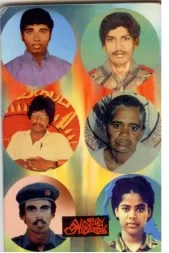
Annai Pupathi Remembered in Eastern Province …. ….. https://en.wikipedia.org/wiki/Annai_Poopathy … & …. https://www.tamilguardian.com/content/annai-poopathy-remembered-students-jaffna-university ……………… https://www.tamilguardian.com/content/37-years-annai-poopathys-resistance-continues-inspire


Pingback: APOYI Sri Lanka: Where Historical Interpretations Animate Conflict | Thuppahi's Blog
Province? He chose to contest from two-member Batticaloa constituency, and came fourth! It’s always interesting to read Prof. Chandre Dharmawardena’s version of recent Sri Lankan history. But, I like to challenge two of his viewpoints.
First, Prof Chandre pretends to show that the political misdeeds of Rasputinic Badiudin Mahmud during 1970-77 period were a blessing to Tamils. As a victim of his race-based standardisation policy for university admissions, introduced after May 1970, I would assert, he did major damage to Tamil-Sinhala as well as Tamil-Muslim amity. I ask Prof Chandre, if Badiudin Mahmud served the Tamil interests, why on earth, he DID NOT contest the 1977 general election from a constituency in the Northern Province.
Secondly, this brings me to poet Kasi Ananthan, who also contested the 1977 general election from Batticaloa constituency, and was placed third. Prof Chandre may be a top-notch physicist, but it’s my impression that his poetry appreciation skills are sub par. He points to Kasi Ananthan’s “blood curdling racist poetry”. I wonder whether he had read Kasi Ananthan’s poetry in the Tamil original. I want him to cite such specific references.
No doubt, Kasi Ananthan belongs to the group of elite poets who wrote ‘protest poetry’ against their oppressors. May I cite few other names? The poetry lines of Rabindranath Tagore, Mao Ze Dong, Anna Ahmatova and Afro-American poets like Amiri Baraka (LeRoi Jones) offer so many lines akin to Kasi Ananthan’s poems. He was cursing only his oppressors (the Sirimavo regime of 1970-77), which put him in jail. One shouldn’t forget that even UNPers including J.R. Jayawardene and JVPers also cursed the Sirimavo regime.
In his 1928 short poem ‘Jinggang Mountain’, according to the wikipedia source, which I picked up in English translation, the last two lines of Mao’s poem read (in English translation) as,
“Upon Huangyang Jie, guns boom with thunderous might
Word comes the enemy has fled into the night”
Here are a few lines in English, from a poem of Amiri Baraka.
”
We want poems
like fists beating niggers out of Jocks
or dagger poems in the slimy bellies
of owner Jews. Black poems to
smear on girdlemamma mulatto bitches
whose brains are red jelly stuck
between ‘lizabeth taylor’s toes. Stinking
whores! We want ‘poems that kill’….”
[source: New Princeton Encyclopedia of poetry and Poetics, ed. Alex Preminger and TVF Brogan, 1993, p. 24]]
I suggest Prof Chandre to improve his poetry appreciation skills, by reading protest poems of others as well.
Reply to Sachi Sr Kantha by Chandre Dharmawardana
I thank prolific writer, historian of Science, and Eelam Ideologue Sachithanantham Sri Kantha for his comments on my essay.
Sachi SK is a person with two doctorates (Ph.Ds), both in specialized biological and life science topics, and hence he should value life, and yet, sadly, in my view he is deeply desensitized.
In discussing Kasi Anathan’s extremely violent poetry, he refers me to similar violent poetry from the Mass Murderer Mao Ze Dong.
Marxist regimes like Mao’s CCP, the Khmer Rouge and Nazi forces like the Brownshirts heavily utilized weaponized poetry to justify political violence, enforce internal conformity, and demand the elimination of perceived traitors. So Kasi Anandan types have had a long history, and each of these movements had highly educated writers who came to defend such macabre madness.
Utilizing art and verse to desensitize followers to cruelty is a common historical mechanism in totalitarian movements. The national anthem of Democratic Kampuchea, Dap Prampi Mesa Chokchey (“Glorious Seventeenth of April”), explicitly celebrated blood as a cleansing agent. Nazi poets like Heinrich Anacker (known as the “Poet of the SA”) were explicitly tasked with writing aggressive propaganda poems. Their verses framed the violent suppression of domestic political opponents as a spiritual duty to the German race. Kasi Anandan also did exactly that. The parallels between Nazi poetry and those of the LTTE poets are so striking that some social scientist should look into it.
Sachi SL advises me to improve my poetry appreciation skills. Indeed, good poetry is uplifting. However, I distinguish between good and evil. Sachi SK seems to say that ” (in) Kasi Ananthan’s poems he was cursing only his oppressors (the Sirimavo regime of 1970-77)”. This is the most unlikely understatement that I have ever heard of from anyone regarding Kasi Anadan’s poetry. In earler works such as “Kasi Ananthan at 70: Poetry and Power—Sri Kantha defends and contextualizes Ananthan’s work against critics. He explicitly notes that human rights advocates, including the authors of the seminal “The Broken Palmyra”, heavily indicted Kasi Ananthan for utilizing his public platform to advocate death for designated “traitors” (such as Alfred Duraiappah and V. Anandasangaree). So, now Sachi SK seems to play oblivion and claim that Kasi Anadan’s poetry was mere cursing agaisnt the Srimavo regime.
No, Kasi Anandan was complcit in many murders, through his weaponized poetry, and later as a central committee member of the LTTE where Thurogi (traitors) were eliminated.
[contributed by Chandre DW on 26-Sept-2026]
Pingback: That CSS Conference in Late 1973 at a Crisis Point ….. | Thuppahi's Blog