Category Archives: social justice

Shehan Karunatilaka lands on the BOOKER ‘Moon’

Sarah Shaffi & Lucy Knight, in The Guardian, 18 October 2022, where the title reads thus: “Shehan Karunatilaka wins Booker prize for The Seven Moons of Maali Almeida”

The Seven Moons of Maali Almeida by Sri Lankan author Shehan Karunatilaka has won the Booker prize for fiction. The judges praised the “ambition of its scope, and the hilarious audacity of its narrative techniques”.


Continue reading

Leave a comment

Filed under art & allure bewitching, cultural transmission, education, landscape wondrous, life stories, performance, politIcal discourse, self-reflexivity, social justice, sri lankan society, the imaginary and the real, travelogue, unusual people, world events & processes

CJR Le Mesurier: A British Civil Servant who challenged the Imperial Order

Michael Powell: article published in 2007 and entitled “Fragile Identities: The Colonial Consequences of CJR Le Mesurier in Ceylon”

ABSTRACT of Article: In the many layered life of CJR Le Mesurier in Ceylon are themes that repeat and recur throughout the British colonial world, touching on marriage and morals, religion and race, archival retention and colonial employment.

Cecil Le Mesurier in Western Australia c 1920s …. Courtesy of Rod Cantley

In particular, his strenuous litigious attack on assumptions of Crown title challenged the philosophic and legal framework of colonial land policy, revealing its ideological foundation, and illuminating the pattern and impulse of land policy throughout Empire.

The increasing effrontery of his actions induces an equally escalating reaction from colonial authority that pares away the preferred patina of civilizing mission to reveal a far more base intent – a colonial impulse more discernible and the actions of authority more disclosing – contributing to a much richer comparative understanding of the dynamics of colonial land dealings.

Continue reading

Leave a comment

Filed under accountability, authoritarian regimes, British colonialism, centre-periphery relations, colonisation schemes, cultural transmission, discrimination, disparagement, economic processes, ethnicity, governance, historical interpretation, island economy, Kandyan kingdom, land policies, landscape wondrous, legal issues, life stories, plantations, politIcal discourse, power politics, religiosity, self-reflexivity, social justice, sri lankan society, trauma, unusual people, welfare & philanthophy, working class conditions, world events & processes

Debating World Politics: “Human Rights” as USA’s Tool in Power Games

Circa 7th October 2022, I inserted  Natasha Gooneratne’s Memo in Thuppahi on Facebook: “An Exposure: Human Rights as a Tool of US Intervention”. …. ………………………………..So, readers should focus initially on this MEMO = https://thuppahis.com/2022/10/04/an-exposure-human-rights-as-a-tool-of-us-intervention-

THAT Item drew the following two comments in Facebook which I then circulated to Natasha and a select few others by EMAIL.

Comment in FACEBOOK by Arun Devan, October 2022: “If you don’t like USA, then don’t go with the begging bowl to US and West. Sri Lanka can choose to stave or be slave. Little choices – thanks to the brutal war and useless spending on military now.”

Comment in FACEBOOK by Richard Simon, October 2022:“Why does the US want to intervene in Sri Lanka? Serious question.”

Continue reading

Leave a comment

Filed under accountability, american imperialism, Australian culture, australian media, centre-periphery relations, China and Chinese influences, debt restructuring, disparagement, economic processes, foreign policy, historical interpretation, human rights, Indian Ocean politics, island economy, landscape wondrous, legal issues, Pacific Ocean politics, politIcal discourse, power politics, Rajapaksa regime, self-reflexivity, social justice, sri lankan society, transport and communications, truth as casualty of war, unusual people, world events & processes

Deeply Wounded. Also Divided? Sri Lanka Today

Neloufer De Mel, in History Today, Vol 72/8, September 2022, where the title reads “Sri Lanka’s Deep Wounds” **

On 31 March 2022 a public protest occurred in the vicinity of the home of the Sri Lankan president Gotabhaya Rajapakse. The protest marked frustration at the shortages of essential commodities (gas, medicines, fuel) and the gruelling ten-to-13-hour power cuts imposed by a cash-strapped government with insufficient dollars to pay for imported fuel. The protestors also sought answers as to why certain neighbourhoods (such as Mirihana, where the president lived) continued to enjoy uninterrupted power.

Continue reading

Leave a comment

Filed under accountability, authoritarian regimes, centre-periphery relations, communal relations, debt restructuring, democratic measures, discrimination, disparagement, economic processes, governance, historical interpretation, human rights, island economy, landscape wondrous, legal issues, life stories, Muslims in Lanka, political demonstrations, politIcal discourse, power politics, self-reflexivity, Sinhala-Tamil Relations, social justice, sri lankan society, Tamil civilians, truth as casualty of war, unusual people, working class conditions, world events & processes

In Appreciation of Professor Riaz Hassan: Two Accolades as Vale


ONE …. Joanne Barker: A Memory about RIAZ HASSAN

From 1992-2006 I worked at Flinders University in various positions, finally leaving in 2006 as the faculty general manager of one of the four faculties. In around 1993-4 when I was still in my early 30s and quite new at the university, I came to know Riaz Hassan as one of the professors. He probably didn’t know my name, but he was always kind and smiled and said hello if we passed on campus.

Continue reading

Leave a comment

Filed under accountability, Australian culture, centre-periphery relations, communal relations, cultural transmission, economic processes, education, ethnicity, governance, heritage, historical interpretation, Indian religions, Islamic fundamentalism, landscape wondrous, life stories, literary achievements, martyrdom, modernity & modernization, nationalism, performance, politIcal discourse, power politics, psychological urges, religious nationalism, self-reflexivity, social justice, suicide bombing, teaching profession, trauma, truth as casualty of war, unusual people, welfare & philanthophy, working class conditions, world events & processes

Standing Firm: Authoritarian Forms of Governance challenged by Sri Lankan Professionals

Item in Colombo Telegraph, 19 August 2022, where the title is as follows … “Saying no to Authoritarian Governance”

We the undersigned individuals from academia, the professions, the corporate sector, the clergy, and civil society organisations, join all those citizens and groups in condemning the abduction, arrest, detention without due process, and other acts of abusive Presidential and State authority committed against persons who participated in the Aragalaya Peoples’ Movement. We condemn the acts of violence that occurred during this time.  However, we reject the narrative that the Aragalaya was responsible for the violence and that it has been transformed into a “fascist,” “anarchist,” “terrorist,” group, that has destroyed State and private property, and is determined to destabilise our country. 

Ranil Wickremesinghe

Continue reading

1 Comment

Filed under accountability, authoritarian regimes, centre-periphery relations, communal relations, democratic measures, disparagement, education, governance, heritage, historical interpretation, human rights, Indian Ocean politics, island economy, landscape wondrous, life stories, politIcal discourse, power politics, Rajapaksa regime, self-reflexivity, slanted reportage, social justice, sri lankan society, trauma, truth as casualty of war, unusual people, world events & processes

Wickremasinghe: President & Strongman? Reprehensible Acts

Andrew Fidel Fernando, in The Indian Express,  18 August 2022, where the title reads thus New Sri Lankan president is focused on protecting upper-class interests” … with highlighting here being impositions from The editor Thuppahi

As if acting out the first half-page of a “How to be a Despot” pocketbook, President Ranil Wickremesinghe has spent his first weeks in Sri Lanka’s highest office beating down and rounding up protesters, while the nation continues to gasp for its barest necessities.

Continue reading

2 Comments

Filed under accountability, atrocities, authoritarian regimes, disparagement, economic processes, governance, historical interpretation, island economy, legal issues, life stories, performance, political demonstrations, politIcal discourse, power politics, Rajapaksa regime, social justice, sri lankan society, unusual people, vengeance, world events & processes

Anglican Archbishop Kanishka Raffel

Jordan Baker Charming and unapologetic: Sydney’s Anglican archbishop isn’t afraid to be out of step with the times”

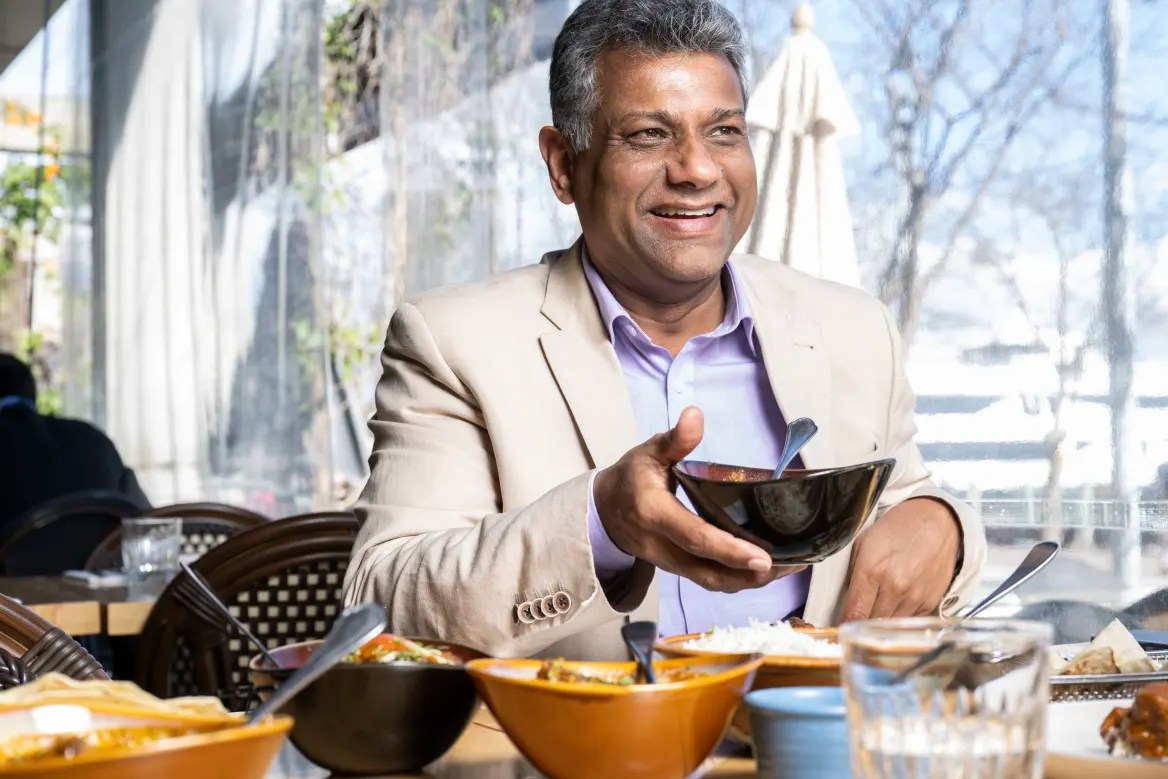
Kanishka Raffel’s election as Archbishop of Sydney broke the mould. His predecessors are all of European descent; his heritage is Sri Lankan. Many of those who went before him were sons of Sydney’s Anglican dynasties, and attended its sandstone schools; he moved to Australia as a boy and went to Carlingford High.
 Anglican Archbishop Kanishka Raffel was born a Buddhist. CREDIT:LOUIE DOUVIS

Continue reading

3 Comments

Filed under accountability, Australian culture, australian media, Buddhism, cultural transmission, education, ethnicity, heritage, life stories, meditations, performance, pilgrimages, politIcal discourse, self-reflexivity, social justice, tolerance, travelogue, unusual people, world events & processes

Facing Vengeance & Hate: Some Internet Expositions

Pirapaharan with automatic weapon & Kittu & Prabha in relaxed mood in camp

*  Michael Roberts: “Addressing Two Angry Tamils,” 9 March 2012, https://thuppahis.com/2012/03/09/addressing-two-angry-tamils-heat-distortion-truth-fact-mendacity-and-eternal-enmity/

Continue reading

Leave a comment

Filed under accountability, atrocities, communal relations, disparagement, ethnicity, governance, historical interpretation, law of armed conflict, life stories, LTTE, military strategy, politIcal discourse, power politics, prabhakaran, security, self-reflexivity, Sinhala-Tamil Relations, slanted reportage, social justice, sri lankan society, Tamil civilians, Tamil Tiger fighters, terrorism, the imaginary and the real, trauma, truth as casualty of war, unusual people, vengeance, war reportage, world events & processes, zealotry

Protected Government Killers: The Trincomalee Shootings of 2 January 2006

Rajan Hoole and Kopalasingam Sritharan, in Colombo Telegraph,  27 July 2022, …. where the title runs thus “Impunity in times of uncertainty – Part IV: Kapila Jayasekera: Killer-in-chief in both ACF and Five Students Cases”

As we have previously pointed out, one of the hazards of tracing killer operations is that lines of responsibility have been deliberately fuddled. Kapila Jayasekere in particular has spent considerable energy covering his racist and murderous tracks, setting a dangerous example to the men under him.

Regarding the Trinco Five case: In August 2008, SP Operations Kapila Jayasekere tried to refute Dr. Manoharan’s testimony that on 2nd Jan 2006 Jayasekere was already at the scene in his pickup when the shooting of the 5 students in Trincomalee took place at 7.35 PM. In his effort to cover his tracks, Jayasekere made claims before the Commission of Inquiry that were fatal to his denial. The same trend is evident in the ACF case. Jayasekera told the Commission in the Five Students case that he picked up ASP Serasinghe in his vehicle and reached the scene of crime at 8.20 PM.

Continue reading

Leave a comment

Filed under accountability, anti-racism, atrocities, authoritarian regimes, chauvinism, conspiracies, disparagement, doctoring evidence, ethnicity, governance, historical interpretation, human rights, legal issues, life stories, politIcal discourse, racism, security, self-reflexivity, Sinhala-Tamil Relations, social justice, sri lankan society, Tamil civilians, terrorism, the imaginary and the real, trauma, truth as casualty of war, unusual people, vengeance, war crimes, world events & processes, zealotry