Category Archives: self-reflexivity

Lord Naseby Clarifies Conservative Party Position on Sri Lanka …. Versus Corbyn’s Extremist Stance

Conservative peer Lord Naseby has issued a media release about the UK general election, addressing the confusion in the Conservative Party’s Manifesto where Sri Lanka is mentioned. This release also comments on the Labour Party’s position on Sri Lanka. 

Background: A significant controversy has arisen during the British general election campaign over the Conservative Party’s manifesto and its mentioning of a ‘two-state solution’ in association with Sri Lanka. In this regard, Conservative peer, the Rt Hon Lord Naseby PC has issued a statement. This trusted and long-standing friend of Sri Lanka is critical of the Conservatives for creating such confusion and fully understands the concerns that this error has caused amongst Sri Lankans everywhere.  

Continue reading

1 Comment

Filed under accountability, centre-periphery relations, foreign policy, historical interpretation, legal issues, life stories, political demonstrations, politIcal discourse, power politics, self-reflexivity, tamil refugees, truth as casualty of war, unusual people, world events & processes

An Indonesian evaluates the R2P Interventions

Agung Wasono: “The Responsibility to Protect and State Sovereignty,”  http://www.agungwasono.com/2016/06/the-responsibility-to-protect-r2p-and.html#

Crisis in Syria – Implementation of R2P 

Introduction: This article discusses the criticism to the Responsibility to Protect (R2P) and more specifically on the debate of its relationship to State sovereignty. This article is divided into four main parts: the first part discusses the background of R2P including its pillars and principles, the second part discusses the different understanding of sovereignty in the context of national and international relations, the third part explores the debates on R2P and sovereignty, and last but not least is the conclusion. Overall, I found that criticisms to R2P are mostly addressed to its imperfect implementation instead of its principles. I argue that the difference concepts of State sovereignty should not be contested each other. In addition, R2P should also be understood in a comprehensive approach by considering all pillars and principles.

Continue reading

Leave a comment

Filed under accountability, american imperialism, centre-periphery relations, conspiracies, economic processes, foreign policy, governance, historical interpretation, Indian Ocean politics, landscape wondrous, law of armed conflict, legal issues, modernity & modernization, politIcal discourse, power politics, security, self-reflexivity, truth as casualty of war, war reportage, world events & processes

Evaluating Gotabaya’s Early Moves — Rajeewa Jayaweera

Rajeewa Jayaweera, Island, 7 December 2019, where the title is “Gotabaya Rajapaksa Presidency: some positives, negatives and challenges”

For all intent and purposes, President Gotabaya Rajapaksa’s (GR) recently concluded state visit to India, his first as Head of State is considered a success. A one on one meeting scheduled for 15 minutes had lasted one hour. During this time, both leaders have supposedly found common ground and established a personal rapport, so essential in relations between countries, especially between countries with a history of thorny periods.

The newly elected Sri Lankan President, in his inaugural speech stated, “we want to be neutral and stay out of conflicts amongst the world powers.” While in India, he reiterated his intention to renegotiate the 99-year lease with state-controlled China Merchants Port Holdings which would have no doubt pleased his hosts.

Continue reading

Leave a comment

Filed under accountability, centre-periphery relations, communal relations, economic processes, ethnicity, export issues, foreign policy, governance, historical interpretation, Indian Ocean politics, island economy, life stories, modernity & modernization, politIcal discourse, power politics, self-reflexivity, Sinhala-Tamil Relations, sri lankan society, transport and communications, welfare & philanthophy, world events & processes

Mockery: Veils and Subterfuge in the High Mountains of the Swiss Embassy

Lalin Fernando,* in Asian Tribune, 9 December 2019, where  the title is  “Swiss strike Gold and Salman in Sri Lanka”

When God on his final inspections round the world visited Switzerland he dropped in on a Swiss farm house. The Swiss farmer was overwhelmed. He invited God in, asked him to sit and rest. He offered God a glass of delicious milk. God thanked him for it. The Swiss farmer said ‘God please don’t thank me. You have given us everything people can want. We live in the most beautiful and richest country in the world. There are beautiful lakes with plenty of fish, high snow capped mountains that give us protection, green fields for us to farm and provide fodder for cattle, gushing rivers and an invigorating climate. I have a large family and everything we need. Thank you God’.

NOTE — my attempt to place photos of Herr Ambassador Herr Hanspeter MOCK drawn from web were defeated by the embargo attached to his PIX on web. Wow! Halleluyyiyah! Swiss barriers on free speech?

After a short rest, God got up to leave. The Swiss farmer said ‘excuse me God, you forgot something’. God checked and said ‘nothing’s missing. May I go please’? The Swiss man said ‘Of course but God you haven’t paid me for the milk’.

Continue reading

1 Comment

Filed under accountability, atrocities, centre-periphery relations, charitable outreach, conspiracies, disparagement, elephant tales, European history, foreign policy, governance, historical interpretation, landscape wondrous, legal issues, life stories, patriotism, performance, politIcal discourse, power politics, self-reflexivity, slanted reportage, sri lankan society, world events & processes, zealotry

Diplomatic Immunity: The International Protocols

Jeevan Thiagarajah, in Daily News, 8 December 2019, with this title “Fiplomatic Immunity in International Law”

This article is an effort to pull out international and national norms applicable to those working in diplomatic missions and by extension having diplomatic status. Although the emergence of diplomatic protections stretches back to antiquity, they are largely codified into law in the modern era. These protections are based mainly on the 1961 Vienna Convention on Diplomatic Relations and the 1963 Vienna Convention on Consular Relations, with the former regulating conduct with top diplomats such as embassy staff; and the latter lower-rank diplomatic officials.

Why are diplomats, no matter how sensitive their job, conferred almost limitless immunity from law? The answer goes centuries back.

The Vienna Convention on International Relations

Continue reading

1 Comment

Filed under accountability, centre-periphery relations, life stories, politIcal discourse, power politics, press freedom & censorship, security, self-reflexivity, sri lankan society, taking the piss, truth as casualty of war, unusual people, world events & processes

World Giants Face-to-Face in Economic Warfare

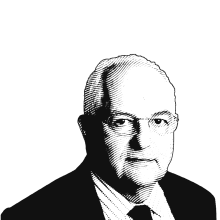
Martin Wolf  Martin Wolf, in Financial Review, 5 June 2019, with this title “Prepare for the 100-year war between the US and China” with underlining emphasis added by The Editor, Thuppahi
The disappearance of the Soviet Union left a big hole. The “war on terror” was an inadequate replacement. But China ticks all boxes. For the US, it can be the ideological, military and economic enemy many need. Here at last is a worthwhile opponent. That was the main conclusion I drew from this year’s Bilderberg meetings. Across-the-board rivalry with China is becoming an organising principle of US economic, foreign and security policies. 
cartoon imported from https://www.scmp.com/comment/opinion/article/3018284/why-chinas-current-trade-war-strategy-keep-calm-and-make-new

Continue reading

Leave a comment

Filed under accountability, american imperialism, authoritarian regimes, China and Chinese influences, foreign policy, historical interpretation, Indian Ocean politics, landscape wondrous, military strategy, modernity & modernization, politIcal discourse, power politics, propaganda, security, self-reflexivity, the imaginary and the real, transport and communications, truth as casualty of war, unusual people, world events & processes

A Focus on Taylor Dibbert: Fair Dinkum’s Running Commentary

 Fair Dinkum,[1] an Aussie Academic with Far Eastern Connections, serves up a Set of Reflections on Dibbert’s Recent Essays

A = Taylor Dibbert maybe a freelance writer but I am sure he is selected because of the perspective he takes. As usual, everything portrays SL’s future as bleak and degenerate.

B = Freelance gives impression of independent writer, but the question is on what criteria do the Lowry Institute accept writings for their website. As a think-tank, the writings they publish are notable for being excessively right-wing, rather than a forum for balanced meaningful intellectual debate and so it should not be regarded as an academic institution.  This “freelance” writer fits perfectly into their political agenda.

Continue reading

1 Comment

Filed under accountability, american imperialism, centre-periphery relations, democratic measures, elephant tales, foreign policy, historical interpretation, Indian Ocean politics, life stories, politIcal discourse, Presidential elections, propaganda, Rajapaksa regime, security, self-reflexivity, slanted reportage, sri lankan society, truth as casualty of war, world events & processes

Populist Pressures as the Central Problem in Lanka’s Recent History …. And So, too, Now

Kumar David, courtesy of Colombo Telegraph, 4 December 2019 where the title is “Ethnic conflict -The Problem is the People”

Today’s column is of an academic nature, where names are used it is for illustration, not to bestow praise or blame on an individual. If a reader thinks a name inappropriate, substitute another and read on. Though most examples are Sri Lankan the argument is general; it is true mutatis mutandis all over the world. The dynamic may be race, religion, language, caste, colour or tribe or any such separator of a society into identity groups. The key word is identity, charged by history and circumstance.

Continue reading

1 Comment

Filed under accountability, authoritarian regimes, chauvinism, communal relations, cultural transmission, democratic measures, economic processes, education, fundamentalism, historical interpretation, Left politics, life stories, nationalism, politIcal discourse, power politics, Rajapaksa regime, self-reflexivity, Sinhala-Tamil Relations, sri lankan society, welfare & philanthophy, world events & processes

To Gotabaya: Wishes, Warnings and Thoughts from The Sunday Times

The Editor, Sunday Times, 1 December 2019

This is the ‘honeymoon’ period for a newly elected first term President, still riding the wave of popularity from the election victory of November 16. Even the media are expected to give the new President time to settle down, and some leeway to carry out his campaign promises and fulfil the expectations of his new office. This is not, however, to say that no comments ought to be made on the performance of the new administration during this period.

Continue reading

1 Comment

Filed under accountability, authoritarian regimes, China and Chinese influences, economic processes, foreign policy, historical interpretation, Indian Ocean politics, island economy, landscape wondrous, legal issues, life stories, modernity & modernization, politIcal discourse, power politics, Rajapaksa regime, security, self-reflexivity, Sinhala-Tamil Relations, sri lankan society, transport and communications, welfare & philanthophy, world events & processes

Jehan Perera’s Appraisal of President Gotabaya’s First Steps

Jehan Perera, in Island, 3 December 2019, with this title: “President’s early parameters may require revision”

One of the weaknesses of the previous government was its failure to have cohesive policies that it implemented with determination. Instead there was a sense of free space and license to do as one pleased. It gave people a welcome sense of freedom, but it also led to strikes and pickets on an almost daily basis and frustration among the general population who did not see government at work. Along with the change of government that took place after the November 16 presidential election there is a sense of strong government and an uncertainty about what the parameters of free space will be. Recent pronouncements by President Gotabaya Rajapaksa are providing an initial indication of what some of the parameters will be. The President’s visit to India and the speeches and interviews he gave there provide a first indication of what some of the parameters might be.

Continue reading

1 Comment

Filed under accountability, american imperialism, China and Chinese influences, economic processes, governance, historical interpretation, Indian Ocean politics, island economy, legal issues, life stories, modernity & modernization, patriotism, politIcal discourse, power politics, Rajapaksa regime, self-reflexivity, Sinhala-Tamil Relations, sri lankan society, Tamil civilians, welfare & philanthophy, world affairs, world events & processes