Category Archives: discrimination

Appreciating Kumari Jayawardena’s Scholarship

Uditha Devapriya … in The Island, 28 June 2024, where the title reads:  “A Tribute to Kumari Jayawardena” … while the presentation here includes highlights imposed by The Editor

Last month the Collective for Historical Dialogue & Memory (CHDM) organised a screening of Conversations with Kumari, a documentary on Kumari Jayawardena. Last week Jayawardena turned 93. Yesterday I reflected on her and the generation she represented. That generation is leaving us, but it remains as influential as ever.


Continue reading

1 Comment

Filed under anti-racism, art & allure bewitching, British colonialism, caste issues, centre-periphery relations, commoditification, communal relations, democratic measures, discrimination, economic processes, ethnicity, governance, historical interpretation, Indian Ocean politics, Indian traditions, island economy, landscape wondrous, language policies, Left politics, life stories, modernity & modernization, nationalism, parliamentary elections, plural society, political demonstrations, politIcal discourse, racist thinking, religious nationalism, self-reflexivity, Sinhala-Tamil Relations, social justice, Sri Lankan scoiety, unusual people, welfare & philanthophy, working class conditions, world events & processes

Sri Lankan ‘Outposts’ on Thursday Island in Colonial Times

Á Booklet by Stanley J. Sparkes and Anna Shnukal entitled The Sri Lankan Settlers of Thursday Island …. presented by …………….. httpsy ://www.elanka.com.au/the-sri-lankan-settlers-of-thursday-island-by-stanley-j-sparkes-and-anna-shnukal/

... I regret that the pictorial illustrations with this text proved obdurate and refused replication; while the whole process of reproduction was difficult”–Thupahiyaa

Introduction

The dismantling of the White Australia Policy in the early 1970s, allied with periodic civil strife in their homeland, brought significant numbers of Sri Lankan immigrants to Australia. Few Australians, however, are aware that, a century before, hundreds of mostly male ‘Cingalese’ (as Sri Lankans were then called),2 mainly from the southern coastal districts of Galle and Matara in the British colony of Ceylon, came as labourers to the British colony of Queensland.3 The first of these arrived independently in the 1870s to join the Torres Strait pearling fleets, but larger numbers were brought to Queensland a decade later as indentured (contract) seamen on Thursday Island and, shortly thereafter, as farm workers for the cane fields around Mackay and Bundaberg, where many of their descendants still live. The arrival of the first batch of 25 indentured Sri Lankan seamen on Thursday Island in 1882 coincided with the importation of ‘Malays’ and Japanese. Yet, unlike the latter, comparatively little has been published on their origins, lives and destinies, nor their contributions to the business, social and cultural life of Thursday Island. Some of those first arrivals demonstrated a remarkable entrepreneurial flair, taking up employment as ‘watermen’ (boatmen), ferrying passengers and cargo from ship to shore and subsequently taking out licences as small businessmen: boarding-house keepers, billiard-room proprietors, shopkeepers, pawnbrokers, boat-owners, gem and curio hawkers and commercial fishermen.

VISIT THIS SITE FOR MAP etc https://en.wikipedia.org/wiki/Thursday_Island

Continue reading

3 Comments

Filed under Australian culture, British colonialism, centre-periphery relations, commoditification, communal relations, cultural transmission, demography, discrimination, economic processes, ethnicity, heritage, historical interpretation, island economy, landscape wondrous, life stories, Pacific Ocean issues, population, religiosity, self-reflexivity, sri lankan society, transport and communications, travelogue, Uncategorized, unusual people, working class conditions, world events & processes

The Work of Anthropologists from Sri Lanka: Reviewing the World Scenario in 1987

Presenting an academic article published in Contributions to  Indian Sociology , n.s, Vol 21, 1-25 also reproduced subsequently in Sri Lanka in 1989 as No, 10 within the SSC Pamphlet Series marshalled by the late Ana Chittambalam, Willa Wickremasinghe , Hari hulugalle and Michael Roberts

Elizabeth Nissan: “The work of Sri Lankan anthropologists: A bibliographic survey”

 Introduction: Although many of the studies included in this essay are concerned with Sri Lanka, this is not a bibliographic essay on the anthropology of that country. It is, instead, a survey of the work of Sri Lankan anthropologists, wherever they may have carried out their research.

Continue reading

Leave a comment

Filed under Aboriginality, accountability, art & allure bewitching, authoritarian regimes, British colonialism, Buddhism, caste issues, centre-periphery relations, Colombo and Its Spaces, colonisation schemes, commoditification, communal relations, cultural transmission, democratic measures, demography, discrimination, disparagement, Dutch colonialism, economic processes, education, ethnicity, fundamentalism, governance, hatan kavi, heritage, historical interpretation, immigration, Indian Ocean politics, Indian traditions, irrigation, Islamic fundamentalism, island economy, landscape wondrous, language policies, Left politics, life stories, literary achievements, modernity & modernization, nationalism, performance, pilgrimages, plantations, plural society, political demonstrations, politIcal discourse, Portuguese in Indian Ocean, power politics, racism, religiosity, religious nationalism, riots and pogroms, self-reflexivity, Sinhala-Tamil Relations, social justice, sri lankan society, Tamil civilians, terrorism, the imaginary and the real, travelogue, vengeance, violence of language, welfare & philanthophy, working class conditions, world events & processes, zealotry

Deciphering the Work of Caste in Sri Lanka’s Lifeworld

Thuppahi is delighted to present a new research venture in keeping with its own spirit — with TUDOR SILVA in Lanka and MARK BALMFORTH in Canada in command.

CASTE: A Global Journal on Social Exclusion …..  Call for Submissions ….. with a Focus on Sri Lanka

Deadlines for Submissions: ….. Abstract: June 15, 2024 …… Full Paper: September 30, 2024

Compared to the expanding body of literature on caste in the Indian subcontinent, caste in Sri Lanka has received only sporadic academic attention and has been largely ignored in policy debates and social development interventions on the island. This can partially be explained by a widespread, public belief in Sri Lanka that despite its past importance, caste is no longer a vital social institution. While open discussion on the topic is largely absent, this does not mean that caste is dead or dying. Rather, caste remains hidden in much of Sri Lankan social life (Jiggins 1979; Silva, Sivapragasam, & Thanges 2009a). Reports from the north and east of the country indicate a certain resurgence of caste issues in post-war society, and new research findings suggest that caste plays a role in social, economic, and political dynamics that affect access to limited resources such as land, drinking water, employment, and political power (Thanges 2015; Hashmi and Kuganathan 2017; Kadirgamar 2019; Silva 2020; Tiruchandran 2021). Caste also continues to play an important role in the social life of south and central Sri Lanka through marriage partner selection, land tenure, temple rituals, politics, economic relations, and the performing arts (Silva, Sivapragasam, & Thanges 2009b; Reed 2010). Recent dissertation work, particularly in overseas universities, suggests that a body of new Sri Lankan caste-related evidence is just on the horizon (Räsänen 2015; Aimee 2017; Thanges 2018; Balmforth 2020; Esler 2020; Pathmanesan 2020).

Continue reading

Leave a comment

Filed under accountability, British colonialism, Buddhism, caste issues, centre-periphery relations, chauvinism, commoditification, communal relations, cultural transmission, democratic measures, demography, discrimination, Dutch colonialism, economic processes, education policy, electoral structures, ethnicity, female empowerment, governance, heritage, historical interpretation, Indian traditions, island economy, language policies, Left politics, legal issues, life stories, plantations, plural society, politIcal discourse, power politics, racist thinking, self-reflexivity, social justice, sri lankan society, Tamil civilians, tolerance, unusual people, working class conditions, world events & processes

Facing Fortress Australia: Ceylonese Migrants in the 1950s & 1960s

Earlson Forbes, whose title in THE CEYLANKAN, vol 27/2, May 2024 is Fortress White Australia: What early Ceylonese migrants [1949 t0 1969] were up against” … [now … with most of the author’s documentary illustrations]

The Six Australian Colonies came together on the 1st  of January 1901 to form the independent Nation of the Commonwealth of Australia.  From 1788 (First Fleet arrival at Sydney Cove) to the time of Federation, Australia was populated by convict and free settlers almost exclusively from Britain.  The 1901 census put the population at 3.7 million.   Aboriginals were not counted in this census. A small percentage of the population was made up of Pacific Islanders and Chinese.  The Chinese entered Australia in the second half of the 19th century at the time of the Gold Rush in Australia (mid-19th century) and in the years following. Between 1851 and 1870 about 50,000 Chinese were estimated to have entered Australia. Pacific Islanders had been brought to Australia in the second half of the 19th century as labourers.

From its inception the Nation of Australia embarked on a highly protective policy regarding entry into the country.  Within one year of formation of the Nation, the Australian Parliament passed two Acts limiting immigration.  These two Acts were The Immigration Restriction Act 1901, and the Pacific Islander Labourers Act 1901.  The Pacific Islander Labourers Act aimed specifically at putting a stop to admission of persons from this region.  The Act stated, ‘No Pacific Island Labourer shall enter Australia on or after the thirty first day of March one thousand nine hundred and four’.

Continue reading

Leave a comment

Filed under accountability, Australian culture, australian media, centre-periphery relations, charitable outreach, communal relations, cultural transmission, demography, discrimination, disparagement, economic processes, education, ethnicity, governance, heritage, historical interpretation, immigration, island economy, landscape wondrous, language policies, legal issues, life stories, patriotism, plural society, politIcal discourse, racist thinking, self-reflexivity, social justice, sri lankan society, taking the piss, transport and communications, travelogue, unusual people, world events & processes

Lankan Cricketers Mauled by Travel-Toss Decision-Safs

Sidarth Monga, in ESPNcricinfo, 3 June 2024 where the title reads thus: “So unfair – Sri Lanka, given a raw scheduling deal, struggle to find their bearings”

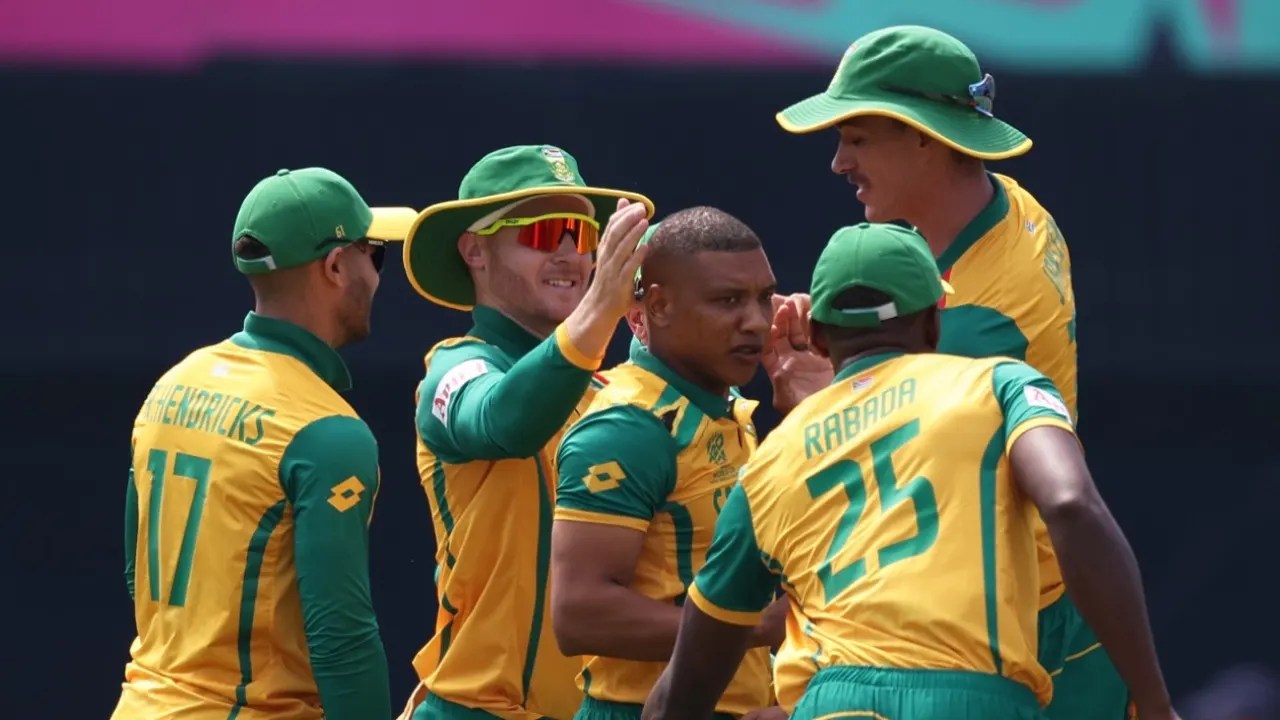
Delayed flights, matches at different venues, hotels far from the game venues have made life difficult for Hasaranga’s team. Sri Lanka’s players were in a hurry to complete the media commitments after their first match of this T20 World Cup. That’s because immediately after the match, they had to rush to their hotel in Brooklyn, an hour-and-a-half away, pack, check out, and then make their 6pm flight to Dallas where they will be playing what is now a must-win match against Bangladesh. This after they had to wait for seven hours at the Miami airport to take their delayed flight to New York to play this match.

Continue reading

1 Comment

Filed under accountability, atrocities, centre-periphery relations, cricket selections, discrimination, disparagement, governance, life stories, meditations, performance, self-reflexivity, taking the piss, trauma, travelogue, world events & processes

A Lament: Biased US Media Coverage of the Pro-Palestinian Protests at Columbia University

Mobashra Tazamal’s LAMENT from The Campus at Columbia University

“I am left with the understanding that to be Muslim at Columbia is to face extreme censorship of your language to appease an audience that doesn’t represent nor respect you. To be Muslim at Columbia is to be racially profiled and doxxed, beg for administrative resources and support, and still receive none. To be Muslim at Columbia is to face Islamophobia on campus—to be spat on and called “terrorists”—and receive no University acknowledgment or recognition. Instead, our experiences are interrogated, as administrators try to poke holes in our narratives, questioning whether they even happened, while others get seats at the table with the University President and the governor of New York, dedicated to making sure they feel seen, heard, and valued.

To be Muslim at Columbia is to have your community and peers be suspended, arrested, and brutalized by the New York Police Department for peacefully protesting the genocide of those who widely look and practice like us, and still being made out to be the aggressors.”

Continue reading

1 Comment

Filed under accountability, centre-periphery relations, discrimination, disparagement, education, ethnicity, governance, Islamic fundamentalism, landscape wondrous, life stories, Middle Eastern Politics, Palestine, political demonstrations, politIcal discourse, power politics, racism, religious nationalism, self-reflexivity, slanted reportage, trauma, truth as casualty of war, unusual people, war reportage, world events & processes

Caste Issues in Sri Lanka: A Partial Bibliography

Michael Roberts

I came across this undated list in my computer files — one drawn up quite sometime back, maybe 20 years back. Though I would seem to have been part of the enterprise, some spellings suggest the involvement of others; while Iranga Silva of the ICES Kandy also seems to have been one of the compilers. It will, nevertheless, interest some readers & scholars and could assisit budding researchers. The items or authors presented in black were part of the File I found. I have taken the liberty of deploying a colour scheme, with red indicating rare items that I have not seen/studied; blue some highly important studies; ….

Continue reading

2 Comments

Filed under British colonialism, caste issues, centre-periphery relations, communal relations, cultural transmission, demography, discrimination, economic processes, ethnicity, governance, heritage, historical interpretation, island economy, landscape wondrous, life stories, politIcal discourse, revenue registers, sri lankan society, working class conditions

A Lifetime Addressing Nationalist Political Currents & Zealotry

Michael Roberts

As I attend a friend’s funeral every now and then in Adelaide or receive mail conveying sad tidings re good friends and other acquaintances, I am reminded that I will disappear into the dust in due course relatively soon. So be it.

However there has been a lifetime of endeavour in various fields. One range of activity has been in the academic realm investigating socio-political events and processes in the world …. with particular attention directed towards my home-country Sri Lanka’s affairs.

Continue reading

1 Comment

Filed under accountability, anti-racism, atrocities, authoritarian regimes, British colonialism, Buddhism, centre-periphery relations, communal relations, cultural transmission, discrimination, disparagement, economic processes, electoral structures, ethnicity, governance, hatan kavi, historical interpretation, insurrections, Islamic fundamentalism, island economy, language policies, Left politics, legal issues, life stories, LTTE, martyrdom, modernity & modernization, Muslims in Lanka, nationalism, parliamentary elections, patriotism, political demonstrations, politIcal discourse, power politics, racism, religious nationalism, self-reflexivity, Sinhala-Tamil Relations, sri lankan society, suicide bombing, Tamil civilians, Tamil Tiger fighters, terrorism, truth as casualty of war, unusual people, vengeance, violence of language, war reportage, world events & processes, zealotry

Be Tamil Bibliography…….For Sri Lanka 2003/04

Michael Roberts

 About the time that I retired from my teaching duties at the Anthropology Department at Adelaide University in 2003/04, the topic of “suicide terrorism” was attracting a lot of attention in academic circles through books and articles. As I dwelt on this topic within the alternative title of “Sacrificial Devotion,” I also had, perforce, to dwell on the grievances espoused by the Sri Lanka Tamils.

Through happenchance, today, I came across an old Word File entitled “Be Tamil Bibliography.” Its entries suggest that it was drafted circa 2003/04so the temporal sweep is restricted. It lists academic books and articles on the ethnic contretemps in Sri Lanka as well as the Tamil world of Sri Lanka and India. Thus, the authors marked include such personnel as Zvelebil, Schalk, Kenneth David and Hellmann-Rajanayagam as well as the local Tamils Chelliah Manogaran, Valentine Daniel, Sivathamby, Somasundaram and Sivaram …. to name a few.

Tamil demonstrators invade the pitch during a Cricket World Cup, Group B, match between Australia and Sri Lanka at the Oval, London, 11th June 1975. Australian opening batsman Alan Turner (foreground) turns his back on the protest while his teammate Rick McCosker looks on. Australia won the match by 52 runs..Photo by Dennis Oulds/Central Press/Hulton Archive/Getty Images


Continue reading

Leave a comment

Filed under atrocities, centre-periphery relations, communal relations, counter-insurgency, cultural transmission, demography, discrimination, disparagement, doctoring evidence, ethnicity, fundamentalism, governance, heritage, historical interpretation, immolation, Indian Ocean politics, insurrections, landscape wondrous, language policies, law of armed conflict, LTTE, martyrdom, military strategy, nationalism, patriotism, photography, politIcal discourse, power politics, power sharing, prabhakaran, propaganda, racist thinking, religiosity, self-reflexivity, Sinhala-Tamil Relations, slanted reportage, social justice, sri lankan society, suicide bombing, Tamil civilians, Tamil migration, tamil refugees, Tamil Tiger fighters, terrorism, truth as casualty of war, unusual people, vengeance, world events & processes, zealotry