
Category Archives: discrimination

British Colonial Socio-Political Distinctions via Stace’s Revelation of Life in Galle, 1910 et seq

Michael Roberts

Walter Terence STACE was a British man born in Ireland in 1886 who entered the British colonial service after a university education and was assigned to Sri Lanka in 1910. He married a Burgher lady, MM Beven in 1928 – is second marriage this – and then resigned in 1932 and moved on to USA where he pursued a successful university teaching career in Philosophy. Following his retirement, he composed an autobiography in 1964 with the intriguing title FOOTPRINTS ON WATER.   

This work has been edited by Bernd Pflug with an excellent and readable “Critique” at the end of the autobiography and presented in Sri Lanka in a slim volume of 218 pages by the Perera Hussein Publishing House.
Continue reading

5 Comments

Filed under accountability, anti-racism, authoritarian regimes, British colonialism, centre-periphery relations, communal relations, cultural transmission, discrimination, disparagement, economic processes, ethnicity, gender norms, governance, heritage, historical interpretation, life stories, politIcal discourse, power politics, racist thinking, self-reflexivity, travelogue, unusual people

Race Relations in Britain Today: Readings via Responses to Audrey Maxwell’s 1998 Study

Michael Roberts 

After I presented my late departed sister Audrey Maxwell’s study, one presented in a book oAudrey Mugn Cross-Cultural Marriage edited by Rosemary Breger & Rosanna Hill [1998, Oxford, Berg] in TPS, I moved on to ……..

Audrey Mug  A ]  https://thuppahis.com/2024/10/31/addressing-audrey-maxwells-research-on-cross-cultural-marriages-in-englan/

AUDREY Mug shots B] and circulated an invitation to scholars and friends in Britain seeking critical thoughts on her study and/or reflections on relations between coloured immigants people and dinky-die BriA tons today; see ………………………………. https://thuppahis.com/2024/10/31/ag-audrey-maxwells-research-on-cross-cultural-marriages-in-englan/

Continue reading

Leave a comment

Filed under anti-racism, Britain's politics, centre-periphery relations, cultural transmission, discrimination, disparagement, education, ethnicity, life stories, migrant experiences, politIcal discourse, racism, religiosity, self-reflexivity, teaching profession, tolerance, working class conditions, world events & processes

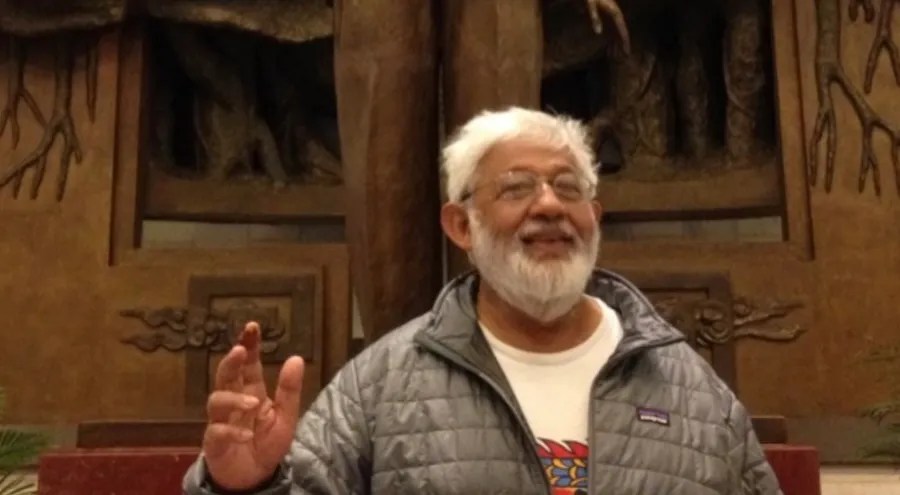
Vale Kumar David — Scholar, Critic and Activist

Rajan Philips, in Colombo Telegraph, 19 October 2024, where the title reads thus = ”Kumar David: An Accomplished Academic & A Broadminded Marxist”  … with highlights imposed by the Editor, Thuppahi

Professor Kumar David (1941-2024)

One by one the lights go out. In a span of seven months, Sri Lanka’s Engineering fraternity and the country’s progressive political fraternity have lost three of their kinds, one after another. Chris Rodrigo was the first to go in March, then it was Bahu in July, and now it is Kumar David, the oldest of the three. Professor Kumar David passed away in Los Angeles, on Monday, October 14. He was 83 years old.

Continue reading

Leave a comment

Filed under accountability, anti-racism, centre-periphery relations, communal relations, democratic measures, discrimination, economic processes, education, ethnicity, governance, heritage, historical interpretation, island economy, landscape wondrous, language policies, Left politics, life stories, patriotism, performance, political demonstrations, politIcal discourse, power politics, self-reflexivity, Sinhala-Tamil Relations, sri lankan society, teaching profession, unusual people, world events & processes

Justice: Another Opportunity Lost

A DailyFT item, 14 October 2024, entitled “Another Lost Opportunity”

The new administration of President Anura Kumara Dissanayake lost yet another opportunity in the international stage to rectify past wrongs and charter a new course. This time at the UN Human Rights Council (HRC), keeping with the policies of the Rajapaksa-Wickremesinghe administrations, the Government rejected international efforts to deliver justice for the tens of thousands of victims of State atrocities. 

Continue reading

Leave a comment

Filed under accountability, atrocities, authoritarian regimes, communal relations, conspiracies, democratic measures, discrimination, doctoring evidence, ethnicity, historical interpretation, human rights, insurrections, Left politics, legal issues, life stories, LTTE, Muslims in Lanka, news fabrication, politIcal discourse, power politics, rehabilitation, self-reflexivity, Sinhala-Tamil Relations, slanted reportage, social justice, sri lankan society, Tamil civilians, terrorism, the imaginary and the real, truth as casualty of war, vengeance, war crimes, war reportage, world events & processes, zealotry

The Personnel Behind THE CEYLON JOURNAL

Thuppahi is pleased to present a photo of the key personnel located in Sri Lanka who were involved in launching the new cutting/edge academic venture known as THE CEYLON JOURNAL this year.


Continue reading

Leave a comment

Filed under accountability, art & allure bewitching, British colonialism, centre-periphery relations, communal relations, cultural transmission, democratic measures, demography, discrimination, economic processes, education, ethnicity, female empowerment, governance, heritage, historical interpretation, human rights, Indian Ocean politics, island economy, landscape wondrous, language policies, Left politics, legal issues, life stories, literary achievements, modernity & modernization, patriotism, performance, photography, politIcal discourse, power politics, press freedom & censorship, racist thinking, self-reflexivity, Sinhala-Tamil Relations, Sri Lankan cricket, sri lankan society, Tamil civilians, travelogue, unusual people, women in ethnic conflcits, working class conditions, world events & processes

The Branding of Islamic Migrants to Ceylon Over the Centuries

WHEN Shamara Wettimuny’s article  in the History Workshop Journal entitled The Colonial History of Islamophobic Slurs in Sri Lanka”  …. was placed in FACEBOOK it received the following set of comments: some prejudiced against and some in favour. The ethnic difference in the authors is quite marked and thereby marks the depth of ethnicity in the island context …. TODAY.  

Moving at a tangent, I stress that the research work that generated the book by Roberts, Colin-Thome & Raheem which is entitled People Inbtween (1989 Sarvodaya) becomes profoundly relevant to this set of engagements. Note that my deployment of the THUPPAHI concept for my web-site’s brand name emerged from this body of research. So, do visit this entry as well: https://thuppahis.com/why-thuppahi/

The original article can be access in THUPPAHI at ………………… https://thuppahis.com/2020/09/07/experiencing-denigration-in-sri-lanka-the-muslims-yesterday-and-today/

Continue reading

Leave a comment

Filed under accountability, authoritarian regimes, British colonialism, centre-periphery relations, communal relations, cultural transmission, demography, discrimination, disparagement, Dutch colonialism, economic processes, education, ethnicity, governance, heritage, historical interpretation, human rights, immigration, Indian traditions, Islamic fundamentalism, island economy, landscape wondrous, language policies, legal issues, politIcal discourse, power politics, racism, religiosity, riots and pogroms, self-reflexivity, sri lankan society, taking the piss, Tamil migration, tolerance, truth as casualty of war, vengeance, violence of language, working class conditions, world events & processes, zealotry

Noel Nadesan’s Critical Reflections on the Sri Lankan Tamils’Armed Struggle

Rajeswary Balasubramaniam, reviewing Odyssey of War by Noel Nadesan **

The ‘Odyssey of War’, a novel by Dr. Noel Nadesan published by Sarasavi Publishers, reflects the struggle for the liberation of Tamils in Sri Lanka (1977-2009) and the failure of interwoven world politics. The novel illustrates how upper-class Tamils overcame caste, religion, and regions and united for the liberation of Tamils, but went beyond the spirit of liberation, migrated, and eventually made the liberation struggle of Tamils a profitable business.

Continue reading

1 Comment

Filed under accountability, anti-racism, asylum-seekers, atrocities, authoritarian regimes, centre-periphery relations, communal relations, constitutional amendments, counter-insurgency, demography, discrimination, Eelam, ethnicity, governance, historical interpretation, Indian Ocean politics, insurrections, language policies, life stories, LTTE, military strategy, patriotism, politIcal discourse, power politics, prabhakaran, refugees, security, self-reflexivity, Sinhala-Tamil Relations, sri lankan society, Tamil migration, tamil refugees, Tamil Tiger fighters, terrorism, trauma, truth as casualty of war, unusual people, vengeance, war reportage, world events & processes

Machiavelli on The Vicious ‘Skeletons’ Inherent Within Politics

A CIRCULAR from Kumar Kirinde ... … with highlighting emphasis imposed by The Editor, Thuppahi

Dear RAFOA member,

Now that another presidential election is due in a few weeks’ time in our beloved country … Sri Lanka. I thought that the attached document will be of interest to you.  The finer points with my take on the matter is given below mainly for the benefit of those who cannot spend much time reading documents running into a few pages.

A statue Niccol

The brief is on Machiavelli’s thinking on political power and ruling a nation.

Machiavelli was a diplomat, author, philosopher, and historian who lived over 500 years ago in Florentine, a part of present day Italy. He served as a senior official in the Florentine Republic with responsibilities in diplomatic and military affairs.

Continue reading

2 Comments

Filed under accountability, art & allure bewitching, authoritarian regimes, centre-periphery relations, chauvinism, discrimination, disparagement, Fascism, foreign policy, historical interpretation, landscape wondrous, life stories, politIcal discourse, propaganda, truth as casualty of war, unusual people, vengeance, world affairs, zealotry

Senaka Weeraratna presses His Claims as Inventor of the DRS in Cricket

Michael Roberts

Senaka Weeraratna of Royal College and Sri Lanka has been persistent in his campaign for recognition being accorded to his role in conceiving the revolutonary DECISION REVIEW SYSTEM in cricket matches. On one occasion he even visited me at my sister’s house in Hampden Lane,Wellawatte, Colombo, in order to persuade me about the validity of his cause. I never had any objection to his position; but I have no clout within the ICC and limited capacities in investigating such an issue. All I can say is that SENAKA reminds me of one Anagarika Dharmapala — one of Senaka’s relatives — in the zealousness and persistence devoted to a cause. 

Continue reading

5 Comments

Filed under accountability, Buddhism, centre-periphery relations, cultural transmission, democratic measures, discrimination, disparagement, ethnicity, governance, historical interpretation, legal issues, life stories, religiosity, Royal College, self-reflexivity, social justice, sri lankan society, taking the piss, unusual people, world events & processes

NATO’s Global Ambitions on the Path to Imperial Conquest

Observer in a Black Sea Port

This You Tube item serves up an excellent discussion and critical analysis of some of the key clauses of the recent NATO communique. It is entertaining too. There is a vast gap between the intellectual rigour applied in this discussion, compared to NATO’s communique which is a distortion of reality and historical truth, and is sheer propaganda.

Continue reading

Leave a comment

Filed under accountability, american imperialism, authoritarian regimes, Britain's politics, centre-periphery relations, conspiracies, discrimination, ethnicity, governance, historical interpretation, military strategy, nationalism, Pacific Ocean issues, politIcal discourse, power politics, riots and pogroms, security, self-reflexivity, the imaginary and the real, truth as casualty of war