Refugees in the Jaffna Peninsula

Kenneth Abeywickrama, presented in his blog under a different title, 9 June 2011

 Refugees in Kayts, June 210 –Pic by Roberts

Refugees worldwide: Not since the partition ofIndiain 1947 has the world seen refugee problems of the magnitude that we see today. Wars, terrorism, economic deprivation and unprecedented natural calamities have combined to make this the major humanitarian problem of our present time.  The largest numbers today are from the Iraq war. According to the UN High Commission for Refugees report of January 2009, there were 1,955,000 Iraqi refugees in the neighbouring countries of Jordan, Syria, Lebanon, Egypt, Turkey, Iran and the Gulf States[1]. This is apart from the over two million Iraqis displaced within their own country, categorised as Internally Displaced Persons (IDPs). The massive earthquake in Haiti on January 12, 2010, left 300,000 dead and over a million internally displaced persons. Even with the high profile President Clinton as rehabilitation fund manager, over 80% of the displaced are still living in squalid camps with poor sanitation and no access to potable water. In 2005 Hurricane Katrina devastated large parts of New Orleans and the centralGulf States of the USA due to poorly constructed levees protecting the land. It killed 1,836 and permanently displaced a million people who have sought refuge in other parts of the country. After nearly 6 years, only half the population of New Orleans were able to return to the city. FOR THE REST SEE http://www.kennethabhaya.com/?page_id=25

Leave a comment

Filed under citizen journalism, life stories, LTTE, Rajapaksa regime, Sinhala-Tamil Relations, Tamil migration, world events & processes

Beruwala, a coastal fishing village in a long-forgotten Beru Forest

Chandre Dharmawardana, of Ottawa,Canada 11 June 2011

A recent news items states that the “Fisheries and Aquatic Resources Development Ministry will develop the Beruwala Fisheries harbour, establish museums, ornamental fish stalls, fish farms, fish plants and exhibition centres.” Perhaps the planners should use the opportunity to plant a few Beru trees (Agrostistachys Indica, and Agrostistachys hookeri), a highly threatened native plant ofSri Lanka, in an around the gardens of the proposed museums. It is  not widely known that the name of this ancient village most likely came from this medicinal shrub, Beru, known in Tamil as Mancherai.

Nineteenth century European writers like Henry Yule had referred to the town as Perivil, a corruption of the name Beruwala where B has been substituted by P, a common phonetic mutation. Note that the sign boards in Beruwala use the standard Sinhala form in English and Sinhala, while the Tamilized form Peruvalai is used in Tamil. Continue reading

Leave a comment

Filed under historical interpretation, Sinhala-Tamil Relations, unusual people, world events & processes

Responsible response to Channel 4 video required

Jehan Perera, in the Island, 21 June 2011

Pic from Tamilnet  — alleging attack on Mullaivaikal hospital, 12 May 2009

The video footage of the last phase of Sri Lanka’s war by the British television broadcaster Channel 4 has been taken on by other international media channels such as Al Jazeera, giving it a global dimension.  It has also been shown at the margins of international forums such as the UN Human Rights Council meeting in Geneva, at the British Parliament and now also at the United Nations Headquarters in New York.  This is being denounced by members of the government as an ill-motivated and fabricated propaganda blitz by enemies of Sri Lanka.  Whether the deeds depicted in the video were committed by soldiers or by the LTTE or by a third party, they are awful, cruel and tragic.

The only way to remain unmoved is to believe that these video images are not real, but have been acted out to discredit the government. The first part of the video focuses on the plight of the civilian population that was trapped along with and by the LTTE in an ever shrinking territory.  There is vivid imagery of artillery shells falling on the civilians.  There are the sounds of wailing children as their parents lie on top of them seeking to shield them with their bodies, and of people screaming in terror as the artillery fire rains on them. There are puddles of rain mixed with blood in the makeshift hospitals that were set up in abandoned schools and the bodies of victims who were being treated.  Continue reading

Leave a comment

Filed under asylum-seekers, Fascism, historical interpretation, Indian Ocean politics, life stories, LTTE, military strategy, Rajapaksa regime, Sinhala-Tamil Relations, Tamil migration, terrorism, world events & processes

Lankan Asylum Seekers: Variety and Spice in Several Tales

There are people seeking asylum in SL – UNHCR

From the Island, 21 June 2011

It is little known by most Sri Lankans that there are refugees and people seeking asylum inSri Lanka, said UNHCR’s Representative Michael Zwack. Issuing a statement to mark the World Refugee Day, on June 20, the UNHCR’s Representative said, although numbers are very small in comparison to most countries,Sri Lankacurrently hosts 236 registered refugees and 141 asylum seekers. We appreciate the good cooperation received by UNHCR from government, he said.

According to UNHCR, Sri Lanka is one country whose refugees are slowly starting to return after the conflict has ended. Since 2010, some 2,900 refugees, mainly from Tamil Nadu in India, have returned with the help of the UNHCR, and they continue to arrive in steady numbers. In addition, over 200 refugees returned on their own accord. According to the UNHCR’s latest Global Trends statistics for 2010, just released, that there are 141, 063 Sri Lankan refugees and 8,563 Sri Lankan asylum seekers in different countries around the world – the majority in India. Continue reading

Leave a comment

Filed under asylum-seekers, life stories, LTTE, Sinhala-Tamil Relations, welfare & philanthophy, world events & processes

‘Justice’ as Digger Andrew Jones’s killer is gunned down in Afghanistan

Brendan Nicholson & Jeremy Kelly, in The Australian, 21 June 2011

When American and Afghan special forces finally cornered the renegade Afghan soldier who murdered Australian army chef Andrew Jones, he pulled out a pistol before Coalition soldiers shot and killed him.  They had hoped to capture Shafied Ullah alive to find out why he killed Lance Corporal Jones in Forward Operating Base Mashal on May 30. They had also hoped to find out how Ullah had made it so far across the mountains of southernAfghanistan, from the small stone fort in the Chora Valley of Oruzgan province to his home district of Tanai in Khost Province, near the border withPakistan. Despite the efforts of Coalition and Afghan troops to capture him, Ullah had eluded search teams for three weeks – until Sunday.

Julia Gillard said yesterday although nothing could take away the grief that Lance Corporal Jones’s family carried, Ullah’s death was a “small measure of justice for his loss of life”. Continue reading

1 Comment

Filed under australian media, life stories, military strategy, terrorism, world events & processes

Kouchner and Miliband speak out on Sri Lanka

David Miliband & Bernard Kouchner, in the New York Times under the titleThe Silence of Sri Lanka”

In April 2009, we travelled together as foreign ministers to Sri Lanka, as 25 years of fighting between the Sri Lankan government and the Tamil Tigers neared its end.The remaining fighters were trapped in the northern most part of the country — along with large numbers of civilians. U.N. estimates put the numbers of civilians there in the last few months of the war at over 300,000. Our purpose was simple: to draw attention to the human suffering, to call for humanitarian aid and workers to be allowed in, and to call for the fighting to stop. We visited refugee camps that had been created to house Tamil refugees from Jaffna. Their stories were brutal and shocking. Random shelling in areas of fighting — including after the government had announced an end to fighting. Men and boys taken away from refugee camps — and now out of contact. Tamil life treated as fourth or fifth class. If foreign policy is about anything, it should be about stopping this kind of inhumanity. Continue reading

Leave a comment

Filed under historical interpretation, Indian Ocean politics, military strategy, power sharing, Rajapaksa regime, Sinhala-Tamil Relations, world events & processes

Cataract Operations for the Tamil Poor in the Vanni

Ranjith Perera, reporting from Kilinochchi

Even as Britain’s Channel 4 was airing what it termed were images of ‘Sri Lanka’s Killing Fields’, hundreds of Tamil civilians living in Sri Lanka’s war-ravaged Wanni region were expressing gratitude after having their eyesight restored with cataract operations performed by leading surgeons at eye camps in Vavuniya and Kilinochchi. The camps organised by the government as part of Sri Lanka’s Vision 2020 program were held to coincide with the country’s two main Buddhist festivals of Vesak and Poson in May and June respectively.

Vision 2020 is a global initiative initiated by the World Health Organisation (WHO) to combat blindness which has become a major public health issue all over the world. “There are 45 million blind people in the world and another 314 million people who have some visual defect,” said Dr. Palitha Mahipala, Additional Secretary to the Ministry of Health. Mahipala who accompanied Sri Lankan legislator Namal Rajapaksa on an inspection tour of the eye camp at the Kilinochchi General Hospital on the final day explaining further said, “One in every two hundred people in the world has either blindness or some visual defect. Eighty percent of them could be either prevented or are easily treatable.” Continue reading

Leave a comment

Filed under life stories, Rajapaksa regime, reconciliation, Sinhala-Tamil Relations, unusual people, welfare & philanthophy

Never again a civil war in Sri Lanka!

M. A. Mohammed Saleem, in the Sunday Island, 5 June 2011

We learn from the media that External Affairs Minister G. L. Pieris, speaking to a select group of journalists in New Delhi recently declared… “There is never going to be another civil war inSri Lanka. Never again” (The Sunday Island May 22). Although it is indeed comforting there are many, inside and outside this country, who would have asked the same question that was raised by one from audience – how could he be sure? And, also find the Minister’s answer less convincing.

No one in Sri Lanka, given its size, could have even dreamt that our country will ever go to war with anyone. This country cannot afford to earn anyone’s enmity, and the best course for it therefore is non-alignment, and that is what was adopted by the early leaders all along. Unfortunately, the very leaders had discounted emotional sensitivities of the various groups Continue reading

Leave a comment

Filed under Indian Ocean politics, power sharing, Sinhala-Tamil Relations

Configuring India in Sri Lanka’s foreign policy equation

Sumanasiri Liyanage, in the Island, 30 May 2011

At the end of Minister of External Affairs of the Government of Sri Lanka, Prof. G L Peiris’ visit toIndiafrom 15-17 May, 2011, a joint press statement was issued by the two governments and it has once again raised critical issues that govern India-Sri Lanka relations. Moreover, as it happened on many an occasion, the India-bashers within the government coalition and without have decried the press statement by invoking the grand but blurred notions of national independence and sovereignty. In my opinion, revisiting the issue of India-Sri Lanka relations with special emphasis on post-conflict situation and developing a policy framework taking the geo-political realities and changes are relevant and useful. Let me emphasise at the outset that the basic parameters of the Sri Lankan foreign policy of the present government are basically correct, the need for a substantial degree of finesse in implementation notwithstanding.Sri Lankareversed its anti-Indian foreign policy in 1994 but a clear, explicit and unambiguous definition of it happened after 2005. In an interview with ITN, The Secretary, Ministry of Defence, Gotabhaya Rajapaksa outlined the three constitutive elements of the Sri Lankan foreign policy. They are: (1) Sri Lanka as a non-aligned country continues to maintain friendly relations with all the countries irrespective of their political and economic systems; (2) it shifts its foreign policy priorities from conventional Western orientation towards the countries in and around the Indian Ocean; and (3) Sri Lanka respects India’s regional and international concerns and interests and adopts it foreign policy accordingly. The importance of the third constitutive element and the specificity ofIndiain Sri Lankan foreign policy equation were highlighted by President Mahinda Rajapaksa by using a metaphorical distinction between ‘friends’ and ‘relations’. Continue reading

Leave a comment

Filed under historical interpretation, Indian Ocean politics, island economy, Rajapaksa regime, Sinhala-Tamil Relations, world events & processes

Sacrificial Devotion and Virulent Politics

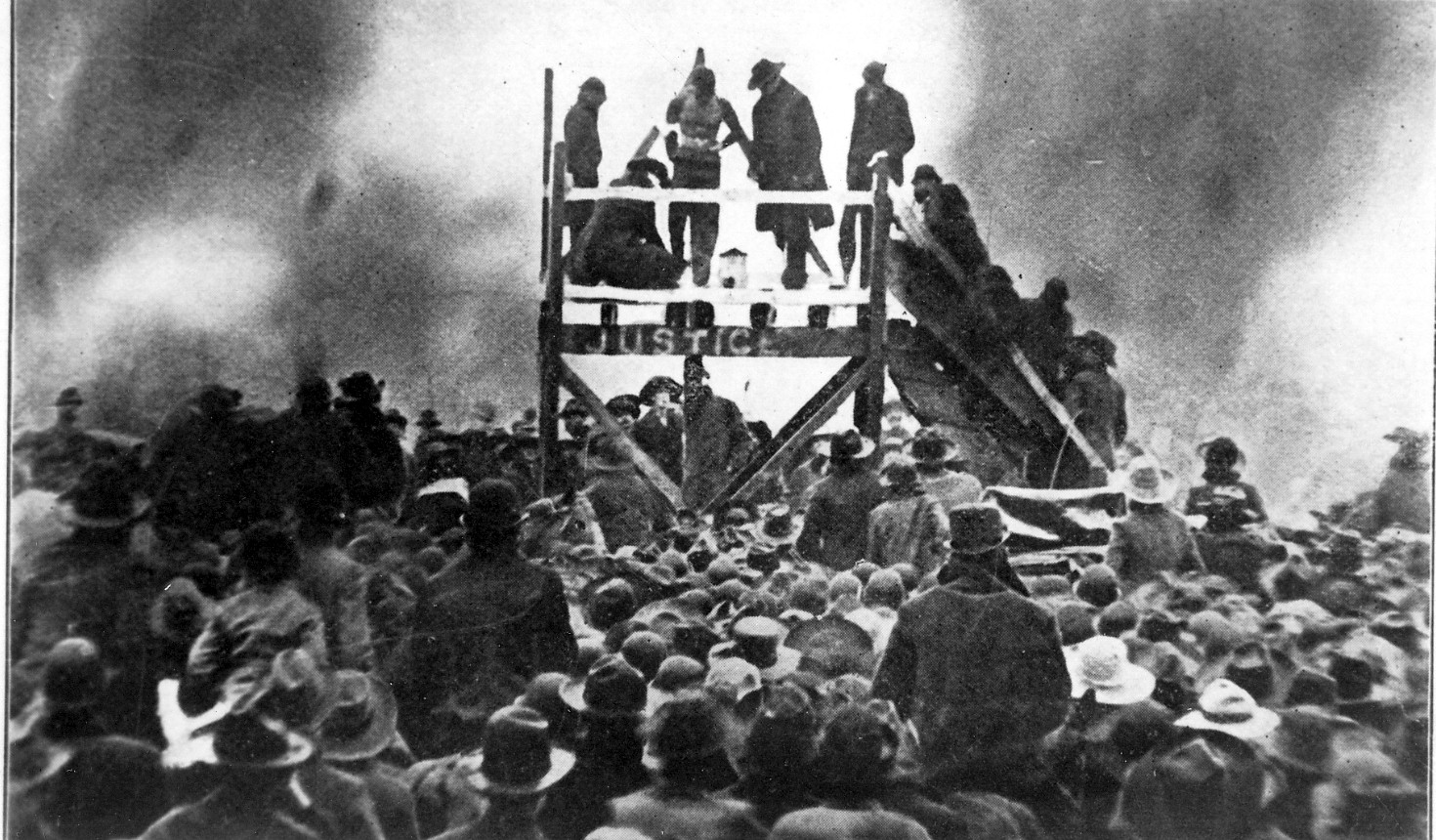
 A public lynching of Henry Smith, a Black, Paris USA

In late December 2008 a small group of scholars in Australia marshalled by Michael Roberts secured a research grant and conduced a workshop on “Sacrificial Devotion: the LTTE and Beyond.” this cluster included such figures as Professor Riaz Hassan, Dr. Daya Somasundaram, De Bea Trefalt, Dr Rohan Bastin, Clive Williams, Dr Carl Thayer and Shyam Tekwani. It also incorporated several postgraduate students.


 Mob, Borella junction, 24/25 July 1983- Pic by Chandragupta Amarasinghe

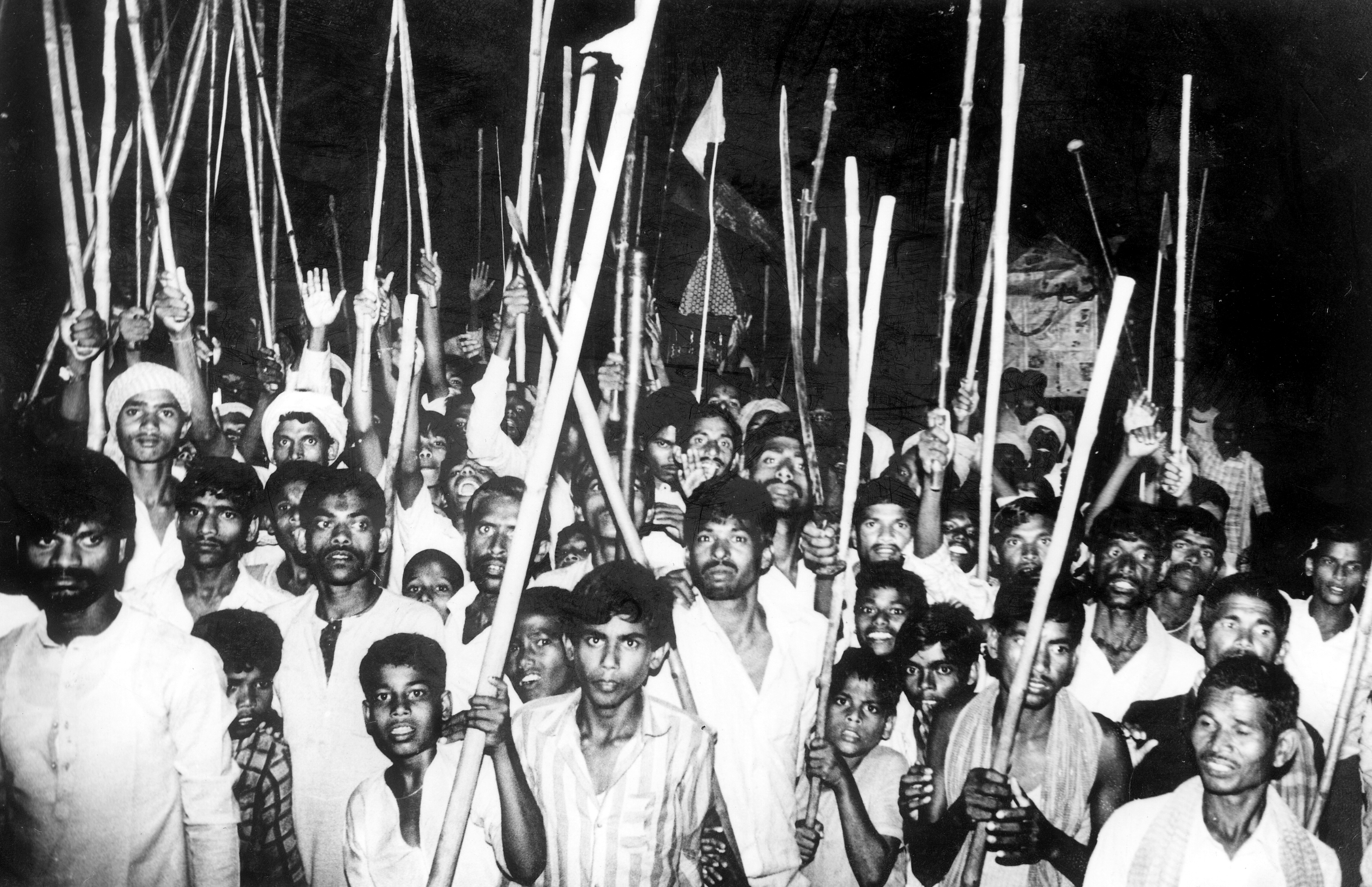
Hindu mob assembled at night, Bhagalpur Pogrom, October 1990 –Photo by Krishnan Murari Kishan for PANA-India, 28 October 1990

 One student was Daniel Nourry whoso was researching martyrdom in medieval Europe. Spurred on by Nourry, after the discussions Michael Roberts proceeded to establish a web site devoted to the theme of “Sacrificial Devotion and Virulent Politics.” He was aided materially by Faye Ruck-Nightingale (in Lanka then) and Vasee Nesiah (in Melbourne), two IT buffs who kept the motors running. Continue reading

Leave a comment

Filed under cultural transmission, historical interpretation, life stories, Sinhala-Tamil Relations, terrorism, world events & processes