Shelling Suffering of the Tamil People, 1990-91 – Ben Bavinck

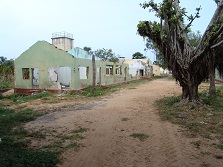
 Uriyan lagoon crossing from Jaffna, December 1991 -Pic from Bavinck’s book

Whatever the veracity and authenticity of Niromi de Soyza’s Tamil Tigress, there is one motif about life in the Jaffna Peninsula in the mid-1980s which is quite correct: this is when she speaks of the “random bombing” or shelling to which people in the region were subject. During the time of Eelam War I this shelling would have been from artillery fired from the Jaffna Fort, the military complex at Palaly or naval ships. Or, alternatively, it would have been from aerial strikes. This feature was again reproduced during the time of Eelam War II (1990-1996) and thereafter in the domains controlled by the LTTE Since neither the Sri Lankan services nor the IPKF (October 1987-late 1989) had UAVs, it is probable that most such bombardments were indiscriminate in their effects even if those directing the gunfire were aiming at some target associated with the militant Eelamist outfits.

Apart from the testimony of Tamil people and whatever records are available in government hospitals and the Jaipur Centre for amputees in Jaffna, we now have the diary records kept by Ben Bavinck which have been made available through the energy of the UTHR personnel and the publishing firm, Vijitha Yapa Publications based in Colombo. The first volume covering the period August 1982-October 1992, is in print as Of Tamils and Tigers:  A Journey through Sri Lanka’s War Years, (Colombo, Yapa, 2011, ISBN 978-0-95664411-1-3). Because it is a detailed day-by-day account it complements the work of the various UTHR publications. Continue reading

4 Comments

Filed under accountability, atrocities, authoritarian regimes, cultural transmission, life stories, LTTE, military strategy, politIcal discourse, power politics, Sinhala-Tamil Relations, sri lankan society, Tamil civilians, Tamil migration, tamil refugees, Tamil Tiger fighters, unusual people, war crimes, world events & processes

From Tsunami Medical Logistics to IDP Camp Medical Aid, 2004-09; Q and A with Dr Herath

From Tsunami Medical Logistics to IDP Camp Medical Aid, 2004-09

Speaking at Adelaide Universityon one occasion the Australian Ambassador, French, stressed that an experienced disaster relief team from Australia played a critical role in coordinating information and logistics for the massive task of relief and recovery in Sri Lanka after the tsunami of 26 December 2004. I do not have those details. But I can now reveal to those interested how a central coordinating unit of medical personnel played a critical role in organising the medical relief work in the coastal regions of the southwest, south and east that were hit by the tsunami and thereafter directed the tasks associated with re-building the institutions and other medical services that had been destroyed by the waters.

Dr. Hemantha Herath was assigned to the Health Desk of the Disaster Preparedness and Response Division (DPRD) of the Ministry of Health on 28 December 2004, while the Tsunami Rehabilitation Unit was also set up at about the same time with Dr. Thushara Ranasinghe as Coordinator, Planning) and Dr. Eeshara Vithana as Coordinator, Operations. The DPRD and TRU together directed the tsunami relief and re-establishment tasks. Their duties were extended in 2007-09 to handling the logistical requirements of drugs and equipment for the medical aid that was being provided to the Tamil refugees in the Eastern Province by personnel by local and foreign NGOs.

Kattankudy district hospital completely destroyed

Setting up a Field Hospital, Zone 2, 21 April 2009  –Pic by Donnie Woodyard

For a number of reasons Herath delayed his sabbatical leave till late 2008 when he eventually proceeded to UK. The unit was still functioning however (now downsized and housed within the offices of the Ministry of Health). The central point is that an experienced team of co-ordinators was at hand when the issue of Tamil IDPs from the north developed in late 2008/early 2009 after a large mass of people were assembled in the Menik Farm camps near Chettikulam over a period of time and especially in April-May 2009. They undertook the duties of (a) marshaling and organizing the erection of temporary health centres within the camps; (b) selecting and assigning doctors, nurses and other staff to service the camps; (c) distributing the equipment and drugs required for the medical centres; and (d) bolstering the pre-existing medical services within Vavuniya District so that they could assist the IDP camps in the handling of more serious cases. Continue reading

7 Comments

Filed under australian media, disaster relief team, IDP camps, life stories, Rajapaksa regime, reconciliation, rehabilitation, Sinhala-Tamil Relations, sri lankan society, Tamil civilians, Tamil migration, tamil refugees, unusual people, welfare & philanthophy, world events & processes

Blake adds to the pressure mounting upon Sri Lanka

IRIN NEWS, 13 September 2011

The failure of a national accountability commission could add to calls for an international inquiry, a top USdiplomat warned on 14 September in Sri Lanka. “If it [a national inquiry] is not a credible process, there will be pressure for some sort of alternate mechanism,” Robert Blake, US Assistant Secretary of State for South and Central Asia, said at the conclusion of a three-day visit to the island nation. Blake, who met President Mahinda Rajapaksa and ministers, noted, however, that Washington would wait for the release of the final report of Sri Lanka’s Lessons Learnt and Reconciliation Commission (LLRC) [ http://reliefweb.int/node/354905 ], the body appointed in May 2010 to investigate the conduct of the final days of the war with the Liberation Tigers of Tamil Eelam (LTTE), before passing judgment. The report is due in November.

According to a UN panel report http://www.un.org/News/dh/infocus/Sri_Lanka/POE_Report_Full.pdf ], released in April, both government forces and the separatist LTTE conducted military operations with flagrant disregard for the protection, rights, welfare and lives of civilians and international law during the final months of the war. Continue reading

Leave a comment

Filed under accountability, american imperialism, authoritarian regimes, democratic measures, Indian Ocean politics, LTTE, power politics, propaganda, Rajapaksa regime, Sinhala-Tamil Relations, truth as casualty of war, UN reports, world events & processes

A Letter to Sanath from a Disgruntled Matara Voter

Andrew Fernando, whom you can get to know better at  The Pigeon and here

Dear Mr Jayasuriya,

Pic by AFP

In April 2010 you were elected to office as the Member of Parliament for the Matara district, in which I live. At the time you were full of promises and the electorate was full of hope for you. “I’d like to give back to society,” you said. “Man of the people,” said we, in turn. However, over the last year and a bit, there have been a few things bothering the people of Matara. You seemed completely preoccupied.

First there was the World Twenty20 brouhaha – you left for three weeks, scored about two runs, and then returned. It must have been the least productive foreign visit in the history of politics, but we were willing to cut you a break. Then there was the awkwardness of the campaign to be included in the World Cup squad. It didn’t end well for you, but we stuck in there. Finally there was the trip toEnglandfor your farewell game, which we were overjoyed about because we thought you’d finally stop worrying about cricket and focus on your political duties. Continue reading

Leave a comment

Filed under accountability, citizen journalism, democratic measures, disparagement, life stories, martyrdom, pilgrimages, politIcal discourse, rehabilitation, sri lankan society, truth as casualty of war, unusual people

Melbourne hosts Mental Health Practitioners from Vietnam and Sri Lanka

The Centre for International Mental Health is hosting 29 delegates from Sri Lanka and Vietnam to participate in the 10th International Mental Health Leadership Program1 from 5th-30th September2011 as part of mental health system development programs in both countries. These lectures will  highlight the impressive work of our colleagues. It is open to the public via previous arrangement. This gathering will be held at 12 – 26 September 2011 at the Centre for International Mental Health, Melbourne School of Population Health Basement Theatre 1, School of Population Health,207 Bouverie St, Carlton.

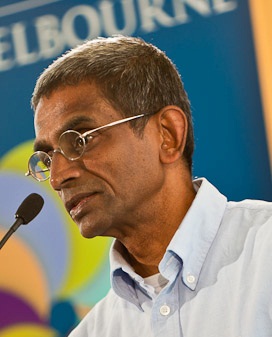
Pic = Daya Somasundaram

Programme:

Monday 12 September 2011, 5.30–6.30 pm Friday 16 September 2011, 5.30–6.30 pm

Dr To Xuan Lan (National Psychiatric Hospital No.1,Vietnam)An overview of Vietnam Mental Health System

Friday 16 September 2011, 5.30–7.30 -pm 

Dr Prasantha De Silva (Ministry of Health, Sri Lanka): A review of implementation of the Sri Lankan National Mental Health Policy and its way forward

Wednesday, 21 September 2011, 5.30–6.30

Mrs Thi Thu Thao Nguyen (from VVAF) :   VietnamVeterans of America Foundation and the expanding role of NGOs in Vietnam Continue reading

2 Comments

Filed under accountability, IDP camps, reconciliation, rehabilitation, Sinhala-Tamil Relations, sri lankan society, Tamil civilians, unusual people, voluntary workers, welfare & philanthophy, world events & processes

“Just Yesterday” … 9/11 was JUST YESTERDAY

“Just Yesterday” … said several fireman from the New York Fire services when interviewed recently … …  as revealed in the Channel Nine film on 9/11 last Sunday, where remarkable footage by the Frenchmen Jules and Gideon Naudet was shown as they filmed the firemen in the foyer of the World Trade Centre and its environs.

Since this tragedy occurred in the BIG APPLE and in Big America, it is, of course, BIG NEWS …. and may well overshadow the scenes on 26 December 2004

 along the coast of Acheh…..

 … and Arugam Bay and Kalmunai inSri Lanka

 …. and Phi Phi and Phuket inThailand.

The world scale in media power is determined by the world scale of super power……So we must be thankful for AL- JAZEERA

ALSO SEE http://www.flixxy.com/japanese-tsunami-viewed-from-a-car.htm

Leave a comment

Filed under Al Qaeda, american imperialism, suicide bombing, terrorism, unusual people, world events & processes

A Verbal Joust between a Tamil Nationalist and a Thuppahi Mongrel

Michael Roberts

Early in September I circulated an item describing efforts mounted by private enterprise in cooperation with the Sri Lankan state (military as well as government agents) to alleviate the life world of Tamil people being re-settled in the northern Vanni – a continuation of efforts in the IDP camps at Menik Farm in 2009 – through the establishment of psycho-social units working on the mental health of children in particular. Clearly, this note and its documents were part of the empirical terrain relevant to the propaganda war raging since early 2009.

 It drew a sharp response from a Sri Lankan Tamil of my generation writing to one of my friends. I have responded with a riposte. This exchange was circulated by email to those who had received the original item on “Mental Health Facilities for the Tamils at the IDP Camps and Now for Those Being Resettled … Reports from Manori Unambuwe.” However, a request from Victor Melder has prompted me to make this exchange more widely available.

I do so for several reasons. Firstly, as backdrop, we must note that Anton Chelvarājah is obviously of my generation – one that reached adulthood in the 1950s and 1960s. Secondly, in mistaking me for a Burgher, he proceeds on a disparaging course of a sweeping character that reveals his mix of caste and ‘racist’ prejudices tinged perhaps with hierarchical class airs (via his use of malicious rumour to describe SWRD Bandaranaike’ supposed bloodline).

Now, this latter feature is precisely the ideological fusion of caste ideology antipathetic to the mixing of blood on the one hand and on the other, the racist thinking of West European origin seeking to stamp its dominance in the course of imperial expansion from the sixteenth century onwards. I identified this current of thinking among the Sinhala nationalists of the late 19th and 20th centuries during the research work that led to the central chapter on “Pejorative Phrases: The Anti-Colonial Response and Sinhala Perceptions of the Self through Images of the Burghers,” in Roberts, Raheem and Colin-Thomé, People Inbetween: The Burghers and the Middle Class in the Transformations within Sri Lanka, 1790s-1980s. Continue reading

1 Comment

Filed under cultural transmission, disparagement, LTTE, politIcal discourse, propaganda, racist thinking, Rajapaksa regime, reconciliation, rehabilitation, Sinhala-Tamil Relations, Tamil civilians, Tamil migration, truth as casualty of war, violence of language, world events & processes

Women as Perpetrators, Planners, and Patrons of Militancy in Kashmir

Swati Parishar, in Studies in Conflict and Terrorism, 2011, vol. 34, pp. 295-317.

Abstract: The Kashmir case is a conundrum in the study of women’s roles in religio-political militancy. While traditional social structure and gendered hierarchies have been retained,
public spaces have also been available to women to don more political and militant roles. This article looks at the multiple roles of women in the militancy in Kashmir and the discourses around them. Women’s participation in the militancy has not found any mention in the nationalist narratives and Kashmiri women struggle to claim their share in the contemporary political discourse. Ambiguities remain about how the male dominated Kashmiri nationalist and conflict discourse may have influenced inclusions and exclusions. Through a case study based on interviews conducted in Kashmir, this article argues that women’s violent activities or their support to the militancy is altogether excluded or maneuvered to preserve existing gender norms and patriarchal traditions. This has dangerous implications as it tends to exclude women’s voices in the peace processes. Continue reading

1 Comment

Filed under female empowerment, gender norms, historical interpretation, life stories, military strategy, politIcal discourse, religious nationalism, terrorism, women in ethnic conflcits, world events & processes

Australia-bound trawler intercepted by Sri Lankan Navy

ABC News

The Sri Lankan navy has intercepted a boat carrying 40 people headed forAustralia, as authorities inColombo crack down on illegal migration rackets. People smugglers in Sri Lanka charge about $5,000 for a risky, one-way journey to Australia, but the navy has stepped up patrols to stop migrants illegally leaving the island’s shores. “Those arrested are all Sri Lankans, who had set off on their journey in a fishing vessel from Negombo town just north of Colombo, said navy spokesman Commander Kosala Warnakulasuriya. Boats from Sri Lanka are believed to take around three weeks to travel to Australia, although some migrants travel by air to Indonesia and then take rickety wooden vessels to the Australian coast.

The Australian High Court last month banned the Federal Government’s plan to send 800 asylum-seekers to Malaysia. Labor’s new border protection policy – which could include changing the Migration Act – will be put to Cabinet on Monday morning before it’s taken to a special Caucus meeting.

The Greens have accused the Federal Government of trying to bypass international law in a bid to process asylum seekers offshore. “What we are seeing here is Julia Gillard moving asylum seeker policy to the right to the nasty side of John Howard,” Greens leader Bob Brown said. “It’s very clear that Julia Gillard and Tony Abbott are edging toward an unholy alliance on immigration to get around international law to allow offshore processing of asylum seekers coming to this country. It is very clear that’s illegal.” Continue reading

1 Comment

Filed under asylum-seekers, australian media, democratic measures, life stories, LTTE, people smugglers, Sinhala-Tamil Relations, sri lankan society, Tamil civilians, terrorism, world events & processes

Val Daniel’s Introduction of Ben Bavinck and Ben’s Diary over the Years of Conflict in Lanka

E. Valentine Daniel, August 2010

Modern warfare, by any measure, is a display of excess; but the excesses just before the end of wars—the excess of inhumanity, indiscriminate use of force, a frenzy of unmatched cruelty, wanton destruction and devastation, blind firepower, unworldly carnage followed by gratuitous torture as well as generalised infliction of pain—exceed everything that comes before. If this was true at the end of the American Civil War and at the end of the Second Battle of the Marne,  in Hiroshima and Nagasaki, and Dresden at the end of World War II,then it was also true in the far less infamous 27-year old war between the Sri Lankan state and the Liberation Tigers of Tamil Eelam, which ended on 18 May 2009.

Bavinck with Tiger ‘boys”  

The bang with which it ended on the streets of the capital city of Colombo was mightier than the bang with which it ended on the battlefield of Mullaitivu; while all the unwilling and frightened children whom the LTTE, at their final hour, had recruited with bravado, didn’t even have a chance to whimper. They were mowed down. It is worth noting that the OED finds that in American slang, in kinship with the Indian hemp, bhang, “bang”, also describes the effect of a hallucinogenic   drug, such as cocaine. Such was the victors’ jubilation on the streets of Colombo after the war had ended: other-worldly.

 This war was called a “civil war,” which is an oxymoron, a violence of language upon the common Latin root, civilis, from which have issued citizen, civic, civility, civilization. How paradoxical, obscene, wrong and insulting to both savage and beast that the “civilized” (and who would deny that Tamils and Sinhalese belong to a great and old civilization?) choose to qualify their own extreme indulgences in violence as “brutal” or “savage”. In fearsome symmetry, the end of the war resembled its beginning. Once we discount the hundreds of “first causes” of the civil war, hypostasised and hypothesised by hundreds of scholars, politicians, commentators and citizens, we may mark the beginning of the Sri Lankan civil war as the 23 July 1983, the day the display of hatred – a spectacle in its own right, a literal flaring up of violence, arson and mayhem, stoked by a government charged with protecting its citizens, which unleashed a pogrom against the Tamil-speaking minority – that swept through the South as an angel of death. The beginning was as grotesquely carnivalesque as the end. But if there was an excess of cruelty during these moments, there were also extreme acts of kindness. There are many accounts of Sinhalese soldiers refusing to shoot to kill, touched to the quick by the law of karma and the Buddhist concept of karunava. Many are the accounts of priests and nuns, at the risk of being fired at from behind, who secreted children, women and the feeble to freedom from the spit of land where they were trapped with the LTTE. Some LTTE cadres themselves, coming to terms with the odds they faced, protected the stealthily escaping trickles of civilians. Why is it so difficult to admit to one’s own enemy’s virtues? The balanced account of Ben Bavinck’s diary forces us to examine this selfcensure Tamils and Sinhalese impose on themselves. Continue reading

9 Comments

Filed under accountability, citizen journalism, historical interpretation, Indian Ocean politics, liberation tigers of tamil eelam, life stories, LTTE, military strategy, prabhakaran, reconciliation, Sinhala-Tamil Relations, sri lankan society, Tamil civilians, Tamil Tiger fighters, terrorism, unusual people, world events & processes