India, China and Rest of the World

Sumanasiri Liyanage, in The Island, 19 sept 2011

Many seem to ask if Sri Lanka is moving towards China away from India. Those who answer the question in the affirmative hold two opposite views. While the first group seems to be happy about Sri Lanka’s increasing ties, economic and otherwise, with China, the other appears to see it as a danger because our closer ties with China would result in antagonizing India and the West. Sri Lankan foreign policy, especially when the UNP was in power, was oriented towards the West. Although the SLFP-led governments adopted more balanced foreign policy regime, they always valued the importance of close links with the USA and its allies. During the past six years, we have witnessed a kind of paradigm shift in the Sri Lankan foreign policy placing more emphasis on the countries in the region. As I have argued on many occasions, this is a positive change. Where could India and China be located in this new foreign policy shift? Can we afford to make a choice on this issue? This issue is raised by many commentators in recent times although not in explicit terms. Continue reading

1 Comment

Filed under historical interpretation, Indian Ocean politics, LTTE, power politics, Rajapaksa regime, Sinhala-Tamil Relations, war crimes, world affairs, world events & processes

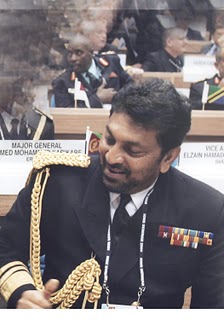
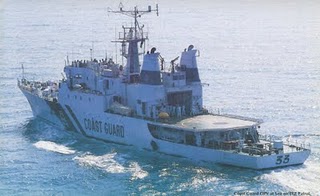
The Sri Lanka Navy’s Role in the local & global context with an emphasis of future strategies

Wasantha Karannagoda,

SEE http://www.srilankaguardian.org/2008/05/role-of-sln-in-local-global-context.html

AND http://lankanavy.blogspot.com/2008_09_01_archive.html

  AND http://en.wikipedia.org/wiki/Sri_Lanka_Navy

Leave a comment

Filed under historical interpretation, Indian Ocean politics, life stories, LTTE, military strategy, power politics, Sinhala-Tamil Relations, sri lankan society, terrorism, world events & processes

Gone missing in Sri Lanka –The Rule of Law

Shanie in the Island, 16 September 2011

“The piously belligerent army of Hindu politics would rather take us away from engagingly thoughtful discussions and would have us embrace instead their much-repeated public proclamations, for example that Rama, the epic hero, is an incarnation of God; that all Hindus worship him; and that he was born on a well identified plot 900,000 years ago. We are thus not allowed to see the Ramayana as ‘a marvellous parable’ (as Rabindranath Tagore saw it) but as a historical document which cannot be questioned. It is also taken to have enough legal status to give actively destructive Hindu politicians a licence to tear down a place of worship of other people to build a temple to Rama,in celebration of his alleged birth exactly there.”

In 1992, a mob of Hindutva fanatics destroyed the Babri mosque inAyodhya,Indiaclaiming that it was built on the sacred spot of Rama’s birthplace. Many liberal minded Indians condemned that action but were unable to reverse the action of the mob who not only took the law into their own hands but also instilled feelings of deep hurt and insecurity in a religious minority. The critical comments quoted above are from Nobel Laureate Professor Amartya Sen’s thoughtful collection of essays ‘The Argumentative Indian’ published a few years ago. Continue reading

Leave a comment

Filed under accountability, authoritarian regimes, citizen journalism, democratic measures, life stories, politIcal discourse, Rajapaksa regime, world events & processes

25 million died in Japan-inspired Asia-Pacific Wars between 1931 and 1945

Rowan Callick, in The Weekend Australian, 17-18 September 2011, under different title: “Manchurian ties bind ol’ blue eyes, blue lotus and boy king”

They are all linked with Manchuria in northeast China, which is the site of an important anniversary tomorrow that has prompted numerous films, conferences and speeches. On September 18, 1931, a Japanese army lieutenant, Kawamoto Suemori, laid dynamite near Liutiao Lake, along a line of the South Manchuria Railway owned by the Japanese government, and detonated it at 10.20pm. He did a poor job. Five minutes later, a train from Changchun steamed across the dynamited section of track, and arrived safely in Mukden, present-day Shenyang, at 10.30pm. But the pretext had been established for a war in which 25 million people, mainly civilians, died throughout Asia and the Pacific islands – and in Australia — before it ended in 1945. Continue reading

Leave a comment

Filed under accountability, life stories, military strategy, politIcal discourse, power politics, racist thinking, war crimes, world events & processes, Zen at war

Recent Works on Sri Lanka’s Ethnic Conflict

Asoka Bandarage, The separatist conflict in Sri Lanka, terrorism, ethnicity, political economy, London & New York, Routledge, 2009, ISBN 0-415-77678-3 (hbk) & 10-203-88631-3 (ebk) 279 pp

N. Manoharan, Democratic dilemma. Ethnic violence and human rights in Sri Lanka, New Delhi, Samskriti,  2008, 279 pp, (pbk) ISBN978-81-87374-50-3

MR Narayan Swamy, The Tiger vanquished. LTTE’s story, Sage Publications, India, 2010 189 pp, ISBN 978-81-321-0459-9 (pbk)

 Ana Pararajasingham (ed.)  Sri Lanka: 60 years of independence and beyond, AMM Screens, Chennai, for Centre for Just Peace and Democracy, 2009, 621 pp, with articles by Lionel Bopage, Neil de Votta, Bruce Kapferer, John Gooneratne, Dagmar Helmann-Rajanayagam, David Rampton, Peter Schalk, Kristian Stokke, Jayampathy Wickramaratne among others.

Michael Roberts, Fire and Storm. Essays in Sri Lankan Politics,Colombo: Vijitha Yapa Publications, 2010 … ISBN 978-955-665-134-8… 336 pp, 33 illustrations

Michael Roberts, Potency, Power and People in Groups, Colombo, Marga Institute, 2011, 128 pp and 78 pp illustrations, incl. of rare images (pbk), ISBN 978-955-582-129-2

Anton Sebastian, A Complete Illustrated History of Sri Lanka, 696 pp, 444 illustrations

Gordon Weiss, The Cage, Pan Macmillan Australia, 2011 … 352 pp, 24 illustrations

                                             SOME ARTICLES

Kumar Reupesinghe, “Ethnic conflicts in South Asia: the case of Sri Lanka and the Indian Peace-keeping force (IPKF),” in Subrata Mitra (ed.) Politics of South Asia,  volume V,  London, Routledge, 2009, pp.  315-35.

Daya Somasundaram, “Collective trauma in the Vanni — a qualitative inquiry into the mental health of the internally displaced due to the civil war in Sri Lanka,” International Journal of Mental Health Systems, 2010 ….This is an Open Access article distributed under the terms of the Creative Commons Attribution License (http://creativecommons.org/licenses/by/2.0), which permits unrestricted use, distribution, and reproduction in any medium, provided the original work is properly cited].

Daya Somasundaram, “Parallel Governments: Living Between Terror and Counter Terror in Northern Lanka (1982-2009),” Journal of Asian and African Studies, 2010, 45: 568-583, doi:10.1177/0021909610373899; http://jas.sagepub.com/content/45/5/568.abstract

 Symbolic burning of DC bill, late 1960s

ALL IMAGES are reproduced from the book Potency listed above. The signature image is a depcition of the Kotahena Riots, 1883.

2 Comments

Filed under anton balasingham, atrocities, authoritarian regimes, Eelam, fundamentalism, gordon weiss, historical interpretation, Indian Ocean politics, island economy, language policies, Left politics, liberation tigers of tamil eelam, life stories, LTTE, martyrdom, political demonstrations, prabhakaran, Rajapaksa regime, religious nationalism, Sinhala-Tamil Relations, sri lankan society, Tamil Tiger fighters, terrorism, trauma, violence of language, world events & processes

Westminster debates history and human rights in Sri Lanka … and India

Extracts from House of Commons debate on Human Rights on the Indian Subcontinent

James Wharton (Stockton South) (Con): We have already heard much discussion today of the value of human rights. Human rights are indivisible, self-evidently of great value and internationally applicable, as the hon. Member forSlough (Fiona Mactaggart) explained rather more eloquently that I will attempt. Human rights must also be understood in context—the context of where a country has been and where it is trying to go. That does not devalue the human right itself or the right to the individuals there. When we comment on other nations, their actions or the actions of those within them, we must have a full understanding of the historical context and of what has happened there to lead to the situation today. It is against that background that I would like to talk about Sri Lanka. Continue reading

1 Comment

Filed under atrocities, authoritarian regimes, disparagement, historical interpretation, LTTE, military strategy, news fabrication, politIcal discourse, Rajapaksa regime, reconciliation, rehabilitation, sri lankan society, truth as casualty of war, violence of language, world events & processes

John Balmond returns to Lanka …and Kalpitiya … in eco-friendly resort style

Nanda Pethiyagoda, in the Sunday Island 18 September 2011

“Sri Lanka is an incredibly beautiful island with fine people. I left my parents and job, my apartment and London to start this project in Kalpitiya and it has been a great adventure, very challenging and rewarding. The entire concept of Palagama Beach was inspired by how villagers live in this area, in keeping with nature that surrounds them. Kalpitiya is unique.”

This is how young John Balmond introduced his project of constructing and running a beach resort in Kalpitiya when I chatted to him seated, actually stretched out on a wide green mattress, leaning against cushions – large and roll ones, in one of the `ambalamas’ at Palagama. We faced the intensely blue water of the swimming pool designed on the infinity concept to be continuous to the eye with the sea, now roaring and a turbulent gray-y green.

Three friends and I decided to go spend a weekend in Kalpitiya before it became overcrowded with tourists once the season starts in November. One of my friends was advised to stay in Palagama Beach and we were very glad about our decision. She was in contact with the manager of the place, very helpful and efficient Amith Senarath. Three other resorts – Khomba House, Bar Reef and Udeki, with Palagama, fall under the destination Alankuda Beach.

Palagama is so very beautiful with its cabanas made of wooden slats, good wood used, John said, Continue reading

3 Comments

Filed under accountability, life stories, rehabilitation, unusual people, world events & processes

Iconic Moments of Reflection in Cricket

Courtesy of http://www.sharegoodstuffs.com/2011/09/crickets-most-iconic-moments.html

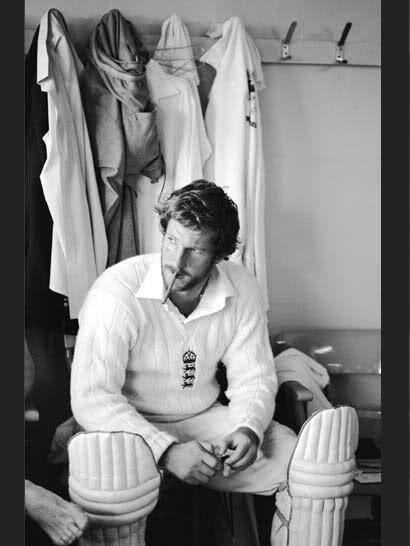
 Headingly Dressing Room, Leeds, 1981:England all-rounder Ian Botham is seen in a reflective mood, smoking a cigar in the dressing room. Botham had made 149 against Australia in the Leeds Test match of 1981. Despite following on, England turned the game around with Botham’s heroics with the bat and Bob Willis with the ball. England won the series often called “Botham’s Ashes” — arising from his complete dominance of Australia.”

 Flintoff consoles Brett Lee, Edgbaston, 7 August 2005: “at the end of one of the greatest Test matches ever, Englandall-rounder Andrew Flintoff broke away from the team celebrations to console the dejected Australian batsman Brett Lee. Lee and Michael Kasprowicz had brought Australia within three runs of an unlikely win before Kasprowicz got out. England went on to win the Ashes for the first time in 19 years, but this moment stood out and Flintoff was applauded for his thoughtfulness. Despite intense rivalry between the two teams, Flintoff and Lee remain mates.”


Leave a comment

Filed under accountability, life stories

Brimstone and Fire on the Cricket Field: Three Iconic Instances

Courtesy of http://www.sharegoodstuffs.com/2011/09/crickets-most-iconic-moments.html

 Windies pacemen vs Kiwi Umpires …….February 9, 1980, saw scenes that have rarely been seen on a cricket field. West Indies, on short tour to New Zealand, felt the umpires were biased. In the first Test in Dunedin, Michael Holding knocked over the stumps at the striker’s end after a caught-behind was turned down by umpire John Hastie. “This was not cricket and I didn’t have to be part of it. I was on my way to the pavilion, quite prepared not to bowl again, when Clive Lloyd and (Deryck) Murray persuaded me back,” Holding said. Later in the tour, Colin Croft shoulder-barged umpire Fred Goodall while running in to bowl. It marked the lowest point in the cricket relations between the two teams and the only incident where an umpire was assaulted by a player in an international game.”

 Lillee vs Miandad: “Pakistan’s Javed Miandad clashed with Australia’s Dennis Lillee in one of the most disgraceful incidents on a cricket field. Lillee and Javed collided as the batsman completed a run during the November 1981 Perth Test. Lillee proceeded to kick Javed on the leg to which Javed reacted angrily, threatening to hit the bowler with his bat. Umpire Tony Crafter stepped between the two as Lillee prepared to have another go at Javed. The blame for the incident was laid on Lillee by many experts. Former Australian captains like Bob Simpson and Ian Chappell condemned Lillee’s behaviour.” Continue reading

1 Comment

Filed under accountability, life stories

Wadsworth on Australia’s Humanitarian Task Force in Pakistan in 2010

Future Directions International conducted a Feature Interview conducted with Wing Commander Ross Wadsworth, titled Operation Pakistan Assist II:The most successful Australian deployment of a combined humanitarian task force,” which provides insights into the lessons learnt by the Australian Defence Force contingent that engaged in humanitarian assistance and disaster relief operations inPakistan in late 2010. The interview can also be downloaded directly from the Future Directions International website at: http://www.futuredirections.org.au/publications/fdi-feature-interviews.html

Those who have any comments, or would like to contribute to the work of FDI, should please feel to ring 61 8 9486 1046

Future Directions International (FDI) Pty Ltd

Leave a comment

Filed under australian media, Indian Ocean politics, rehabilitation, welfare & philanthophy, world events & processes