Category Archives: sri lankan society

Al-Jazeera’s Incisive Review of Sri Lanka’s Economic Crisis

VISIT https://www.youtube.com/watch?v=oTRohZFHffQ

“It’s not just the pandemic: Why Sri Lanka’s economy is in crisis | Counting the Cost” …. 31 Jult 2021

Sri Lanka’s finances are in a precarious state, but the economy was already in trouble before the COVID-19 pandemic. Between 2005 and 2015, Colombo borrowed billions from China, accumulating a mountain of debt. It was forced to hand over a port to a Chinese company after failing to keep up with payments. But Beijing is making more loans. Asia Frontier Capital’s Ruchir Desai explains why China and India are keen to help Colombo out. Elsewhere, crisis-hit Lebanon has its third prime minister in 12 months. Diana Menhem, managing director of civic organisation Kulluna Irada, tells us little will change with the same politicians in power. – Subscribe to our channel: http://aje.io/AJSubscribe – Follow us on Twitter: https://twitter.com/AJEnglish – Find us on Facebook: https://www.facebook.com/aljazeera – Check our website: https://www.aljazeera.com/

27,049 views

1 Comment

Filed under accountability, centre-periphery relations, China and Chinese influences, coronavirus, economic processes, foreign policy, governance, historical interpretation, island economy, life stories, modernity & modernization, politIcal discourse, Rajapaksa regime, self-reflexivity, sri lankan society, world events & processes

Adam’s Bridge? Evaluating the Legend

Patrick Ranasinghe, at elanka 2 August 2021, where the title runs thus: “Could This Be The Legendary “Magic Bridge” Connecting India And Sri Lanka? “

eLanka _ Could This Be The Legendary _Magic Bridge_ Connecting India And Sri Lanka_ – by Patrick Ranasinghe – eLanka

Location   The bridge starts as a chain of shoals from the Dhanushkodi tip of India’s Pamban Island. It ends at Sri Lanka’s Mannar Island. Pamban Island is accessed from the Indian mainland by the 2-km-long Pamban Bridge. Mannar Island is connected to mainland Sri Lanka by a causeway.

Continue reading

Leave a comment

Filed under Aboriginality, ancient civilisations, centre-periphery relations, economic processes, historical interpretation, Indian traditions, landscape wondrous, life stories, meditations, photography, sri lankan society, the imaginary and the real, travelogue, world events & processes

Sinhalaness in Pre-British Ceylon: Issues and Pathways

A Review Essay by Alan Strathern** dissecting a Book by Michael Roberts published in 2004

This item was located by Thuppahi in the web-site Colombo Telegraph on 26 December 2012 (see https://www.colombotelegraph.com/index.php/the-royal-we-sinhala-identity-in-the-dynastic-state/). However, it appeared initially in 2005 in the prestigious journal Modern Asian Studies,  39: 1013–1026.

AN INTRODUCTORY NOTE by Michael Roberts, 7 August 2021

This item is a review essay not a standard review. Alan Strathern is an accomplished historian who happens to be the son of a leading social anthropologist, viz., Marilyn Strathern of ANU and Cambridge University. You will find that his prose is as refined and clear-cut as demanding. After some hesitation, I decided to adhere to my normal policy of highlighting some parts of the text with blue colourfor the benefit of readers facing the difficulties posed by complex issues in historical sociology. On occasions I have also imposed a break in extra-long paragraphs. The illustrations too are my impositions intended to promote reader interest.

Continue reading

2 Comments

Filed under Aboriginality, ancient civilisations, architects & architecture, authoritarian regimes, British colonialism, British imperialism, Buddhism, centre-periphery relations, commoditification, cultural transmission, economic processes, ethnicity, hatan kavi, heritage, historical interpretation, insurrections, Kandyan kingdom, landscape wondrous, life stories, literary achievements, military strategy, modernity & modernization, nationalism, patriotism, performance, pilgrimages, politIcal discourse, Portuguese imperialism, religiosity, Saivism, self-reflexivity, sri lankan society, Tamil migration, unusual people, violence of language, world events & processes

A Death-Bed Declamation in Grief from Bishop Lakshman Wickremesinghe in September 1983

Text of the final Pastoral Letter written by the Anglican Bishop of Kurunegala, Rt. Rev. L Wickremasinghe, in September 1983 after the July 1983 Violence ……  [Bishop Lakshman passed away some weeks after this on October 23rd 1983] ………….. from http://dbsjeyaraj.com 28 July 2021, 9:28 pm

“The Tragedy is that it is Becoming Harder in 1983 for Sinhala Christians to Acknowledge that what was done is a GREATER Moral Crime than in 1958” …………….. Bishop Lakshman Wickremesinghe

Continue reading

4 Comments

Filed under atrocities, centre-periphery relations, chauvinism, communal relations, economic processes, education, Eelam, ethnicity, heritage, historical interpretation, insurrections, life stories, LTTE, politIcal discourse, reconciliation, religiosity, self-reflexivity, Sinhala-Tamil Relations, sri lankan society, Tamil civilians, the imaginary and the real, tolerance, trauma, Uncategorized, unusual people, world events & processes

Three Cricketers lined up for Hefty Punishments

Rex Clementine in Island, 29 June 2021, where the title is “Banned”

Sri Lanka Cricket’s Disciplinary Committee has recommended lengthy suspensions for three players who breached a bio-secure bubble in England last month that resulted in them being sent home halfway through the tour. Accordingly, Danushka Gunathilaka and Kusal Mendis with previous offences have been banned for two years while Niroshan Dickwella has been handed a suspension of 18 months. Each player also has been fined 25,000 USD for their offence.

A NOTE …the photo of the three players alienated the computer which rejected that shot !@#!$ … so this is shot of one… Dhanushka Gunatilleka

Continue reading

1 Comment

Filed under Aboriginality, disparagement, life stories, performance, sri lankan society, taking the piss, trauma, unusual people

Introducing Alan Strathern’s Work to Sri Lankan Aficianados

Alan Strathern’s first major work was Kingship and Conversion in Sixteenth-Century Sri Lanka: Portuguese Imperialism in a Buddhist Land. …. published in 2008 and since then he has extended his reach. Though in far too belated manner, Thuppahi here introduces his work to a Sri Lankan audience …. Begiining with a citation leading to CR De Silva’s review of his book on Sri Lanka….. and ending with his own introduction of self to the world in the Oxford University web site.

Continue reading

2 Comments

Filed under accountability, ancient civilisations, British imperialism, centre-periphery relations, cultural transmission, economic processes, education, governance, hatan kavi, heritage, historical interpretation, Indian Ocean politics, Islamic fundamentalism, island economy, Kandyan kingdom, landscape wondrous, life stories, modernity & modernization, nationalism, politIcal discourse, Portuguese imperialism, Portuguese in Indian Ocean, power politics, religiosity, self-reflexivity, sri lankan society, teaching profession, unusual people, world events & processes

The Skeins of Class bearing on the Threads of Sinhala Cultural Revival under the British

Uditha Devapriya, in The Island, 24 July 2021, where the title reads “Colonial Bourgeoisie and Sinhala Cultural Revival”

The colonial bourgeoisie in Sri Lanka did not form a monolithic class. They were divided horizontally as well as vertically: horizontally on the basis of income and inheritance, and vertically on the basis of primordial attachments, such as caste ideology. Various factors, mainly economic, conspired as much to unify the bourgeoisie as they did to divide them, distinguishing them by their homogeneity as much as by their heterogeneity.

Panadura Vaadaya

Continue reading

1 Comment

Filed under architects & architecture, art & allure bewitching, authoritarian regimes, British colonialism, Buddhism, centre-periphery relations, commoditification, cultural transmission, economic processes, education, historical interpretation, island economy, Kandyan kingdom, landscape wondrous, life stories, literary achievements, modernity & modernization, nationalism, paintings, patriotism, performance, politIcal discourse, religious nationalism, self-reflexivity, sri lankan society, unusual people

A Nine-Year Old Space Explorer –Megha Wijewardane of Adelaide

A Note from Christopher Duff-Tytler of Adelaide, 30 July 2021

Subject:  Great ambition for:- A 9 year old SriLankan origin, NASA ambassador in Australia.

I Just found out that this boy with SL parents lives in Adelaide…..Chris

1 Comment

Filed under landscape wondrous, life stories, performance, pilgrimages, self-reflexivity, sri lankan society, teaching profession, transport and communications, travelogue, unusual people, world events & processes

Ethnicity after Edward Said: Post-Orientalist Failures in Comprehending the Kandyan Period of Lankan history

Michael Roberts ... presenting a refereed journal article from the year 2001** as a foundation for reflection and fresh pursuits because it addresses the work of Edward Said, a renowned social theorist-cum-political scientist.

Edward Said  Leslie Gunawardena

Abstract: Disenchantment with the excesses of nationalist and ethnic claims in recent decades has directed the analysis of ethnicity presented in academic writings in recent decades.  Ethnicity is seen as pernicious, “primordialist” and “essentialist.”  Other scholars as well as nationalist spokespersons are castigated for reading the present into the past.  This line of criticism has entered the scholarship on the Indian subcontinent and been extended to surveys of the literature on the pre-British and British periods of Sri Lankan history.   Yet these critics themselves are governed by the either/or epistemology of 20th century rationalism.  They are unable to decipher the worldview and the political ideology that organised the socio-political order of the Kingdom of Sihale, better known as the Kingdom of Kandy.  Their bias is “presentist” and “modernist.”  With little patience for historical puzzles, their readings of the pre-British period are simple-mindedFor the most part they rely on the severely flawed interpretation presented in Leslie Gunawardana’s “People of the Lion.”  This dependence marks their ignorance.

** presented in Ethnic Studies Report, Vol XIX/1, 2001 … ICES and kindly supplied by Iranga Silva

Continue reading

Leave a comment

Filed under american imperialism, authoritarian regimes, British colonialism, Buddhism, centre-periphery relations, communal relations, European history, hatan kavi, heritage, historical interpretation, immigration, Indian Ocean politics, island economy, Kandyan kingdom, landscape wondrous, life stories, Muslims in Lanka, patriotism, politIcal discourse, population, Portuguese in Indian Ocean, power politics, self-reflexivity, sri lankan society, transport and communications, world events & processes

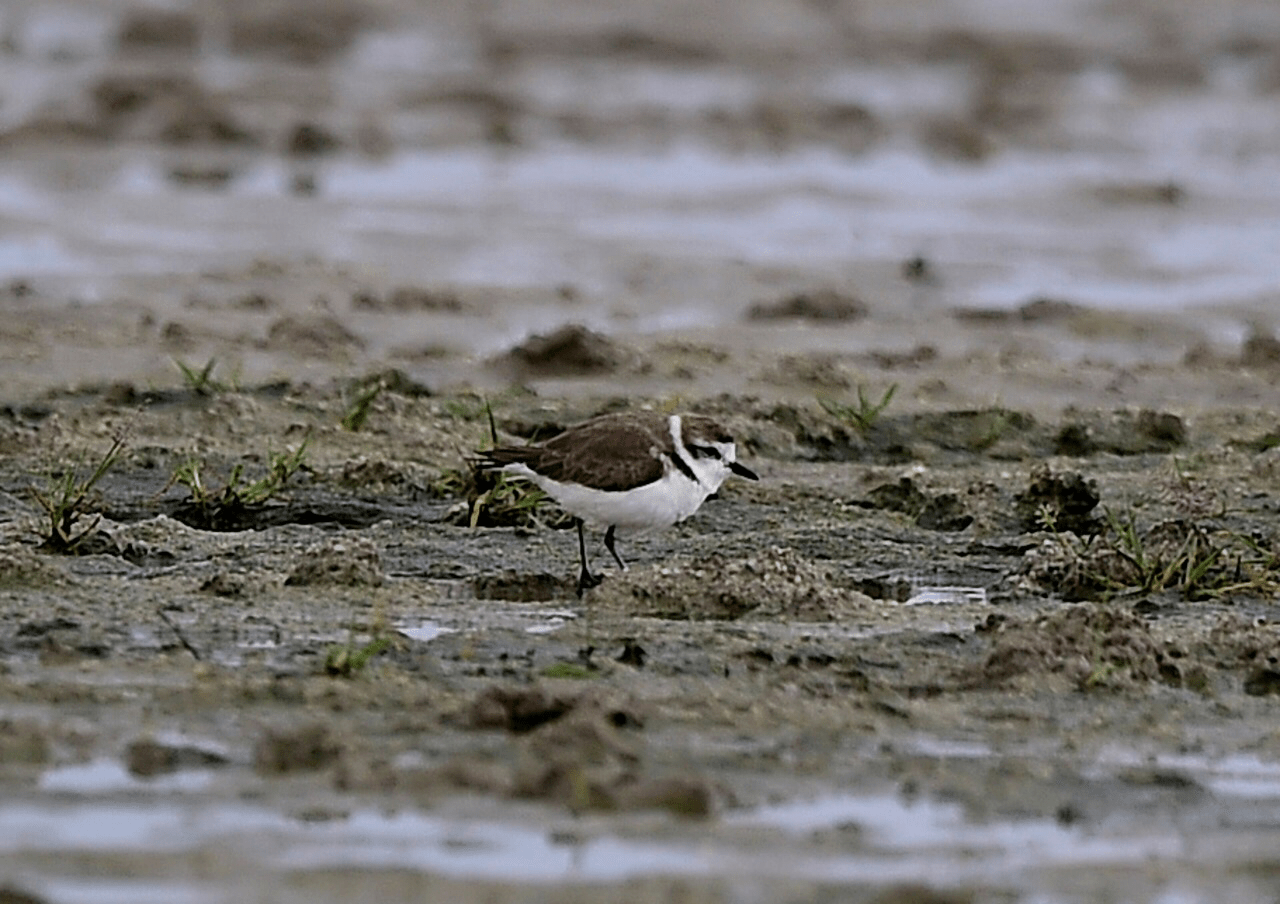
The Precious Landscape and the Beauties of Nature in Mannar …. Now Under Threat?

The Delights of Nature in Mannar

An ancient Baobab tree — a reminder of the links with Arab traders in the medieval and early modern eras

Continue reading

Leave a comment

Filed under accountability, centre-periphery relations, economic processes, environmental degradation, heritage, island economy, landscape wondrous, legal issues, life stories, politIcal discourse, power politics, sri lankan society, travelogue, truth as casualty of war, unusual people, welfare & philanthophy, world events & processes