
SEE https://www.youtube.com/watch?v=qJOJ8F7bxDI

 The Bridge On The River Kwai location: the military hospital: Mount Lavinia Hotel, Hotel Road, Colombo, Sri Lanka | Photograph: Mount Lavinia Hotel
SEE https://www.youtube.com/watch?v=qJOJ8F7bxDI
The Bridge On The River Kwai location: the military hospital: Mount Lavinia Hotel, Hotel Road, Colombo, Sri Lanka | Photograph: Mount Lavinia HotelUditha Devapriya, in The Island 12th & 19th August in two parts, with this title “Early 20th Century Buddhist Revival” …. https://ceylontoday.lk/news/a-short-note-part-1-early-20th-century-buddhist-revival AND https://ceylontoday.lk/news/a-short-note-part-2-early-20th-century-buddhist-revival
The colonial bourgeoisie in Sri Lanka did not form a monolithic class. They were divided horizontally as well as vertically: horizontally on the basis of income and inheritance, and vertically on the basis of primordial attachments such as caste ideology. Various factors, mainly economic conspired as much to unify the bourgeoisie as they did to divide them, distinguishing them by their homogeneity as well as by their heterogeneity.

Filed under art & allure bewitching, British colonialism, Buddhism, commoditification, cultural transmission, economic processes, education, ethnicity, heritage, historical interpretation, island economy, landscape wondrous, language policies, life stories, literary achievements, modernity & modernization, paintings, politIcal discourse, sri lankan society, transport and communications, unusual people, world events & processes
Geoff Wijesinghe, in Faz, 2 March 2002 where the title is “George Siegertsz: Once again to those days” …. kindly sent to Thuppahi by Clare Marie White from out of the blue skies.
George Siegertsz, who passed away in London last week at the age of 82, was one of the last of a generation of post-World War Two musicians. George was a regular at Lion House at the Bambalapitiya Junction. He was one of the motley group of young men who visited the popular eatery, which served more as a “cup tea punt” (a cup of tea and a fag) club where these youth chatted for long hours of this, that and the other.
Although the group comprised many toughs who walked around like pocket editions of Humphrey Bogart, George Raft and Spencer Tracy, the tough guys at the time of the silver screen, George Siergertsz was more interested in chatting and in music. He was the country’s number one whistler, a fine art and often his friends at Lion House, would gather round a table and listen to him whistling the popular tunes at the time.

 Erin De Selfa
The Richmond Sixty Club & Others
Richmond 60 Club Wishes Walter J. May Happy Birthday, 8th January 2021
 A Sixty Club Publication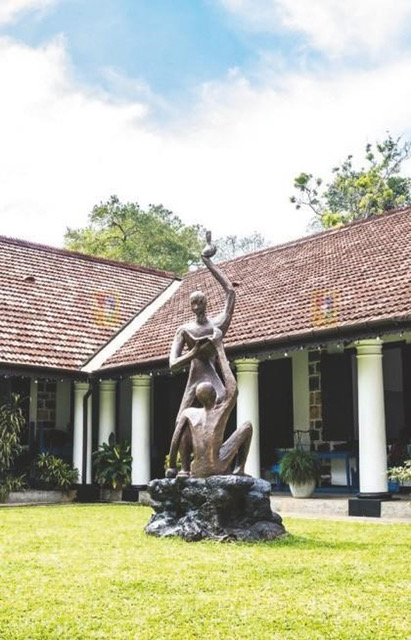
MESSAGE OF THE 6O CLUB PRESIDENT
As the President of the Richmond 60 Club, I am happy to write a few words for the special supplement issued to coincide with the 92nd birthday of Walter J. May on 08th January 2021.
Michael Roberts, responding in 1985 to a Review Essay by Susan Bayly of Cambridge University on his book on Caste Conflcist and Elite Formation, CUP 1982
Susan Bayly** has done me the honour of reviewing the book on Caste Conflict and Elite Formation: The Rise of a Karava Elite in Sri Lanka, 1500-1931 at considerable length.’ Her essay is appropriately entitled ‘The History of Caste in South Asia’. This title provides a clue to the interpretative pathways which have led her systematically to misunderstand the arguments within the book. No less problematical is her implicit belief in the possibility of constructing a composite picture of the caste system qua system on the basis of empirical data drawn from different regions, regions as widely different as Sri Lanka, southern India and western India. Let me elaborate this charge, and in doing so reiterate the arguments which I presented.
 Susan Bayly
Filed under British colonialism, caste issues, centre-periphery relations, commoditification, cultural transmission, economic processes, education, ethnicity, historical interpretation, Indian religions, Indian traditions, island economy, Kandyan kingdom, land policies, landscape wondrous, life stories, modernity & modernization, politIcal discourse, Portuguese imperialism, sri lankan society, transport and communications, unusual people, welfare & philanthophy, working class conditions, world events & processes
Michael Roberts

ONE: The Theme Tune and George Siegertsz
The mainline tale about the production process in Ceylon in the composition of the outstanding film The Bridge on the River Kwai – a film based on an actual wartime commando operation involving the destruction of a bridge being built with POW labour by the Japanese war machine in Thailand – can be read at https://thuppahis.com/2021/08/02/kitulgala-and-the-classic-movie-bridge-on-the-river-kwai/
Filed under art & allure bewitching, British colonialism, centre-periphery relations, heritage, historical interpretation, island economy, landscape wondrous, life stories, meditations, performance, photography, self-reflexivity, sri lankan society, the imaginary and the real, travelogue, unusual people, world events & processes, World War II and Ceylon
Piyasiri Wickramasekara, Chandrasena Maliyadde and HMG Palihakkara ++
It is with profound sorrow that we, the class of 1968 in the Faculty of Arts at the University of Peradeniya, came to know of the untimely departure of our great friend Dr. Cyril Paranavithana (Parane), just two days prior to his 75th birthday (28 July 2021) in New York, USA. The warm
greetings intended for this landmark birthday event had to be hurriedly turned into heartfelt condolences.

Filed under art & allure bewitching, charitable outreach, cultural transmission, education, ethnicity, heritage, historical interpretation, landscape wondrous, life stories, modernity & modernization, patriotism, performance, self-reflexivity, sri lankan society, teaching profession, travelogue, unusual people
Unknown Author** … in https://www.elanka.com.au/portuguese-sri-lankan-surnames-and-their-meanings-2/
The Portuguese arrived in Ceylon, or Ceilão, as they called it, by chance. In 1505, a fleet commanded by Lourenço de Almeida—the son of Francisco de Almeida, the first viceroy of Portuguese India—was blown into Galle by adverse winds. It was thirteen years later, in 1518, that the Portuguese established formal contact with the Kingdom of Kotte, ruled by Vira Parakrama Bahu, and were permitted to build a fort in Colombo.

Filed under centre-periphery relations, cultural transmission, demography, economic processes, education, governance, heritage, historical interpretation, Indian Ocean politics, Indian traditions, island economy, landscape wondrous, life stories, politIcal discourse, Portuguese imperialism, Portuguese in Indian Ocean, power politics, self-reflexivity, sri lankan society, transport and communications, travelogue, unusual people, world events & processes
Uditha Devapriya, in The Island, 31 July 2021, where the title reads “Round and About in Kurunegala”
Covering 65 kilometres, the road from Colombo to Ambepussa is fairly straight. From there it turns left and right, up and down. To get to Kurunegala via Ambepussa, you have to pass Alawwa and Polgahawela. Between these regions the terrain rises, offering you a glimpse of the hill country. Then the mountains recede from view, the mist settles, and the chaos of urban life returns. The shops teem with life, the clock-tower looms over you, and the heat rises. From afar, the faintest outline of Ethagala catches your eye. This is your first glimpse of Kurunegala.


Filed under ancient civilisations, art & allure bewitching, British colonialism, Buddhism, centre-periphery relations, cultural transmission, economic processes, heritage, historical interpretation, landscape wondrous, life stories, Sinhala-Tamil Relations, sri lankan society, transport and communications, travelogue
Chandra R. de Silva, aka “CR”, being the Inaugural Tessa Bartholomeusz Memorial Lecture, Department of Religion, Florida State University, Tallahassee, FL, delivered on March 4, 2002


Let me begin by thanking the Department of Religion and Florida State University for inviting me to deliver the inaugural Tessa Bartholomeusz Memorial Lecture. As many of you are aware, Tessa and I worked together in two academic projects in the last few years and we were part of a group that worked hard and successfully to set up an American Research Center in Sri Lanka. I miss her both as a scholar and a friend and thus, my appreciation for all you have done in her memory is immense.
Filed under art & allure bewitching, centre-periphery relations, discrimination, economic processes, ethnicity, governance, heritage, historical interpretation, Indian traditions, island economy, landscape wondrous, life stories, paintings, politIcal discourse, Portuguese imperialism, Portuguese in Indian Ocean, self-reflexivity, sri lankan society, transport and communications, travelogue, world events & processes
 thuppahi