Category Archives: reconciliation

What’s good for the goose isn’t good for the gander?

Renton de Alwis, in the Daily News, 4 May 2011

Brute forces of terrorist gangs blow up innocent people; be it at a public market, at places of religious worship (like the Temple of the Tooth of the Buddha in Kandy), in buses, trains, buildings of economic significance, airports or on roads (like we Sri Lankans had for nearly three decades) or at places where people gather for entertainment (Bali Hard Rock Cafe and the recent incident in Morocco). And if we know who they are that blow people and places, we are told by the ‘international community’ to talk to them and seek honourable political solutions.

 Central Bank in Fort, Colombo after bombing, 31 Jan 1996

Some even offer to be mediators in the process. And when some of these happen in the big cities of the world on the Western hemisphere, all systems are let loose to annihilate international terrorists, like the hunted killing of Osama Bin Laden announced on Monday this week I learnt of, upon near completion of writing of this column.

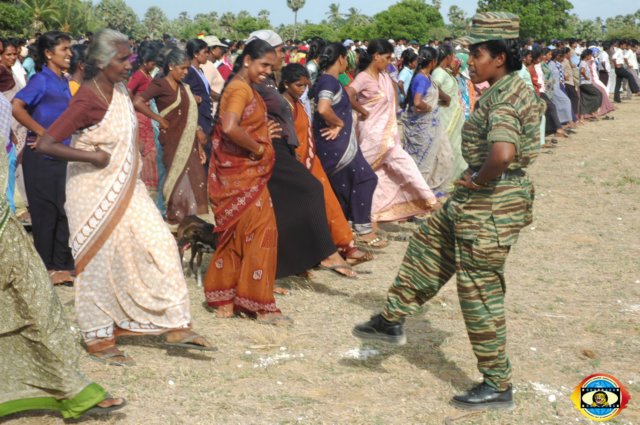
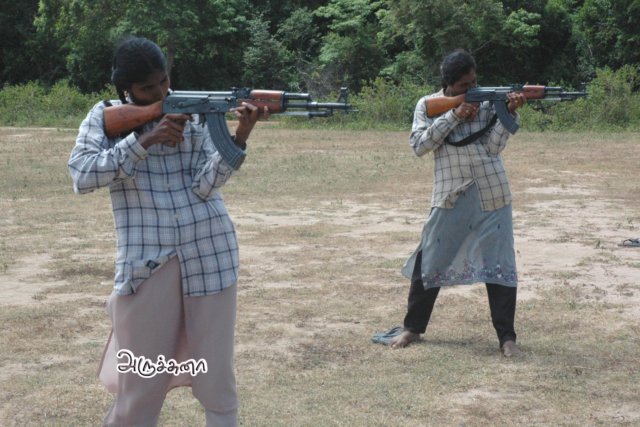
    Black Tigers marching, Kilinochchi                                                                  

 Maaveerar Cenotaph in replicaof Iwo Jima monument–location unknown

 Maaveerar thuyilam illam [‘cemetery’]

  Continue reading

Leave a comment

Filed under citizen journalism, historical interpretation, island economy, life stories, LTTE, power sharing, Rajapaksa regime, reconciliation, Sinhala-Tamil Relations, terrorism, world events & processes

Reconciliation Failures: Bitter Fruits of Procrastination

Somapala Gunadheera, in the Island, 3 may 2011

The Darusman Report has caused much embarrassment to us and made our motherland a target of international bickering. The legitimacy, the propriety, and the logic of the report are under scrupulous scrutiny. But I do not propose to enter that arena here. My purpose is to draw attention to the fact that things might not have come to the present catharsis if diligent attention was paid to the real problems of the Tamils soon after the end of the war.

It is an open secret that there is widespread disappointment and disillusionment about the inordinate delay in implementing urgent measures to bring about national reconciliation, as promised at the victory celebrations. This lethargy has caused much loss of face to the Government, nationally and internationally and resulted in substantial material loss to the country. The credibility gap created by the inaction is widening day by day. Lip service alone cannot bridge it convincingly. What is needed is prompt action. Continue reading

Leave a comment

Filed under power sharing, Rajapaksa regime, reconciliation, Sinhala-Tamil Relations, welfare & philanthophy

Sumanthiran interviewed: pleads for sincere approach from the Rajapaksa government

Mandana Ismail Abeywickrema,  in the Sunday Leader, 17 April 2011

The issues faced by the Tamil community and finding a political settlement will have to be done through discussions, says TNA Parliamentarian and Attorney at Law, M.A. Sumanthiran. In an e-mail interview with The Sunday Leader, Sumanthiran observed that the TNA was engaged in discussions honestly and sincerely with a view to resolving all issues. “There is no other way. We wish that the government too would show more sincerity and purpose in this matter,” he said. Speaking of looking for a political settlement beyond the 13th Amendment, Sumanthiran observed there was no need to discuss anything further than the 13th Amendment if it is the solution to the issue.

Continue reading

Leave a comment

Filed under citizen journalism, cultural transmission, power sharing, Rajapaksa regime, reconciliation, Sinhala-Tamil Relations

Sangakkaras visit St. Patrick’s College, Jaffna

Rev. Fr. Jero Selvanayagam, the Rector of St. Patrick’s College, expressed sentiments of happiness and excitement of the staff and students at the surprise visit of the Sri Lanka Captain. Rev. Fr. Rector said that it is a great moment of encouragement not only for the Cricket of the College but for everyone interested in Cricket. His visit to Jaffna is an encouragement for the the youth and the students are very inspired by his concern to his the College and meet. The Rector commended the Captain for his sterling qualities of leadership that had brought for the outstanding performance for the National Cricket Team.


The Sri Lankan Captain, Kumar Sangakkara was very much moved by the rousing welcome given to him by the students of the North and in his speech appreciated the upcoming talented cricketers from the North.

It is high time that we shed our differences and live together as a family belonging to Mother Lanka. I would be most happy to see soon cricketers from the North and East playing in the National Team and this will be a great symbol of unity in the country that could be fostered Continue reading

34 Comments

Filed under life stories, reconciliation, Sinhala-Tamil Relations, unusual people

Fire and Storm. Essays in Sri Lankan Politics, Volume One

by Michael Roberts is now in print.


 Anna Pupathi cut-out shrine

 young Pirapaharan


Pirapaharan falls

1 Comment

Filed under historical interpretation, Indian Ocean politics, island economy, LTTE, military strategy, reconciliation, Sinhala-Tamil Relations, suicide bombing, terrorism

Ben Bavinck’s Jaffna Diaries: Extracts in Himal

Ben Bavinck, Courtesy of HIMALSOUTHASIAN, February 2010

Bavinck with Tiger boys at Kalmunai Point, Pooneryn

Writer’s introduction: The Tamil Tigers started the war again on 11 June 1990, by attacking police stations in the Eastern Province. The Sri Lankan Army recaptured the districts of Batticaloa and Amparai, and drove the Tigers back behind the lagoon, which runs parallel to the east coast. While doing so, the army indulged in many atrocities against Tamil civilians. On 3 August, the Tamil Tigers attacked two mosques in Kattankudi, a largely Muslim town, killing 120 worshippers. After this, Kattankudi remained disturbed for a long time.

Boarding a ship in a cage

  Lagoon crossing Uriyan

6 September 1990, Kalmunai, Eastern Province. On this day, I left for Kalmunai in a van carrying solely Muslim passengers – there was not a single Tamil. Tamils are not safe in either the Sinhalese or the Muslim areas of the Eastern Province. We started out at 6 in the evening. When we reached Mahiyangana at 2 am, we slept on the

Continue reading

5 Comments

Filed under citizen journalism, life stories, LTTE, reconciliation, Sinhala-Tamil Relations, unusual people

Power-sharing vital: Personal exhortations insufficient for multi-ethnic victory

Jehan Perera, in the Island, 5 April 2011

 Pic from Island, 5 April 2011

Sri Lanka’s loss to India in the finals of the World Cup cricket tournament in Mumbai was a big disappointment to the country’s cricket fans that would comprise the vast majority of its population.  But it was not unexpected, even as victory was hoped for as within reach.  India’s cricket team is known to be strong and it has a population that is more than 50 times larger than Sri Lanka’s from which to draw its talent.  The Sri Lankan team also fought to the end to make it a thrilling contest worthy of a world final. The crowds that thronged Galle Face Green to witness the action in Mumbai on giant screens in the public park streamed to their homes dejected at its conclusion.

Pic from Sunday Observer, 3 April 2011

The disappointment would have been much greater to the members of the Sri Lankan cricket team who had done so well to come to the final of the World Cup tournament. They overcame other great cricket playing nations on the way, but the challenge in India was just too much.  The cricket pitch and the roaring crowd in Mumbai favoured the Indian hosts. But the Sri Lankan team had their country’s President Mahinda Rajapaksa in the stands cheering them all the way.  The President knew where the heart of his nation was and was there with them. Continue reading

Leave a comment

Filed under historical interpretation, life stories, power sharing, Rajapaksa regime, reconciliation, Sinhala-Tamil Relations, welfare & philanthophy

Is Sri Lanka a tiger state? How do we describe its economic growth?

Eric Ellis, in the Sydney Morning Herald under title “With Tamil Tigers slain, booming Sri Lanka makes up for lsot time.”

 Hambantota Convention Centre

… and Unawatuna beach near Galle

The country seems like a construction zone, with ports, highways and airports sprouting and former rebel strongholds blossoming, writes Eric Ellis in Colombo. SO TINY Sri Lanka has made it to today’s Cricket World Cup final, to face mighty India in Mumbai in the first all-south Asian final. With India emerging as an economic superpower and relations with Pakistan, also a semi-finalist, thawing, it’s a symbolic triumph for this fast-rising region and for Sri Lanka, in particular, just two years after the end of its 25-year civil war with Tamil Tiger insurgents.   

Continue reading

Leave a comment

Filed under Indian Ocean politics, island economy, LTTE, Rajapaksa regime, reconciliation, Sinhala-Tamil Relations, world events & processes

Indo-Pak Rapprochement via World Cup Cricket?

Michael Roberts, Courtesy of HIMAL, April issue, article drafted on 12 March and now posted on http://www.himalmag.com/component/content/article/1-web-exclusive/4330-the-world-cup-in-cricket.html

The leaders of India & Pakistan honour their national anthems — Pic by AFP

 The present World Cup scenario can be contrasted with that in 1987, when Pakistan, India and Sri Lanka sprang a surprising coup and snaffled the rights to hold the competition. Since then, India has risen to become a financial giant in the cricket world; therefore, the decision to hold the competition in this region was understandable.

This time around, due to security concerns Pakistan is no longer a part of the equation; Bangladesh now makes up the trio. Despite this and the loss of key players to the notorious spot-fixing betting scandal, the Pakistani squad displays significant talent. Their cricket so far has been as volatile as dangerous; their victory against Sri Lanka was highly accomplished, while their defeat against New Zealand was lamentable. They do have the advantage of playing all their first-round matches in Sri Lanka, and the grapevine indicates that they are pleased with these circumstances – presumably due to the considerable support from the substantial Muslim minority (eight percent of the population) in Lanka – even when pitted against the local team. Continue reading

Leave a comment

Filed under cultural transmission, historical interpretation, Indian Ocean politics, reconciliation, world events & processes

The Laureus Foundation, Botham and FOG announce a cutting-edge school and sports centre project for Mankulam

Michael Roberts

A significant media event was hosted by the Laureus Foundation on the Sunday evening 27th March at a function room in the Taj Samudra Hotel with Sir Ian Botham, Kushil Gunasekera, Muttiah Muralitharan, Kumar Sangakkara, Michael Vaughan and Christopher Martin-Jenkins on the podium. The gathering was meant to publicize a venture that was being launched at Mankulam in the north, one initiated by the Foundation of Goodness, but now supported powerfully by Laureus Sports Foundation.

 Pic by Roberts

Botham & Vaughan at Mankulam –Pic by AFP

Botham, Vaughan, Murali, Kushil, Jenkins and a number of foreign journalists had flown to Mankulam by helicopter earlier that day to see the site selected for the project, to look around the devastated war zone and to meet some of the Tamil IDPS who had returned to their locality after the harrowing experiences of war and displacement. This trip in itself was a unique operation calling for permission and cooperation from the army and air force. As such, it was a measure of the influence secured by Kushil Gunasekera and Muralitharan working in conjunction.

     A number of British and foreign media personnel attended this event, but Rex Clementine was, as far as I could see, the only local print journalist who turned up. This was a pity because we were treated to a major initiative as well as some excellent snacks. Continue reading

8 Comments

Filed under cultural transmission, island economy, life stories, Rajapaksa regime, reconciliation, Sinhala-Tamil Relations, welfare & philanthophy, world events & processes