Shyam Tekwani, courtesy of Tehelka, where the title was “The long afterlife of war in teardrop isle”
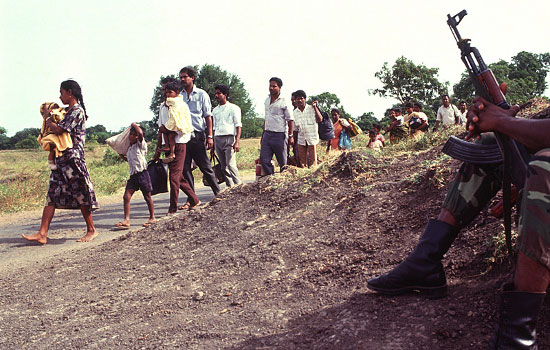
Tamil civilians pass checkpoint
IT IS the first truth of war, however deplorable, that civilians die. The first casualty in war is the civilian. The real victims of war are the civilians. Particularly in civil wars, which are about national survival. In a war zone, they are everywhere, fleeing on foot, on bicycles or handcarts or on somebody’s back, through drenching rain or blazing sun. Wandering around in circles, with no destination, to escape the hail of gunfire and rockets, all with just one question to ask: when would this madness end?
 Dogged efforts by an assorted cast of actors to unearth evidence and implicate Colombo of war crimes steadily increased the pressure on the Mahinda Rajapaksa government and peaked around the second anniversary of the military victory. First, the United Nations released its controversial report of the secretary-general’s panel of experts on accountability in Sri Lanka citing evidence ‘sufficiently credible to warrant further investigations’ into the charges of violations of international humanitarian and human rights law committed during the last phase of military operations. The report was followed by The Cage: The fight for Sri Lanka & the last days of the Tamil Tigers, a book by Gordon Weiss, who was the spokesperson and communications adviser attached to the UN team in Colombo during the years that included the end of the war. Then came the sensational British television Channel 4’s documentary Killing Fields (not to be mistaken for the brilliant 1980s film on Pol Pot’s Cambodia). All three claimed to have ample evidence to charge the government of Sri Lanka for crimes against humanity. Continue reading