
This boating cameraperson was surely inspired!

This boating cameraperson was surely inspired!
Filed under accountability, landscape wondrous, life stories, meditations, performance, photography
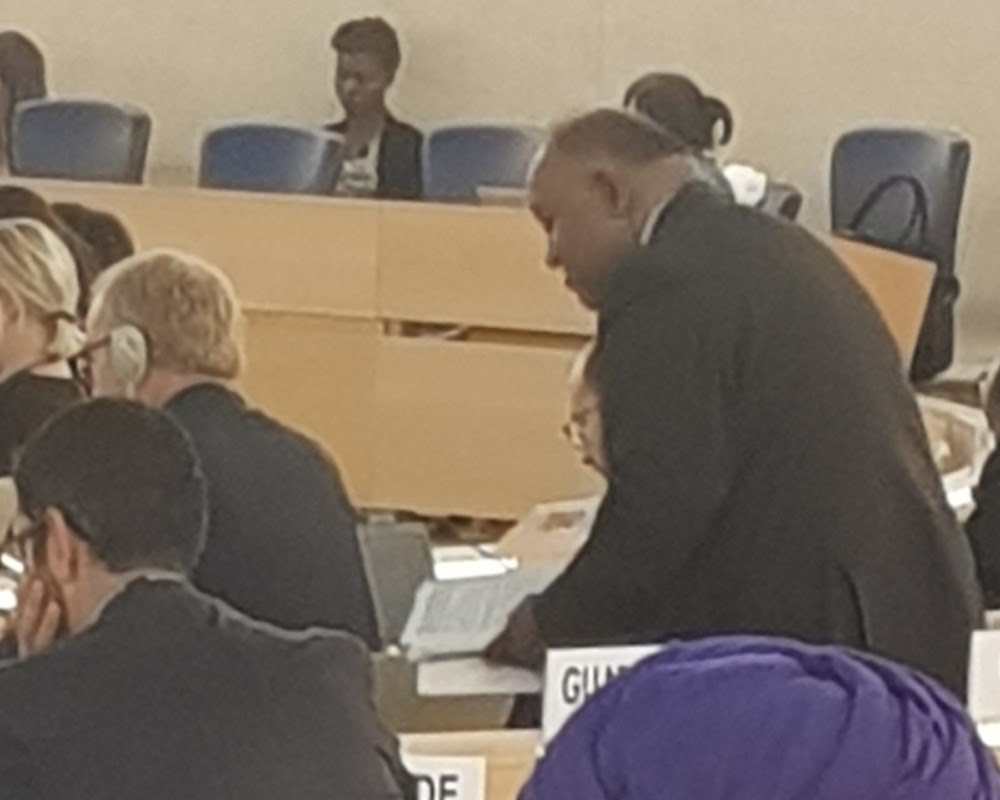 Pro-LTTE Tamil Terrorists leader Pathmanabban Manivannan distributing anti-Sri Lanka documents inside the UNHRC General Assembly in Geneva
Michael Roberts …. reprinting an article drafted in Heidelberg in 1976 and published in the MODERN ASIAN STUDIES in 1978 … with the pessimistic forecast in its concluding paragraphs being informed by seminar discussions in SRi Lanka in the early 1970s, an article by Martin Woolacott in the Guardian Weekly and news items in UK indicating that young Tamils were receiving military training with the PLO.

 Bandaranaike stirring a crowd and Mettananda addressing a crowd of Sinhalayo on Galle Face Green pressing for the Sinhala Only Bill
It is widely recognized that the concepts of ‘state’ and ‘nation’ developed largely out of the history of Europe. In Western Europe the process of state-building preceded and assisted the process of nation-formation. In consequence, the concept of the nation that developed from this process focused on the political community as defined by the institutional and territorial framework. In the tradition of Rousseau, Abbé Sieyes could define a nation as ‘a body of associates living under one common law and represented by the same legislature’.[1] In most lands of Western Europe these developments also produced the model of a single nationality nation or nation-state. In Central and Eastern Europe, the process was different: ‘the nation was first defined as a cultural rather than a political entity’ and the underlying theoretical foundation was in the tradition of Herder rather than Rousseau.[2] Nevertheless, once nationhood had been achieved in these regions there was a tendency to approximate to the model associated with Western Europe. This was made all the easier in such states as Italy and Germany because the majority of their citizens were from one ethnic group; they, too, were single nationality nations.[3] Whatever the dualisms and amalgams in Europe, the export model has been that associated with that of Western Europe—for the simple reason that the predominant colonizing powers were from this part of the Continent.
Filed under atrocities, Buddhism, communal relations, devolution, economic processes, electoral structures, historical interpretation, land policies, language policies, Left politics, legal issues, life stories, politIcal discourse, power politics, riots and pogroms, self-reflexivity, Sinhala-Tamil Relations, sri lankan society
Chandra C de Silva, in book review of Sri Lanka at the Crossroads of History, edited by Zoltán Biedermann and Alan Strathern, London, UCL Press, 2017. xiv, 340 p.
The significance of this volume of twelve essays lies principally in its collective effort to reassess the importance of global connections in Sri Lanka’s history up to 1850. Previous historical writing had sporadically dealt with this theme. For instance, in the area of ancient history the writings of Sri Lankan scholars such as Senerat Paranavithane, Senake Bandaranayake, and Sudarshan Seneviratne have placed Sri Lanka in the context of archaeological research in India. Historians of medieval Sri Lanka, notably Sirima Kiribamune, W. M. Sirisena, and S. Pathmanathan paid considerable attention to extra-local linkages. Writing on more recent Sri Lankan history, Jorge Flores, S. Arasaratnam, and John Holt (to name but a select few) have made significant contributions to our understanding on how the external world was perceived and received in Sri Lanka up to the mid-19th Century. Furthermore, thanks to the scholarship of a new generation of scholars (including the editors of this volume), we now know much more on how Sri Lanka was part of the wider worlds of Sanskrit literature, Buddhist learning, Cola power, Islam, and of Western colonial empires. Nevertheless, with the growth of the nationalist movement against British colonial rule and the first half century of independence, the emphasis by many historians (including myself) has been on the study of Sri Lanka as a unit. As the editors point out, internal ethnic conflict in recent times has also led to a continued emphasis on the evolution of Sri Lanka and its peoples at the expense of how Sri Lanka engaged with the world beyond its shores.


Filed under British colonialism, centre-periphery relations, commoditification, cultural transmission, economic processes, historical interpretation, Indian Ocean politics, Indian traditions, landscape wondrous, life stories, modernity & modernization, politIcal discourse, Portuguese in Indian Ocean, power politics, religiosity, security, sri lankan society, the imaginary and the real, world events & processes, zealotry
Stanley Samarasinghe aka “Sam”
ONE = MEMO Sent to The Editor, Thuppahi
Unfortunately the present government has discredited the concept of Good Governance and many voters have become cynical. But Sri Lanka has no alternative but to think afresh and make an effort to convince at least 50%+1 of the voters that Good Governance must be given another chance. If not we will elect another set of corrupt politicians. My argument is that this time the younger politicians must take the lead and not Civil Society leaders. For sure Rev. Maduluwave Sobitha played a decisive role in 2015. But civil society leaders have no power to deliver. Recall that before his death Rev. Sobitha himself expressed his frustration a few months after the new government was elected.


Filed under accountability, economic processes, education, governance, historical interpretation, Indian Ocean politics, island economy, language policies, Left politics, legal issues, life stories, politIcal discourse, power politics, Presidential elections, self-reflexivity, social justice, Sri Lankan cricket, welfare & philanthophy, working class conditions, world events & processes
Sachith Mendis, in ROAR, 16 October 2016, where the title runs “Remembering Dr. Cyril Ponnamperuma: One of Sri Lanka’s Most Noteworthy Scientists,”
Three-and-a-half billion years ago, our planet was in the midst of a decisive transformation. Until then, meteorites had rained down onto a molten landscape and boiled the oceans, making the six-hour days blisteringly hot. Smokey by-products of the volcanic landscape choked the air, making it heavy, acrid, and unbreathable. The sun was dimmer but the world was warmer; all this extra heat came from below, as the planet’s core cooled off through volcanic vents. The moon had just formed following a forgotten planet’s violent impact with the Earth and was much closer to us then, its pockmarked face mirroring our crater-ridden crust, and filling the night sky. Lava flowed freely, smoke billowed, and oceans roared, but little moved of its own accord—until somewhere between 3.4 and 3.8 billion years ago.

Sujit Sivasundaram is the Director of the Centre of South Asian Studies, Reader in the Faculty of History and a Fellow of Gonville and Caius College. He works on the Indo-Pacific world, with a deep commitment to South and Southeast Asia and the Indian Ocean. His last book was ‘Islanded’, on the makings of Sri Lanka. He is co-editor of ‘The Historical Journal’ and a Councillor of the Royal Historical Society.

Filed under authoritarian regimes, British colonialism, centre-periphery relations, cultural transmission, economic processes, education, ethnicity, governance, heritage, historical interpretation, Indian Ocean politics, Indian traditions, landscape wondrous, life stories, modernity & modernization, politIcal discourse, power politics, transport and communications, travelogue, world events & processes
Michael Roberts, Courtesy of Colombo Telegraph , October 2018


This is a provocative piece on the last stages of Eelam War IV in 2008/09 and on its aftermath of Reports and You Tube cut-and-thrust. It makes specific claims in assertive style. These assertions are founded on lengthier articles with their supporting evidence. So, it is by assertion that I proceed. Continue reading
Filed under american imperialism, australian media, British imperialism, centre-periphery relations, disparagement, doctoring evidence, fundamentalism, historical interpretation, IDP camps, Indian Ocean politics, landscape wondrous, life stories, LTTE, military strategy, patriotism, photography, politIcal discourse, power politics, Rajapaksa regime, self-reflexivity, Sinhala-Tamil Relations, slanted reportage, sri lankan society, Tamil civilians, Tamil Tiger fighters, truth as casualty of war, Uncategorized, unusual people, war reportage, women in ethnic conflcits, world events & processes, zealotry

There is no presidential checkmate after all as many of us were alerted to last week. President Sirisena is in no position to checkmate anyone. No surprise there. He has burnt his boats with the UNP, and even Mahinda Rajapaksa cannot rally everyone in the JO to support a new political arrangement with the old defector. It is now reported that Maithripala Sirisena first approached the UNP to canvass for a second term as President with UNP support, and only after being rebuffed by the UNP that he sought an alliance with the Rajapaksas. It is also known that there were quite a few meetings between Maithripala Sirisena and Mahinda Rajapaksa, which would only confirm that the former President has been quite serious about pursuing a deal with the current incumbent. And obviously because a second term Sirisena presidency is the only way to secure a path for the now underage Namal Rajapaksa to become president in 2024. That the former President could not get others on board for this scheme shows how tenuous and tentative are the loyalties within the Joint Opposition. Be that as it may.
Filed under authoritarian regimes, conspiracies, constitutional amendments, economic processes, electoral structures, governance, historical interpretation, Indian Ocean politics, landscape wondrous, legal issues, life stories, parliamentary elections, performance, politIcal discourse, power politics, Presidential elections, self-reflexivity, Sinhala-Tamil Relations, slanted reportage, sri lankan society, the imaginary and the real
Mahinda Wijesinghe in Sunday Island, 14 October 2018
I had the privilege of attending Vidya Jyothi, Professor E.O.E. Pereira’s 111th annual memorial birth anniversary lecture on September 13, 2018, conducted by the Institution of Engineers Sri Lanka, at the Wimalasurendra Auditorium. There was a packed audience. Not being an engineer of any sort I had to cadge an invitation for this event though I did have a fleeting acquaintance in my youth with this nonpareil legend. It was an experience I still carry with fond memories. However I was fortunate enough to play cricket for our College with two of his sons, namely Lorenz and his younger brother Bryan. Their father and mother, Mavis, never did miss any matches their sons were playing in. I treasure those friendships. Alan, the youngest of the brothers left for Australia before I made his acquaintance.

 thuppahi