
ONE = A Celebrated Afghan School Fears the Taliban Will Stop the Music
“The Afghanistan National Institute of Music became …”
Item in NY Times [whihc demands payment for access !]
The Richmond Sixty Club & Others
Richmond 60 Club Wishes Walter J. May Happy Birthday, 8th January 2021
 A Sixty Club Publication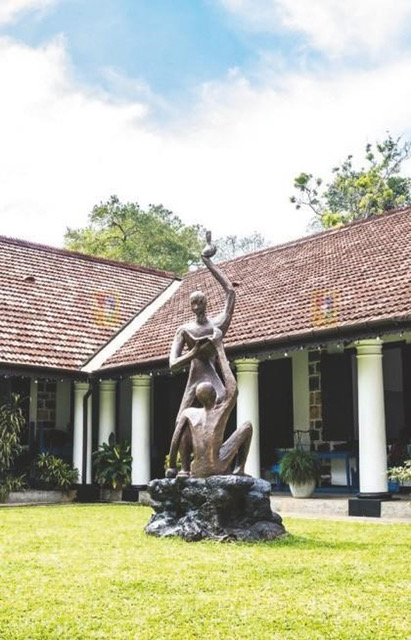
MESSAGE OF THE 6O CLUB PRESIDENT
As the President of the Richmond 60 Club, I am happy to write a few words for the special supplement issued to coincide with the 92nd birthday of Walter J. May on 08th January 2021.
Michael Roberts, responding in 1985 to a Review Essay by Susan Bayly of Cambridge University on his book on Caste Conflcist and Elite Formation, CUP 1982
Susan Bayly** has done me the honour of reviewing the book on Caste Conflict and Elite Formation: The Rise of a Karava Elite in Sri Lanka, 1500-1931 at considerable length.’ Her essay is appropriately entitled ‘The History of Caste in South Asia’. This title provides a clue to the interpretative pathways which have led her systematically to misunderstand the arguments within the book. No less problematical is her implicit belief in the possibility of constructing a composite picture of the caste system qua system on the basis of empirical data drawn from different regions, regions as widely different as Sri Lanka, southern India and western India. Let me elaborate this charge, and in doing so reiterate the arguments which I presented.
 Susan Bayly
Filed under British colonialism, caste issues, centre-periphery relations, commoditification, cultural transmission, economic processes, education, ethnicity, historical interpretation, Indian religions, Indian traditions, island economy, Kandyan kingdom, land policies, landscape wondrous, life stories, modernity & modernization, politIcal discourse, Portuguese imperialism, sri lankan society, transport and communications, unusual people, welfare & philanthophy, working class conditions, world events & processes
Piyasiri Wickramasekara, Chandrasena Maliyadde and HMG Palihakkara ++
It is with profound sorrow that we, the class of 1968 in the Faculty of Arts at the University of Peradeniya, came to know of the untimely departure of our great friend Dr. Cyril Paranavithana (Parane), just two days prior to his 75th birthday (28 July 2021) in New York, USA. The warm
greetings intended for this landmark birthday event had to be hurriedly turned into heartfelt condolences.

Filed under art & allure bewitching, charitable outreach, cultural transmission, education, ethnicity, heritage, historical interpretation, landscape wondrous, life stories, modernity & modernization, patriotism, performance, self-reflexivity, sri lankan society, teaching profession, travelogue, unusual people
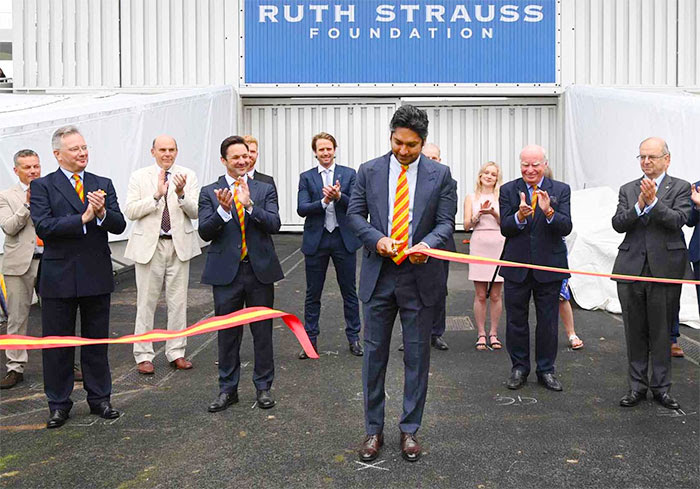
News Item in The Island, 14 August 2021, with this headline “Kumar Sangakkara opens new Compton and Edrich stands at Lord’s”
Unknown Author** … in https://www.elanka.com.au/portuguese-sri-lankan-surnames-and-their-meanings-2/
The Portuguese arrived in Ceylon, or Ceilão, as they called it, by chance. In 1505, a fleet commanded by Lourenço de Almeida—the son of Francisco de Almeida, the first viceroy of Portuguese India—was blown into Galle by adverse winds. It was thirteen years later, in 1518, that the Portuguese established formal contact with the Kingdom of Kotte, ruled by Vira Parakrama Bahu, and were permitted to build a fort in Colombo.

Filed under centre-periphery relations, cultural transmission, demography, economic processes, education, governance, heritage, historical interpretation, Indian Ocean politics, Indian traditions, island economy, landscape wondrous, life stories, politIcal discourse, Portuguese imperialism, Portuguese in Indian Ocean, power politics, self-reflexivity, sri lankan society, transport and communications, travelogue, unusual people, world events & processes
Uditha Devapriya, in The Island, 31 July 2021, where the title reads “Round and About in Kurunegala”
Covering 65 kilometres, the road from Colombo to Ambepussa is fairly straight. From there it turns left and right, up and down. To get to Kurunegala via Ambepussa, you have to pass Alawwa and Polgahawela. Between these regions the terrain rises, offering you a glimpse of the hill country. Then the mountains recede from view, the mist settles, and the chaos of urban life returns. The shops teem with life, the clock-tower looms over you, and the heat rises. From afar, the faintest outline of Ethagala catches your eye. This is your first glimpse of Kurunegala.


Filed under ancient civilisations, art & allure bewitching, British colonialism, Buddhism, centre-periphery relations, cultural transmission, economic processes, heritage, historical interpretation, landscape wondrous, life stories, Sinhala-Tamil Relations, sri lankan society, transport and communications, travelogue
Anoma Pieris, with highlighting emphasis imposed by The Editor of Thuppahi
Architect Valentine Gunasekara passed away peacefully at sunset on Monday 4, September 2017; and I felt it was important that his passing did not go unnoticed. The ebook version of Imagining Modernity: The Architecture of Valentine Gunasekara published 14 years after my 2007 book is an effort at ensuring he would not be forgotten. He mirrored the struggles of my parent’s generation across the hard years of import-substitution and Socialist policies when every bag of cement was purchased with a special permit. In fact, even attempting to build with concrete appeared foolhardy. However, he persevered, leaving a small coterie of buildings that are comparable to the works of Van Molyvann (1926-2017) in Cambodia or the Malayan Architects Co-Partnership (1960-67) in Singapore. These buildings have not garnered the attention and care that is afforded mid century modernism elsewhere, largely because their attempts at design synthesis are overlooked. The tropical climate is also hostile to pristine architectures and plastered concrete surfaces are high maintenance. But if one is willing to look beyond everyday tolerances to the aspirations behind the aesthetic responses that surround us in our rapidly growing cities, one needs to engage with Gunasekara’s repertoire.


Filed under architects & architecture, art & allure bewitching, British colonialism, centre-periphery relations, cultural transmission, economic processes, education, ethnicity, female empowerment, gender norms, heritage, historical interpretation, island economy, landscape wondrous, life stories, modernity & modernization, performance, self-reflexivity, travelogue, unusual people, world events & processes
Kerry Packer’s World Series Cricketers assembled together

QUESTION FOR Aficianados: In what way are they different from Today’s Cricketers in the 2010s and 2020s?
MY TRUMP-CARD ANSWER = They are all clean-shaven and beardless …. and distinctly better-looking as a result.
A FOOTNOTE: When one of the World Series matches pitted a combined team against the West Indies Squad at the huge football stadium at West Lakes in Adelaide in January !978 (or 1979?), Michael Roberts was one of the mere 800 or 900 spectators in that giant arena.
I consider WHAT WE the few WITNESSED to be a privilege that I shared with that small cluster of cricket fans: we were seeing great cricketers in action within a form of televsion documentation that was revolutionizing the format–notably by having cameras at both ends and others cameras for special side-shots …. besides drop-in wickets, et cetera, et cetera.
Qadri Ismail, in Groundviews in 2015 with this title “The Import Of Sri Lankan Muslim Names”


My name is Mohamed Qadri Ismail. Mohamed Qadri Ismail is not my name.
The statements may prompt a wtf. (The acronym, btw, of the World Taekwondo Federation.) Surely one cannot affirm a position and its contradiction. Yet I do. The second sentence doesn’t necessarily negate the first.
Filed under Aboriginality, accountability, atrocities, authoritarian regimes, centre-periphery relations, communal relations, cultural transmission, economic processes, education, fundamentalism, governance, heritage, historical interpretation, Indian religions, landscape wondrous, legal issues, life stories, modernity & modernization, Muslims in Lanka, nationalism, politIcal discourse, power politics, self-reflexivity, Sri Lankan scoiety, teaching profession, truth as casualty of war, unusual people, world events & processes, zealotry
 thuppahi