Category Archives: accountability

Sherlock Holmes & Churchill: Their Lessons on Afghanistan

David Von Drehle, in Washington Post, 8 August 2021, with this title … “Sherlock holmes & Winston Churchill: Cautionary tales on Afghanistan”


I learned of a place called Afghanistan as many Americans used to do: by reading one of the most famous opening chapters in literary history. I was 11 years old, and my new book introduced a young English doctor. Sent to an outpost of the Empire, he was hurried ahead to the front lines of a persistent war. He united with his assigned unit in Kandahar, and nearly died in combat when his shoulder was shattered by a bullet. Recuperating back in London, seeking an affordable apartment, he met a potential roommate — a strange fellow among whose first words to him were:

“You have been in Afghanistan, I perceive.”

Thus Dr. Watson met Sherlock Holmes.

Continue reading

Leave a comment

Filed under accountability, Afghanistan, american imperialism, British imperialism, economic processes, fundamentalism, historical interpretation, insurrections, Islamic fundamentalism, landscape wondrous, life stories, military strategy, patriotism, politIcal discourse, power politics, self-reflexivity, slanted reportage, taking the piss, Taliban, the imaginary and the real, transport and communications, trauma, travelogue, truth as casualty of war, unusual people, world events & processes

Jehan Perera on the Requisites for Political Reconciliation

Jehan Perera, in The Island, 3 August 2021, with this title “Restoring reconciliation process cannot be piecemeal”


The government is making a resolute effort to turn Sri Lanka around and put it in the direction of rapid economic development. The systematic manner in which it has been conducting the Covid vaccinations has earned recognition by WHO as well as the international community. The value of the military in getting things done on a large scale with minimum of delay has been manifested in the partnership that they have struck with the health authorities. The memory is fading of how some of the government leaders dabbled in alchemy and the spirit world to find an antidote to the COVID virus, despite being vested with the responsibility to strengthen the health of the country’s people. There is also increased space being given to civil society to engage in protests, such as the protracted teachers’ strike and the agitation against the expanding mandate of the Kotelawala Defence University.

Continue reading

2 Comments

Filed under accountability, centre-periphery relations, citizen journalism, communal relations, democratic measures, devolution, economic processes, governance, historical interpretation, Indian Ocean politics, landscape wondrous, life stories, LTTE, nationalism, patriotism, performance, political demonstrations, politIcal discourse, power politics, power sharing, Rajapaksa regime, reconciliation, rehabilitation, security, self-reflexivity, Sinhala-Tamil Relations, slanted reportage, sri lankan society, Tamil civilians, Tamil migration, tamil refugees, the imaginary and the real, truth as casualty of war, unusual people, vengeance, war reportage, welfare & philanthophy, world events & processes

John Pilger’s Overview of the Deeper History of Western Intervention in Afghanistan

John Pilger  in Consortium News, Volume 26, Number 240, 28 August 2021, with this title “The Great Game of Smashing Nations”

More than a generation ago, Afghanistan won its freedom, which the U.S., Britain and their “allies” destroyed.

Outside the gate of the Arg, the presidential palace, in Kabul, the day after the Saur revolution on April 28, 1978. (Cleric77, CC BY-SA 3.0, Wikimedia Commons)

As a tsunami of crocodile tears engulfs Western politicians, history is suppressed. More than a generation ago, Afghanistan won its freedom, which the United States, Britain and their “allies” [then] destroyed.

Continue reading

Leave a comment

Filed under accountability, Al Qaeda, american imperialism, authoritarian regimes, British imperialism, conspiracies, fundamentalism, governance, historical interpretation, Indian Ocean politics, insurrections, Islamic fundamentalism, life stories, military strategy, politIcal discourse, power politics, security, self-reflexivity, slanted reportage, truth as casualty of war, unusual people, vengeance, war crimes, war reportage, world events & processes, zealotry

The Sri Lankan Government and the Media within the Crossroads of War 2006-09

Palitha Kohona ,in The Sunday Observer, 28 June 2020, with this title Managing the media on the road to Nandikadal – Part 1″ ….http://www.sundayobserver.lk/2020/06/28/news-features/managing-media-road-nandikadal-part-1

The conflict with the terrorist LTTE dragged on for over two decades causing widespread death and destruction with no obvious end in sight. The Government, after the election of President Mahinda Rajapaksa, recognised, perhaps for the first time, that carefully managing the media, both domestic and international, was an important factor if this endless struggle were to be ended successfully. President Rajapaksa, a consummate politician, accepted the profound value of a non-antagonistic media and carefully orchestrated initiatives to secure this objective. As the world knows, the bloody conflict was eventually ended on the banks of the Nanthikadal Lagoon on May 18, 2009, through the colossal efforts and sacrifices of the security forces.

Tony Birtley of Al Jazeera at the warfront in late 2008 and Ranil Wijayapala in ??

Continue reading

Leave a comment

Filed under accountability, authoritarian regimes, centre-periphery relations, communal relations, Eelam, ethnicity, foreign policy, fundamentalism, governance, historical interpretation, human rights, insurrections, island economy, language policies, legal issues, life stories, LTTE, military strategy, nationalism, politIcal discourse, power politics, Rajapaksa regime, security, self-reflexivity, Sinhala-Tamil Relations, sri lankan society, suicide bombing, Tamil civilians, Tamil migration, Tamil Tiger fighters, terrorism, truth as casualty of war, UN reports, unusual people, violence of language, war crimes, war reportage, welfare & philanthophy, women in ethnic conflcits, world events & processes

Force 136 in British Ceylon during World War II and the Film “Bridge on the River Kwai”

Tony Donaldson

I read the piece entitled “Travails in Filming “The Bridge on the River Kwai” … and The Locations” a few days ago and found it very interesting. I like this stuff about films in Ceylon in the 1950s and 60s so keep posting relevant material. It’s a topic worth exploring more.

William Holden & Chandran Rutnam during the shooting of the Film

Another location used in the Bridge on the River Kwai film was the Riverdale Bungalow. There is a scene in which “Shears” (played by William Holden) is walking through the Botanical Gardens during a Force 136 training operation and gets caught up in it when he is attacked and thrown to the ground. The training officer apologizes and leads him on to a path to meet his Force 136 contact, and this scene cuts to a path at the top of a ridge looking down to the Mahaweli River and we see Shears walking into the Riverdale Bungalow for a meeting, which of course is not in the Botanical Gardens. The bungalow is still there today in pretty much the same condition as it was in the film and when it was used by Force 136 during WW2. The scene in which Shears is with the girl on the beach was filmed at the Mt Lavinia Hotel which was also a Force 136 site in WW2.

Continue reading

1 Comment

Filed under accountability, British colonialism, centre-periphery relations, governance, historical interpretation, Indian Ocean politics, landscape wondrous, life stories, military strategy, photography, politIcal discourse, security, self-reflexivity, the imaginary and the real, transport and communications, trauma, unusual people, war reportage, world events & processes, World War II and Ceylon

An Afghan Soccer Star who sought the Skies ….

BBC News Item, c. 21 August 2021c with this title “Zaki Anwari: Afghan footballer falls to death from US plane in Kabul”

Afghan authorities have confirmed that a young footballer fell to his death after trying to stow away on a US military plane leaving Kabul airport. Zaki Anwari, 19, had played for Afghanistan’s national youth team. Further details of when he died have not been disclosed.

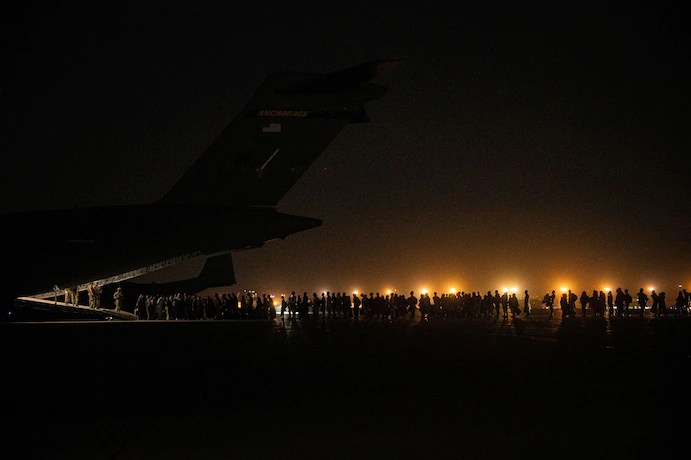
Since the Taliban’s recapture of Afghanistan, thousands of people have scrambled to Kabul’s airport as Western countries rush to evacuate their citizens and Afghan colleagues. Images emerged on Monday showing hundreds of people running alongside a US air force plane as it moved down a runway. Some people were seen clinging to its side.

Continue reading

Leave a comment

Filed under accountability, Afghanistan, authoritarian regimes, fundamentalism, landscape wondrous, life stories, politIcal discourse, Taliban, the imaginary and the real, unusual people, war reportage, world events & processes

Taliban’s Rise as Major Setback for India: A Lament exposing Power-Plays in Asia

  Sunil Sharan in New Delhi, 22 August 2021 where his chosen title is “The Lonesomeness of Defeat” **

Afghanistan has been a debacle for the Americans, but no less so for the Indians. The great generals of the modern era, the Guderians, the Rommels, the MacArthurs, and Without doubt the greatest of them all, Napoleon, always saw things clearly. They recognized Victory to be victory and defeat to be defeat and did not confuse between the two. A superb German army opened two fronts in World War II, which led to its downfall. The Americans did the same in Iraq and Afghanistan, meeting humiliation in both places.

Continue reading

1 Comment

Filed under accountability, american imperialism, centre-periphery relations, China and Chinese influences, disparagement, ethnicity, historical interpretation, Indian Ocean politics, Islamic fundamentalism, landscape wondrous, law of armed conflict, life stories, meditations, military strategy, politIcal discourse, security, slanted reportage, taking the piss, Taliban, unusual people, vengeance, war reportage, world events & processes

Beating COVID …. Sequential Multi-Drug Treatment

A Medical Friend in Lanka: “In response to Dr Justin Labrooy’s email about Ivermectin usage: I totally agree that people should not self-medicate. It can be very dangerous.”

   Dr Peter McCullough MD, testified to the Texas Senate HHS Committee. He has done a lot of work on early treatment of Covid. He found the best treatment to be sequential multidrug treatment, one drug alone does not seem to work.

https://www.youtube.com/watch?app=desktop&v=QAHi3lX3oGM

Peter McCullough, MD testifies to Texas Senate HHS Committee  …. LISTEN

2,063,266 views …………….Mar 12, 2021

This is the research paper he mentions: https://rcm.imrpress.com/article/2020/2153-8174/RCM2020264.shtml

Abstract

The SARS-CoV-2 virus spreading across the world has led to surges of COVID-19 illness, hospitalizations, and death. The complex and multifaceted pathophysiology of life-threatening COVID-19 illness including viral mediated organ damage, cytokine storm, and thrombosis warrants early interventions to address all components of the devastating illness. In countries where therapeutic nihilism is prevalent, patients endure escalating symptoms and without early treatment can succumb to delayed in-hospital care and death. Prompt early initiation of sequenced multidrug therapy (SMDT) is a widely and currently available solution to stem the tide of hospitalizations and death. A multipronged therapeutic approach includes 1) adjuvant nutraceuticals, 2) combination intracellular anti-infective therapy, 3) inhaled/oral corticosteroids, 4) antiplatelet agents/anticoagulants, 5) supportive care including supplemental oxygen, monitoring, and telemedicine. Randomized trials of individual, novel oral therapies have not delivered tools for physicians to combat the pandemic in practice. No single therapeutic option thus far has been entirely effective and therefore a combination is required at this time. An urgent immediate pivot from single drug to SMDT regimens should be employed as a critical strategy to deal with the large numbers of acute COVID-19 patients with the aim of reducing the intensity and duration of symptoms and avoiding hospitalization and death.

Keywords: SARS-CoV-2COVID-19hospitalizationmortalityambulatory treatmentanti-infectiveanti-inflammatoryantiviralcorticosteroidantiplatelet agentanticoagulantsequenced multidrug therapy

ALSO SEE https://www.uscjournal.com/authors/peter-mccullough

https://lymediseaseassociation.org/about-lyme/research-articles/peter-a-mccullough-md-mph-covid-19-treatment-protocols/

5 Comments

Filed under accountability, coronavirus, education, life stories, medical puzzles, security, self-reflexivity, trauma, unusual people, welfare & philanthophy, world events & processes

Mateship in the Wild …. Wunderbar !!!

THIS ITEM was sent to me by Wilfred Perera … whom I know not but … HERE we see the marvellous WORK of cameraman Michel Denis-Hunt

Photographer Michel Denis-Huot, who captured these amazing pictures on safari in Kenya’s Masai Mara in October last year, said he was astounded by what he saw:“These three brothers (cheetahs) have been living together since they left their mother at about 18 months old,’ he said. ‘On the morning we saw them, they seemed not to be hungry, walking quickly but stopping sometimes to play together. ‘At one point, they met a group of impala who ran away. But one youngster was not quick enough and the brothers caught it easily’.”

Continue reading

Leave a comment

Filed under accountability, landscape wondrous, life stories, performance, photography, self-reflexivity, tolerance, travelogue, wild life, world events & processes

The Rise of Tribalism

Tony Donaldson

I can remember a time back in the early years of this century when the age of cosmopolitanism was in fashion. It was a beautiful time. One of the great benefits of cosmopolitanism is that it allowed us to throw off the shackles of nationalism. We could take on different identities of our own choosing at any time in our lives with an absolute sense of freedom.[1] We could travel anywhere and engage with cultures and peoples around the world without political interference. We could build partnerships in business and trade that benefited all of us. Nationalism was in decline, and it was a positive direction for humanity.

Continue reading

Leave a comment

Filed under accountability, Afghanistan, american imperialism, Australian culture, australian media, cultural transmission, economic processes, education, governance, historical interpretation, legal issues, modernity & modernization, politIcal discourse, power politics, self-reflexivity, world events & processes