

Entering the Fort – Original Entrance with the VOC Plaque **

Richard Guilliatt, in The Australian Weekend Magazine 20-21 June 2020, where the title is
Simon Quinn is a 32 year old PhD student from Australia, studying Sanskrit living in Gurgaon 30km South West of Delhi. When the Indian government announced a sudden & draconian nationwide lockdown on 24th March, to halt the spread of Covid19 among the nation’s 1.38 billion people, he logged on to a chat forum for Aussies travelling in India on his lap top. Anxious messages were flooding in.

Filed under accountability, Australian culture, australian media, charitable outreach, communal relations, coronavirus, historical interpretation, landscape wondrous, life stories, patriotism, performance, politIcal discourse, self-reflexivity, transport and communications, trauma, travelogue, unusual people, voluntary workers, welfare & philanthophy, world events & processes
The National Archives of Australia has not ruled out taking more than three months to declassify the potentially explosive ‘Palace Letters’, remaining tight-lipped on a release date almost three weeks after the High Court ordered the documents to be made public.
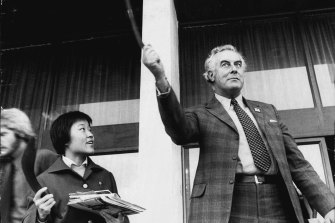 Gough Whitlam, pictured in 1972, established the predecessor to the National Archives. Historian Jenny Hocking has long been seeking papers relating to his dismissal from office.CREDIT:GEORGE LIPMAN
Jane Russell, reviewing Stuart Cosgrove “Memphis 68: The Tragedy of Southern Soul,” Polygon Press Oct. 2017

This book is the middle section of a critically acclaimed sixties ‘soul’ trilogy by Australian-Scot Stuart Cosgrove, award winning broadcaster for Channel 4 and long-time writer for UK music media, Echoes and New Musical Express. It follows on from Detroit 67: The Year that Changed Soul and anticipates the forthcoming Harlem 69: The Future of Soul (October 2018).
Filed under accountability, atrocities, authoritarian regimes, centre-periphery relations, chauvinism, communal relations, conspiracies, cultural transmission, democratic measures, ethnicity, heritage, historical interpretation, human rights, landscape wondrous, legal issues, life stories, political demonstrations, politIcal discourse, power politics, security, self-reflexivity, social justice, trauma, unusual people, vengeance, world events & processes
Anonymous Oriel College Collective …….The letter (below) is a response from [one part of] Oxford University to black students attending as Rhodes Scholars who demand the university removes the statue of Oxford Benefactor, Cecil Rhodes.
Interestingly, Chris Patten (Lord Patten of Barnes), The Chancellor of Oxford University, was on the Today Programme on BBC Radio 4 on precisely the same topic. The Daily Telegraph headline yesterday was “Oxford will not rewrite history”. Lord Patten commented: “Education is not indoctrination. Our history is not a blank page on which we can write our own version of what it should have been according to our contemporary views and prejudice.”

Filed under art & allure bewitching, British colonialism, British imperialism, communal relations, cultural transmission, discrimination, disparagement, economic processes, education, ethnicity, governance, heritage, historical interpretation, landscape wondrous, life stories, politIcal discourse, power politics, self-reflexivity, slanted reportage, taking the piss, truth as casualty of war, Uncategorized, unusual people, violence of language, world events & processes
Jehan Perera, in Island, 30 June 2020, with this title “The Need For Better Representation In Divided Societies”
There has been a trend of President Gotabaya Rajapaksa making senior appointments in which those who are outside the established administrative systems are being brought in to provide leadership and ensure effective and non-corrupt practices. As a large number of these appointments have been from the security forces this has given rise to a perception that the country is heading towards eventual military rule. There is a concern that the forthcoming general elections will be followed by constitutional changes that will entrench the military in governance as in some other countries such as Myanmar. This is unlikely to be the case in Sri Lanka as democratic traditions upholding civilian control of government are deeply ingrained in the fabric of political society.


Filed under accountability, ancient civilisations, Buddhism, chauvinism, communal relations, democratic measures, discrimination, economic processes, ethnicity, fundamentalism, governance, heritage, historical interpretation, Islamic fundamentalism, language policies, legal issues, life stories, Muslims in Lanka, politIcal discourse, population, power politics, Rajapaksa regime, reconciliation, self-reflexivity, Sinhala-Tamil Relations, social justice, tolerance, welfare & philanthophy, working class conditions
The SL Army’s Land Warfare Campaign in 2006-09: Debating the Lines of Strategic Emphasis
 HALANGODE FOUR: Retd Brig. Hiran Halangode’s Clarification**
This account deals with the question of the re-organization of the Infantry Battalions and a gradual expansion of the SIOT concept since 2002.
I start with the raising of the Ceylon Army and its evolution up-to 1983 in brief. The Army was raised to defend Sri Lanka’s sovereignty and territorial integrity whilst the external threat was to be met by the British Forces deployed in Ceylon. Note our INTERNAL DEFENCE was primarily the Ceylon Army’s responsibility. Our Army’s primary tasks were to tackle the trade union and leftist agitations, strikes and work disruptions which affected our supply of essential services, distribution of food from the port and our daily life. Continue reading
Filed under accountability, centre-periphery relations, education, historical interpretation, insurrections, law of armed conflict, life stories, military strategy, nationalism, politIcal discourse, power politics, prabhakaran, security, self-reflexivity, sri lankan society, Tamil civilians, Tamil Tiger fighters, truth as casualty of war, unusual people, war reportage, world events & processes
 in Daily Mirror, 25 June 2020, where the title reads “Red Alert on Manna Mineral Extraction Project” ………….. Australian Company had acquired land in December 2018 and March 2020
As a popular tourist attraction in the country, Mannar boasts of a rich cultural heritage dating back to the Portuguese, Dutch and British periods. Dotted with palmyra trees and a scenic stretch of the Northern coastal belt, it is a popular destination for nature lovers as well. During the flamingo season, the pink, red or orange feathered visitors frequent Mannar’s wetlands till the end of March.

Filed under accountability, centre-periphery relations, commoditification, economic processes, heritage, Indian Ocean politics, island economy, landscape wondrous, legal issues, life stories, politIcal discourse, power politics, self-reflexivity, sri lankan society, tourism, transport and communications, unusual people, welfare & philanthophy, wild life, working class conditions, world events & processes
Scenes at the Gisenyi & Volcanoes National Park in Rwanda …. in 2011
 …. only the rear end on show
Filed under landscape wondrous, life stories, travelogue, unusual people, wild life
 thuppahi