Yearly Archives: 2011

Being a Tamil under the LTTE: Teacher Murugesu speaks out

Courtesy of the Sunday Observer, 2 October 2011 where the title is  “Tamil, Sinhala or Muslims of Wanni long for Alternative Leadership”

Web Editor’s Note: While the appearance of this news rport in translation form the Thinakaran in a government-run newspaper may generate scepticism, I think this is ahighly significant representation from hard-earned expereince. I stress here that I have myself sought information on conditions in Thamililam in the period 1995-2009 inclusive of the ceasefire stages with an eye on the degree of support for the LTTE. My information garnered thus far is fragmentary, but Anoma Rajakruna was working  intermittently on the topic of female empowerment in LTTE land in the mid-2000s and indicated that the poltical sentiments of people were constrained by the degree to which their family networks depended on the LTTE dispensation for daily livelihood — precisely the message conveyed by Murgesu the teacher. One should also attend to the title of the book conveeing NBen Bavinck’s diary record, namely, Of Tamils and Tigers and the evidence that is presented on the years 1989-1992 in Volume One. Michael Roberts

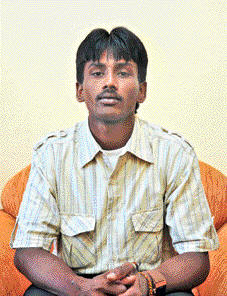
Any Tamil who lived through the horrors and unimaginable human sufferings during the last battle at Mullivaikkal in Mullaitivu would never even dream of leading the Tamils in the path of another war. The bitter memory of it is indelibly registered in the minds of the people of the Vanni and it is they who directly encountered the dire consequences, burdens and untold sufferings caused by that last battle. Nor do they have any right to talk about the last stages of that bitter battle. Anyone who witnessed the happenings of May 19 will never think of forcing the Tamils into another war”– So said an emotionally-charged Vanni resident Ariyakutty Murugesu, one time teacher and the father of two former LTTE women cadres. He was one among those who suffered and experienced the heart-rending tragedies and miseries of the last battle. He is a man of an intellectual calibre. He was a teacher at several schools in the Northern peninsula and had also worked as a freelance journalist, including for the Lake House publication .

Speaking out his mind in a brief interview with Thinakaran, our Tamil language daily, he said that the war was forced on the people of Kilinochchi, Mullaitivu and Mannar and they had to Continue reading

Leave a comment

Filed under accountability, authoritarian regimes, communal relations, democratic measures, IDP camps, liberation tigers of tamil eelam, life stories, LTTE, military strategy, politIcal discourse, prabhakaran, Rajapaksa regime, reconciliation, rehabilitation, Tamil civilians, tamil refugees, Tamil Tiger fighters, unusual people, welfare & philanthophy

Arun Thambimuttu steps out as a Tamil and Lankan Patriot — like Father like Son

Q and A Interview with Rohan Abewardena, in The Island, 25 & 26 September 2011 under title “Batti political family scion beckons Tamils”

Q: You have grand ideas, but you are yet relatively unknown here as a businessman and politician so can you tell us something about your self and your background.

I come from a famous political family in Batticaloa. My father was Sam Tambimuttu, a member of parliament. He was assassinated by the LTTE along with my mother in 1990. They were gunned down in front of the Canadian High Commission at Gregory’s Road. My mother passed away ten days after the shooting. At the time I was about 14 years of age. After the assassination of my parents I went to UKand did my secondary and higher education there. I obtained a degree in economics from theUniversity ofDurham. Then I got involved in investment fund management and I lived away for 20 years. I returned toSri Lanka three times after the assassination of my parents – all three times to renew my passport. I still hold a Sri Lankan passport. I never took a foreign citizenship. I never thought the day would arrive when I would come back to Sri Lanka and specifically to Batticaloa where we are hailing from. When I came back it struck me, it struck me a lot because I travelled the length and breadth of Eastern Province and Sri Lanka as a whole. I always knew our country is very beautiful and resourceful, but if you look at the past 60 years, since independence I feel we failed. We failed in many areas, but primarily our resources and what we have been given in this blessed island,

Sam Thambimuttu  but we have not achieved our full potential. So I had to ask questions, especially about Batticaloa, because I feel Batticaloa is immensely resource rich, but nothing has moved. People have not exploited the natural resources of the region. People are still quite poor with lot of unemployment. So I began to ask questions because my family members were part of the political process there. My mother’s father, Senator Manickckam was one of the founding leaders of the Federal Party along with H.A.V. Chelvanayakam. My father of course was a representative of TULF and my mother was an activist from the late 60s. My great granduncle was also a State Council member. He was more a Ceylonese nationalist and not a Tamil nationalist       … [For a note on the assassiantion of Sam Thambimuttu in Ben Bavinck’s diary see the end of this item in thuppahi].

Continue reading

1 Comment

Filed under accountability, communal relations, cultural transmission, democratic measures, island economy, life stories, LTTE, patriotism, politIcal discourse, power sharing, Rajapaksa regime, reconciliation, rehabilitation, Tamil civilians, tolerance, unusual people, voluntary workers, world events & processes

The Haka : “I die, I die, I live, I live”

Alastair Eykyn, Courtesy of his blog, http://www.bbc.co.uk/blogs/alastaireykyn/2011/09/the_origins_of_the_haka.html?postId=110398671 where the title is “The Origins of the Haka”

The haka is an emotive subject, with South Africa coach Pieter de Villiers whipping up a storm in New Zealand last week when he claimed the ritual was losing its lustre. “People are becoming used to it,” he said. “It’s not a novelty anymore and they don’t respect it.” Inevitably, the comments triggered articles in the Kiwi press featuring outraged Maori leaders, protective cultural figures and even a few disgruntled foreigners. But does De Villiers have a point?

For this week’s Radio 5 live rugby programme, I spoke to a number of different people about the haka and its place in Maori culture and All Black history. Here are many different kinds of haka and the Maori use them for a variety of purposes. They use them to welcome people, to bid farewell to their dead, to celebrate success and to express collective pride. The one haka recognised globally is the All Black haka: Ka Mate. This particular haka dates back over 200 years. A warrior chief named Te Raupahara composed it, having just escaped capture by a tribal rival. It was reflective of his relief and excitement at survival.

The words, “ka mate, ka mate, ka ora, ka ora” literally means “I die, I die, I live, I live.” Te Raupahara became something of a heroic figure as a leader and a warrior and his haka was kept alive after his death. Continue reading

Leave a comment

Filed under cultural transmission, patriotism, world events & processes

A Tiger Wheeler-Dealer & Two Conscripts recant and reject Tiger cause

Item by S. Thilainathan in  the government rag, Daily News, 30 Sept. 2011

Sasikumar- From D-News

Sarachandran in Thamililam during visit –Pic courtesy of National Post

Two Tamil youths, Kumaravel Sasikumar and Gunasingham Visaban who underwent immense suffering due to LTTE atrocities, in an exclusive interview, praised President Mahinda Rajapaksa for his exemplary leadership in completely eradicating LTTE terrorism from our motherland. They also said that if the President had not given directions to the Armed Forces to end this 30-year-old terrorist war despite mounting foreign pressure, Sri Lanka would have continued to be in turmoil even today.

Ex-LTTE cadres, 21-year-old Kumaravel Sasikumar was born in Homagama. Thereafter his parents who are from Vavuniya settled in the Vanni area. Sasikumar said that in 2006 when the A9 road was completely closed down due to mounting LTTE violence, he was trapped in Visvamadu. During this period, the LTTE started to replenish its depleting cadres by forcefully dragging innocent boys and girls, ignoring their unwillingness to join the LTTE cadres. Continue reading

1 Comment

Filed under accountability, authoritarian regimes, liberation tigers of tamil eelam, life stories, LTTE, Rajapaksa regime, reconciliation, rehabilitation, Sinhala-Tamil Relations, Tamil civilians, Tamil migration, tamil refugees, Tamil Tiger fighters, terrorism, world events & processes

Sandwiched in between: Tamil Dissidents and Others in the Furnace of War & its Killings, January 1989-December1990 via Ben Bavinck’s Diary

Sharika Thiranagama rides a bike in emulation of her mother Rajani Thiranagama nee Rajasingam for the biographical documentary NO MORE TEARS

As the ethnic conflict in Sri Lanka escalated from July 1983 and the Tamil liberation struggle developed along several militant paths, Tamils throughout the island were placed in a difficult position. The focus here is on the sentiments of those identified in the census as “Sri Lanka Tamils” as distinct from “Indian Tamils” – wherever they resided in the island.[1]

But within this framework the emphasis is on those Sri Lankan Tamils who resided in the northern and eastern parts during the period extending from August 1988 to October 1992, the time spanned by the first volume in Ben Bavinck’s diaries. Note, here, that Bavinck was a fluent Tamil speaker and because of his long experience in the Jaffna Peninsula in the 1950s-70s he was, as Val Daniel suggests, a de facto Tamil in sentiment.[2]

However, he did not look Tamil. On several occasions he was treated as a foreign NGO person or even as “a foreign dignitary.” In the period of his diary, moreover, he was attached to the National Christian Council and was undertaking welfare and relief measures throughout the island. As such, he was able to intervene on behalf of people who were at the receiving end of the conflict. A good part of this work took him to the north on many occasions. Therefore his dairy extracts reveal the thinking of many of his friends, acquaintances and others in this region during the period of warfare between the Tigers and the Indian Peace Keeping Force (till late 1989) and, thereafter during the short interregnum of peace negotiations from January to April 1990 and, thirdly, the renewal of war between the LTTE and the government of Lanka (GoSL) from June 1990 onwards.

A theatrical dramatization of the murder of Rajani Thiranagama by the National Film Board of Canada with Sharika Thiranagama in the role

 His information, therefore, is a voice of his times and conveys invaluable information. It should not be dismissed as “gossip,” though of course some of the reportage has to be treated cautiously as second-hand or third-hand reportage of events that Bavinck did not witness himself. These tales, clearly, must be sifted and evaluated in the light of other contemporaneous information Continue reading

11 Comments

Filed under accountability, anton balasingham, atrocities, citizen journalism, Eelam, female empowerment, historical interpretation, indian armed forces, Indian Ocean politics, liberation tigers of tamil eelam, life stories, LTTE, martyrdom, politIcal discourse, prabhakaran, reconciliation, Sinhala-Tamil Relations, sri lankan society, Tamil civilians, Tamil Tiger fighters, terrorism, unusual people, war crimes, women in ethnic conflcits, world events & processes

Tamil Tigers face jail for up to 16 years in The Netherlands

Courtesy of The Australian, 29 September 2011

 Pro-Tiger demo in London, mid 2009 -Web-Editor’s Files


A Sri Lankan protester outside the Canadian High Commission kicks the symbol of the Liberation Tigers of Tamil Eelam in Colombo in May 2009 —  Source: AFP

DUTCH prosecutors yesterday asked for jail sentences of between 10 and 16 years for five suspected Tamil Tigers for aiding the Sri Lankan rebel movement from The Netherlands, including collecting funds.  “We are asking for long sentences. The suspects were consciously involved in an international terrorist organisation,” prosecutor Ward Ferdindessen said in the indictment.

The prosecution asked for three sentences spanning a decade each, a 12-year sentence and a 16-year sentence. “If we are demanding heavy penalties . . . it’s for the future, so that it won’t happen again,” Mr Ferdindessen said. Continue reading

Leave a comment

Filed under accountability, authoritarian regimes, communal relations, Eelam, immigration, life stories, LTTE, politIcal discourse, Sinhala-Tamil Relations, Tamil civilians, Tamil migration, terrorism, truth as casualty of war, world events & processes

Female Empowerment: Frontline Combat Roles for Aussie Women

Mark Dodd, in The Australian, 29 September 2011, under titleAccess to All Areas.”

HOURS after Defence Minister Stephen Smith announced the lifting of restrictions preventing women from serving in front-line combat units, navy captain Michele Miller was presented as the Australian Defence Force’s poster girl to support the plan.  Articulate, intelligent, ambitious, dedicated, unquestionably brave and now pregnant, Miller recounted how in 2004 as second-in-command of the frigate HMAS Stuart she led a recovery party to rescue wounded US servicemen after al-Qa’ida terrorists blew up an Iraqi oil terminal.

“I had my chance to see body bags and to deal with that distress and what happens when you get combat casualties,” she told reporters quietly. Miller is a strong supporter of the new deal for women to participate in close-quarters combat and Defence would sorely like more Millers. Less was said of her long haul to senior command since her graduation as a junior officer at the Australian Defence Force Academyin 1991. Ask anyone in Defence from the former chief, Peter Cosgrove, to the incumbent, David Hurley, and his deputy, Mark Binskin, and they’ll tell you that combat experience is a definite career enhancer. It was one reason Smith cites for the opening of the last 7 per cent of military jobs from which women have been barred solely because of sex. Continue reading

Leave a comment

Filed under Afghanistan, australian media, democratic measures, discrimination, female empowerment, military strategy, politIcal discourse, world events & processes

UK not monitoring safety of Tamils deported to Sri Lanka

Ian Cobain, in The Guardian, 28 September 2011

 Tamils at an IDP Camp — Pic by Eranga Jayawardena for AP [see end for Web Editor comment… and additional note]

The government has conceded that it is doing almost nothing to establish what is happening to scores of Tamils who are being forcibly removed from the UK, despite concerns for their safety in Sri Lanka. A flight chartered by the UK Border Agency was due to depart on Wednesday with up to 50 failed asylum applicants on board, 24 hours after several human rights groups warned that they could face detention without trial, torture or even death.

As lawyers for some of the individuals lodged last-minute appeals, the Home Office claimed that arrangements to monitor the welfare of the deportees had been sub-contracted to the International Organisation for Migration (IOM), an inter-governmental body. “They do it on our behalf,” a spokesman said. When the IOM denied this, the Border Agency conceded that the only measure being taken to ensure the safety of Tamils who are forcibly removed from the UK to Sri Lanka is to give them the telephone number and address of the British High Commission in Colombo. Continue reading

Leave a comment

Filed under accountability, asylum-seekers, authoritarian regimes, communal relations, discrimination, historical interpretation, IDP camps, life stories, LTTE, Rajapaksa regime, reconciliation, Sinhala-Tamil Relations, tamil refugees, welfare & philanthophy, world affairs, world events & processes

Military Memoirs as a Historical Genre

Yuval Noah Harari

FULL TITLE: Military Memoirs:  A Historical Overview of the Genre from the Middle Ages to the Late Modern Era


ABSTRACT of Article: The article surveys the history of military memoirs in the west from the Middle Ages to the late modern era. It examines the relation of military memoirs to other literary and historiographical genres, such as conversion narratives, service records, and oral life-stories. It focuses in particular on the rising visibility of memoirs composed by common soldiers and junior officers. The article then analyses the historiographical importance of this genre, and the unique contributions it can make to the study of military history.It emphasizes the genre’s relevance to the study of military command, of military culture, and of the experience of war.

This article can be found in War In History 2007; 14; 289. The online version of this article can be found at:
http://wih.sagepub.com/cgi/content/abstract/14/3/289

Leave a comment

Filed under military strategy, politIcal discourse, world affairs, world events & processes

Rohan de Soyza’s Conservation Gift — Kodigahakanda now a wild life sanctuary in Kalutara

Suraj A Bandara, in Daily News, 29 Sept 2011, under title “ Kalutara to have first wildlife sanctuary” 

The Kodigahakanda forest in the Olaboduwa North Grama Niladhari division in Horana will be declared a sanctuary in November under the Forest Conservation Department, K.Munagam (President of MEDEF, that is, the Mihithala Mithuro Environmental Development Foundation)told the Daily News. “This is the first wildlife sanctuary in the Kalutara district,” he said. Kodigahakanda bio-diversity centre at Gonapola was opened by Kalutara District Parliamentarian Vidura Wickramanayake on Sunday.

Kodigahakanda Conservation Society and Mihithala Mithuro Environmental Development Foundation (MEDEF) with the financial support of Global Environmental Foundation (GEF) through United Nation’s Development Program (UNDP), built this centre to conserve the biodiversity of the forest with the participation of the regional community. The initial financial allocation for the centre was Rs 1.5 million.

Kodigahakanda is an 18 acre secondary scrub jungle on top of a granite based hill rock, 378 feet above sea-level at its highest point. It is located in a 600 acre coconut plantation. Though the land belongs to philanthropist Rohan De Soyza, he has kept the forest without exploiting it for economic gains. He had wanted to keep the jungle unharmed for the benefit of diverse creatures living there. Continue reading

1 Comment

Filed under sri lankan society, Uncategorized, welfare & philanthophy, world events & processes