
Yearly Archives: 2011

Australian media slams Australian party leaders for asylum-seeker policy debacle

Greg Sheridan, in The Australian, 14 October 2011, with title as “Both leaders must share the blame” **[see note at end]

Gillard & Bowen–Pic by Julia Smith

THE boatpeople backdown is a huge defeat for Australian sovereignty. It is a defeat in which the Gillard government and the Abbott opposition share equally. And it is a red-letter day for the people-smugglers. The government has now laid out the welcome mat for the people-smugglers and everyone involved in their industry. Illegal immigrants and the people who smuggle them can mark this down as a magnificent victory over the Australian political system. Both sides of politics have failed Australia comprehensively in this area and it is a failure that may be very difficult to remedy.

The Prime Minister says more boats will come; this is the same as welcoming more boats. It makes a mockery of the government’s previous position that it is not Australian policy, or pull factors, but the conditions in the source countries, or push factors, that cause this determined illegal immigration. Continue reading
1 Comment

Filed under accountability, asylum-seekers, australian media, disparagement, immigration, life stories, politIcal discourse, sri lankan society, Tamil migration, tamil refugees, welfare & philanthophy, world affairs, world events & processes

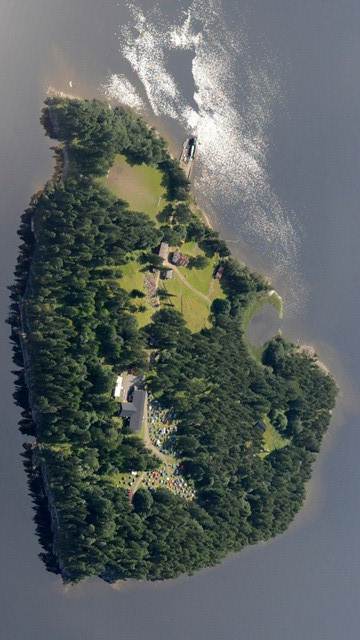
Utoya and Lanka: Two Pearl-shaped Islands

Where the bells tolled for the DEAD !!


Leave a comment

Filed under politIcal discourse, world events & processes

The World Bank – does it cash in on the deprived?

Michael O’Leary, Courtesy of Lanka Monthly Digest, 11 October 2011 edn … also see http://lmd.lk/

The World Bank’s (WB) official goal is the reduction of poverty and its function is to provide loans to developing countries for capital programmes. In the 1940s and ’50s, the bank adopted a conservative approach and its level of lending was low. From 1968, its President Robert McNamara shifted policy towards measures like building schools and hospitals, improving literacy and agricultural reform. Keynesianism was the ideology of the lender’s bureaucrat-economists, whose ideals echoed the domestic policies of the US governments of the time – LBJ’s Great Society, with its emphasis on growth and redistribution as a remedy for poverty.

McNamara’s Treasurer Eugene Rotberg acquired capital from the global bond market. Ironically, Swiss banks (many of which hoard much of the money looted by dictators from developing nations) contributed a substantial share of these funds. Unfortunately, from 1976 to 1980, debt levels in developing nations rose at an average annual rate of 20 per cent. Continue reading

1 Comment

Filed under accountability, american imperialism, NGOs, politIcal discourse, welfare & philanthophy, World Bank, world events & processes

Saman Dias, Sri Lankan American and serial entrepreneur

Eve Mitchell, in Contra Costa Times, 10 Sept 2011

As is true for many technology-trained immigrants who come to theUnited States, opportunity beckoned for Saman Dias. She arrived in the Bay Area in 1984 when she was 24 to start a training program for a software program under development.She learned the project was in danger of running out of funding after she had arrived. Dias took matters into her own hands, drawing on her experience four years ago in her native Sri Lanka of teaching children and adults how to use computers.”I ended up making cold calls and getting training and consulting opportunities and contracts through other training companies,” she said. “I had to be proactive and not just wait and expect somebody to save us.” Continue reading

Leave a comment

Filed under life stories, sri lankan society, unusual people, world events & processes

Sam Prince and his multi-talented ventures– the way to go

Chris Kimball, Updated December 08, 2010 12:28:00

 Pic by Alex Ellinghausen

Sam Prince is a doctor, Mexican food entrepreneur and philanthropist – and now he aims to eradicate one disease at a time. All this at just 26.

http://www.abc.net.au/news/2010-12-03/sam-prince/2363320 — Source: 7.30 ACT | Duration: 19min 51sec

  *****

 Healing the World a Step at a Time

Mark Metherell,  in Sydney Morning Herald, http://www.smh.com.au/national/healing-the-world-a-step-at-a-time-20110401-1crbh.html

Sam Prince is a prodigy in a hurry. Lunch with him is conducted standing at the counter of one of his restaurants, eating a burrito out of a foil wrap. At age 27, Prince has achieved more than most do in a lifetime. While still a medical student, he launched his own Zambrero ”fresh mex” restaurant chain which now numbers 17 outlets aroundAustralia. He graduated from medicine much earlier than most, at 22. The engaging young doctor has established and financed the E-magine Foundation, which has built and equipped 15 computer learning centres in rural areas of his parents’ birthplace,Sri Lanka, with a goal to build 100 schools by 2014. Continue reading

Leave a comment

Filed under accountability, life stories, rehabilitation, Tamil civilians, Tamil migration, unusual people, welfare & philanthophy, world affairs, world events & processes

Antiquated language teaching methods block goal of a trilingual police force

Olindhi Jayasundera, in the Daily Mirror, 6 October 2011: “People want a Trilingual Police force”

Presidential Advisor and Coordinator of the Presidential Initiative for a Trilingual Sri Lanka Sunimal Fernando said people had requested for the government to set up a trilingual police system at the earliest time possible. “They don’t want ethnic Tamil people in the North and Sinhala people in the South.” he said. The Presidential Secretariat said yesterday that when people were requested to send in their recommendations to be added in the country’s ten year trilingual national plan one of the suggestions that stood out was the people’s interest in changing the Sri Lankan Police Force into a strictly trilingual based one.

He said another recommendation was to change language teaching methods in the country. “We were informed that people find it difficult to learn Sinhala, Tamil and English due to the outdated methods practiced in the country as opposed to methods practiced abroad where language is taught through activities,” he said. He said that only 1.5% of the public sector receives training in the second language for a year. “To train the public service at the present rate of progress in bilingual training it would take about 100 years. This is the state of language use in Sri Lanka right now,” he said.  The Presidential Secretariat has called on the public to send their comments and suggestions to the council.

Leave a comment

Filed under accountability, communal relations, democratic measures, language policies, life stories, power sharing, reconciliation, Sinhala-Tamil Relations, sri lankan society

Bikes for Basics: A Cross-country Ride for Tamils in Mankulam … and Beyond

Mankulam, a town in Northern Sri Lanka which was devastated by the recent civil war, lasting for three decades.  In 2011 the violence is now finally over, villagers are returning to repair their homes, tend their abandoned farms and gradually rebuild their lives. This task is an arduous and demanding one, with little access to water, food, electricity and public transportation, life is hard and children walk up to 10km daily to continue their education at the local school.

The bicycle has been an integral part of the landscape and a popular mode of transport for many years in Northern Sri Lanka.  Economically viable, requiring a third of the energy of walking and moving at four times the speed, the bicycle is a prized family possession shared by all. It enables women to access essential food and vegetables from the local market, allows men to seek employment far from their homes and assists community members in taking their home grown produce to the town market. Known as a “Veerayah” in the local Tamil dialogue, the sturdy bicycle often transports the entire family – a child on the cross bar and another on the back behind the rider.

Recognizing that bicycles are an expression of self freedom, a contributor to the alleviation of poverty and a symbol of empowerment to the whole society, three British volunteers are embarking on a ride from Seenigama to Mankulam to raise money for new bicycles for the northern communities. They start on October 21st from Seenigama, a village in the rural South, devastated by the 2004 Boxing Day tsunami and cycle over 400 km in less than 5 days to Mankulam in the rural North. Both of these rural towns have deep links with the charity, the Foundation of Goodness, headed by local entrepreneur and humanitarian, Kushil Gunasekera and international cricket star, Muthiah Muralidaran, the organization helped rebuild Continue reading

Leave a comment

Filed under accountability, communal relations, cultural transmission, life stories, reconciliation, rehabilitation, Tamil civilians, tamil refugees, welfare & philanthophy, world events & processes

Discovering Australia: Pulling Tourist Legs

These were posted on an Australian tourism website, and the answers are the actual responses by the website officials, who obviously have a great sense of humor ……  ________________________________________________ 

Q: Does it ever get windy in Australia ? I have never seen it rain on TV, how do the plants grow? ( UK).
A: We import all plants fully grown, and then just sit around watching them die.
  __________________________________________________

Q: Will I be able to see kangaroos in the street? ( USA) 
A: Depends how much you’ve been drinking.
__________________________________________________

Q: I want to walk from   Perth to   Sydney – can I follow the railroad tracks? ( Sweden)
A: Sure, it’s only three thousand miles.  Take lots of water.
__________________________________________________ Continue reading

Leave a comment

Filed under australian media, citizen journalism, cultural transmission, world events & processes

Raj Rajaratnam as a Kinda’ Tiger

David Rose in Vanity Fair at http://www.vanityfair.com/politics/features/2011/09/tamil-and-raj-201109… [and see additons at end re sentencing].

Pic courtesy of google

Earlier this year, Raj Rajaratnam, founder of the Galleon Group hedge fund, was convicted of conspiracy and securities fraud in one of the biggest insider-trading cases in the history of Wall Street. But there was another reason the Federal Government was interested in Rajaratnam – his alleged financial support for Tamil separatists inSri Lanka, whose cause is spearheaded by the ferocious Tamil Tiger terrorists. Vanity Fair’s David Rose gets the untold story from a Tamil Tiger turned FBI informant.In November 2002, the Doubletree hotel in Somerset, New Jersey, hosted a daylong gala: lunch, speeches, dinner, more speeches and finally dancing. There were more than 400 guests, and they were all there to mark the 25th anniversary of the Ilankai Tamil Sangam, ostensibly a cultural and social organization. Many of its members supported the demand by Sri Lanka’s Tamil minority for an independent state, and although the Sangam was not avowedly militant, the flags and videos of the movement’s military wing, the Liberation Tigers of Tamil Eelam (LTTE), were on display throughout the hall. The Tamil Tigers, as the group is known, were then in the 19th year of a civil war against the Sri Lankan government. Designated a terrorist organization by the U.S. State Department in 1997, the Tamil Tigers invented the suicide-bombing belt, a technology it exported to Hamas and Al-Qaeda. The Tigers were responsible for hundreds of suicide attacks on buses, temples, and shopping malls and for village massacres in which children were killed in front of their parents. In May 1991, the Tigers assassinated the former Indian Prime Minister Rajiv Gandhi. Two years later, they assassinated the Sri Lankan president, Ranasinghe Premadasa.

Continue reading

Leave a comment

Filed under accountability, life stories, LTTE, prabhakaran, propaganda, Tamil civilians, terrorism, truth as casualty of war, war crimes, world affairs, world events & processes

The Three Terrors—that’s my cup of tea …. Jihad is sweet, Jihad is fun!

Ahmedido Domingo (aka Ahmadinejad), Erdogano Pavarotti (aka Erdogan) and Assad Carreras (aka Bashar Assad) singing about the benefits of terrorism.

SEE http://www.youtube.com/watch?v=4IS-GWc0tk8

Based on Funiculi Funicula
Sung by the Three Terrors:
Erdogano Pavarotti, Assad Carreras and Ahmedido Domingo

Continue reading

Leave a comment

Filed under american imperialism, terrorism, violence of language, war crimes, world events & processes