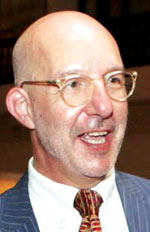
Nihal Rodrigo on Sri Lanka’s Relations with India

Nihal Rodrigo as reported in the Nation, 5 June 2011

Sri Lanka has emerged from a complex and violent conflict situation in whichIndia, our nearest neighbour, came to be involved as well.India’s own political and economic “neighbourhood” extends well beyond its immediate geographic national boundaries. The South Asian neighbourhood and indeed the wider global environment continue to undergo radical changes. Change is one of the few constant factors in history. Global developments over the last half century illustrated that neither rigid devotion to a particular political doctrine of governance, nor to a system of economic order can endure. TheUnionof the Soviet Socialist Republics (USSR) has broken out into many divergent independent states. In India’s immediate neighbourhood,China, the largestCommunistRepublicin the world has moved away from rigid Communist dogma and state control to emerge as the second largest economy in the world in record time. Sino-Indian relations have acquired new dimensions which impact in our neighbourhood and beyond, globally as well. Continue reading
Leave a comment

Filed under historical interpretation, Indian Ocean politics, island economy, LTTE, Rajapaksa regime, Sinhala-Tamil Relations, world events & processes

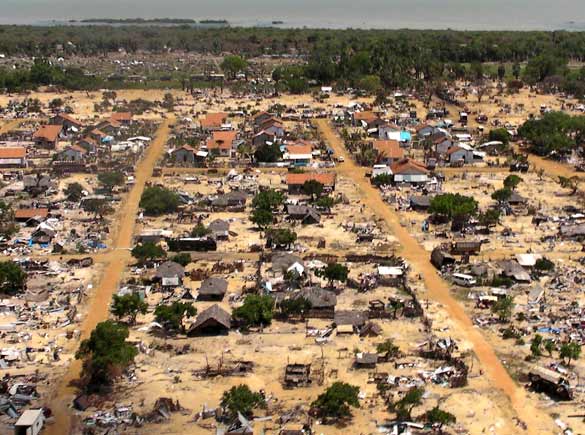
Pirapaharan’s Last Stand was in this Arena

  • ·        Times Aerial Images of the Coastal Strip that was Pirapaharan’s Last Stand, circa 23 May 2009

  • ·        Kanchan Prasad’s Post-War Vistas at the LTTE’s Last Redoubt, May 14-19 2009

 SEE  “PICTORIAL IMAGES” in top menu within this site


Pic by Times media man, 23 May 2009

 Pics by Kanchan Prasad, 14-18 May 2009

Leave a comment

Filed under LTTE, military strategy, Uncategorized

SL Army into bigger things

From the Economist, http://www.economist.com/node/18775481?story_id=18775481&fsrc=rss

IN THE run-up to Vesak, the holiest day in the Buddhist calendar, which this year coincided with the second anniversary of its victory against the Tamil Tiger rebels,Sri Lanka’s armed forces had plenty to do. The throngs who clogged Colombo’s streets on May 18th for the festival of light marking the Buddha’s birthday were treated to an array of glimmering, white paper lanterns, each meticulously assembled by a soldier, sailor or airman. The army’s non-martial tasks do not stop at lamp-making. Between 2006 and 2009 Sri Lankainducted thousands into its army, navy and air force to fight against the Liberation Tigers of Tamil Eelam. With the war won, servicemen are being deployed in everything from market gardening to tourism.

 Defence symposium at Galadari

Training University undergraduates.


Continue reading

Leave a comment

Filed under Uncategorized

IOM and Danziger aid ex-Tiger cadres

Shamindra Ferdinando, in Island, 29 May 2011

Ex-LTTE combatants can now benefit from a unique project executed by the International Organisation for Migration (IOM) with the support of international donors. The scheme launched in the aftermath of the conclusion of the war in May 2009, provides assistance to those who once fought for the LTTE. Richard Danziger, Chief of Mission, IOM Sri Lanka, told The Island that they had designed and implemented a comprehensive Information, Counselling, and Referral Services (ICRS) programme for ex-LTTE personnel. Danziger said that the ICRS project would help the ex-combatants to return to civilian life in a dignified and timely manner. That would definitely contribute to the process of peace and national reconciliation, thereby building a positive environment for the resumption of economic activities in war torn areas, Danziger said

Danziger was speaking after the last week’s IOM’s 60th anniversary celebrations. Danziger revealed that as at May 16, 2011, 1,730 ex-LTTE personnel had received individual assistance, through the ICRC project.

On the invitation of the government of the Government of Sri Lanka, the IOM has so far profiled about 6,800 ex-LTTE personnel. Danziger said that it was an ongoing project conducted with the blessings of the government. He said: “As of today, more than 6726 former LTTE cadres have been profiled by IOM. Each beneficiary receives individual support following their release from the government’s rehabilitation facilities. They can apply for a small grant to set up a business, find employment, start formal education or be engaged in apprenticeships and on-the-job training schemes. Similarly, through the ICRS referral mechanism, beneficiaries are put in contact with job vacancies, vocational training opportunities and some of the specialist services that they may need to access such as health, psycho-social and legal support. As at 16 May 2011, 1,730 former combatants have been given individual assistance through the ICRS mechanism.” Continue reading

Leave a comment

Filed under life stories, LTTE, Rajapaksa regime, reconciliation, Sinhala-Tamil Relations, welfare & philanthophy

A Woman’s Courage: demining work

Raisa Wickrematunge, in The Sunday Leader, May 2011

Pic by Azeez

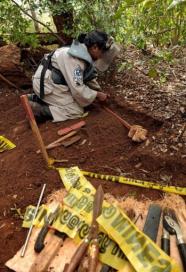
Late last year The Sunday Leader visited Mahiyankulam to find out more about the de-mining process. It was like entering a different world. Moving through the thick forest, along the demarcated safe lanes, they materialised. The first things you spotted were bright protective jackets and  helmets. The de-miners were busily occupied, gingerly lifting the mines and disarming them. They do this every day, from 9 am to 1.30 pm.As we moved around the Mahiyankulam site, one thing stood out surprisingly, quite a few of the de-miners were female. The project manager of the Horizon India de-mining team, Colonel P.M. Meena explained that a few had lost family members in the war, and had subsequently joined the team. They smiled at us shyly, slight figures in heavy protective gear, before going back to work.

Continue reading

Leave a comment

Filed under LTTE, military strategy, Sinhala-Tamil Relations, unusual people, world events & processes

Syed Saleem Shahzad: murdered journalist just another statistic

Amanda Hodge, in The Australian, 2 June 2011

OVER coffee in an Islamabad cafe three weeks ago, Syed Saleem Shahzad clutched his tender right side, where fragments of a bullet fired by an unstable security guard last August remained lodged, and laughed off his misfortune. In one year, the prominent Pakistani journalist had been shot, threatened by al-Qa’ida-linked commander Ilyas Kashmiri, detained by senior ISI ( Inter-Services Intelligence agency) officers and injured in a car accident after his driver fell asleep while on the road back from seeing militant contacts in Waziristan.

On Tuesday, Shahzad’s battered body was pulled from a canal 130km fromIslamabad. His car, with identity documents and a diary, was found 10km away. A rushed autopsy, conducted just before Shahzad was reportedly buried as an unclaimed body, noted his already-fragile right ribs had been broken. His lungs were punctured and his liver had failed. Shahzad had been missing since Sunday evening after setting off for a local television station where he was to give an interview on his investigation into alleged links between al-Qa’ida and the Pakistannavy. His story, published in the Hong Kong-based Asia Times Online on May 27, reported that al-Qa’ida operatives attacked the Mehran naval base inKarachi last month after talks with al-Qa’ida broke down over the release of naval officers arrested for suspected links with the terror group. It was to have been the first in a two-part series. Continue reading

Leave a comment

Filed under australian media, life stories, terrorism, unusual people, world events & processes

Terrorism Gonibilla in Sri Lanka: Defence Symposium now in Progress –two items

Seminar on terrorism opens in Sri Lanka

R. K. Radhakrishnan, in The Hindu, http://www.thehindu.com/news/international/article2064807.ece

Pic by Radhakrishnan

The three-day seminar opened on Tuesday with an address by Army Commander Jagath Jayasuriya, detailing the humanitarian operation carried out by the Sri Lankan Army in the final stages of the war.  Sri Lanka protected civilians in the face of a ruthless terrorist group using civilians as part of its military strategy, its Army Commander Jagath Jayasuriya said here on Tuesday. “Victory came with many sacrifices… [this is a] saga to be shared with the world. A saga of epic political resolve… National security is no longer confined to the borders as we see in Iraq, Afghanistan and Libya,” he said in his opening address on ‘Defeating Terrorism, Sri Lanka Experience,’ organised by the Sri Lankan Army to share its experience in eradicating the LTTE. Calling for a global alliance to defeat terrorism, he said that only such an alliance could succeed. He encouraged countries facing terrorism challenges to face it head on.

Continue reading

Leave a comment

Filed under Fascism, historical interpretation, Indian Ocean politics, LTTE, military strategy, Rajapaksa regime, Sinhala-Tamil Relations, world events & processes

Women “key” to water projects in Sri Lanka

Women could prove key to the success of Sri Lanka’s rural water and sanitation projects, experts and villagers say. As a five-year project to reduce time spent collecting water and to ensure safe drinking water jointly launched by the Asian Development Bank (ADB) and Sri Lankan government comes to a close, its leaders are reflecting on the lasting benefits of their decision to incorporate women in an unprecedented way. “Usually women are in the backseat, but in this [project] we were right in front,” Indrani Silva, who heads the women’s association at Lanka Pokuna village in the north-central Polonnaruwa District, one of five rural areas involved in this US$263 million undertaking, told IRIN. Projects took place in eastern Batticaloa and Trincomalee, north-central Anuradhapura and Polonnaruwa and southern Hambantota districts. Continue reading

Leave a comment

Filed under island economy, life stories, welfare & philanthophy, world events & processes

Jaffna Open Forum: Labour Market Conundrum in Jaffna and the North

Friday, 03rd JUNE 2011, 4:00 – 7:00 pm

Venue: Jaffna Public Library Auditorium, Esplanade, Jaffna 

In a post-war situation like that ofSri Lanka, generating gainful employment should be the top priority, especially in the war-affected regions. Hundreds of thousands of jobs and livelihoods were lost there due to mass displacement of populations, security restrictions, land mines infested agricultural lands, and closure of businesses and manufacturing activities. Although the unemployment rate in the country as a whole was just 4.9% in 2010, no one knows the unemployment rate in theNorthern Provinceor the Jaffna District because of lack of data.    

Evidences such as high number of households dependent on welfare handouts, high number of crimes, and strong desire to migrate abroad among youths and middle-aged persons in Jaffna indicate high levels of unemployment and underemployment in Jaffna in particular and the Northern province in general. A learned guess-estimate of unemployment rate in Jaffna could be in the range of 10% – 20%.  Although a lot of people highlight the high unemployment rate, the daily wage rate for unskilled, semi-skilled, and skilled labour inJaffnais almost the same as inColombo. Besides, there is labour shortage during sowing and harvesting seasons. Further, unemployed youths (including graduates) could be seen loitering in villages and towns. Thus, the labour market inJaffnaappears to be a puzzle.    Continue reading

Leave a comment

Filed under island economy, Sinhala-Tamil Relations

Alexa Schulz’s “Tropical Amsterdam”

Hassina Leelarathna, in the Sunday Leader, 30 May 2011

It wasn’t too long ago, it seems, that I used to hear an elderly Burgher neighbour grumble as she watched her neighbours walk past her home: “Look at these natives, child, look at how they dress now.” It was the mid 1970’s, and my neighbour, with the crisp semi-British accent and ‘bobbed hair,’ still considered herself among the island’s privileged, even as the European short dress, long the preserve of Burgher ladies and, perhaps, one of the last symbols of their cultural separateness and social dominance, was being mercilessly usurped by the ‘natives.’
Now, more than three hundred years after their ancestors first forayed into the island, do the Burghers still consider themselves a tier above the rest?  With whom do the remaining Burghers identify?  With the coloniser or the colonised? The conqueror or the conquered? These are the questions film director Alexa Oona Schulz set out to answer when she headed to Sri Lanka with her cinematographer husband, Matthias Grunsky, in 2009.  The result is a 54-minute documentary, Tropical Amsterdam, that gives a glimpse into the sometimes funny, sometimes poignant, lives of an aged tribe now facing extinction in a land their ancestors once ruled.
Schulz lives in Los Feliz Village, a laid back artistic community near Los Angeles that is full of chic little restaurants, and bars once frequented by America’s most famously drunken poet Charles Bukowski.  Over breakfast, Schulz, whose documentary “Football Warriors” won two international awards in 2006, recounted her Sri Lankan experience and her interest in making a film about the Burghers of Sri Lanka.   The German-born filmmaker became fascinated with the island after reading Michael Ondaatje’s Running in the Family, an energetic memoir that draws on the Sri Lankan-born author’s Dutch genealogy Continue reading

10 Comments

Filed under cultural transmission, life stories, unusual people, world events & processes