Chandra C de Silva, in book review of Sri Lanka at the Crossroads of History, edited by Zoltán Biedermann and Alan Strathern, London, UCL Press, 2017. xiv, 340 p.
The significance of this volume of twelve essays lies principally in its collective effort to reassess the importance of global connections in Sri Lanka’s history up to 1850. Previous historical writing had sporadically dealt with this theme. For instance, in the area of ancient history the writings of Sri Lankan scholars such as Senerat Paranavithane, Senake Bandaranayake, and Sudarshan Seneviratne have placed Sri Lanka in the context of archaeological research in India. Historians of medieval Sri Lanka, notably Sirima Kiribamune, W. M. Sirisena, and S. Pathmanathan paid considerable attention to extra-local linkages. Writing on more recent Sri Lankan history, Jorge Flores, S. Arasaratnam, and John Holt (to name but a select few) have made significant contributions to our understanding on how the external world was perceived and received in Sri Lanka up to the mid-19th Century. Furthermore, thanks to the scholarship of a new generation of scholars (including the editors of this volume), we now know much more on how Sri Lanka was part of the wider worlds of Sanskrit literature, Buddhist learning, Cola power, Islam, and of Western colonial empires. Nevertheless, with the growth of the nationalist movement against British colonial rule and the first half century of independence, the emphasis by many historians (including myself) has been on the study of Sri Lanka as a unit. As the editors point out, internal ethnic conflict in recent times has also led to a continued emphasis on the evolution of Sri Lanka and its peoples at the expense of how Sri Lanka engaged with the world beyond its shores.


Continue reading →
Like this:
Like Loading...



 Figure 1 – post-conflict releases of land from the Palali HSZ


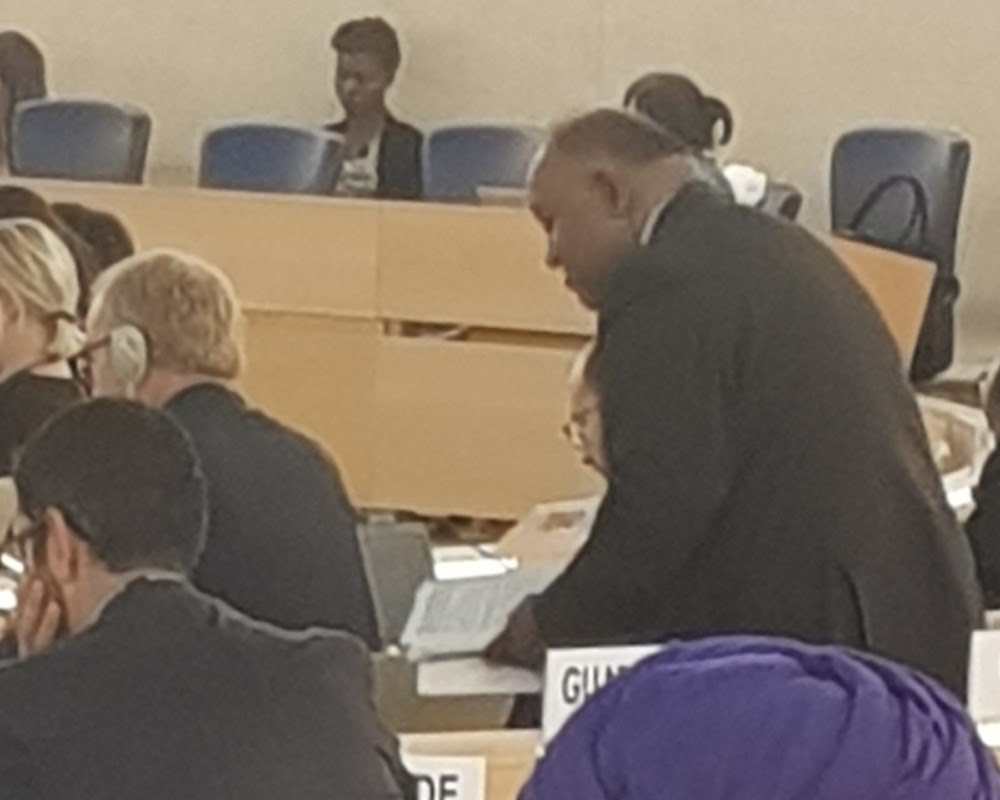 Pro-LTTE Tamil Terrorists leader Pathmanabban Manivannan distributing anti-Sri Lanka documents inside the UNHRC General Assembly in Geneva


