Abi-Habib and Bastians on the Political Struggle in Sri Lanka

Maria Abi-Habib and Dharisha Bastians, in New York Times, 26 October 2018, where the title reads “Sri Lanka Faces Constitutional Crisis”

Sri Lanka plunged into a constitutional crisis Friday after the president ousted the prime minister, a move that took the nation by surprise and was denounced as illegal by some government ministers. Sri Lankans were glued to their television sets Friday after President Maithripala Sirisena dismissed Prime Minister Ranil Wickremesinghe and replaced him with Mahinda Rajapaksa, a popular former leader who was accused of human rights abuses, brazen nepotism and excessively close ties to China when he had governed the country.


Continue reading

1 Comment

Filed under accountability, authoritarian regimes, China and Chinese influences, democratic measures, economic processes, foreign policy, governance, historical interpretation, Indian Ocean politics, legal issues, parliamentary elections, politIcal discourse, power politics, security, self-reflexivity, Sri Lankan cricket, vengeance, world events & processes

A Presidential Coup …. and A Major Political Crisis

Asanga Welikala, courtesy of Groundviews, whose preferred title is “Paradise Lost? Preliminary Notes on a Constitutional Coup”

There were three dramatic announcements on the evening of Friday 26th October 2018 from the Presidential Secretariat, which occurred in the following order: (a) the announcement of the withdrawal of the UPFA from the government; (b) the swearing-in of Mahinda Rajapaksa before President Maithripala Sirisena as the Prime Minister; and (c) the announcement that the President has informed Ranil Wickremesinghe in writing that he has been removed from the office of Prime Minister under Article 42(4).

Mahinda Rajapakse in Kandy … earlier in 2015 -Getty Images-Buddhika Weerasinghe

Continue reading

4 Comments

Filed under accountability, authoritarian regimes, constitutional amendments, governance, historical interpretation, legal issues, life stories, politIcal discourse, power politics, sri lankan society, world events & processes

Land Acquisition Processes in Sri Lanka, 1948-2018

Gerald H. Peiris, being  an article serialized recently in The Island, under the following heading  “Alleged ‘Land Grabbing’ by the Security Forces in Sri Lanka” … with highlighting emphasis being impositions by The Editor, Thuppahi

In view of the significance accorded in recent public debate and discussion on the subject of ‘land grabbing’ in several conflict-ridden countries of the Third World it is necessary to devote attention to a series of facts that are of crucial relevance to a balanced understanding of the related situation in Sri Lanka.

Figure 1 – post-conflict releases of land from the Palali HSZ

Continue reading

Leave a comment

Filed under accountability, authoritarian regimes, communal relations, economic processes, governance, historical interpretation, island economy, land policies, legal issues, LTTE, military strategy, modernity & modernization, nationalism, NGOs, politIcal discourse, power politics, press freedom & censorship, rehabilitation, security, self-reflexivity, Sinhala-Tamil Relations, slanted reportage, sri lankan society, Tamil civilians, Tamil Tiger fighters, truth as casualty of war, vengeance, war reportage, welfare & philanthophy, world events & processes

Sri Lanka’s Withering History. Without a Hattotuwa or a Fukuyama!

Richard Simon, whose preferred title is “The End of History, Again” ……. —  A parody which is presented in this blog viz,……………………………………. http://notesfromceylon.blogspot.com/2018/10/the-end-of-history-again.html — a site which I encourage you to visit …. Note that I have inserted highlighting emphases to assist readers.

Hattotuwa  A Tiger Cub resembling Hattoyama?

A Tiger Lad going on duty -Pic by Shyam Tekwani circa 1989

Someone for whom I have great respect asked me to write my reaction to this essay by Sanjana Hatthotuwa in the Island. I do so somewhat unwillingly, since the kind of writing it represents is ordinarily of no interest to me. This is because I view, historical processes (including, inter alia, all social and political processes) as being beyond human control. It is true that humans, both individually and in groups, can grasp and sometimes make use of these processes to further their own ends, but in doing so they unavoidably change both the process and its results. And these changes and effects are not fully predictable by anyone. Hence my deep conviction that socio-political activism is at best ambiguous in its effects, and at worst downright dangerous.

Continue reading

1 Comment

Filed under accountability, authoritarian regimes, British colonialism, centre-periphery relations, communal relations, cultural transmission, disparagement, economic processes, governance, heritage, historical interpretation, island economy, landscape wondrous, language policies, life stories, modernity & modernization, politIcal discourse, power politics, self-reflexivity, Sinhala-Tamil Relations, sri lankan society, Tamil Tiger fighters, truth as casualty of war, unusual people, world events & processes, zealotry

Politics without Principle in Sri Lanka, 1948-1992

John Richardson. reproducing a chapter in Arun Gandhi, Ed., W orld Without Violence (1993) which is entitled “The Seventh Blunder: Politics without Principle. Lessons from Sri Lanka” ++

 FR Jayasuriya fasting unto death in support of SINHALA ONLY … 24 May 1956

The world began to experience a wave of political change in 1989.  Entrenched authoritarian regimes in many nations have crumbled in the face of popular dissatisfaction with repressive policies that failed to deliver on promises of economic opportunity.  Many nations are now experimenting with the forms of democracy: popular elections to choose leaders, accountability of leaders to elected parliaments, freedom of expression and freedom to compete for power within organized political parties.[i]

Continue reading

1 Comment

Filed under accountability, Buddhism, cultural transmission, discrimination, economic processes, governance, historical interpretation, Indian Ocean politics, insurrections, island economy, language policies, Left politics, life stories, modernity & modernization, politIcal discourse, power politics, security, self-reflexivity, Sinhala-Tamil Relations, sri lankan society, vengeance, welfare & philanthophy, world events & processes

Ranil Wickremasinghe at the Oxford Union delineating the Geo-Politics of the Indian Ocean over Time

Today I had the opportunity to speak at two hallowed British institutions: the London Stock Exchange founded in 1698, and now at the Oxford Union born in 1823. Many Sri Lankans educated at Oxford have made an impact in Sri Lanka. Among them were two Presidents of this very Union – my colleagues – Lalith Athulathmudali – we studied at the same school, we entered Parliament at the same time in 1977 and we sat in the same Cabinets. Lakshman Kadirgamar, who like me, studied for the LLB at the University of Colombo, and then came to Balliol. They were both Presidents of the Union in the Hillary terms of 1957-58 and 1958-59, respectively, and both their lives were cut short by the violence perpetrated by the LTTE.

Continue reading

2 Comments

Filed under accountability, american imperialism, British imperialism, centre-periphery relations, China and Chinese influences, energy resources, export issues, foreign policy, growth pole, historical interpretation, Indian Ocean politics, island economy, landscape wondrous, legal issues, performance, politIcal discourse, power politics, self-reflexivity, sri lankan society, the imaginary and the real, transport and communications, world events & processes

Natural Wonders: Replicating Male Potency

This boating cameraperson was surely inspired!

Leave a comment

Filed under accountability, landscape wondrous, life stories, meditations, performance, photography

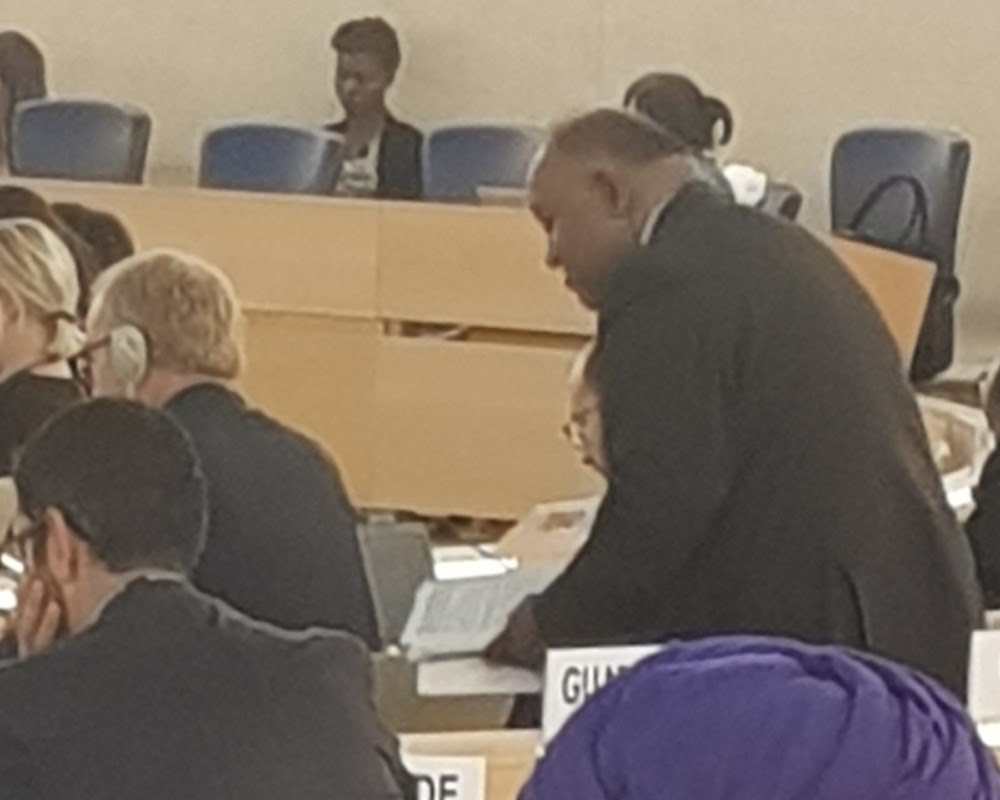
THIS ITEM reached me by email and the captions are those within the pictorial display: Editor Thuppahi ….. visit this reference for the item posted on15th Septemebr 2018

http://www.sinhalanet.net/ltte-tamil-terrorists-diaspora-leader-pathmanabban-manivanna-cought-red-hand-in-unhrc-general-assembly-while-distributing-anti-sri-lankan-documents-to-un-ambassadors-on-13th-sep-2018

THE TITLE deployed runs thus: “ LTTE Tamil Terrorists’ Diaspora Leader, Pathmanabban Manivanna caught Red Hand in UNHRC General Assembly while distributing ant

1Pro-LTTE Tamil Terrorists leader Pathmanabban Manivannan distributing anti-Sri Lanka documents inside the UNHRC General Assembly in Geneva

Continue reading

Leave a comment

October 23, 2018 · 2:47 pm

Ethnic Conflict in Sri Lanka and Sinhalese Perspectives: Barriers to Accommodation

Michael Roberts …. reprinting an article drafted in Heidelberg in 1976 and published in the MODERN ASIAN STUDIES in 1978  … with the pessimistic forecast in its concluding paragraphs being informed by seminar discussions in SRi Lanka in the early 1970s, an article by Martin Woolacott in the Guardian Weekly and news items in UK indicating that young Tamils were receiving military training with the PLO.

Bandaranaike stirring a crowd and Mettananda addressing a crowd of Sinhalayo on Galle Face Green pressing for the Sinhala Only Bill

It is widely recognized that the concepts of ‘state’ and ‘nation’ developed largely out of the history of Europe. In Western Europe the process of state-building preceded and assisted the process of nation-formation. In consequence, the concept of the nation that developed from this process focused on the political community as defined by the institutional and territorial framework. In the tradition of Rousseau, Abbé Sieyes could define a nation as ‘a body of associates living under one common law and represented by the same legislature’.[1] In most lands of Western Europe these developments also produced the model of a single nationality nation or nation-state. In Central and Eastern Europe, the process was different: ‘the nation was first defined as a cultural rather than a political entity’ and the underlying theoretical foundation was in the tradition of Herder rather than Rousseau.[2] Nevertheless, once nationhood had been achieved in these regions there was a tendency to approximate to the model associated with Western Europe. This was made all the easier in such states as Italy and Germany because the majority of their citizens were from one ethnic group; they, too, were single nationality nations.[3] Whatever the dualisms and amalgams in Europe, the export model has been that associated with that of Western Europe—for the simple reason that the predominant colonizing powers were from this part of the Continent.

Continue reading

Leave a comment

Filed under atrocities, Buddhism, communal relations, devolution, economic processes, electoral structures, historical interpretation, land policies, language policies, Left politics, legal issues, life stories, politIcal discourse, power politics, riots and pogroms, self-reflexivity, Sinhala-Tamil Relations, sri lankan society

Sri Lanka at the Crossroads of History: A Book Review

Chandra C de Silva, in book review of Sri Lanka at the Crossroads of History, edited by Zoltán Biedermann and Alan Strathern, London, UCL Press, 2017. xiv, 340 p.

The significance of this volume of twelve essays lies principally in its collective effort to reassess the importance of global connections in Sri Lanka’s history up to 1850. Previous historical writing had sporadically dealt with this theme. For instance, in the area of ancient history the writings of Sri Lankan scholars such as Senerat Paranavithane, Senake Bandaranayake, and Sudarshan Seneviratne have placed Sri Lanka in the context of archaeological research in India. Historians of medieval Sri Lanka, notably Sirima Kiribamune, W. M. Sirisena, and S. Pathmanathan paid considerable attention to extra-local linkages. Writing on more recent Sri Lankan history, Jorge Flores, S. Arasaratnam, and John Holt (to name but a select few) have made significant contributions to our understanding on how the external world was perceived and received in Sri Lanka up to the mid-19th Century. Furthermore, thanks to the scholarship of a new generation of scholars (including the editors of this volume), we now know much more on how Sri Lanka was part of the wider worlds of Sanskrit literature, Buddhist learning, Cola power, Islam, and of Western colonial empires. Nevertheless, with the growth of the nationalist movement against British colonial rule and the first half century of independence, the emphasis by many historians (including myself) has been on the study of Sri Lanka as a unit. As the editors point out, internal ethnic conflict in recent times has also led to a continued emphasis on the evolution of Sri Lanka and its peoples at the expense of how Sri Lanka engaged with the world beyond its shores.


Continue reading

Leave a comment

Filed under British colonialism, centre-periphery relations, commoditification, cultural transmission, economic processes, historical interpretation, Indian Ocean politics, Indian traditions, landscape wondrous, life stories, modernity & modernization, politIcal discourse, Portuguese in Indian Ocean, power politics, religiosity, security, sri lankan society, the imaginary and the real, world events & processes, zealotry