Sunset on Lake Petén Itzá, Guatemala


The Central American country of Guatemala boasts some very large lakes. Lake Izabal is the country’s largest, and Lake Atitlán is probably the most renowned (some have called it the world’s most beautiful lake). The lake in our image, Petén Itzá, is also well worth a look – and lots of people feel it’s definitely worth a visit, as many journey here to take in the stunning scenery. Petén Itzá is popular with the local wildlife as well – crocodiles, spider monkeys, jaguars and brockets thrive here, and the northeastern shore of the lake hosts a butterfly reserve.

Besides all of the lakeside splendour, the area is rich in archaeological sites. It’s said at least 27 Maya archaeological sites are located in the lake’s vicinity, including Tayasal, once a large city.

Continue reading

Leave a comment

Filed under ancient civilisations, landscape wondrous, tourism, travelogue

USA’s Bungling-Programmes in Afghanistan

“Double Eagle’s” Serial Commentary 

ONE

Even as the Vice-President with Obama, Biden was opposed to keeping US troops in Afghanistan. When Obama supported the Army’s request for a troop surge in 2009, VP Biden strongly opposed it. It is also known that most Americans did not want their soldiers and airmen to remain in that country after Bin Laden was taken out.

Biden made the announcement in May this year, that he will pull out all US troops by the end of August. His desire was to complete the withdrawal before Sep 2021 (the 20th Anniversary of 9/11 attacks on the USA).

Continue reading

2 Comments

Filed under accountability, american imperialism, atrocities, foreign policy, historical interpretation, Islamic fundamentalism, law of armed conflict, life stories, military strategy, politIcal discourse, power politics, security, Taliban, trauma, truth as casualty of war, unusual people, war reportage, world events & processes, zealotry

Taliban Ban? No More Music in Afghanistan?

ONE = A Celebrated Afghan School Fears the Taliban Will Stop the Music

“The Afghanistan National Institute of Music became …”

Item in NY Times [whihc demands payment for access !]

Continue reading

2 Comments

Filed under Afghanistan, atrocities, authoritarian regimes, centre-periphery relations, communal relations, cultural transmission, discrimination, Fascism, governance, historical interpretation, Islamic fundamentalism, life stories, performance, politIcal discourse, power politics, religiosity, religious nationalism, self-reflexivity, Taliban, world events & processes, zealotry

USA Falls on Its Own Sword in Afghanistan

A friend in the Antipodes whom I shall call “A Modern Anzac” has provided a long-term appraisal of Western intervention in Afghanistan which questions the interpretation from Clive Williams as well as those voiced by former PM, John Howard, and by Greg Sheridan and others in The Australian newspaper [i]  In doing so, I have imposed by own highlighting…. Michael Roberts 

 A Modern Anzac

A = Frontal Challenge One

This kind of narrative belongs to a 1800s mindset of military thinking: it is outmoded and irrelevant to the 21st Century.

Continue reading

Leave a comment

Filed under accountability, american imperialism, historical interpretation, Islamic fundamentalism, landscape wondrous, life stories, military strategy, politIcal discourse, power politics, security, self-reflexivity, Taliban, trauma, truth as casualty of war, war reportage, world events & processes

Afghanistan Withdrawal: Trump Initiated, Biden Followed, Pentagon Unhappy ….

   Clive Williams in Email Note to Michael Roberts, 18 August 2021 *&*

President Trump made the political decision to withdraw and committed the US to a withdrawal schedule in 2020. President Biden followed through on that commitment. It was not a military decision. The US military could have stayed indefinitely. They had no fatalities this year and only nine in 2020, so it was a sustainable deployment. There was no prospect of defeating the Taliban militarily though without the cooperation of Pakistan.
State [i.e. the State Department] accepted President Trump’s decision, but the Pentagon was not happy about it, particularly because so much equipment had to be abandoned due to the accelerated withdrawal schedule.  The biggest mistake the Americans made was supporting corrupt Afghan political leaders who lacked popular support. The second biggest was not adequately monitoring and mentoring the ANSF. [i.e. = Afghan National sEcurity Force].
Clive
 Taliban fighters in Kabul on Monday. Picture: Reuters

Continue reading

1 Comment

Filed under accountability, Al Qaeda, american imperialism, authoritarian regimes, centre-periphery relations, fundamentalism, historical interpretation, Indian Ocean politics, Islamic fundamentalism, life stories, military strategy, politIcal discourse, power politics, security, unusual people, vengeance, war reportage, world events & processes

Horror and Terror in Kabul: Pictorials

No words  required!!


Continue reading

1 Comment

Filed under accountability, american imperialism, fundamentalism, historical interpretation, human rights, landscape wondrous, life stories, martyrdom, military strategy, political demonstrations, power politics, taking the piss, Taliban, the imaginary and the real, transport and communications, trauma, travelogue, unusual people, vengeance, world events & processes

Walter J. May: A Marvellous Richmondite and Ceylonese

The Richmond Sixty Club & Others

Richmond 60 Club Wishes Walter J. May Happy Birthday, 8th January 2021 

A Sixty Club Publication 

MESSAGE OF THE 6O CLUB PRESIDENT

As the President of the Richmond 60 Club, I am happy to write a few words for the special supplement issued to coincide with the 92nd birthday of Walter J. May on 08th January 2021. 

Continue reading

2 Comments

Filed under accountability, cricket for amity, cultural transmission, education, heritage, historical interpretation, landscape wondrous, life stories, performance, self-reflexivity, Sri Lankan cricket, sri lankan society, travelogue, unusual people, world events & processes

From Empiricist Conflation to Distortion: Caste in South Asia

Michael Roberts, responding in 1985 to a Review Essay by Susan Bayly of Cambridge University  on his book on Caste Conflcist and Elite Formation, CUP 1982

Susan Bayly** has done me the honour of reviewing the book on Caste Conflict and Elite Formation: The Rise of a Karava Elite in Sri Lanka, 1500-1931 at considerable length.’ Her essay is appropriately entitled ‘The History of Caste in South Asia’. This title provides a clue to the interpretative pathways which have led her systematically to misunderstand the arguments within the book. No less problematical is her implicit belief in the possibility of constructing a composite picture of the caste system qua system on the basis of empirical data drawn from different regions, regions as widely different as Sri Lanka, southern India and western India. Let me elaborate this charge, and in doing so reiterate the arguments which I presented.

Susan Bayly

Continue reading

1 Comment

Filed under British colonialism, caste issues, centre-periphery relations, commoditification, cultural transmission, economic processes, education, ethnicity, historical interpretation, Indian religions, Indian traditions, island economy, Kandyan kingdom, land policies, landscape wondrous, life stories, modernity & modernization, politIcal discourse, Portuguese imperialism, sri lankan society, transport and communications, unusual people, welfare & philanthophy, working class conditions, world events & processes

Anecdotal Tit Bits: Making “The Bridge on the River Kwai”

Michael Roberts

ONE: The Theme Tune and George Siegertsz

The mainline tale about the production process in Ceylon in the composition of the outstanding film The Bridge on the River Kwai – a film based on an actual wartime commando operation involving the destruction of a bridge being built with POW labour by the Japanese war machine in Thailand – can be read at https://thuppahis.com/2021/08/02/kitulgala-and-the-classic-movie-bridge-on-the-river-kwai/

Continue reading

5 Comments

Filed under art & allure bewitching, British colonialism, centre-periphery relations, heritage, historical interpretation, island economy, landscape wondrous, life stories, meditations, performance, photography, self-reflexivity, sri lankan society, the imaginary and the real, travelogue, unusual people, world events & processes, World War II and Ceylon

Afghanistan’s Turmoil Replayed at Lords Cricket Ground

Michael Roberts

In my reading, the spirit of cricket was spiked and shattered at its iconic home-ground of Lords yesterday. Not only yesterday –the fifth day. IThe “spiking” occurred throughout the match  with (A) tailenders’ bombarded with headhigh short-pitched bowling by both sides; (B) verbal badinage and assualts — camouflaged as “badinage” and presented with smiles — from both parties; and (C) the spiking of the ball by Jimmy Anderson [according to one report] among the events on the ground.

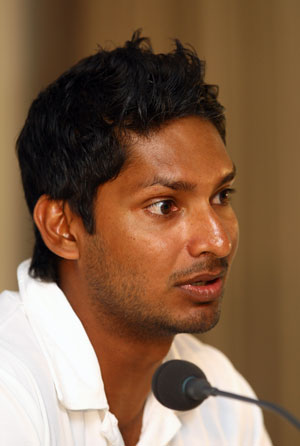
Kumar Oh Kumar …. what future for “The Spirit of Cricket” talk you delivered during the famous COWDREY LECTURE some years back!

https://www.espncricinfo.com/story/kumar-sangakkara-s-mcc-spirit-of-cricket-lecture-522183

….. https://www.cricketcountry.com/articles/kumar-sangakkaras-spirit-of-cricket-speech-tugs-the-heart-3891

Continue reading

1 Comment

Filed under accountability, cricket for amity, disparagement, fundamentalism, life stories, patriotism, performance, psychological urges, world events & processes