
Prime Minister Mia Mottley of Barbados addresses Opening Ceremony, COP26, 1 Nov 2021
VISIT …. https://www.youtube.com/watch?v=BsBVx_8oFm0

VISIT …. https://www.youtube.com/watch?v=BsBVx_8oFm0
Filed under accountability, centre-periphery relations, cultural transmission, democratic measures, demography, disparagement, economic processes, education, environmental degradation, fundamentalism, governance, historical interpretation, landscape wondrous, legal issues, life stories, modernity & modernization, performance, politIcal discourse, population, power politics, self-reflexivity, taking the piss, the imaginary and the real, trauma, truth as casualty of war, unusual people, welfare & philanthophy, world events & processes
Rod Mickleburgh, in The Globe and Mail, 10 November 2021, where the title is “Chinese Canadian Veterans celebrated at Vancouver Museum”
When the Second World War ended, Ronald Lee did what so many other returning veterans did. He shed his uniform, took up civilian life, married, had kids and never talked about what he did during the war. Mr. Lee maintained his silence for 70 years. Beyond a few medals found in his underwear drawer long ago, his six kids knew almost nothing about his wartime experience. Finally, in his mid-90s, he agreed to be interviewed by Catherine Clement, curator of the Chinese Canadian Military Museum in Vancouver.
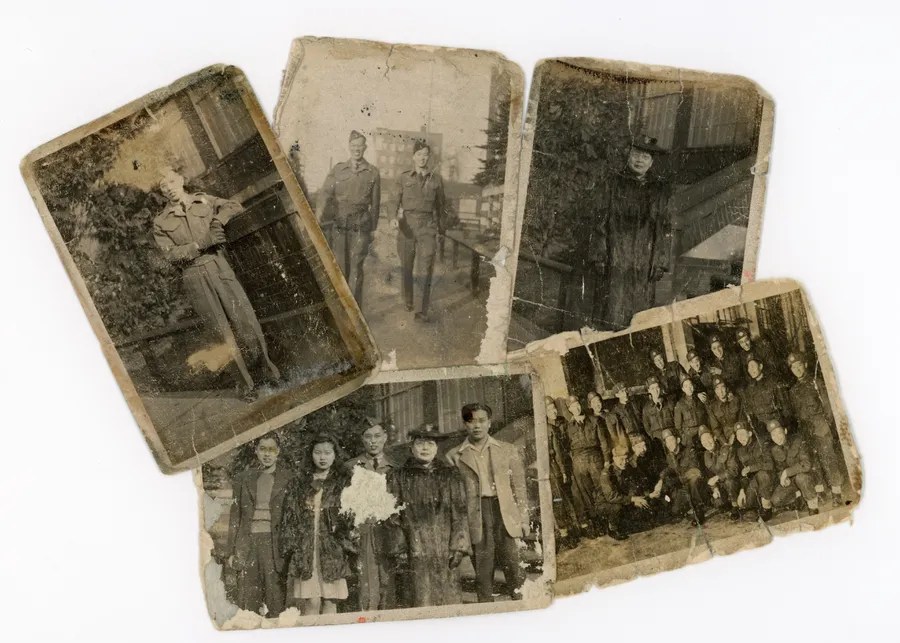
Ronald Lee’s wallet contained tattered photos of himself in uniform and with his commando comrades…. RONALD LEE FAMILY/CHINESE CANADIAN MILITARY MUSEUM Continue reading
so sayeth a DINOSAUR before the CLIMATE CHANGE CONFERNCE at Glasgow this month … Novmber 2021
Filed under accountability, climate change issues, world events & processes
Chandre Dharmawardana, writing from Canada (see below)
Sri Lanka is heading towards an agricultural disaster similar to that created by Stalin who was guided by a so-called “Dialectical Materialist” version of agricultural science announced by Lysenko, a “party scientist”. Sri Lanka’s leaders also have ideologues who have various scientific and medical backgrounds and are ready to present “justifications” for the push for 100% organic agriculture. Here we trace this pseudo-science movement back to some of its roots and discuss some of the pseudo-science that is being presented as “science”.

Dr. Jayasumana and Dr. Sanath Gunatilleke confronting a farmer in an unequal discussion.
Filed under accountability, biotechnology, citizen journalism, cultural transmission, doctoring evidence, economic processes, education, environmental degradation, historical interpretation, island economy, land policies, life stories, patriotism, performance, politIcal discourse, self-reflexivity, truth as casualty of war, unusual people, welfare & philanthophy, world events & processes, zealotry
Tom Shakespeare: “Çooking up a Past” in “Collection. No Small Inheritance” …. https://farmerofthoughts.co.uk/collected_pieces/cooking-up-a-past/ …. no date indicated …. but it was clearly written after the tsunami and, in my reckoning penned in late 2005. I have imposed haphazard highlighting …. and devoted much time to this essay because it is a marvellous and introspective ethnographi tale — one that (A) grapples with profound issues and changes in attitudes to illegimate births in UK in the period 1950s to the present, while also (B) serving up fascinating vignettes about the lifeways of the Westernized Ceylonese middle class in the 1950s … and again in 2005.
The airport was full of English fans, heading to Colombo for the first of three test matches against Sri Lanka. On the Emirates flight to Dubai, they seemed to be drinking the plane dry, first of beer and then whisky. On the second leg, I tried to sleep, blocking them out with ear plugs. At dawn, I declined the offer of breakfast. But when I smelled the meal I quickly changed my mind. It was fish curry with kiribath and seeni sambol my first taste of the real Sri Lankan food that I would be eating for breakfast, lunch and dinner for the rest of the month.
After twenty years away, I was travelling back to Sri Lanka, to understand part of my cultural inheritance and investigate my mother’s roots. I had been eating this food for forty years, and cooking it for more than twenty, but I had only previously made one visit to my ancestral home. ng Having discovered more about my father’s past, it was time to hear about the other side of the family tree. Since my teenage years, my mother and I have spent more time squabbling than bonding, and I was excited as well as anxious about the prospect of more than two weeks alone together.


Waruni Kumarasinghe & Dinithi Dharmapala, from the Strategic Communications Unit, LKIIRSS, … whose preferred title i “Amnesty International Report on Sri Lanka: Far from the Truth”
Amnesty International’s latest report on Sri Lanka, titled “From Burning Houses to Burning Bodies: Anti-Muslim Violence, Discrimination and Harassment in Sri Lanka” (October 2021) levels very serious accusations against this country. The overall argument of the report is that Muslims in Sri Lanka are an oppressed minority subjected to state-sponsored violence and systematic discrimination. The argument, as will be explained in a moment, is deeply flawed.

Filed under accountability, anti-racism, centre-periphery relations, chauvinism, communal relations, cultural transmission, demography, economic processes, electoral structures, ethnicity, female empowerment, governance, historical interpretation, Islamic fundamentalism, island economy, life stories, modernity & modernization, Muslims in Lanka, patriotism, politIcal discourse, population, self-reflexivity, social justice, sri lankan society, tolerance, unusual people, world events & processes
Michael Roberts, here repeating a set of perspectives voiced initially on 19 June 2009 after the LTTE had been vanquished,in the News Magazine FRONTLINE that was printed every fortnight from Chennai.++
“One can win the War, but lose the Peace.” Cliché this may be, but it also a hoary truism that looms over the post-war scenario in Sri Lanka. The triumphant Sri Lankan government now has to address the human terrain rather than the fields of battle.

Filed under accountability, anti-racism, British colonialism, centre-periphery relations, communal relations, cultural transmission, education, ethnicity, governance, hatan kavi, historical interpretation, language policies, legal issues, life stories, modernity & modernization, nationalism, patriotism, politIcal discourse, power politics, racism, racist thinking, Rajapaksa regime, reconciliation, self-reflexivity, Sinhala-Tamil Relations, sri lankan society, tolerance, truth as casualty of war, unusual people, world events & processes
Rex Clementine in Dubai
It took Sri Lanka three years to find Asanka Gurusinha’s successor at number three. In the year 2000, Kumar Sangakkara came along and he occupied the slot for 15 years breaking world records at will. For six years, Sri Lanka searched for Sanga’s replacement without much success. Given the way how Charith Asalanka went about things in the T-20 World Cup, there is enough evidence that we have found Sanga’s successor and the man himself confirms that. “I think Charith Asalanka has done extremely well. He looks like the caliber of player who will have a long career, score a lot of runs and win a lot of games for Sri Lanka,” Sangakkara told Sri Lankan journalists during a virtual interaction from Colombo.


Sri Lanka’s Charith Asalanka plays a shot during the second one-day international (ODI) cricket match between Sri Lanka and India at the R.Premadasa Stadium in Colombo on July 20, 2021. (Photo by ISHARA S. KODIKARA / AFP) (Photo by ISHARA S. KODIKARA/AFP via Getty Images)
University of Adelaide Newsroom, October 2021, where the title runs “GUARDIANS OF THE DEAD PODCAST: TRUE STORIES AND FASCINATING CASES FROM A WORKING FORENSIC PATHOLOGIST”
Professor Roger Byard has opened up his case files and trawled back through his personal recollections for a new podcast from The Advertiser and the University of Adelaide, Guardians of the Dead, which sheds a light on the macabre but fascinating world of forensic pathology. “I say that pathologists are almost the guardians of the dead, because we are the last doctor to look after this person and this is a person,” Professor Byard , Chair of Pathology at the University of Adelaide, said. “Father, mother, brother, whatever. They’re part of a family and there are people who will miss this person for a long time so we have tremendous responsibility in this. Particularly for parents who’ve lost a child or a baby, they want to talk to me… they just want to eyeball the person who looked after their baby. And so I can look at them and just say ‘this is not (just) a case. This is your dead child. And we can’t imagine what you’re going through, because we’re so saddened by it.”

Over the last 12 months, researchers and visitors at the Cairns and District Family History Centre would have seen a sprightly, bespectacled, grey haired gentleman, peering intently into the microfilm reader screen. He is busily transcribing films that have nothing to do with his own Anglo-Scandinavian Heritage.
Larry Andresen, [sic?] in Cairns Family History, at https://cdfhs.org/ancestry-in-british-ceylon-vital-records-research/ with this title “Ancestry British Ceylon – Vital Records Research,” 3 March 2017
My name is Larry Andresen [sic?], and I am researching British Ceylon birth, marriage and death records.

Filed under accountability, Australian culture, British colonialism, centre-periphery relations, cultural transmission, education, ethnicity, heritage, historical interpretation, landscape wondrous, legal issues, life stories, modernity & modernization, politIcal discourse, self-reflexivity, sri lankan society, travelogue, unusual people, welfare & philanthophy, world events & processes
 thuppahi

