The Killing of SWRD Bandaranaike: Part Two

Sanjiva Senanayake,  …………. “Who Shot the PM?” Part II ** … with higlighting being emphasis implanted by the author

The first point that had to be proved by the prosecution beyond any doubt was that Somarama actually pulled the trigger. Without that the entire case, conspiracy and all, would fail.

Despite the large number of people present that morning, only three ‘eye-witnesses’ were called by the prosecution to establish that Somarama was the actual shooter. They were : (a) the Buddhist monk Niwanthidiye Ananda; …. (b) one of his acolytes from Polonnaruwa named Wedage Piyadasa …   and (c) a teacher named Wijekoon Wickramasinghe.

Continue reading

1 Comment

Filed under accountability, Buddhism, historical interpretation, legal issues, life stories, performance, politIcal discourse, security, self-reflexivity, sri lankan society, trauma, unusual people, vengeance

Leonard Woolf’s Remarkable Novel

Nick Rankin, in BBCnews, 23 May 2014, where the title runs thus: “Leonard Woolf’s forgotten Sri Lankan novel” …… The Bloomsbury Group and Sri Lanka are rarely spoken of in the same breath, but that is partly because Leonard Woolf’s groundbreaking first novel, The Village in the Jungle, is unjustly ignored, argues writer and broadcaster Nick Rankin.

She was born Virginia Stephen, daughter of the Victorian bookman Sir Leslie Stephen, but when she married in 1912, her name changed to Virginia Woolf, and she went on to become the best-known woman writer of the 20th Century.


Her lesser-known husband, Leonard Woolf, however, wrote and published a novel first. That almost forgotten book, first published in 1913, is called The Village in the Jungle and it is a remarkable work because it is the first novel in English literature to be written from the indigenous point of view rather than the coloniser’s.

Continue reading

1 Comment

Filed under accountability, British colonialism, Buddhism, cultural transmission, economic processes, governance, heritage, historical interpretation, island economy, landscape wondrous, life stories, literary achievements, population, self-reflexivity, sri lankan society, the imaginary and the real, travelogue, unusual people, working class conditions

Apoyi-Apoyi Situation in Lanka: UN Report on “Food-Security” Conditions

This survey of the parlous socio-economic situation in Sri Lanka by the UN agencies located within the island is a long and complicated document …with several graphs and diagrams. So Thuppahi will present only a small part and provide the web link at the end. The internet filewas kindly converted for me by Dinu Jayasuriya of Rooleo Studios in Adelaide….. Note that the highlighting within the document is NOT my work, but that internal to the UN presentation.

A vendor at a wholesale produce centre is running out of customers and produce….. Photo: © UN Sri Lanka

Foreword by the United Nations Resident Coordinator

Sri Lanka is facing its worst economic crisis since independence. Concurrent challenges in public finance and sovereign debt, as well as the availability and affordability of food, fuels, fertilizers, and medicines, have disrupted livelihoods across the country. As a result, around 5.7 million women, men, girls and boys are now in urgent need of humanitarian assistance.

Continue reading

2 Comments

Filed under accountability, economic processes, governance, historical interpretation, island economy, life stories, self-reflexivity, sri lankan society, trauma, UN reports, welfare & philanthophy, world events & processes

Sumana Saparamadu: An Appreciative Vale from 2016

Lalitha Karalliadde Witanachchi, in the Sunday Observer, 8 May 2016, with this title “Epitome of Generosity, Kindness and Loyalty” **

The death occurred on April 15 [2016] of well-known journalist Sumana Saparamadu at the age of 92. She was born in Havelock Road, Wellawatte in the home of her parents Mr and Mrs. D.C. Saparamadu. Her father was a well-known apothecary who worked for several years in Kadugannawa, where Sumana spent her childhood “in the beautiful hill country with mist-laden hills and the train winding its way upcountry”, as she was wont to tell me when recalling her happy childhood.

Continue reading

1 Comment

Filed under British colonialism, centre-periphery relations, cultural transmission, education, female empowerment, heritage, historical interpretation, island economy, life stories, literary achievements, patriotism, politIcal discourse, press freedom, self-reflexivity, sri lankan society, travelogue, unusual people, women in ethnic conflcits

Roadside Scenery: British Ceylon in the Early 20th Century

Several of these old photographs cropped up in the course of my work on Leonard Woolf for presentation in Thuppahi. They give us some understanding of the contexts serving as backdrop to daily life in the daytime. …. since nightitme life is more veiled and obdurate in a world without mobile telephone cameras.

Continue reading

Leave a comment

Filed under architects & architecture, British colonialism, commoditification, demography, economic processes, heritage, island economy, landscape wondrous, life stories, photography, sri lankan society, transport and communications, travelogue

Ashton Agar’s Sri Lankan Lineages

Michael Roberts

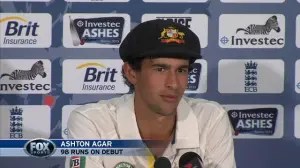
Ashton Agar may play cricket now for Western Australia, but he is the eldest of three boys schooled at the De La Salle College in Melbourne. Our investigations indicate that his father John Agar is from a cricketing family associated with the Prahran Cricket Club in Melbourne – a happy coincidence because Prahran had several Burgher migrants active within its portals—notably Owen Mottau and Dav Whatmore.[1] As vitally, his mother Sonia is a Sinhalese Sri Lankan, being the daughter of Nala Hewawisa[2] from a marriage with Sheila Plunkett,[3] who is described in one source as a “Burgher of British descent.”

Continue reading

2 Comments

Filed under anti-racism, Australian culture, australian media, cricket for amity, cricket selections, cultural transmission, economic processes, education, ethnicity, heritage, historical interpretation, island economy, landscape wondrous, life stories, patriotism, performance, plantations, self-reflexivity, Sri Lankan cricket, sri lankan society, travelogue, unusual people, world events & processes

Contrasts in Lanka: The Sturdy Medieval vs The Fluid Tempestuous Present

This photograph sent to Thuppahi by KEITH BENNETT of Australia & Lanka .…. says it all


Continue reading

Leave a comment

Filed under architects & architecture, heritage, landscape wondrous, life stories, meditations, nature's wonders, photography, security, self-reflexivity, Sri Lankan cricket, sri lankan society, the imaginary and the real, travelogue, unusual people, world events & processes

A Practical Channel of Charity for Sri Lankan Families in Need

elanka Notice

Dear Fellow Sri Lankan – in Australia …. and globally …..

The following is an initiative of eLanka, the leading website for the Sri Lankan expats in Australia and globally. We have created via our eLanka Shop several Grocery packs which you can purchase online and then we will delivery free of charge anywhere in Sri Lanka.

Have a look at the pricing and different packages we have on eLanka Shop. https://elankashop.com/ (People can order online).

Delicious Sri Lankan food on Lotus leafe.

Continue reading

5 Comments

Filed under Australian culture, charitable outreach, rehabilitation, self-reflexivity, sri lankan society, transport and communications, unusual people, world events & processes

A View of Australia from ORCADIAN somewhere in the Orkney Islands

Orcadian, responding to an Email circulated by Thuppahi conveying the views of JOHN LANDER,  circulated by Senaka Weeraratne

John Lander, a former Australian ambassador, gives a most thoughtful analysis on the fictions of the China threat. Western diplomats need to return to the basics of what makes for good diplomacy. We are increasingly seeing Western diplomats becoming irrational, bordering on insane.


Continue reading

Leave a comment

Filed under accountability, american imperialism, Australian culture, australian media, authoritarian regimes, China and Chinese influences, discrimination, economic processes, foreign policy, governance, historical interpretation, military strategy, news fabrication, Pacific Ocean politics, politIcal discourse, power politics, propaganda, security, slanted reportage, the imaginary and the real, truth as casualty of war, world events & processes

At Lords: Man of the Match to a Cricket Ball … Good Lord!@!@!

Errol Fernando 

My Man of the Match over the years has often been a Man.  Sometimes a bowler, batsman or fielder.  Also perhaps an umpire or even a third umpire.  Possible even a selector, coach or psychologist.

This time,  after yesterday’s Lord’s Test match, my Man of the Match ….. aka MOM ….. was the ball. Short and sweet, clear and simple , it was the actual BALL !  You will remember that at the end over 55 Captain Kane and Southey showed umpire Rod Tucker the ball, claiming that it had gone out of shape. Sure enough it was stuck in the gauge and New Zealand were able to choose a replacement ball. They smiled happily but did not realise that it would be the BATSMEN who would soon be smiling. At this stage England needed 99 to win.

Continue reading

1 Comment

Filed under accountability, cricket for amity, doctoring evidence, ethnicity, life stories, meditations, nature's wonders, performance, sri lankan society, travelogue, unusual people, world events & processes