Category Archives: world events & processes

Islanders For Kiwi Islanders

Items in The Island, 25 June 2021

ONE:

A country of 5.5 Million, people far removed in the Pacific Ocean, has within two years scaled the dizzy competitive heights of World Cricket in the most exemplary fashion, narrowly conceding the 50 over championship to a freak incident, and annexing the Test championship in a final worthy of the best in Cricket!

Continue reading

1 Comment

Filed under heritage, performance, self-reflexivity, slanted reportage, the imaginary and the real, world events & processes

Leonard Woolf in Hambantota: An Interpretation

Question-Mark Author, deploying this title “Leonard Woolf: He penned his love for Sri Lanka in ‘Village in the Jungle’,”

Leonard Woolf who served as a colonial Assistant Government Agent in Hambantota was the author of the renowned novel Village in the Jungle. During his tenure as the Assistant Government Agent of the Hambantota District from 1908 to 1911, Woolf visited villages and jungles in Hambantota on his bicycle or a pony’s back. He conducted his inspections under the shade of massive trees. He was very much attached and devoted to his job.

Continue reading

5 Comments

Filed under accountability, British colonialism, British imperialism, centre-periphery relations, cultural transmission, economic processes, education, ethnicity, governance, heritage, historical interpretation, island economy, land policies, landscape wondrous, legal issues, life stories, literary achievements, meditations, modernity & modernization, politIcal discourse, self-reflexivity, sri lankan society, the imaginary and the real, travelogue, unusual people, world events & processes

The “Colombo Bharathas”: A Merchant Community

Joe “Malli” Vaz ***

The ghosts of forgotten family histories haunt the children of immigrants, pressing us to take on the role of scribes to recover and record those enduring tales implanted deep within our childhood memories.

Iruthamma De Votta kin

This experience loosely corresponds to what social scientists studying diasporic identity describe as an interesting rule of three: The first generation to immigrate tries to “blend in,” often leaving their traditions and culture behind. Their children—the second generation, who are born in the new country—become superficially curious about their identity and ancestry. But surprisingly, it’s the third generation that struggles to figure out who they are and where they came from, showing a strong desire to connect with the old country, language, culture and cuisine.

Continue reading

10 Comments

Filed under British colonialism, centre-periphery relations, commoditification, communal relations, cultural transmission, economic processes, education, ethnicity, heritage, historical interpretation, Indian Ocean politics, Indian traditions, landscape wondrous, life stories, politIcal discourse, Portuguese imperialism, Portuguese in Indian Ocean, self-reflexivity, Sinhala-Tamil Relations, sri lankan society, Tamil civilians, tolerance, transport and communications, travelogue, unusual people, working class conditions, world events & processes

Lankans in Adelaide in Support of Island’s Covid Battle

A Note from Dr Charitha Perera

Dear Friends,  On behalf of the Adelaide Covid 19 fundraising committee, I wish to inform you that the Sri Lankan Food Fair held on Monday 14th June raised a sum of $33,032. 
We thank the 16 Sri Lankan community organisations and many volunteers who worked tirelessly together for a common cause to raise these funds.
Some of the Chefs and Workers posing for all their worth!

Continue reading

2 Comments

Filed under coronavirus, life stories, patriotism, performance, sri lankan society, voluntary workers, welfare & philanthophy, world events & processes

Fresh EU Assessment of Glyphosate

Conveyed by Chandre Dharmawardena, 25 June 2021: “NEW EU REPORT:  Assessment Group on Glyphosate, 15 June 2021”

Main findings
The dRAR [draft Renewal Assessment Report] consists of 11,000 pages, which is substantially larger than an average dRAR. In comparison, a typical assessment report for an active substance in the EU is less than 5.000 pages.

Continue reading

1 Comment

Filed under biotechnology, cultural transmission, economic processes, education, environmental degradation, governance, historical interpretation, landscape wondrous, legal issues, modernity & modernization, power politics, self-reflexivity, teaching profession, Uncategorized, welfare & philanthophy, world events & processes

UNHRC raps Sri Lanka on the Knuckles

Resolution on behalf of Canada, Germany, North Macedonia, Malawi, Montenegro and the UK, the Core Group on Sri Lanka …. from UK Mission to the WTO, UN and Other International Organisations (Geneva)…..   22 June 2021

Council resolution 46/1 called upon the Sri Lankan Government to address the harmful legacies of war and to protect human rights, including for those from religious minorities. We regret the lack of progress on these issues, with a number of further concerning developments.

Continue reading

Leave a comment

Filed under accountability, British imperialism, centre-periphery relations, power politics, propaganda, taking the piss, truth as casualty of war, UN reports, vengeance, world events & processes

Deadly Blows: Horrendous Onfield Events in Cricket

When Steve Waugh & Jason Gillespie crashed into Each Other at Asgiriya in 1999 at Kandy ….

COL01:SPORT-CRICKET AUSTRALIA:KANDY,SRILANKA,10SEP99 – Australian fielders Jason Gillespie (left) and captain Steve Waugh collide in attempting to take a catch from the bat of Sri Lankan Mahela Jayawardena on the second day of the first cricket test at the Asgiriya stadium in central Kandy September 10. Jayawardena survived with his score on 34 but the two fielders were taken to hospital with Gillespie rushed on a stretcher with a broken leg and Waugh with an injured nose. Jayawardena swept a ball from Colin Miller and Gillespie came in from long-leg while Waugh rushed down from short fine-leg to take the catch. Sri Lanka went in for lunch at 181 for 5. al/Photo by Anuruddha Lokuhapuarachchi REUTERS

Continue reading

1 Comment

Filed under accountability, Australian culture, life stories, photography, self-reflexivity, trauma, travelogue, world events & processes

Basil Fernando’s Searing Protest against Violence in All Its Forms

Basil Fernando: A Short Abstract re the book Body, Mind, Soul, Society: An Autobiographical Account

 This book (176 pages) is an attempt to contribute towards an understanding of the impact of violence on human persons and the society. It is based on the direct experience of living and working in Sri Lanka and Cambodia. However, references are also made to several more developing countries in Asia with which I have been engaged in working after the experiences in Sri Lanka and Cambodia. The book is written from the perspective of a victim who is also an observer.

Continue reading

2 Comments

Filed under accountability, atrocities, authoritarian regimes, British colonialism, caste issues, centre-periphery relations, chauvinism, communal relations, cultural transmission, discrimination, disparagement, economic processes, ethnicity, governance, historical interpretation, human rights, Indian traditions, island economy, JVP, landscape wondrous, legal issues, life stories, Muslims in Lanka, nationalism, political demonstrations, politIcal discourse, power politics, psychological urges, racist thinking, riots and pogroms, self-reflexivity, Sinhala-Tamil Relations, sri lankan society, Tamil civilians, Tamil migration, terrorism, trauma, truth as casualty of war, vengeance, violence of language, working class conditions, world events & processes

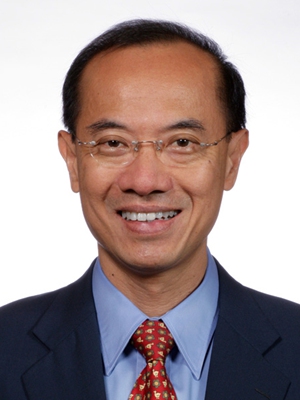
China: Lessons for Australia from George Yeo

George Yeo in Global Times, 16 June 2021, where the title is “China is a democracy by Lincoln’s definition: former Singaporean FM”

Editor’s Note: As tensions between China and the West continue to heat up, the Communist Party of China (CPC) has become the target of myriad attacks of the US-led Western countries. George Yeo, former Singaporean minister of foreign affairs, thinks this is because many in the West perceive China as a threat to American dominance in the world. Yet Yeo believes the nature of China’s rise is very different from that of the US – and hopefully Americans will eventually realize this. What does Yeo think of the development the CPC over the past 100 years? What are its challenges in the future? Why is China constantly being labeled as conducting “wolf warrior diplomacy?” Yeo shared his insights with Global Times (GT) reporters Li Aixin and Bai Yunyi.

Continue reading

Leave a comment

Filed under accountability, Australian culture, australian media, authoritarian regimes, centre-periphery relations, China and Chinese influences, economic processes, education, foreign policy, governance, historical interpretation, modernity & modernization, politIcal discourse, power politics, propaganda, security, self-reflexivity, transport and communications, unusual people, world events & processes

The Early History of Sociology at the University of Ceylon

H.L. Seneviratne,** Department of Anthropology, University of Virginia, USA, in Social Affairs: A Journal for the Social Sciences, ISSN 2478-107X (online) …. www.socialaffairsjournal.com

This paper is an account of the Department of Sociology of the University of Ceylon in approximately the first decade of its existence. The most significant development during this period was the transition of the department from one that provided courses for other departments, in particular Economics, to one that awarded its own degrees, making it a full-fledged and autonomous entity. The inability to grant its own degrees was not a plight rooted in any statutory limitation but a limitation of resources, in particular the want of adequate teaching staff. This may partly have been due to the ‘late comer’ status of Sociology in relation to other disciplines, and a related vicious circle of inadequate resources and low enrollments. Being a subordinate partner of Economics was also a part of the legacy of the department’s structural origin in the model of British universities. The oldest Department of Sociology in the UK was at the London School of Economics (LSE) and only goes back to the beginning of the 20th century; and it started as a subsidiary of the Economics Department. This paper makes an attempt to assess the relative contribution of the two major figures that strived in their own ways to secure the progress of the department towards achieving full-fledged status as a department that granted its own degrees.

Continue reading

Leave a comment

Filed under accountability, centre-periphery relations, cultural transmission, education, governance, heritage, historical interpretation, life stories, literary achievements, patriotism, performance, politIcal discourse, self-reflexivity, sri lankan society, teaching profession, unusual people, world events & processes