Category Archives: wikileaks

Cartographic & Photographic Illustrations in support of the Memorandum Analysing the War in Sri Lanka and Its Propaganda Debates

Michael Roberts

No survey of Eelam War IV — especially its last phase from late 2008 to May 2009 — can be pursued without some comprehension of the unfolding geographical context and some attention to illustrative pictorial details of the LTTE ditch-and-bund system of defense as well as the defensive deployment of a congealed mass of people and Tiger personnel from circa mid-February to mid-May 2009 within what is best referred to as the “Last Redoubt.”[1] Attention to pictorial evidence must obviously embrace evidence of shelling and casualties (both injured and dead) as well as prima facie instances suggestive of extra-judicial execution by both sides. These in their turn must sit alongside the graphic photographs of clusters of people streaming or struggling across the Nandikadal Lagoon or crossing sand and scrub terrain in April and May 2009 after the Sri Lankan Army infiltrated and penetrated the Tiger arena in the Last Redoubt…. and released them from their corralled situation.[2]

1-UNITED-NATIONS-SRI-LANKA-facebook+ Pic 1: The Fate of the Corralled Tamil Populace of  Thamilīlam = on the move constantly — from mid 2008 in some instances Pic from en.wikipedia.com Continue reading

31 Comments

Filed under accountability, atrocities, Eelam, governance, historical interpretation, Indian Ocean politics, law of armed conflict, legal issues, life stories, LTTE, mass conscription, military strategy, NGOs, patriotism, photography, politIcal discourse, power politics, prabhakaran, propaganda, Rajapaksa regime, Sinhala-Tamil Relations, slanted reportage, sri lankan society, Tamil civilians, Tamil Tiger fighters, the imaginary and the real, trauma, truth as casualty of war, UN reports, unusual people, vengeance, war crimes, war reportage, wikileaks, world events & processes

Truth Journalism? Marie Colvin hoist on her own Petard

Michael Roberts, courtesy of Colombo Telegraph where the title is Marie Colvin as a Mouthpiece of the LTTEand where you will find all manner of comments. Also note the hyperlnks within this article HERE.in thuppahi.

Having come across Tammita-Delgoda’s 2009 article “Reading between the Lines” for the first time in 2014, I reproduced it in Thuppahi for several reasons. His essay reveals how significant figures in the Western media world participated actively in the highly effective propaganda war sustained by the LTTE networks abroad working in coordination with the Tiger directorate in the Vanni, armed as the Tigers were with modern satellite technology.

Marie C -beaut TAMM ITA 11 Marie-Colvin-1024_285081k-- ST

As Tammita-Delgoda’s news account indicates, Marie Colvin, an intrepid war correspondent who ultimately paid a price of death for her boldness when she was caught in crossfire in Syria in 2012, was one of those partial to the LTTE camp. Eight years earlier, in March-April 2001, she had used her Tamil connections to slip beyond the Government of Sri Lanka’s (GSL) frontlines into the territory of Thamilīlam, the de facto state of the LTTE, and was injured when returning. The details surrounding this incident are highly relevant to our examination of journalistic ethics and are addressed at length below. It is adequate for the moment to note Colvin’s well-known “empathy for the underdog” and her devotion to the plight of civilians in war-torn arenas (DBS Jeyaraj 2012) Continue reading

27 Comments

Filed under accountability, american imperialism, authoritarian regimes, cultural transmission, Eelam, Fascism, female empowerment, governance, historical interpretation, life stories, LTTE, nationalism, photography, politIcal discourse, power politics, prabhakaran, propaganda, Rajapaksa regime, reconciliation, Sinhala-Tamil Relations, slanted reportage, sri lankan society, Tamil civilians, Tamil migration, tamil refugees, Tamil Tiger fighters, the imaginary and the real, truth as casualty of war, vengeance, wikileaks, women in ethnic conflcits, world events & processes

Saving Talaivar Prabhākaran, 2009: Fr. Gaspar Raj’s Revelations in 2010

Saving private ryan The title for this item is inspired by that riveting film from 1998 entitled Saving Private Ryan with Tom Hanks in the lead role.

 KEY QUOTATION: “It is said that the LTTE was agreeable to USA’s direct involvement, but they were not agreeable to locking the weapons. The USA had also started preparing for the Mullivaikal operation. Accordingly, PACOM’s Naval unit, Marine Expediency Brigade, will land at the Mullaithivu shores; and the Navy and the Air Force of PACOM will also join in this operation” … being just one stick of dynamite in “Mullivaikal Last Stages: Facts Unknown to the Tamil-Speaking World,” by Fr. Gaspar Raj, an essay in Tamil translated by one “ M N” for Nakeeran and then presented to the world by Sri Lanka Guardian on 23rd June 2010.

 Jegath Fr. Gaspar Raj prabha-tiger Talaivar Pirapāharan in his guerrilla days

This essay was re-discovered by accident when I went through my computer files recently and becomes extremely important in the light of (A) the recent review article by Daya Gamage; (B) the startling facts and manoeuvres that are displayed in the raw within the US Embassy despatches of 2009 made available by Wikileaks;[1] and (C) by the veteran journalist[2] PK Balachandran’s information on Revd. Fr. Jegath Gaspar Raj’s role in 2009 and his endorsement of key facts in the Gaspar Raj essay…….inserted here at the end of the article by Gaspar Raj.[3] Michael Roberts.

Continue reading

9 Comments

Filed under american imperialism, atrocities, Eelam, historical interpretation, Indian General Elections, Indian Ocean politics, landscape wondrous, life stories, LTTE, military strategy, politIcal discourse, power sharing, prabhakaran, Rajapaksa regime, Sinhala-Tamil Relations, sri lankan society, Tamil migration, truth as casualty of war, wikileaks, world events & processes

Dedicated Medical Work Amidst the Heat of War, Death and Propaganda: In the Vanni Pocket, 2009

Michael Roberts, …courtesy of Groundviews where the essay carried a different title. In presenting the article here I have embellished it with images, maps.  It also has a few more hyperlinks.

Amidst the obfuscations and cumulus clouds of propaganda that have subsumed reviews of the last stages of Eelam War IV, it has taken time for some remarkable feats to emerge. The affidavit provided by Dr. Veerakanthipillai Shanmugarajah on 10th May 2012 with assistance from a British solicitor reveals astounding medical relief work by a body of doctors, nurses, attendants and administrative aides during the Tamil peoples’ enforced retreat and crucible of battle in 2009. This statement has been deployed by a collective named ENGAGE SRI LANKA in the course of its criticism of Channel Four’s video reportage and the claims of “Vany Kumar” (Gnanakumar Thamilvani in name,[i] who also presented herself under such aliases as “Damilvany” and “Vany Kumar”). As such, it is an element in the ongoing propaganda war – one which no public document can rise beyond. Continue reading

21 Comments

Filed under accountability, citizen journalism, disaster relief team, gordon weiss, historical interpretation, Indian Ocean politics, law of armed conflict, life stories, LTTE, military strategy, nationalism, photography, politIcal discourse, power politics, prabhakaran, propaganda, Rajapaksa regime, Sinhala-Tamil Relations, slanted reportage, sri lankan society, Tamil civilians, Tamil migration, tamil refugees, Tamil Tiger fighters, the imaginary and the real, trauma, truth as casualty of war, UN reports, unusual people, wikileaks, world events & processes

Wikileak Disclosures of Secret US Despatches on the Last Phase of Eelam War IV in 2009: Appendix III for “BBC Blind

Robert Blake, Colombo , 19 March

OFDA Regional Adviser met on March 18 with a group of 15 internally displaced persons (IDPs) in Vavuniya who fled the “safe zone”, including a Sri Lankan employee of the International Organization for Migration (IOM). This contact reported that the LTTE is now widely recruiting from among the trapped population, forcing both young and old to fight, and is positioning its artillery within civilian concentrations. The IOM worker confirmed the skirmish on March 17 following LTTE attempt to forcibly recruit civilians who were offloading food supplies, leading to wider retaliation by the IDPs. Continue reading

10 Comments

Filed under accountability, american imperialism, governance, historical interpretation, Indian Ocean politics, life stories, LTTE, military strategy, NGOs, politIcal discourse, power politics, prabhakaran, propaganda, Rajapaksa regime, Sinhala-Tamil Relations, slanted reportage, sri lankan society, Tamil civilians, Tamil Tiger fighters, truth as casualty of war, UN reports, wikileaks, world events & processes

An Elephantine ACT OF UNION

ELEPHANTINE FUCK Continue reading

Leave a comment

Filed under accountability, taking the piss, terrorism, trauma, unusual people, war crimes, wikileaks, world events & processes

Peacocks in full flight near Mattala

PEACOCK IN FLIGHT P-COCK FLT P-COCK FLT-22 PCOKC FLT Courtesy of LALIN Fernando

Leave a comment

Filed under life stories, patriotism, pulling the leg, sri lankan society, taking the piss, truth as casualty of war, wikileaks, world affairs

The Original Cave Man at PUNYELROO in Outback Australia

 Cave1 … captured by Alan Marriage

Leave a comment

Filed under accountability, ethnicity, heritage, historical interpretation, immigration, law of armed conflict, life stories, news fabrication, people smugglers, photography, pulling the leg, racist thinking, trauma, truth as casualty of war, wikileaks

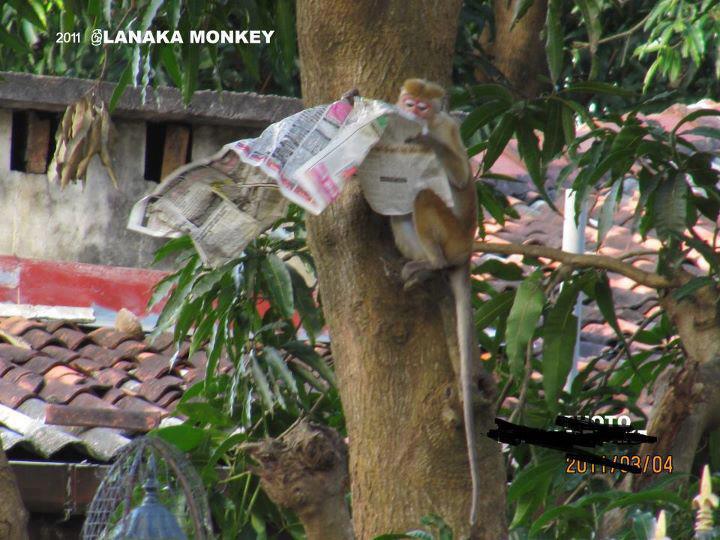
Sri Lankan Monkey captivated by Australian news!

 Monkey Read, Momkey DO.

….. and who is it that said that “there is no progress in Sri Lanka” …. !!!!

1 Comment

Filed under accountability, atrocities, australian media, cultural transmission, life stories, news fabrication, politIcal discourse, propaganda, pulling the leg, sri lankan society, unusual people, wikileaks

The Torture Scene in “Killing Fields” and Gordon Weiss

Michael Roberts, courtesy of Colombo Telegraph where it appeared a few days earlier.. with a different title. The version here has minor embellishments.

 Frontispiece images in the Gordon Weiss web-site — http://www.gordonweissauthor.com/press.html#

                                                 ONE

In the course of my researches into the emergence of Ceylonese nationalism in the British period, I delved in considerable detail into an event that was referred to then as “the 1915 riots” – the term “riots” in South Asia being a mechanical reproduction of the terminology of the British legal lexicon to describe affrays of all sorts. In 1915 this shorthand phrase referred to the assaults on the Mohammedan Moors (as they were called then) in the south-western quadrant by elements of the Sinhalese population (Roberts 1981). Amidst the complex processes that promoted this outbreak let me isolate a particular factor: a critical force inspiring the attacks was the incitement by those whom I have referred to as “stirrers” (Kannangara 1984; Roberts 1981; 1994a).

The outbreak of the July 1983 pogrom against Tamils living in the south-western and central regions of Lanka encouraged scholars to redefine such events as “pogroms.” On this occasion too, anecdotal testimony from friends and the article by Valli Kanapathypillai (1990) indicate that incitement by a diverse body of chauvinist stirrers was one factor behind a campaign that legitimised the terror wrought by depicting these activities as acts that would “teach Tamils a lesson.”

Dwelling on some anecdotal tales I was motivated in the 1990s to pen a literary essay of protest against the horrendous acts of July 1983: “The Agony and Ecstasy of a Pogrom: Southern Lanka, July 1983.” This article was written during a lonely sojourn in Charlottesville, Virginia, where my isolation promoted reflexivity. Central to this intervention was the deployment of two horrifying photographs extracted from the Tamil Times. In subsequent years I discovered that these images had been captured by a brave cameraman, Chandragupta Amarasinghe, who supplied me with better copies and clarified details about the mayhem around Borella Junction that 24th/25th night in July (Roberts 1994b, 2003). Continue reading

18 Comments

Filed under accountability, atrocities, cultural transmission, disparagement, Eelam, historical interpretation, law of armed conflict, life stories, LTTE, military strategy, politIcal discourse, power politics, propaganda, Rajapaksa regime, reconciliation, Sinhala-Tamil Relations, sri lankan society, Tamil civilians, Tamil Tiger fighters, truth as casualty of war, UN reports, wikileaks, world events & processes