Category Archives: unusual people

Dutch Burghers and Portuguese Mechanics: Eurasian Ethnicity in Sri Lanka

Dennis B. McGilvray, reproducing an essay presented in April 1982 within Comparative Studies in Society and History 24 (2): 235-263 –– an article that is wide-ranging and draws on ethnographic work as well as historical manuscripts. Note that the highlighting and pictorial insertions are the work of The Editor, Thuppahi.


I: PROLOGUE

Historians and anthropologists in Sri Lanka have tended to migrate in opposite directions, but away from the multiethnic confusion of the port cities. Typically, the heterogeneous, semi-Westernized, postcolonial urban society of Colombo and the larger towns has been only a transit point on intellectual journeys outbound to European archives or inbound to “traditional culture.” This was certainly my viewpoint as I arrived “inbound” in Sri Lanka for my first anthropological fieldwork. I took only passing notice of the clerks of mixed European and Sri Lankan descent who sold me stationery supplies at Cargill’s and mosquito nets at Carvalho’s. These people are given the official designation of Burghers in the government census: they are the racially mixed descendants of the Portuguese, Dutch, and British personnel who occupied the island during four and a half centuries of colonial rule.

Continue reading

6 Comments

Filed under ancient civilisations, art & allure bewitching, centre-periphery relations, communal relations, demography, discrimination, economic processes, ethnicity, European history, female empowerment, heritage, historical interpretation, immigration, Indian traditions, island economy, landscape wondrous, life stories, literary achievements, modernity & modernization, Muslims in Lanka, performance, politIcal discourse, Portuguese in Indian Ocean, religiosity, self-reflexivity, Sinhala-Tamil Relations, sri lankan society, Tamil civilians, transport and communications, travelogue, unusual people, welfare & philanthophy, world events & processes

Continuation of Venom and Bias at the UNHRC

Malinda Seneviratne in his web-site MalindaWords where the title runs “Spit and venom in Geneva (same old, same old)”


 It’s Bachelet’s hour. That’s Michelle. The UN High Commissioner for Human Rights. The second of her bi-annual Christmas-come-early party in Geneva. Time to get her kicks, probably. The grave countenance, deep tone and malice disguised as concern.  Yes, folks, it’s that time of year of regurgitating tired arguments based on tendentious claims made by unreliable sources with agendas that have little or nothing to do with human rights.

Continue reading

Leave a comment

Filed under accountability, american imperialism, atrocities, centre-periphery relations, communal relations, conspiracies, discrimination, disparagement, doctoring evidence, ethnicity, governance, historical interpretation, Indian Ocean politics, landscape wondrous, language policies, legal issues, life stories, LTTE, military strategy, patriotism, politIcal discourse, power politics, Rajapaksa regime, self-reflexivity, Sinhala-Tamil Relations, slanted reportage, sri lankan society, truth as casualty of war, UN reports, unusual people, vengeance, war crimes, war reportage, world events & processes, zealotry

“Anglo-Ceylonese”: A Missing Dimension in British Ceylon

Michael Roberts

The conquest of the island of Ceilao by the British between 1796 and 1818 was an outcome of their imperial conquests in India and underpinned by their sea power. The presence of their troops and other personnel in British India was so extensive that in time a new ethnic category-cum-group emerged in the localities (usually towns) with British personnel: namely, the Anglo-Indians.[i] By the late 19th century these people of mixed descent spawned by British personnel in India stood as a distinct community of Christians speaking Indian English as their mother-tongue and oriented to both India and the United Kingdom.


An Anglo-Indian being washed and coiffured

Continue reading

9 Comments

Filed under accountability, British colonialism, British imperialism, centre-periphery relations, communal relations, cultural transmission, demography, economic processes, education, ethnicity, governance, heritage, historical interpretation, island economy, landscape wondrous, life stories, modernity & modernization, politIcal discourse, population, self-reflexivity, sri lankan society, travelogue, unusual people, welfare & philanthophy, world events & processes

Imaginative Explorations of Sri Lanka’s History on the Cards

ISLAND newspaper News Item, 18 November 2021

In a brand new initiative, under the working title ‘Project 72’, Roar Media and author Sarah Kabir are set to take a deep dive into Sri Lanka’s past since gaining Independence in 1948, entertainingly and educationally covering some of the most defining years in the nation’s history.

Continue reading

3 Comments

Filed under art & allure bewitching, centre-periphery relations, citizen journalism, communal relations, democratic measures, education, ethnicity, female empowerment, governance, historical interpretation, human rights, landscape wondrous, legal issues, life stories, literary achievements, modernity & modernization, politIcal discourse, self-reflexivity, social justice, sri lankan society, unusual people, world events & processes

The Unspoken Injustice in Sports: Are Some Coaches the Unmasked Wolves in Sheep Clothing?

Nicholle Collom, University of Kelaniya

Expressing opinions on the unspoken side of the coin, taking any circumstance of life in to consideration, is always a risk that a writer may encounter. The truth be spoken, the opinion and perspective that you and I may share can be contrastingly distinct depending on the circumstance and experiences that one may have encountered. There may be some of us who have courageously fought for ourselves conquering against the injustice. Yet, amidst the presence of these brave warriors, how many voices may have been overpowered, unable to voice out the injustice that they may have encountered in sport? How many of you may have silently suffered and engaged in silent battles for the fear of being penalized, degraded or being considered an outcast?  Therefore, my motive here is to be the voice for the ones that fear to speak out loud. I wish to pen this thought down so that you may be educated and that courage may find itself, for you to be your own voice and fight for yourself and for your children someday against injustice of prejudiced coaches in the field of sports.

Continue reading

Leave a comment

Filed under accountability, citizen journalism, economic processes, education, female empowerment, governance, life stories, performance, self-reflexivity, sri lankan society, trauma, unusual people

Kokkadicholai: An Outpost in Wartime Batticaloa

This Item appeared in Dilshy Banu’s Facebook post and I have borrowed it and its photographs for circulation via Thuppahi – in part because it marks a little “outpost activity” in the course of the war and largely because I have met Dilshy and respect her courageous career choices and her lines of philanthropic endeavour….. Michael Roberts, 18 November 2021

Dilshy Banu: Kokkadicholai in Batticaloa: Traversing Tension during Eelam War IV”


Continue reading

1 Comment

Filed under accountability, authoritarian regimes, centre-periphery relations, charitable outreach, communal relations, cultural transmission, economic processes, ethnicity, female empowerment, heritage, historical interpretation, IDP camps, insurrections, jihad, landscape wondrous, life stories, NGOs, patriotism, politIcal discourse, reconciliation, rehabilitation, religiosity, self-reflexivity, sri lankan society, transport and communications, travelogue, unusual people, war reportage, welfare & philanthophy, women in ethnic conflcits

The World Delineated as Achchaaru….. Our Cross-Fertilised Foundations

Achchaaru! Cross-Fertilisation is the Arterial Foundation of Our World

Continue reading

Leave a comment

Filed under accountability, centre-periphery relations, cultural transmission, education, ethnicity, heritage, historical interpretation, island economy, landscape wondrous, life stories, politIcal discourse, sri lankan society, travelogue, unusual people, world events & processes

Mia Mottley’s Scathing Denunciation of World Climate Programmes ar Galsgow 2021

Prime Minister Mia Mottley of Barbados addresses Opening Ceremony, COP26, 1 Nov 2021

VISIT …. https://www.youtube.com/watch?v=BsBVx_8oFm0


Continue reading

Leave a comment

Filed under accountability, centre-periphery relations, cultural transmission, democratic measures, demography, disparagement, economic processes, education, environmental degradation, fundamentalism, governance, historical interpretation, landscape wondrous, legal issues, life stories, modernity & modernization, performance, politIcal discourse, population, power politics, self-reflexivity, taking the piss, the imaginary and the real, trauma, truth as casualty of war, unusual people, welfare & philanthophy, world events & processes

Chinese Canadian War Veterans Step Out from the Shadows

Rod Mickleburgh, in The Globe and Mail, 10 November 2021, where the title is  “Chinese Canadian Veterans celebrated at Vancouver Museum”

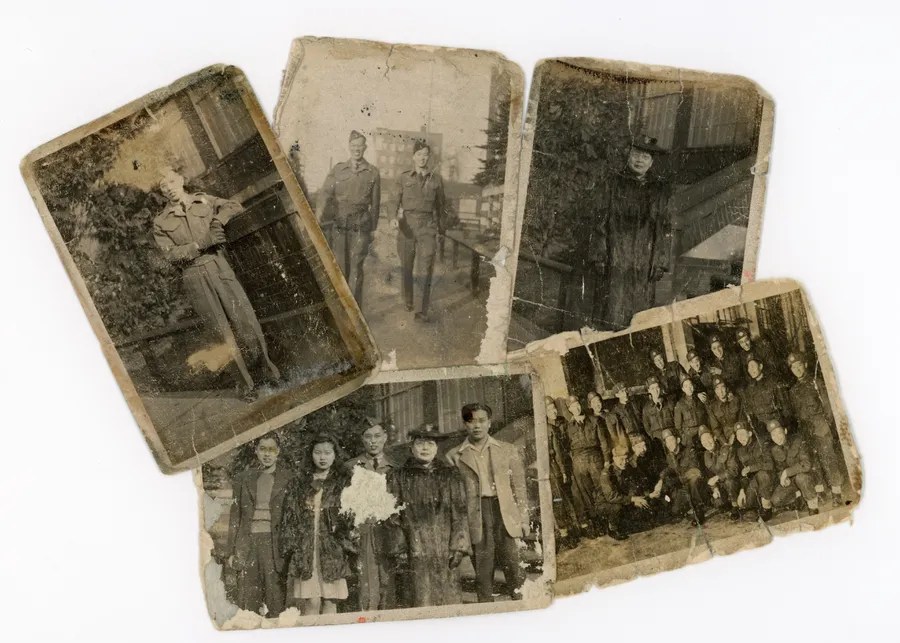
When the Second World War ended, Ronald Lee did what so many other returning veterans did. He shed his uniform, took up civilian life, married, had kids and never talked about what he did during the war. Mr. Lee maintained his silence for 70 years. Beyond a few medals found in his underwear drawer long ago, his six kids knew almost nothing about his wartime experience. Finally, in his mid-90s, he agreed to be interviewed by Catherine Clement, curator of the Chinese Canadian Military Museum in Vancouver.


Ronald Lee’s wallet contained tattered photos of himself in uniform and with his commando comrades…. RONALD LEE FAMILY/CHINESE CANADIAN MILITARY MUSEUM Continue reading

1 Comment

Filed under accountability, China and Chinese influences, communal relations, cultural transmission, education, ethnicity, heritage, historical interpretation, immigration, landscape wondrous, life stories, self-reflexivity, trauma, travelogue, unusual people, world events & processes

The “Fertiliser Mafia” debilitating Sri Lanka’s Agricultural Wellbeing?

Chandre Dharmawardana, writing from Canada (see below)

Sri Lanka is heading towards an agricultural disaster similar to that created by Stalin who was guided by a so-called “Dialectical Materialist” version of agricultural science announced by Lysenko, a “party scientist”. Sri Lanka’s leaders also have ideologues who have various scientific and medical backgrounds and are ready to present “justifications” for the push for 100% organic agriculture. Here we trace this pseudo-science movement back to some of its roots and discuss some of the pseudo-science that is being presented as “science”.


Dr. Jayasumana and Dr. Sanath Gunatilleke confronting a farmer in an unequal discussion.

Continue reading

9 Comments

Filed under accountability, biotechnology, citizen journalism, cultural transmission, doctoring evidence, economic processes, education, environmental degradation, historical interpretation, island economy, land policies, life stories, patriotism, performance, politIcal discourse, self-reflexivity, truth as casualty of war, unusual people, welfare & philanthophy, world events & processes, zealotry