Category Archives: Sri Lankan scoiety

Appreciating Kumari Jayawardena’s Scholarship

Uditha Devapriya … in The Island, 28 June 2024, where the title reads:  “A Tribute to Kumari Jayawardena” … while the presentation here includes highlights imposed by The Editor

Last month the Collective for Historical Dialogue & Memory (CHDM) organised a screening of Conversations with Kumari, a documentary on Kumari Jayawardena. Last week Jayawardena turned 93. Yesterday I reflected on her and the generation she represented. That generation is leaving us, but it remains as influential as ever.


Continue reading

1 Comment

Filed under anti-racism, art & allure bewitching, British colonialism, caste issues, centre-periphery relations, commoditification, communal relations, democratic measures, discrimination, economic processes, ethnicity, governance, historical interpretation, Indian Ocean politics, Indian traditions, island economy, landscape wondrous, language policies, Left politics, life stories, modernity & modernization, nationalism, parliamentary elections, plural society, political demonstrations, politIcal discourse, racist thinking, religious nationalism, self-reflexivity, Sinhala-Tamil Relations, social justice, Sri Lankan scoiety, unusual people, welfare & philanthophy, working class conditions, world events & processes

West Indian Women Cricketers trounced by the Sri Lanka Women’s Squad

Michael Roberts

While most cricketing fans may be focusing on the T20 World Cup matches in the Caribbean and USA, the female West Indian cricketers have been ‘holidaying’ in Sri Lanka. Or rather, thus far, they have faced the mighty Sri Lankan ladies in three 50-over matches in the south-eastern corner of the island: at the grounds in Hambantota abutting the wild life park at Yala and a vibrant coastline.

Kavisha Dilhari

Sachini Nishansala


Continue reading

Leave a comment

Filed under cricket for amity, life stories, performance, Sri Lankan cricket, Sri Lankan scoiety

Dr Wilfred S. E. Perera: Tutor & Guide Extraordinary … & Reaching 90

Sudheera Uduwela, in Daily News in 2013  …. now sent to Thuppahi by LK Hettiarachchi …. while the title is a Thuppahi Intervention

Professor Wilfred S.E. Perera, our beloved guru and mentor and a leading light in the field of maternal and gynaecological care in Sri Lanka for well over four decades, celebrated his 90th birthday on June 15.

The humble and unpretentious great man did so amongst his close-knit family, friends and grateful students, who cherish the privilege of being tutored by an extraordinary man of knowledge, talent, kindness and humility.

Continue reading

1 Comment

Filed under accountability, art & allure bewitching, charitable outreach, cultural transmission, education, heritage, life stories, medical marvels, patriotism, performance, self-reflexivity, Sri Lankan scoiety, teaching profession, unusual people, world events & processes

Us/Them Semantics in Sinhalese Confrontations with Other Forces Over Time

Michael Roberts presenting the Synopsis of an Article published after a refereeing process in the journal NATIONALISM and ETHNIC POLITICS  Vol 9/3 Summer 2003, pp. 75-102

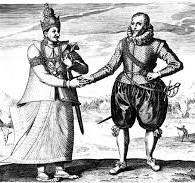
The collective identity of Sinhala-speakers over four centuries dating from the 1590s is analyzed with due attention to the structural form of (a) the Kingdom of Kandy and (b) the British colonial regime that took control of the whole island by 1815/18. The analysis dwells on the modes of oral, visual-iconic and written forms of cultural transmission that pre-dated print technology, while drawing attention to the relative uniformity of the Sinhala language in both geographical and temporal scale. A semantic pattern of political alliances based on the opposition of inside to outside which works contextually like a nestling Chinese-box is one dimension of this linguistic order. This supported the tendency of Sinhalese representations to adopt an associational logic which merged past enemies (the wicked Tamils) with contemporary enemies (the Portuguese, the English) during the liberation struggles of the Kandyan state and its militia in the pre-1818 period. Such tendencies and the continuation of disparaging epithets coined during the period of Portuguese imperial intrusion into the vocabulary of the twentieth century must inform any theoretical efforts to distinguish the collective consciousness of the Sinhalese after the substantial transformations initiated under the British from that which is expressed so powerfully in the war poems of the pre-British period. 

VISIT this Digital-Reference:
https://www.semanticscholar.org/paper/Language-and-national-identi ty%3A-the-Sinhalese-and-Roberts/003324e5fbcdd
Special ADDITIONS for TPS …. The “US vs THEM” Phenomenon

Leave a comment

Filed under authoritarian regimes, British colonialism, centre-periphery relations, communal relations, cultural transmission, demography, Dutch colonialism, economic processes, ethnicity, governance, hatan kavi, heritage, historical interpretation, Indian Ocean politics, island economy, Kandyan kingdom, language policies, law of armed conflict, life stories, literary achievements, nationalism, patriotism, politIcal discourse, population, Portuguese imperialism, power politics, racism, security, self-reflexivity, Sinhala-Tamil Relations, Sri Lankan scoiety, transport and communications, world events & processes, zealotry

Sri Lanka in Cavernous Economic Chasm

Ahilan Kadirgamar in Q and A with Hans Dembowski …. in Q and A at https://www.dandc.eu/en/contributors/ahilan-kadirgamar


Sri Lanka’s government defaulted in April 2022. How is the economy doing today?
The situation is dire. Sri Lanka’s GDP contracted by 7.8 % last year and is contracting this year as well. Some 500,000 formal-sector jobs have been lost. Another 1 million informal jobs were lost in the construction sector. Cost of living has risen by over 70 % with the crisis. According to the World Bank, the poverty rate doubled to 25 % last year, and the UNDP reckons that multidimensional poverty now affects over half of our people. Multidimensional poverty takes account of things like child mortality, nutrition, school attendance and consumption patterns.

Continue reading

Leave a comment

Filed under accountability, centre-periphery relations, economic processes, governance, historical interpretation, island economy, legal issues, life stories, modernity & modernization, politIcal discourse, power politics, security, self-reflexivity, Sri Lankan scoiety, welfare & philanthophy, world events & processes

Overlordship & Land Adjudication in the NCP of Lanka in the Recent Past

Professor Amarasiri De Silva in Book Review in Daily Mirror, 27 December 2023, of Lokubanda Tillakaratne: Rata Sabhawa of Nuwarakalaviya – Judicature in a Princely Province: An Ethnographical and Historical Reading, 2023,  322 pages, ISBN 9798218157654,  …. with highlights imposed by The Editor, Thuppahi

In antiquity, Sri Lankan Kings wielded authority not only as sovereigns, but also as architects of legal frameworks and systems of justice. Their edicts [were] often articulated verbally or inscribed on enduring rock surfaces, [and] gave rise to fields of law and administration that permeated the kingdom. However, the distant corners of the country, secluded from the immediate influence of royal decrees, presented a different reality.

Continue reading

Leave a comment

Filed under accountability, authoritarian regimes, British colonialism, caste issues, centre-periphery relations, colonisation schemes, communal relations, cultural transmission, democratic measures, demography, devolution, economic processes, ethnicity, governance, heritage, historical interpretation, island economy, land policies, landscape wondrous, life stories, modernity & modernization, politIcal discourse, power politics, Sri Lankan scoiety, unusual people, welfare & philanthophy

“Karlsruhe Bungalow” …. Today … Yesterday

Avishka Mario Senewiratne

The Karlsruhe Bungalow was the final abode of Sri Lanka’s greatest Burgher, C. A. Lorenz. The origins of Karlsruhe are not clear. Lorenz purchased it from Drs. Vam Beck and Dickman in 1870, but lived there only for a few months till his untimely death in 1871. Lorenz bestowed this valuable property opposite the Welikada prison to his loyal housekeeper. Later, in the early 1900s the Methodist Church brought this property to site Wesley College.

1 Comment

Filed under architects & architecture, art & allure bewitching, charitable outreach, Colombo and Its Spaces, cultural transmission, economic processes, heritage, historical interpretation, landscape wondrous, life stories, patriotism, Sri Lankan scoiety, unusual people

Best XI Team from Asia Cup Results

ESPNcricinfo staff, 18 September 2023

The Asia Cup is over. India are champions, for the eighth time. Deserving winners too. At the end of it, here’s the team of the tournament, put together with votes from Andrew Fidel FernandoMohammad IsamS Sudarshanan, Shashank KishoreSidharth Monga and Yash Jha.
Shubman Gill: 302 runs from six innings; Avg 75.50; SR 93.49; Best 121
He started the tournament slowly, bowled by Haris Rauf for 10 in India’s opening game, but had just one poor outing after that – 19 against Sri Lanka. Outside of that, his scores read 67*, 58, 121 and 27*. That century in a losing cause against Bangladesh was his fourth in ODIs this year. Gill ended comfortably at the head of the scorers’ chart. His strokemaking was gorgeous as usual, and he often ensured he batted deep.

Rohit Sharma (Captain) …. 194 runs from five innings; Avg 48.50; SR 107.77; Best 74*

Not a huge tournament by Rohit’s standards, but he strung together three consecutive half-centuries: 74* vs Nepal, 56 vs Pakistan, and 53 vs Sri Lanka. Marking a departure from India’s strategy in the last World Cup, Rohit also showed more intent in the early overs, and helped get India away quickly. Having led India to the title, he’s the obvious choice for captain.
Mendis was only behind Gill in the scorers’ chart, and – importantly – showed the consistency he has often lacked. He scored three half-centuries in the Asia Cup, all from No. 3, and two of them were big ones: 92 vs Afghanistan and 91 vs Pakistan – the game they won off the last ball to get into the final. He was Sri Lanka’s designated keeper too, and finished with nine dismissals.

Continue reading

Leave a comment

Filed under accountability, cricket for amity, cricket selections, life stories, performance, Sri Lankan scoiety

Discernment: The Tulana Resource Centre at Kelaniya Fostering Discernment

TULANA is a Sri Lanka Jesuit Province Apostolate mandated by the Superiors and founded in 1974 by its current Director, the Asian Jesuit Theologian, Indologist and Buddhist Scholar, Fr. Aloysius Pieris, s.j.

“The name TULANA has its roots in Sanskrit and means four things taken together: elevation, weighing, comparing and deciding for the weightier things – in short DISCERNMENT.”

Revd Aloysius Peiris, s.j.

 Its primary founding motivation was as a response to two challenges – the challenge of the spirituality and philosophy of Sri Lanka’s major religion, Buddhism, and the challenge of the socio-political aspirations of the highly educated but marginalised rural youth.

Continue reading

3 Comments

Filed under accountability, anti-racism, art & allure bewitching, Buddhism, charitable outreach, communal relations, cultural transmission, democratic measures, economic processes, education, ethnicity, heritage, historical interpretation, human rights, landscape wondrous, language policies, legal issues, life stories, meditations, patriotism, performance, politIcal discourse, reconciliation, religiosity, self-reflexivity, social justice, Sri Lankan scoiety, teaching profession, tolerance, unusual people, voluntary workers, welfare & philanthophy, world affairs

Galle Fort & Its Peoples in Black & White

Gagno’s Searing Camerawork

Continue reading

2 Comments

Filed under architects & architecture, art & allure bewitching, communal relations, cultural transmission, Dutch colonialism, economic processes, heritage, historical interpretation, landscape wondrous, life stories, performance, photography, population, religiosity, self-reflexivity, Sri Lankan scoiety, tourism, travelogue