Category Archives: politIcal discourse

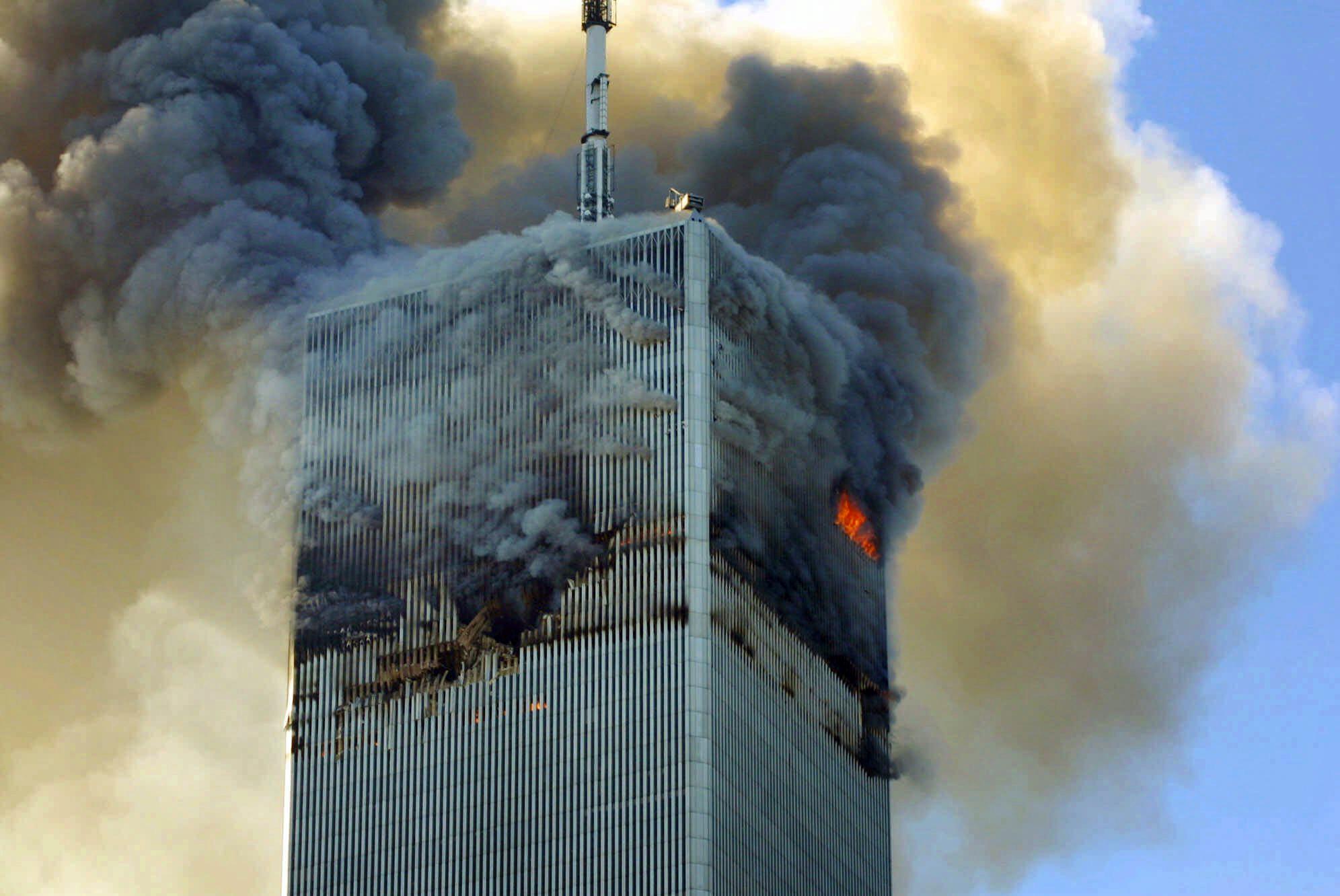
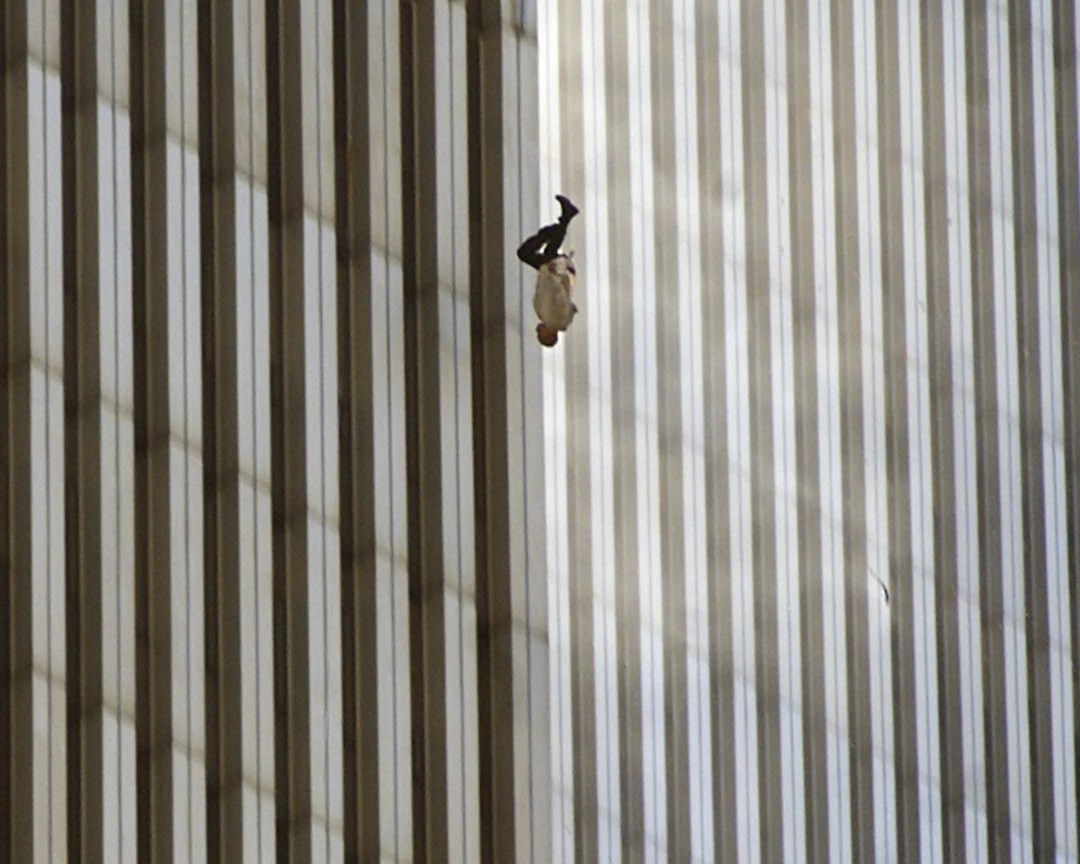
Indelible. Unforgetable. 9/11 in Pictures

We Shall Remember.

Fire and smoke billows from the north tower of New York’s World Trade Center on Tuesday, Sept. 11, 2001. (AP Photo/David Karp)

 A person falls from the north tower of New York’s World Trade Center as another clings to the outside, left, while smoke and fire billow from the building, Tuesday Sept. 11, 2001. (AP Photo/Richard Drew)

Continue reading

Leave a comment

Filed under accountability, Al Qaeda, atrocities, conspiracies, fundamentalism, historical interpretation, immolation, Islamic fundamentalism, landscape wondrous, life stories, military strategy, photography, politIcal discourse, power politics, security, self-reflexivity, suicide bombing, terrorism, the imaginary and the real, trauma, vengeance, world events & processes

Lakshman’s Hambantota Diarrhoeas

Lakshman Gunasekara … with highlights being the intrusion of The Editor, Thuppahi

I recall reading both these articles,[1] or at least parts of these articles just a few weeks ago sent by you.

1) China:- I am an admirer of China (just as much as I am an even bigger admirer of India, simply because of cultural and geographical affinity) and I am specifically an admirer of China’s role in the world today as a relatively civilised and certainly civilisational (in terms of Difference) counter to the old, beginning-to-fade Western imperialism. This is not to say that I do not have problems with China’s internal, unnecessarily repressive, political system. While I am a long-time Communist and I continue to watch with interest the successes and failure of the single-party system (the Communist Party is not at all the typical western-liberal-style ‘political party’), I am surprised at the lack of more dedicated practice of electoral politics within that one-party system, especially at the higher levels of national structures. Theoretically, I prefer the Communist one-party state than the bourgeois-liberal multiparty competitive electoral system as the best way toward greater democracy and consolidating social democracy.

Continue reading

1 Comment

Filed under accountability, centre-periphery relations, China and Chinese influences, commoditification, economic processes, governance, historical interpretation, Indian Ocean politics, island economy, Left politics, life stories, modernity & modernization, politIcal discourse, power politics, Rajapaksa regime, self-reflexivity, sri lankan society, transport and communications, world events & processes

9/11 Chaos: How Lewis Porte and Gander in Canada met the Overflow from 9/11

It is almost 20 years since 9/11 and here is a wonderful story about that terrible day. …..Jerry Brown Delta Flight 15… (true story)

Here is an amazing story from a flight attendant on Delta Flight 15, written following 9-11:

On the morning of Tuesday, September 11, we were about 5 hours out of Frankfurt, flying over the North Atlantic.  All of a sudden, the curtains parted and I was told to go to the cockpit, immediately, to see the captain.

Continue reading

Leave a comment

Filed under accountability, charitable outreach, cultural transmission, democratic measures, education, historical interpretation, landscape wondrous, life stories, performance, politIcal discourse, self-reflexivity, terrorism, the imaginary and the real, tolerance, transport and communications, trauma, travelogue, unusual people, voluntary workers, welfare & philanthophy, world events & processes

A Battle Map of the Dutch Invasion of Kandy in 1765

Presented by Brig Hiran Halangode, retd] GW SLA

Chamikara Pilapitiya, author of book titled Maha Nuwara Yugaye Apprakata Viththi* has gifted a copy of a rare Battle Map of the Dutch invasion of Kandy in 1765 to Trinity College Kandy. An image of the gifted copy of the map is given below. It shows a detailed description of the trench lines and the gun batteries in and around the town of Kandy, which was used by the Kandyan army to attack the invading Dutch army in 1765.

 Mr. Chamikara Pilapitiya presenting a copy of his book to then Principal of Trinity College in 2019.

The original map is available in Rijksmuseum, Amsterdam.

Continue reading

5 Comments

Filed under art & allure bewitching, authoritarian regimes, cultural transmission, economic processes, ethnicity, governance, heritage, historical interpretation, island economy, Kandyan kingdom, landscape wondrous, life stories, military strategy, patriotism, politIcal discourse, power politics, sri lankan society, transport and communications, unusual people, world events & processes

Spats about Ports in Sri Lanka: The Bigger Picture

  Mick Moore**

To the extent that we can make any confident prophesies about world affairs in this very fragile current context, it is reasonable to predict that (a) global political, military, economic and ideological competition between China and the US is going to continue to loom large and (b) Sri Lanka, for a range of historical and geographical reasons, is likely to remain caught up in that competition. We can expect to see many more partisan spats, like those between Jonathan Hillman and Fair Dinkum in relation to the Hambantota Port, counterposing good/wicked China against wicked/good US. Some claims will be right, and some wrong. My guess is that in 10 years or so, the two combatants will earn similar levels of positive and negative points.

Continue reading

10 Comments

Filed under accountability, american imperialism, centre-periphery relations, China and Chinese influences, Cuba in this world, economic processes, governance, historical interpretation, island economy, landscape wondrous, modernity & modernization, politIcal discourse, power politics, Rajapaksa regime, self-reflexivity, sri lankan society, transport and communications, travelogue, world events & processes

American Schemes of Global Bifurcation behind Hillman’s Story on Hambantota Port

Fair Dinkum

I am unfamiliar with the work of Jonathan E. Hillman. So, I spent time researching his background before reading this article. I wanted to read the article with an open mind. With this type of article, it is important know who the author is; what his relationship is with Sri Lanka, China and the US; the organisation he is affiliated with and what their goals are; and why did he decide to write this essay and for what purpose?

Greece may be on the fringe of the EU geographically, but it has become a key focus in the intensifying scramble for global influence. Sri Lanka could go the same way.  Illustration by Henry Wong

Continue reading

4 Comments

Filed under accountability, american imperialism, authoritarian regimes, centre-periphery relations, China and Chinese influences, economic processes, foreign policy, governance, historical interpretation, Indian Ocean politics, island economy, landscape wondrous, legal issues, life stories, modernity & modernization, politIcal discourse, power politics, security, self-reflexivity, the imaginary and the real, transport and communications, truth as casualty of war, unusual people, world events & processes

The Story behind the Rise of Hambantota Port: An American Twist

Jonathan E. Hillman, 26 August 2021, whose title runs thus:The Secret History of Hambantota” ….  while the presentation here is marked by the imposition of highlights, let me prefigure the prospect of critical commentary from knowledgeable specialists sought out by Thuppahi.

If Chinese loans were cigarettes, Sri Lanka’s Hambantota Port would be the cancerous lung on the warning label. Some observers have pointed to the underperforming port and alleged that China is using “debt trap diplomacy,” loading countries up with loans and seizing strategic assets after they cannot repay. Others have argued that Sri Lanka, not China, is responsible for its debt woes. The debate is important for understanding the risks lurking in China’s Belt and Road Initiative, especially as the pandemic pushes more of China’s borrowers to the brink.

Continue reading

4 Comments

Filed under accountability, american imperialism, authoritarian regimes, centre-periphery relations, China and Chinese influences, communal relations, demography, economic processes, export issues, growth pole, historical interpretation, Indian Ocean politics, island economy, landscape wondrous, life stories, photography, politIcal discourse, power politics, security, self-reflexivity, slanted reportage, sri lankan society, the imaginary and the real, transport and communications, truth as casualty of war, unusual people, world events & processes

Auckland Atrocities: Grounded Appraisals from Sri Lankans

I present several comments from Sri Lankans in New Zealand and Sri Lanka

A NOTE from SM in Colombo, 7 Sept 2021

It is high time for countries to cut hard on organisations promoting and practicing extremist ideologies whether they be religious, ethnic, separatist, or nationalist.  The UK extended its ban on the LTTE a few days back which is a welcome development.  Canada should practice what they preach. With an election round the corner, the Liberal Trudeau govt soft peddles the LTTE issue in order to garner Canadian Tamil votes.  The Canadian government’s sponsorship of TGWA is a case in point.
Countries that ignore, or aid and abet violent extremism will reap what they sow.

Continue reading

1 Comment

Filed under accountability, asylum-seekers, atrocities, centre-periphery relations, communal relations, cultural transmission, discrimination, disparagement, economic processes, ethnicity, fundamentalism, governance, heritage, historical interpretation, human rights, landscape wondrous, legal issues, life stories, martyrdom, Muslims in Lanka, politIcal discourse, press freedom & censorship, self-reflexivity, Sinhala-Tamil Relations, slanted reportage, sri lankan society, taking the piss, terrorism, the imaginary and the real, tolerance, trauma, travelogue, truth as casualty of war, unusual people, vengeance, violence of language, world events & processes, zealotry

Revealing Headlines & Videos from Afghanistan

  • Anthony Loyd  in The Weekend Australian, 3 September 2021:  Battle is joined for Afghanistan’s never-conquered guerrilla heartland,”

  • Rodger Shanahan: in The Weekend Australian, 3 September 2021: “Impacts on Western security of Afghanistan withdrawal far from settled”

Continue reading

Leave a comment

Filed under accountability, american imperialism, atrocities, historical interpretation, human rights, Islamic fundamentalism, life stories, military strategy, nationalism, politIcal discourse, power politics, security, self-reflexivity, transport and communications, trauma, war reportage, world events & processes, zealotry

Anne Abayasekara: Telling It Like It Is

Telling It Like It Is …. is a compilation of a few of the journalistic writings of Anne Abayasekara.


She was born Annette Aurelia Ameresekere in April 1925. In the field of journalism, she was a Sri Lankan pioneer, entering what was a male dominated profession in the early 1940s. At Lake House, before reaching 22 years of age, she was appointed Editress of the Women’s Pages in the Ceylon Daily News and Sunday Observer, being the only female in the Editorial Department.

Continue reading

Leave a comment

Filed under charitable outreach, citizen journalism, cultural transmission, education, female empowerment, governance, heritage, historical interpretation, language policies, life stories, literary achievements, patriotism, performance, politIcal discourse, press freedom & censorship, reconciliation, self-reflexivity, Sinhala-Tamil Relations, sri lankan society, tolerance, unusual people, welfare & philanthophy, women in ethnic conflcits, world events & processes