
A Jesus Christ ‘Miracle’ in Rio ….. A Genius in Cameracraft generates a SHOT that is an Achievement Indelible

Captain Kumar Kirinde, SLAF Retd, whose facored title runs as “THE DESTROYED TOWERS OF THE WORLD TRADE CENTRE OF NEW YORK: THE AFTEMATH OF 9/11 REMEMBERED IN PICTURES” .…. Sources: http://www.quora.com (posts by Ann Longmore-Etheridge), ……………………………………………………………………………….. https://science.howstuffworks.com/engineering/structural/world-trade-center-slurry- wall.htm and Google Images
Constructing the World Trade Center (1970)
 Pic: https://www.ba-bamail.com/baba-recommends/history-in-pictures-25- amazing-images-of-the-past/ ….
Filed under 9/11 Attacks, accountability, Al Qaeda, centre-periphery relations, fundamentalism, historical interpretation, landscape wondrous, life stories, martyrdom, photography, politIcal discourse, power politics, security, self-reflexivity, suicide bombing, terrorism, the imaginary and the real, trauma, unusual people, vengeance, world events & processes
Avishka Mario Senewiratne, whose chosen title is “Jonathan Forbes and the Discovery of Sigiriya,” where it was presented in The Ceylankan, vol 26/3, August 2023
“Sigiri is the only example in Ceylon of those solitary activities, which form so remarkable a feature in the table-land of the dakka…” – Sir James Emerson Tennent
Surrounded by the glorious forestry, guarded by majestic ramparts, nourished by enchanting tanks and ponds, and illuminated by those picturesque frescoes, the Lion Rock: Sigiriya is certainly a grand delight in this palm-fringed isle. Its histories and mysteries are vast. For nearly 700 years this one-time Capital of ancient Ceylon, which housed the fortress of the infamous King Kasyapa I, was lost and forgotten by those in this country. What lingered of Sigiriya were tales from the ancient chronicle Cūḷavaṃsa (sequel of the Mahāvaṃsa) and other contemporary documents. It is most likely that Kings from Nissankamalla to Sri Wickrema Rājasinghe never saw or knew little of this important part of heritage. The older occupants of Ceylon’s maritime region: the Portuguese and Dutch also had no idea of Sigiriya. However, things began to change with the British occupation of the whole of Ceylon in 1815. One such was the translation of the ancient chronicles of Ceylon by George Turnour of the Ceylon Civil Service. The famous story surrounding Kasyapa the patricide, losing the favour of his people in Anuradhapura and locating a new fortress in Sigiriya has been well recorded in the annals of this country. However, when it was first recorded in English, the very mention of Sigiriya aroused the curiosity of the new rulers of this ancient country. Many pursued the idea of finding the long-lost Sigiriya.

Filed under ancient civilisations, architects & architecture, art & allure bewitching, British colonialism, centre-periphery relations, cultural transmission, heritage, historical interpretation, landscape wondrous, life stories, nature's wonders, photography, rehabilitation, unusual people, world events & processes
Karthik Krishnaswamy in The Cricket Monthly, 24 July 2023 , where the title reads “MS Dhoni joined the pantheon of mythical Tamil heroes”
Superstars in Chennai emerge from cinema or politics or both. Then came along a cricketer from Ranchi

Chennai: Chennai Super Kings captain MS Dhoni during the IPL 2023 cricket match between Chennai Super Kings and Lucknow Super Giants, at M. A. Chidambaram Stadium, in Chennai, Monday, April 3, 2023. (PTI Photo/R Senthil Kumar)(PTI04_03_2023_000319B)
It begins when he steps over the boundary. A rasping chant. A name.
“Baashha!” A drumroll. “Baashha!” Another drumroll.
There are urgent bars of instrumental orchestration, and as they swell to a crescendo, a voice pierces the air: “Let’s welcome the new batsman, Mahendra Singh… Dhoniiiiiiiiii!”
The timing is just right. The announcer’s voice gives way to the power-packed vocals of SP Balasubrahmanyam.
Hey Baashha paaru Baashha paaru
Pattalathu nadaya paaru
Pagai nadungum padaya paaru
Coatu suitu rendum eduthu
Poattu nadakkum puliya paaru
Behold Baashha
Behold the warrior-like stride
Behold the army that sends
shudders down enemy spines
Behold the tiger in coat and suit
Filed under accountability, art & allure bewitching, cricket for amity, cricket selections, cultural transmission, economic processes, heritage, historical interpretation, Indian traditions, landscape wondrous, life stories, LTTE, martyrdom, nationalism, performance, photography, politIcal discourse, power politics, propaganda, refugees, rehabilitation, terrorism, the imaginary and the real, travelogue, truth as casualty of war, vengeance, war reportage, welfare & philanthophy, world events & processes, zealotry
WWCT in Daily Mirror, 22 August 2023 … with this title “The Leopard – An Ideal Conservation Umbrella Lankan Leopards. A Symbol of Hope”
The Sri Lankan leopard (Panthera pardus kotiya) – IUCN Status: Vulnerable. Estimated range loss (2016): 63%
We are the IUCN Red List assessors for the Sri Lankan leopard having been members of the IUCN’s Cat Specialist group since 2002
It may be a dubious feat to celebrate, but the Sri Lankan leopard has the lowest overall loss of historic range of all the sub-species, with ~37% of its previous range remaining.
Michael Roberts
The Afghanistan vs Pakistan three match series being played out at Hambantota in Sri Lanka ……. YES, YES, in Hambantota if you happen to know where that is … snuck up and into my world in distant Australia with quite a bang – only after the outcome of the second 50-over ODI. The BANG lay in the scores: when a side reaches 302 runs and by a whisker in the last over, it is quite a bang: clearly an outstanding match (with Shadab Khan, Imam ul-Haq and Babar Asam standing out for Pakistan and the young opening batsmen Rahmanullah Gurbaz and Ibrahim Zadran hitting the straps for Afghanistan)
 Babar Azam

Gurbaz
Michael Roberts
The attacks on Tamils living and/or working in the southern and central parts of island Sri Lanka by elements of the Sinhala population were indefensible, horrible and disastrous for the country. It is not adequate to depict them as “riots.” They constituted a “pogrom” – with all the pejorative colourings attached to that concept.[1]

Filed under accountability, anti-racism, atrocities, chauvinism, Colombo and Its Spaces, discrimination, economic processes, ethnicity, historical interpretation, life stories, LTTE, photography, politIcal discourse, power politics, racist thinking, self-reflexivity, Sinhala-Tamil Relations, sri lankan society, Tamil civilians, the imaginary and the real, trauma, unusual people, vengeance, world events & processes, zealotry
Michael Roberts … reproducing an article that appeared initially in a collection of my essays in 1994 under the title above in EXPLORING CONFRONTATION, Readng, Harwood Academic Publishers, 1994, pp. 317-27. It was subsequently reproduced in Nethra, vol. 6, 199-213. …. and then placed on web in Groundviews (without its footnotes) .… https://ground views.org/2019/03/28/the-case-for-foreign-judges-in-a-judicial-mechanism-in-sri-lanka-countering-falsehoods/.

Bystanders after the burning and assaulting: also at Borella Junction area, 24-25th July 1983, picture by Chandragupta Amarasinghe. There is a suggestion here that popular participation in attacks were also initiated and/or facilitated by state functionaries. It is also likely that some of those described as ‘bystanders’ were perpetrators of some of the destruction, burning and killing. I had not discovered whom the photographer was when Exploring Confrontation went to press in 1994. Let me use this occasion to record my greatest respect for the bravery and ingenuity revealed by Chandragupta Amarasinghe in extremely dangerous and trying circumstances.
Filed under anti-racism, atrocities, centre-periphery relations, Colombo and Its Spaces, communal relations, cultural transmission, disparagement, ethnicity, fundamentalism, heritage, historical interpretation, life stories, performance, photography, politIcal discourse, power politics, racism, riots and pogroms, self-reflexivity, Sinhala-Tamil Relations, sri lankan society, Tamil civilians, trauma, unusual people, vengeance, violence of language, world events & processes, zealotry
Yomal Senerath-Yapa, in Sunday Times 18 June 2023, with this title “A humane look at the villagers of Palaikuli”
Sumathy Sivamohan’s maiden documentary film ‘Amid the Villus’ tells the story of a pastoral people for whom the land was simply home. This film, Sumathy Sivamohan’s latest documentary – also her first (having so far done only feature films) — takes you to Palaikuli, the dry scrubland village in Musali South where for ages a pastoral people have tended to cattle and goats.

It is a poetic, humane, behind-the-headlines look at the ‘Musali land-grab’ where she documents the story of the community that was vilified in the news for infringing on the vintage ‘land of the leopard’ at Wilpattu.
Filed under accountability, art & allure bewitching, authoritarian regimes, centre-periphery relations, communal relations, cultural transmission, discrimination, economic processes, ethnicity, governance, historical interpretation, human rights, island economy, land policies, legal issues, life stories, meditations, patriotism, performance, photography, politIcal discourse, self-reflexivity, social justice, tolerance, unusual people, welfare & philanthophy, working class conditions
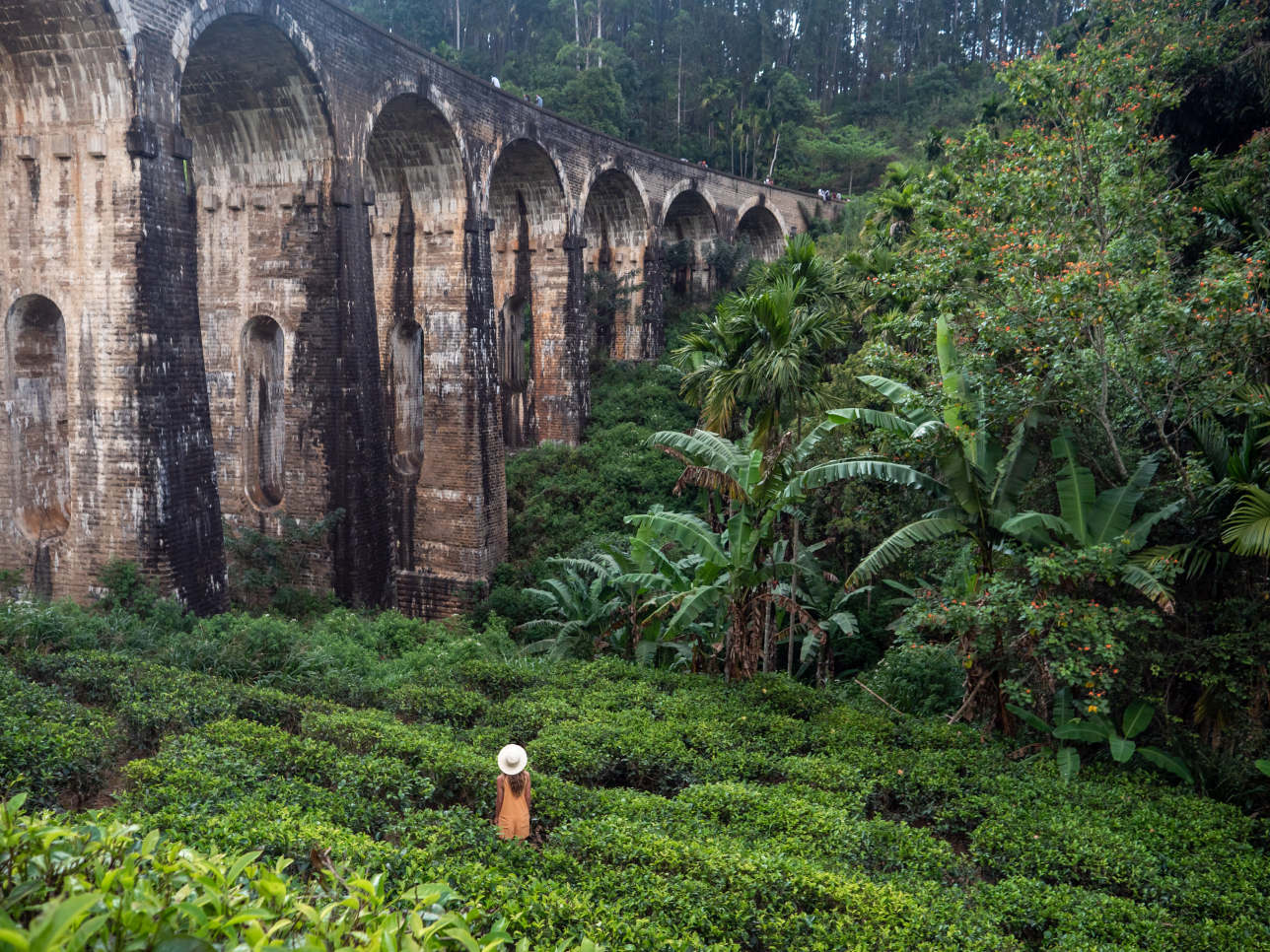
 Lee Tulloch, in Sydney Morning Herald, 9 June 2023, where the title reads = “Why you should visit this undersold, teardrop-shaped island right now”
If there’s a country that could do with a lot of love right now, it’s Sri Lanka. Over the past three decades, the island nation has been ravaged by conflict and disaster, beginning with the devastating 2004 Indian Ocean tsunami, which claimed 30,000 lives, and the 26-year-long civil war, which ended in 2009.
It had just re-emerged as a popular tourist destination when, on Easter Sunday 2019, an Islamic group, in retaliation for the Christchurch attacks thousands of kilometres away, bombed three churches and three luxury hotels in Colombo, unnerving the tourists who had returned in record numbers.
Filed under accountability, ancient civilisations, architects & architecture, art & allure bewitching, australian media, Buddhism, commoditification, cultural transmission, ethnicity, heritage, historical interpretation, island economy, landscape wondrous, life stories, photography, pilgrimages, slanted reportage, sri lankan society, travelogue, unusual people, world events & processes
 thuppahi


