
Category Archives: performance

Afghanistan’s Turmoil Replayed at Lords Cricket Ground

Michael Roberts

In my reading, the spirit of cricket was spiked and shattered at its iconic home-ground of Lords yesterday. Not only yesterday –the fifth day. IThe “spiking” occurred throughout the match  with (A) tailenders’ bombarded with headhigh short-pitched bowling by both sides; (B) verbal badinage and assualts — camouflaged as “badinage” and presented with smiles — from both parties; and (C) the spiking of the ball by Jimmy Anderson [according to one report] among the events on the ground.

Kumar Oh Kumar …. what future for “The Spirit of Cricket” talk you delivered during the famous COWDREY LECTURE some years back!

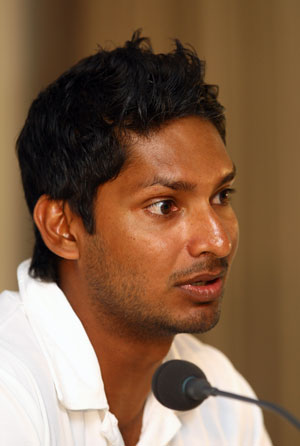
https://www.espncricinfo.com/story/kumar-sangakkara-s-mcc-spirit-of-cricket-lecture-522183

….. https://www.cricketcountry.com/articles/kumar-sangakkaras-spirit-of-cricket-speech-tugs-the-heart-3891

Continue reading

1 Comment

Filed under accountability, cricket for amity, disparagement, fundamentalism, life stories, patriotism, performance, psychological urges, world events & processes

Dr. Cyril Paranavitana: An Appreciation from Many Hearts & Hands

Piyasiri Wickramasekara, Chandrasena Maliyadde and HMG Palihakkara ++

It is with profound sorrow that we, the class of 1968 in the Faculty of Arts at the University of Peradeniya, came to know of the untimely departure of our great friend Dr. Cyril Paranavithana (Parane), just two days prior to his 75th birthday (28 July 2021) in New York, USA. The warm
greetings intended for this landmark birthday event had to be hurriedly turned into heartfelt condolences.

Continue reading

8 Comments

Filed under art & allure bewitching, charitable outreach, cultural transmission, education, ethnicity, heritage, historical interpretation, landscape wondrous, life stories, modernity & modernization, patriotism, performance, self-reflexivity, sri lankan society, teaching profession, travelogue, unusual people

Valentine Gunasekara: His Architectural Virtuosity and Heritage

Anoma Pieris, with highlighting emphasis imposed by The Editor of Thuppahi

Architect Valentine Gunasekara passed away peacefully at sunset on Monday 4, September 2017; and I felt it was important that his passing did not go unnoticed. The ebook version of Imagining Modernity: The Architecture of Valentine Gunasekara published 14 years after my 2007 book is an effort at ensuring he would not be forgotten. He mirrored the struggles of my parent’s generation across the hard years of import-substitution and Socialist policies when every bag of cement was purchased with a special permit.  In fact, even attempting to build with concrete appeared foolhardy. However, he persevered, leaving a small coterie of buildings that are comparable to the works of Van Molyvann (1926-2017) in Cambodia or the Malayan Architects Co-Partnership (1960-67) in Singapore.  These buildings have not garnered the attention and care that is afforded mid century modernism elsewhere, largely because their attempts at design synthesis are overlooked. The tropical climate is also hostile to pristine architectures and plastered concrete surfaces are high maintenance. But if one is willing to look beyond everyday tolerances to the aspirations behind the aesthetic responses that surround us in our rapidly growing cities, one needs to engage with Gunasekara’s repertoire.

Continue reading

5 Comments

Filed under architects & architecture, art & allure bewitching, British colonialism, centre-periphery relations, cultural transmission, economic processes, education, ethnicity, female empowerment, gender norms, heritage, historical interpretation, island economy, landscape wondrous, life stories, modernity & modernization, performance, self-reflexivity, travelogue, unusual people, world events & processes

Defending Sri Lanka at Geneva in 2009: Wijesinha’s New Book

Rajiva Wijesinha, presenting  his new book unders the imprint of Godage & Bros, Colombo

In 2006 the United Kingdom, as now 15 years later, was in the forefront of bringing Sri Lanka before the United Nations Human Rights Council in Geneva. The resolution was not taken up but kept on the table, and in September 2007 the UK proposed discussing the text with the recently appointed Sri Lankan Representative Dayan Jayatilleka.

Continue reading

1 Comment

Filed under accountability, american imperialism, centre-periphery relations, foreign policy, governance, historical interpretation, human rights, landscape wondrous, life stories, patriotism, performance, politIcal discourse, power politics, security, self-reflexivity, Sinhala-Tamil Relations, truth as casualty of war, UN reports, unusual people, world events & processes

Stalag Luft III and Its “Great Escape” Tunnel: An Archaelogical Treasure

The Great Escape Tunnel

Untouched for almost seven decades, the tunnel used in the Great Escape has finally been unearthed. The 111-yard passage nicknamed ‘Harry’ by Allied prisoners was sealed by the Germans after the audacious break-out from the POW camp Stalag Luft III in western Poland. Despite huge interest in the subject, encouraged by the film starring Steve McQueen, the tunnel undisturbed over the decades because it was behind the Iron Curtain and the Soviet had no interest in its significance.

Continue reading

3 Comments

Filed under architects & architecture, art & allure bewitching, ethnicity, historical interpretation, Hitler, landscape wondrous, life stories, patriotism, performance, security, self-reflexivity, the imaginary and the real, travelogue, unusual people, vengeance, war crimes, war reportage, world events & processes, World War II

Sinhalaness in Pre-British Ceylon: Issues and Pathways

A Review Essay by Alan Strathern** dissecting a Book by Michael Roberts published in 2004

This item was located by Thuppahi in the web-site Colombo Telegraph on 26 December 2012 (see https://www.colombotelegraph.com/index.php/the-royal-we-sinhala-identity-in-the-dynastic-state/). However, it appeared initially in 2005 in the prestigious journal Modern Asian Studies,  39: 1013–1026.

AN INTRODUCTORY NOTE by Michael Roberts, 7 August 2021

This item is a review essay not a standard review. Alan Strathern is an accomplished historian who happens to be the son of a leading social anthropologist, viz., Marilyn Strathern of ANU and Cambridge University. You will find that his prose is as refined and clear-cut as demanding. After some hesitation, I decided to adhere to my normal policy of highlighting some parts of the text with blue colourfor the benefit of readers facing the difficulties posed by complex issues in historical sociology. On occasions I have also imposed a break in extra-long paragraphs. The illustrations too are my impositions intended to promote reader interest.

Continue reading

2 Comments

Filed under Aboriginality, ancient civilisations, architects & architecture, authoritarian regimes, British colonialism, British imperialism, Buddhism, centre-periphery relations, commoditification, cultural transmission, economic processes, ethnicity, hatan kavi, heritage, historical interpretation, insurrections, Kandyan kingdom, landscape wondrous, life stories, literary achievements, military strategy, modernity & modernization, nationalism, patriotism, performance, pilgrimages, politIcal discourse, Portuguese imperialism, religiosity, Saivism, self-reflexivity, sri lankan society, Tamil migration, unusual people, violence of language, world events & processes

Kitulgala and the Classic Movie “Bridge on the River Kwai”

Michael Roberts

Nihal Rajapaksa has sent me three video clips[1] pertaining to that classic film “The Bridge on the River Kwai,” starring actors William Holden (American), Alex Guinness (British) and Jack Hawkins (British) – a film that was directed by David Lean and was shot in Ceylon in 1957  — with local links aided by the collaboration of Chandran Rutnam among other locals. Whatever your age, these clips are a “Must See” category (three specific web-references afe served up below in RED).

Chandran Rutnam and William Holden while shooting The Bridge on the River Kwai.

Continue reading

8 Comments

Filed under cultural transmission, education, heritage, historical interpretation, landscape wondrous, life stories, military strategy, nationalism, performance, photography, press freedom, security, self-reflexivity, the imaginary and the real, travelogue, unusual people, war reportage, world events & processes

President Premadasa’s Gross Failures on the Warfront in the North in 1989/90

 Shamindra Ferdinando, in The Island, 21 July 2021, where the title is “How Premadasa paved the way for first Parama Weera Vibushanaya, posthumously”

One-time Army Commander Gen. Daya Ratnayake (2013-2015) recently joined a special event on Zoom in honour of those who made the supreme sacrifice at Kokavil, 31 years ago. Prof. Raj Somadeva and writer Charith Kiriella delivered special lectures on the occasion. Those who defended the isolated Kokavil base – Officer Commanding, Kokavil transmission complex, Saliya Aladeniya, an old Trinitian who was posthumously promoted Captain of 3 Battalion, Sri Lanka Sinha Regiment (3 SLSR), and his men, perished in the battle. The LTTE didn’t hand over their bodies.

  Aladeniya

Continue reading

2 Comments

Filed under accountability, anton balasingham, centre-periphery relations, disparagement, Eelam, historical interpretation, life stories, LTTE, military strategy, performance, prabhakaran, security, self-reflexivity, Sinhala-Tamil Relations, Tamil Tiger fighters, trauma, world events & processes

Three Cricketers lined up for Hefty Punishments

Rex Clementine in Island, 29 June 2021, where the title is “Banned”

Sri Lanka Cricket’s Disciplinary Committee has recommended lengthy suspensions for three players who breached a bio-secure bubble in England last month that resulted in them being sent home halfway through the tour. Accordingly, Danushka Gunathilaka and Kusal Mendis with previous offences have been banned for two years while Niroshan Dickwella has been handed a suspension of 18 months. Each player also has been fined 25,000 USD for their offence.

A NOTE …the photo of the three players alienated the computer which rejected that shot !@#!$ … so this is shot of one… Dhanushka Gunatilleka

Continue reading

1 Comment

Filed under Aboriginality, disparagement, life stories, performance, sri lankan society, taking the piss, trauma, unusual people

The Skeins of Class bearing on the Threads of Sinhala Cultural Revival under the British

Uditha Devapriya, in The Island, 24 July 2021, where the title reads “Colonial Bourgeoisie and Sinhala Cultural Revival”

The colonial bourgeoisie in Sri Lanka did not form a monolithic class. They were divided horizontally as well as vertically: horizontally on the basis of income and inheritance, and vertically on the basis of primordial attachments, such as caste ideology. Various factors, mainly economic, conspired as much to unify the bourgeoisie as they did to divide them, distinguishing them by their homogeneity as much as by their heterogeneity.

Panadura Vaadaya

Continue reading

1 Comment

Filed under architects & architecture, art & allure bewitching, authoritarian regimes, British colonialism, Buddhism, centre-periphery relations, commoditification, cultural transmission, economic processes, education, historical interpretation, island economy, Kandyan kingdom, landscape wondrous, life stories, literary achievements, modernity & modernization, nationalism, paintings, patriotism, performance, politIcal discourse, religious nationalism, self-reflexivity, sri lankan society, unusual people