Category Archives: life stories

AHANNA Programme launched by SL Government and Police

Addressing Sinhala-Muslim and Other Communal Tensions

Please find attached hereto a press release dated 09 August 2018, issued by the Department of Government Information with regard to the launching of the “Ahanna” programme, which aims to promote reconciliation and mutual trust among communities.  This programme, initiated by the Ministry of Finance & Mass Media and the Secretariat for Coordinating Reconciliation Mechanisms (SCRM), will be implemented island-wide.

The videos of the programmes held in Dehiwala and Panadura on 08 and 09 August 2018, could be viewed via the following links and are available on the Ministry’s Youtube channel:

https://www.youtube.com/watch?v=jW0YOnOnAxU

https://www.youtube.com/watch?v=2us1xFetVaw&t=15s

Spend time on listening to this broadcast in Sinhala ….

LISTEN & WATCH a SAF RUGBY CEREMONY = YouTube – 848f4d836bc7a643 – 2

ALSO LISTEN TO Kishani’s DANNO BUDUNGE  = https://www.google.com.au/search?q=kishani+danno+budunge&rlz=1C1CHZL_enAU745AU745&tbm=isch&source=iu&ictx=1&fir=fmBt4znKeKBT6M%253A%252CNkysJFNXc0W7eM%252C_&usg=AFrqEzc3I66fuGKioDHB-2WzG7BbW6-PAA&sa=X&ved=2ahUKEwiinZThnuLcAhWDjLwKHUjaBiYQ9QEwCnoECAMQBA#imgrc=yv7BxEnTyz6I1M:

Continue reading

Leave a comment

Filed under accountability, atrocities, cultural transmission, democratic measures, economic processes, education, governance, heritage, historical interpretation, Islamic fundamentalism, island economy, landscape wondrous, legal issues, life stories, nationalism, politIcal discourse, propaganda, reconciliation, religiosity, self-reflexivity, Sinhala-Tamil Relations, social justice, sri lankan society, the imaginary and the real, tolerance, trauma, unusual people, welfare & philanthophy, women in ethnic conflcits, working class conditions, world events & processes

Young Pirapāharan’s Inspirations and Ideology: Ragavan’s Incisive Memorial in May 2009

Ragavan, being a reprint from The Sunday Leader, 24 May 2009, where the title runs Memories of a much-mythologised rebel leader by a former LTTE fighter ” …. with the highlighting being the work of The Editor, Thuppahi

  The body identified as that of the Tamil rebels’
leader, Velupilai Pirapaharan, was carried Tuesday
through Sri Lankan troops — 
Courtesy Reuters

“Those who bear arms acquire and wield an extreme measure of power. We believe that if this power is abused, it will inevitably lead to dictatorship.” – Pirapaharan, from an interview with N. Ram, 1986

The LTTE’s supreme leader and commander, Velupillai Pirapaharan, along with his wife, children and the entire leadership of the LTTE, have been completely wiped out by the Sri Lankan military. The LTTE began as a guerrilla unit during the 1970’s, at its peak, it controlled vast territory and built up a conventional force consisting of an army, navy and air force. The group won many battles against the Sri Lankan Army, crushed all Tamil opposition groups functioning in Sri Lanka, and was seen as a deadly, brutal and disciplined organisation.

Continue reading

5 Comments

Filed under accountability, conspiracies, Eelam, governance, historical interpretation, Hitler, Indian Ocean politics, landscape wondrous, life stories, LTTE, martyrdom, military strategy, nationalism, politIcal discourse, power politics, prabhakaran, refugees, security, self-reflexivity, Sinhala-Tamil Relations, sri lankan society, tamil refugees, terrorism, truth as casualty of war, vengeance, war reportage, world events & processes

Anagarika Dharmapala in Ceylon and the World: Missing Dimensions highlighted by Kemper

Sasanka Perera, in The Island, 8 August 2018, where the title is “Rescuing Dharmapala from the ‘Nation’,” …. with emphasis via highlighting in this version being an imposition by The Editor, Thuppahi

I was intrigued to see the worlds of knowledge of the past that were opened up when reading Steven Kemper’s 2015 book, ‘Rescued from the Nation: Anagarika Dharmapala and the Buddhist World’ published by the University of Chicago Press. Growing up Sinhala Buddhist in Sri Lanka, Anagarika Dharmapala (1864-1933) would easily be one of the most important historical characters from the recent past, we had become familiar with early in our lives. This was certainly so for my generation. As we know from that experience, Dharmapala was closely and intimately linked to the country’s Buddhist revivalism in the late 19th and early 20th centuries. Precisely due to this reason, he was the most iconic culture hero of the Sinhala Buddhists in the modern period.

Continue reading

4 Comments

Filed under British colonialism, communal relations, cultural transmission, economic processes, ethnicity, heritage, historical interpretation, Indian religions, Indian traditions, landscape wondrous, life stories, nationalism, patriotism, pilgrimages, politIcal discourse, power sharing, religiosity, self-reflexivity, sri lankan society, the imaginary and the real, travelogue, unusual people, world events & processes

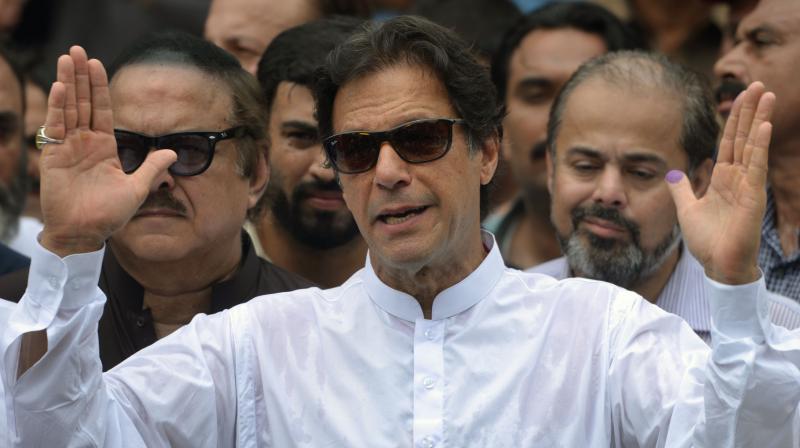
Imran Khan set to embrace Pakistani and Indian Cricketers at his Ministerial Inauguration

Bipin Dani in The Deccan Chronicle, 7  August 2018

Fawad Chaudhry, spokesperson of Imran Khan’s Pakistan Tehreek-e-Insaf (PTI), said that Imran Khan will invite all members of the 1992 World Cup-winning Pakistani cricket team for his oath-taking ceremony as Pakistan Prime Minister. (Photo: AFP)

Mumbai: Imran Khan will invite all members of the 1992 World Cup-winning Pakistani cricket team for his oath-taking ceremony as Pakistan Prime Minister. This was revealed by his party Pakistan Tehreek-e-Insaf (PTI) spokesperson, Fawad Chaudhry. “Due to some legal issues, we are yet to finalize the final date of the ceremony and therefore the invitations are not sent yet,” said Chaudhry. Imran Khan also has plans to invite India’s Sunil Gavaskar, Kapil Dev and Navjot Singh Sidhu for his swearing-in ceremony. Continue reading

1 Comment

Filed under charitable outreach, cricket for amity, cultural transmission, governance, heritage, Indian Ocean politics, landscape wondrous, life stories, politIcal discourse, self-reflexivity, unusual people, world events & processes

Visiting Jaffna Today in July 2018: Misconceptions and Issues

Jehan Perera in Island, 23 July 2018, where the title is “Coping With Nationalism In Jaffna Through Engagement”

Early in the morning as I walked down a street in Jaffna, I heard a cry “Annai, annai.” Initially, I took no notice and kept on walking, but the cry was persistent. So I looked back to see two small children behind the gate of their house. I smiled at them and recommenced my walk. But again the cry “Annai, annai” rent the air. This time I turned back and walked to the source of the sound. The elder one, a girl of about six years of age, ran away but the little one, a boy of no more than three stood his ground. Eyes gleaming and with a drippy nose he stood and smiled. I reached out through the chained gate and stroked the top of his head and he laughed happily and ran away.

Continue reading

Leave a comment

Filed under accountability, citizen journalism, communal relations, economic processes, governance, historical interpretation, landscape wondrous, legal issues, life stories, nationalism, politIcal discourse, reconciliation, self-reflexivity, Sinhala-Tamil Relations, sri lankan society, Tamil civilians, trauma, truth as casualty of war, unusual people, vengeance, welfare & philanthophy, world events & processes, zealotry

Awful Events in July ’83: Will We Ever Learn

Harim Peiris, in Daily News, 23 July 2018, where the title reads “‘Never again’: The enduring lesson of July 1983, after 35 years” …. with highlights being the work of The Editor, Thuppahi

July 23 marked the 35th anniversary of one of post-independent Sri Lanka’s darkest chapters, the July 1983 pogrom against Tamil civilians throughout the country. The pogrom was sparked by an ambush of an Army patrol in Jaffna, by the LTTE, then one of several militant groups operating in the North, in which the entire platoon of 13 soldiers was wiped out.

Continue reading

Leave a comment

Filed under accountability, atrocities, authoritarian regimes, communal relations, democratic measures, disparagement, economic processes, ethnicity, fundamentalism, historical interpretation, jihad, landscape wondrous, law of armed conflict, life stories, LTTE, performance, politIcal discourse, power politics, Rajapaksa regime, religiosity, self-reflexivity, Sinhala-Tamil Relations, slanted reportage, sri lankan society, Tamil migration, tamil refugees, teaching profession, truth as casualty of war, vengeance, violence of language, welfare & philanthophy, world affairs

Facing Foursquare: Lalith Weeratunga in Q and A with Daily Mirror

Ranjith Ananda Jayasinghe, in Daily Mirror, 25 July 2018http://www.dailymirror.lk/article/I-never-took-orders-from-members-of-the-Rajapaksa-family-153131.html, where the title is “I never took orders from members of the Rajapaksa family”

Secretary to the former President Mahinda Rajapaksa, Lalith Weerathunga, in an interview with our sister paper Deshaya spoke about the charisma of the ousted president, the times during which the war raged and the controversial manner in which former Army Commander Sarath Fonseka was arrested. This marks the first time during the past four years that Weerathunga obliged to grant an interview to a newspaper.   

Continue reading

Leave a comment

Filed under accountability, governance, historical interpretation, Indian Ocean politics, landscape wondrous, legal issues, life stories, politIcal discourse, power politics, Rajapaksa regime, self-reflexivity, sri lankan society, truth as casualty of war, unusual people, world affairs

Ajit Kanagasundram’s Tale of Lanka and Singapore

Continue reading

Leave a comment

Filed under authoritarian regimes, British colonialism, colonisation schemes, economic processes, energy resources, governance, historical interpretation, Indian Ocean politics, island economy, life stories, modernity & modernization, politIcal discourse, security, Sinhala-Tamil Relations, sri lankan society, Tamil migration, transport and communications, welfare & philanthophy, world events & processes

Germany: Humanist Fundamentalism saves Al-Qaeda Fundamentalist from Deportation


Soeren Kern, item from The Gatestone Institute , 18 April 2018, …. where the title is Germany’s Dysfunctional Deportation System”

  • Aidoudi’s asylum request was rejected in 2007 after allegations surfaced that he had undergone military training at an al-Qaeda jihadi camp in Afghanistan between 1999 and 2000. During his training, he had allegedly worked as a bodyguard for Osama bin-Laden.
  • The government in North Rhine-Westphalia confirmed that for years Aidoudi had been receiving €1,168 ($1,400) each month in welfare and child support payments.
  • “Salafists such as Sami A. have no business in Germany and should be deported. Germany should not be a retirement retreat for jihadists.” — Alexander Dobrindt, Member of the German Bundestag.
  • Sami Aidoudi (left) lived in Germany since 1997, until he was deported to his homeland of Tunisia on July 13, 2018. He is alleged to have undergone military training at an al-Qaeda jihadi camp in Afghanistan between 1999 and 2000. He had allegedly worked as a bodyguard for Osama bin-Laden (right) during his training. (Image sources: Aidoudi – SpiegelTV video screenshot; Bin Laden – Wikimedia Commons)

Continue reading

Leave a comment

Filed under accountability, Al Qaeda, asylum-seekers, authoritarian regimes, cultural transmission, fundamentalism, governance, historical interpretation, human rights, Islamic fundamentalism, jihad, landscape wondrous, legal issues, life stories, politIcal discourse, power politics, security, self-reflexivity, slanted reportage, Taliban, terrorism, unusual people, war crimes, world events & processes, zealotry

Shreya Ghoshal to sing in Melbourne This August

Item from The Indian Sun, 22 July 2018, where the title runs Shreya brings her scores to the shores Down Under”

The beautiful and rich voice of Shreya Ghoshal will be heard on Australian shores this August when the singers, one of the most famous in Bollywood, performs live. Often referred to as an “energetic powerhouse” on stage, Sheya’s off-stage persona is very different from what you see on stage. “Sometimes it is good to be ignorant of yourself,” laughs the singer.

Continue reading

3 Comments

Filed under art & allure bewitching, australian media, heritage, landscape wondrous, life stories, performance, unusual people