Category Archives: landscape wondrous

Remembering George Turnour: Scholar & Administrator Extraordinary

Hugh Karunanayake

Thirty seven years ago, on 13 April 1985, the British Prime Minister of the day  Mrs Margaret Thatcher during her visit to Sri Lanka to open the Victoria Dam, said  in an address to the Parliament of Sri Lanka  “The remains of an ancient civilization are visible in many parts of your island. Two thousand years ago, your irrigation system far exceeded in scale and sophistication anything existing in Europe. That great chronicle the Mahavamsa, has passed down to us the story of your island’s development.”

 The Mahavansa and the history it contained would probably  have been lost in the mists of antiquity if not for the  indefatigable efforts of a Civil Servant by the name George Turnour.

Continue reading

10 Comments

Filed under accountability, ancient civilisations, architects & architecture, British colonialism, centre-periphery relations, cultural transmission, education, ethnicity, governance, heritage, historical interpretation, island economy, landscape wondrous, life stories, literary achievements, performance, politIcal discourse, Royal College, sri lankan society, teaching profession, unusual people

St. Josephs College in Colombo: Its Multi-faceted Achievements over 125 Years

Lynn Ockersz, in The Island, 13 June  2022, where the title runs thus St. Joseph’s College, Colombo – a dignified 125 years”

One hundred and twenty-five years into its existence, St. Joseph’s College, Colombo remains dignified and spiritually-focused in the Sri Lankan school system. Its achievements have been numerous and multidimensional over the decades but if one were to sum up the essential identity of the College, then, spiritual development would be the phrase to choose.

Continue reading

1 Comment

Filed under charitable outreach, cultural transmission, economic processes, education, heritage, historical interpretation, landscape wondrous, life stories, patriotism, performance, religiosity, sri lankan society, teaching profession, unusual people, welfare & philanthophy

Misreading the Tamil Tigers: An American Scholar in 2017

Paige Ziegler, in The Bridge, 13 April 2017, where the title is “Learning from the Liberation Tigers of Tamil Eelam” …. reproduced here in Thuppahi, a site which has presented umpteen articles on Eelam War IV, in order to indicate [see THUPPAHI EDITOR’s NOTE at the end] how young American scholars present essays without extensive research. 

The Liberation Tigers of Tamil Eelam (LTTE) were a highly successful terrorist organization who were famous for successfully forming a fully functional military. Their fight for separation from the Sri Lankan government lasted a quarter century, and parallels can be drawn between the Sri Lankan conflict and the current situation in the Middle East (and elsewhere). With civilian casualties reaching staggering numbers and negotiations leading nowhere, Sri Lanka had elected a new government and, with it, a new approach. By leveraging popular support, utilizing external countries to manage the conflict, and employing strategic military measures, the new Sri Lankan government recovered its country. Duplicating similar political actions and military maneuvers as those that proved successful for the Sri Lankan government may usher in peace for the Middle East.

Continue reading

1 Comment

Filed under accountability, american imperialism, cultural transmission, doctoring evidence, historical interpretation, landscape wondrous, life stories, LTTE, politIcal discourse, power politics, prabhakaran, Rajapaksa regime, security, self-reflexivity, Sinhala-Tamil Relations, slanted reportage, suicide bombing, Tamil civilians, Tamil Tiger fighters, unusual people, vengeance, war reportage, women in ethnic conflcits, world events & processes, zealotry

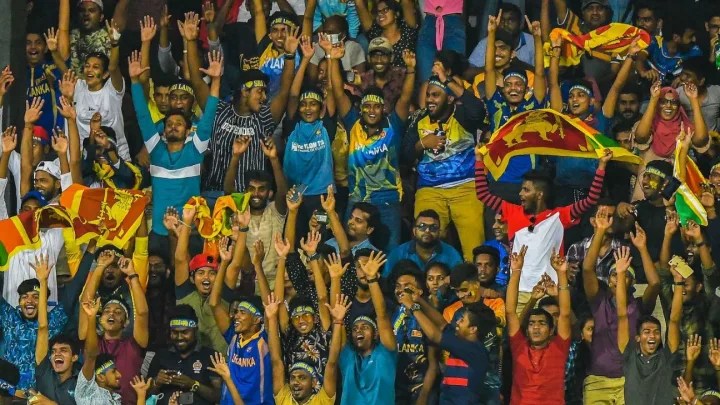
Hail the Sri Lankan Cricket Fans: Joe Paiva’s Pictorial Applause from Adelaide:

Joe Paiva’s Colourful Applause from Adelaide

Congratulations the People of Lanka for welcoming the Aussies with open arms and warm hospitality. This is the Sri Lankan way.

 Cricket Australia take special note and reciprocate, when overseas teams grace our  great, multicultural continent…. Australia. In the past Australia has treated foreign team shabbily. That now must change. It is sport not war. Sri Lanka despite its dire situation has shown the world how it should be done.

Continue reading

3 Comments

Filed under accountability, cricket for amity, cultural transmission, ethnicity, heritage, landscape wondrous, life stories, patriotism, performance, photography, politIcal discourse, self-reflexivity, sri lankan society, tolerance, travelogue, unusual people, world events & processes

General Custer’s Last Stand: Annihilation by the Sioux, 25 June 1876

David Graham, in Quora, …. https://www.quora.com/What-are-some-of-the-most-epic-last-stands-in-history/answer/David-Graham-149 

On June 25, 1876, after a stumbling night march that exhausted men and horses, Lieutenant Colonel George Armstrong Custer and the 7th U.S. Cavalry attacked Sitting Bull’s village on the banks of the Little Bighorn River in southeastern Montana.

What happened next: Lakota Sioux and Northern Cheyenne warriors under the war chiefs Crazy Horse, Gall and Two Moon wiped out all 210 officers and men in the five companies of cavalry under Custer’s immediate command. 

  Custer marker on Last Stand Hill | Photo: David Graham


Continue reading

Leave a comment

Filed under accountability, american imperialism, authoritarian regimes, heritage, historical interpretation, landscape wondrous, life stories, military strategy, travelogue, war reportage

Memories are Made of This: The Agar-Hewawissa-Plunkett-Forbes Lineages of Ceylon

Charles Schokman

This picture brought back memories. I knew Ashton Agar’s Great Grandfather from way back in Ceylon (now Sri Lanka). Mr. Plunkett worked at Walker Sons & Co Ltd as a car salesman and resided at Negombo. He had two daughters Sheila and Carmaline. (Bubbles). Sheila was married to Nala Hewawissa and Carmaline to Ron Forbes.

Continue reading

5 Comments

Filed under art & allure bewitching, Australian culture, centre-periphery relations, cricket for amity, cultural transmission, economic processes, education, ethnicity, heritage, historical interpretation, island economy, landscape wondrous, life stories, self-reflexivity, sri lankan society, travelogue, unusual people, world events & processes

Senaka Calls for a Ticker-Tape Farewell for the Aussie Cricket Teams

Senaka Weeraratna

Give Aussies a Ticker Tape parade as a farewell gesture by driving them through the streets of Colombo (near Galle Face Green) once this popular Australian cricket tour is over.

This is exactly what the Australians did in Melbourne on February 20, 1961 when they bid goodbye to the West Indian Cricket Team led by Frank Worrell. Australia beat West Indies by 3 to 2 in a close contest which went down to the wire.

Continue reading

Leave a comment

Filed under accountability, art & allure bewitching, Australian culture, charitable outreach, communal relations, cricket for amity, cultural transmission, heritage, historical interpretation, landscape wondrous, nationalism, patriotism, performance, politIcal discourse, self-reflexivity, Sri Lankan cricket, Sri Lankan scoiety, the imaginary and the real, travelogue, unusual people, world events & processes

Errol Fernando’s Reading of the Day’s Play at Headingley

Errol Fernando to one “Gavin,” 25/26 June 2022

Predictions under the McCullum/Stokes alliance are totally impossible, Gavin.   England 55 for 6 chasing 329 and now 264 for 6  starting  all-important Day Three.  I was WAY off with my prediction in the previous Test.  Way off indeed, even by my standards.

However, I now have the perfect solution. I will make my usual prediction which I will keep to myself. I will then send you the OPPOSITE prediction  –  something completely absurd and ridiculous  –   and sure enough that is most likely to happen under McCullum/Stokes!  If I had done that in the previous Test I would have been hired by the bookmakers.

Continue reading

1 Comment

Filed under art & allure bewitching, charitable outreach, cricket for amity, education, heritage, historical interpretation, landscape wondrous, life stories, meditations, paintings, performance, pulling the leg, self-reflexivity, sri lankan society, the imaginary and the real, unusual people, world events & processes

The Cliff-hanger Match at Khettarama: Reflections …. the Day After

Michael Roberts

The fourth ODI held at Khettarama on the June, as we know, was magnificent match …and a cliff-hanger. With the benefit of a night’s sleep, I can venture on a more considered commentary.

Cricket is a great leveller is it not!! The skipper Dasun Shanaka had jolted the world with a heroic innings of the Maxwell variety in the second ODI at Palleakele. But, here, at Khettarama in the 4th ODI, he proved to be a lemon: running between the wickets like a novice …. with the first run taken in a dawdling manner, he was run-out at a crucial time.

Continue reading

2 Comments

Filed under accountability, cricket for amity, cricket selections, landscape wondrous, life stories, performance, photography, Sri Lankan cricket, unusual people

Is China’s Eclectic Mix of Communism with Capitalism a Threat?

Tomasz Kamusella, in The Conversation, 26 October 2021, where the title runs thus “How China combined authoritarianism with capitalism to create a new communism”

After the 1989 fall of communism in the Soviet bloc, five self-declared communist states remain today: China, Cuba, Laos, North Korea and VietnamBelarus and Venezuela can also be added to the mix as they fulfil the criteria of a communist state – even though they do not officially invoke the ideology. So, at present, the number stands at seven. The question is, now that capitalism is the engine of China’s economy, what is communism today? And if the number of communist states is poised to grow in the near future, as some predict, what does this prospect mean for democracy?

Continue reading

2 Comments

Filed under accountability, authoritarian regimes, China and Chinese influences, disparagement, economic processes, ethnicity, European history, governance, heritage, historical interpretation, landscape wondrous, legal issues, life stories, military strategy, modernity & modernization, politIcal discourse, power politics, security, self-reflexivity, slanted reportage, travelogue, truth as casualty of war, unusual people, world events & processes