Category Archives: Indian traditions

Obeyesekere’s New Book on the Kandyan Kingdom

Uditha Devapriya, reviewing Gananath Obeyesekere’s new book The Many Faces of the Kandyan Kingdom (1591-1765) Colombo, Perera-Hussein, 2020, 200 pp., Rs. 1,200 ... with ‘arbitrary’ highlighting imposed by the Editor, Thuppahi

In 1602, the year of the Dutch East India Company’s founding, Joris van Spilbergen reached the shores of Sri Lanka after setting sail from the seaport of Veere in Holland a year earlier. Tasked with opening up trade negotiations with the King of Kandy, Vimaladharmasuriya, Spilbergen bore with him a letter from the Prince of Orange, acknowledging their willingness to counter the Portuguese. Not for one moment underestimating the Portuguese presence in the island, though, they disembarked at Batticaloa, which fell under the jurisdiction of the Kandyan Court. They anchored off the coast on May 31.


Continue reading

4 Comments

Filed under accountability, art & allure bewitching, authoritarian regimes, British imperialism, Buddhism, centre-periphery relations, discrimination, economic processes, ethnicity, heritage, historical interpretation, Indian religions, Indian traditions, Kandyan kingdom, landscape wondrous, life stories, Muslims in Lanka, politIcal discourse, population, Portuguese in Indian Ocean, power politics, religiosity, sri lankan society, the imaginary and the real, transport and communications, travelogue, unusual people, world events & processes

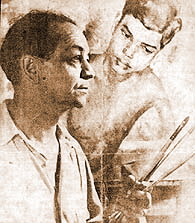
David Paynter’s Open Homosexuality on Display THEN

Namini Wijedasa, on David Shillingford Paynter, in The Sunday Times, 22 November 2015, sent to me by Jane Russell of UK and Sri Lanka

David Shillingford Paynter was an ornament of the Anglo-Ceylonese community. His middle name indicates that his English father was a west countryman, most likely from Devon. Paynter combined a Protestant work ethic with a Sinhalese aesthetic sensibility about colour and form. 

Continue reading

5 Comments

Filed under accountability, art & allure bewitching, cultural transmission, economic processes, ethnicity, heritage, historical interpretation, Indian traditions, landscape wondrous, life stories, modernity & modernization, paintings, performance, self-reflexivity, sri lankan society, the imaginary and the real, tolerance, travelogue, unusual people, world events & processes

Fashioning History in Sri Lanka: Controversies

Michael Roberts

Computer generated 3D illustration with a Portuguese Caravel of the Fifteenth Century

Abstract of the article below: Two arrival stories in the long span of the island’s history will provide the foundations for reflections on history-making in the modern era. Episode One will pursue my own intellectual trail in the 1980s in fashioning an interpretation of the story of the arrival of the Portuguese and my subsequent confrontations in print with KM de Silva on this issue in the 1990s. Episode Two essays an interpretation of the advent of Vijaya retailed in the Pali & Sinhala chronicles as a genesis story of the same order as the tale of Adam and Eve: contending that it is not a tale with any factual basis, but one that conveys a mythic truth for its authors and ‘faithful’ listeners. It is, thus, a morality-tale about the magical implantation of civilised culture and state-forms within the island. This interpretation, however, has shortcomings and will benefit from the correctives imposed by Godfrey Gunatilleke’s exposition of the multi-faceted symbolism associated with this myth.

Continue reading

7 Comments

Filed under accountability, ancient civilisations, art & allure bewitching, British colonialism, centre-periphery relations, communal relations, cultural transmission, disparagement, economic processes, education, ethnicity, hatan kavi, heritage, historical interpretation, Indian traditions, island economy, landscape wondrous, life stories, politIcal discourse, Portuguese imperialism, Portuguese in Indian Ocean, power politics, self-reflexivity, sri lankan society, the imaginary and the real, transport and communications, travelogue, world events & processes

Glenn Maxwell’s Indian Jewels

Vini Raman is an Indian origin Australian citizen who is a practising pharmacist in Melbourne. Glenn and Vini got engaged last year on February 21, 2021. Glenn Maxwell and Vini have been dating for quite some time now and the news of the couple emerged on social media in 2017 after they were photographed together. Vini also accompanied her Victoria-born cricketer boyfriend at the Australian Cricket Awards in 2019 and 2020. Vini belongs to a Tamil family based in Australia. She went to Mentone Girls Secondary College in Victoria and completed her studies in medical science and is practising in the field…. https://www.news18.com/cricketnext/news/who-is-vini-raman-glenn-maxwells-fiance-who-loves-him-more-than-jimmy-neesham-3462464.html ….. & …. https://www.instagram.com/p/B8YMAjapb4k/?utm_source=ig_web_copy_link Continue reading

Leave a comment

Filed under cricket for amity, heritage, Indian traditions, life stories, performance, photography, self-reflexivity, travelogue, Uncategorized, unusual people, world events & processes

The Pearls and Pearl Divers of Ceylon

Tamara Fernando:  Seeing Like the Sea: A Multispecies History of the Ceylon Pearl Fishery 1800–1925″*  Past & Present, Volume 254, Issue 1, February 2022, Pages 127–60, ……………………………………………. https://doi.org/10.1093/pastj/gtab002

ABSTRACT of the Article: The pearl fishery of Ceylon was a lucrative source of pearls as well as a theatre of colonial power. But instead of narrating a story of abstracted governmentality, this paper dives below the waves, braiding Tamil poetry with scientific material relating to the oyster and state sources concerning fishery administration. Taken together, these unearth a multi-species history of the human relationship to the seas. In the same way that pearl divers’ labour was a mode of knowing nature, so too, natural processes and marine creatures shaped, in turn, the economic, social and cultural worlds at the fishery. This nacreous, layered approach combines natural history, maritime labour and historical ecology to explore the fragile and interlocking balance below the waves which extended beyond humans to the molluscs, sharks, boring sponges and parasitic tapeworms of the Gulf of Mannar. The archive around the pearl fishery advances the animal and ecological histories of the Indian Ocean and also points towards ways of suturing the gulf between Indian and Sri Lankan scholarship.

Continue reading

2 Comments

Filed under British colonialism, commoditification, economic processes, governance, heritage, historical interpretation, Indian traditions, island economy, landscape wondrous, life stories, marine life, population, sri lankan society, the imaginary and the real, trauma, travelogue, unusual people, working class conditions, world events & processes

Sarojini Jayawickrama’s Book on Robert Knox

Nira Wickramasinghe: reviewing Sarojini Jayawickrama’s Writing that conquers. Re-reading Knox’s Historical Relation of the Island Ceylon, (Social Scientists Association, Colombo 2004)


Among academic historians in many parts of the world there exists an almost pathological fear of contamination by literary studies via the linguistic turn which manifests itself in the display of fierce criticism of authors of postmodern or cultural studies especially those interested in ‘discourse’ or textual analysis. This is an indication of how centred professional historians still are in the historicist and implicitly empiricist models which are responsible for their material and political hegemony in academia as well as in the public sphere.

Continue reading

1 Comment

Filed under ancient civilisations, British imperialism, Buddhism, caste issues, centre-periphery relations, cultural transmission, economic processes, ethnicity, European history, heritage, historical interpretation, Indian traditions, island economy, Kandyan kingdom, landscape wondrous, life stories, literary achievements, politIcal discourse, self-reflexivity, sri lankan society, the imaginary and the real, travelogue, unusual people, world events & processes

Romila Thapar & Sri Lanka’s Heritage in Today’s Dismal Context

Uditha Devapriya

On Thursday, the 27th of January, Professor Romila Thapar will deliver the Dr Roland Silva Memorial Lecture to the National Trust of Sri Lanka. Professor Thapar will be speaking about the museum in India, charting its evolution from private collections to public displays and placing it in the context of similar institutions from other colonial societies.


Continue reading

1 Comment

Filed under accountability, architects & architecture, art & allure bewitching, Buddhism, cultural transmission, education, heritage, historical interpretation, Indian traditions, landscape wondrous, life stories, meditations, paintings, pilgrimages, politIcal discourse, self-reflexivity, sri lankan society, teaching profession, travelogue, unusual people, world events & processes

Kumari Jayawardena’s Study of the Bourgeoise in British Ceylon

Kumari Jayawardena:Nobodies to Somebodies: The Rise of the Colonial Bourgeoisie in Sri Lanka” ….. Paperback, 412 pages …………Published February 1st 2003 by Zed Books (first published February

Synopsis: The origins and growth of the bourgeoisie in Sri Lanka during British rule are important aspects of the country’s modern history. Here, Kumari Jayawardena traces the evolution of the bourgeoisie from a feudal society and mercantilist economy, to the age of plantations. She assigns primacy to class over caste, and details the rise of the new-rich Nobodies of many castes, ethnicities and religions into the ranks of the Somebodies. She discusses the links between capital accumulation, religious revivalism, ethnic identity and political movements, and highlights the obsession of the bourgeoisie with land acquisition and social status.

Continue reading

1 Comment

Filed under accountability, British colonialism, centre-periphery relations, commoditification, communal relations, democratic measures, devolution, economic processes, education, electoral structures, ethnicity, heritage, historical interpretation, Indian traditions, island economy, language policies, life stories, politIcal discourse, power politics, self-reflexivity, Sinhala-Tamil Relations, sri lankan society, working class conditions, world events & processes

Buddhism among Tamils in the Past … and Present-Day Squabbles

PK Balachandran, in The Citizen, 8 August 2021, where the title is In Sri Lanka, the Tamil Link with Buddhism is Brushed Under the Carpet”

Unsustainable claims put forward by the Sinhalese and the Tamils on language, religion and ethnicity, have muddied Sri Lankan politics in the post-independence era. The Sinhalese loudly proclaim that Buddhism is quintessentially and exclusively, a “Sinhala” religion. The Tamils, on the other hand, claim with equal vehemence, that they have always been unalloyed Hindus, who had never ever had anything to do with Buddhism, which they identify with “Sinhala hegemony.”

Continue reading

1 Comment

Filed under ancient civilisations, architects & architecture, art & allure bewitching, Buddhism, cultural transmission, economic processes, evolution of languages(s), heritage, historical interpretation, Indian traditions, landscape wondrous, life stories, paintings, photography, pilgrimages, politIcal discourse, power politics, self-reflexivity, Sinhala-Tamil Relations, sri lankan society, truth as casualty of war, world events & processes, zealotry

Romila Thapar’s ZOOM Lecture on The Museum in India

Professor ROMILA THAPAR to deliver the Dr. ROLAND SILVA MEMORIAL LECTURE for the National Trust on 27th January 2022 at 6.00 pm on Zoom….

yes  ZOOM

Prof. Romila Thapar  who is a Professor of Ancient History, Emerita, at the Jawaharlal Nehru University in New Delhi. The notice of the Lecture is appended (or attached) and we welcome you all to participate.

Roland Silva


Continue reading

Leave a comment

Filed under ancient civilisations, architects & architecture, art & allure bewitching, cultural transmission, economic processes, education, evolution of languages(s), heritage, historical interpretation, Indian Ocean politics, Indian religions, Indian traditions, landscape wondrous, life stories, nature's wonders, religiosity, Sinhala-Tamil Relations, sri lankan society, teaching profession, travelogue, unusual people, world events & processes