Category Archives: Indian traditions

Mahathma Gandhi at Mahinda College in 1927

Ruhunu Puthra

In November 1927, Mahatma Gandhi and Kasturbai Gandhi arrived in Galle. They were the chief guests at the prize-giving of Mahinda College, on the 24th. The Olcott Memorial Assembly Hall of the College was filled to capacity. Never was there such a large gathering of Buddhists, Hindus and Christians. The speech given by Gandhi is excerpted from the Mahinda College Magazine of 2002:

“It has given me the greatest pleasure to be able to be present at this very pleasant function. You have paid me, indeed, a very great compliment and conferred on me a great honour by allowing me to witness your proceedings and making the acquaintance of so many boys.

Continue reading

5 Comments

Filed under art & allure bewitching, centre-periphery relations, charitable outreach, communal relations, cultural transmission, education, ethnicity, heritage, historical interpretation, Indian traditions, landscape wondrous, life stories, performance, politIcal discourse, self-reflexivity, sri lankan society, teaching profession, tolerance, unusual people, world events & processes

Cricket Teams on the Road: Ship. Rail. Air. Road

Deepti Unni, in The Cricket Monthly, 1 November 2021, where the title is “Long way round. Will travel for cricket”

Bio bubbles, pandemics, extended quarantines, months away from family – cricketers have spent more time away from home this last year and a half than at any time in the recent past. It’s almost a throwback to the early years of the game, when Test tours would run six months and longer, including the time spent getting there and back by ship.

Well-wishers wave goodbye to Douglas Jardine and the other members of the MCC (Marylebone Cricket Club) as they set sail from Tilbury to Australia on the Orient liner Orontes….Photo by Davis/Getty Images

Continue reading

Leave a comment

Filed under accountability, art & allure bewitching, British colonialism, cricket for amity, cultural transmission, ethnicity, heritage, historical interpretation, Indian traditions, landscape wondrous, life stories, performance, photography, religiosity, self-reflexivity, slanted reportage, Sri Lankan cricket, the imaginary and the real, transport and communications, travelogue, unusual people, world events & processes

Dutch Burghers and Portuguese Mechanics: Eurasian Ethnicity in Sri Lanka

Dennis B. McGilvray, reproducing an essay presented in April 1982 within Comparative Studies in Society and History 24 (2): 235-263 –– an article that is wide-ranging and draws on ethnographic work as well as historical manuscripts. Note that the highlighting and pictorial insertions are the work of The Editor, Thuppahi.


I: PROLOGUE

Historians and anthropologists in Sri Lanka have tended to migrate in opposite directions, but away from the multiethnic confusion of the port cities. Typically, the heterogeneous, semi-Westernized, postcolonial urban society of Colombo and the larger towns has been only a transit point on intellectual journeys outbound to European archives or inbound to “traditional culture.” This was certainly my viewpoint as I arrived “inbound” in Sri Lanka for my first anthropological fieldwork. I took only passing notice of the clerks of mixed European and Sri Lankan descent who sold me stationery supplies at Cargill’s and mosquito nets at Carvalho’s. These people are given the official designation of Burghers in the government census: they are the racially mixed descendants of the Portuguese, Dutch, and British personnel who occupied the island during four and a half centuries of colonial rule.

Continue reading

6 Comments

Filed under ancient civilisations, art & allure bewitching, centre-periphery relations, communal relations, demography, discrimination, economic processes, ethnicity, European history, female empowerment, heritage, historical interpretation, immigration, Indian traditions, island economy, landscape wondrous, life stories, literary achievements, modernity & modernization, Muslims in Lanka, performance, politIcal discourse, Portuguese in Indian Ocean, religiosity, self-reflexivity, Sinhala-Tamil Relations, sri lankan society, Tamil civilians, transport and communications, travelogue, unusual people, welfare & philanthophy, world events & processes

Vale Dr. Siran Deraniyagala: Assiduous Archaelogist & A Savant Servant for Lanka

Chryshane Mendis

It is no easy task to pen down few words on the life history of a colossus like Dr. Siran Deraniyagala, but nevertheless I will try. Life has its ways, its own twists and turns at times one would not expect; such was the shocking yet inevitable demise of Dr. Deraniyagala. The mystery of life will take us on many paths, and in the case of Dr. Deraniyagala, it took him to explore the mystery of life itself! While digging the earth to unravel humanity’s origins, perhaps he too realized where his journey would end, in the earth; and it eventually did come to pass on the 5th of October 2021. The Man who studied the past, of the lifeways of past peoples, now himself joined them; Siran Upendra Deraniyagala is now a person of the past! But what of his legacy? Will he be only a person of the past or will he be remembered in the present? Unlike the mystery of life, this is an easy question with a simple answer. Yes. Siran Deraniyagala will live on! Decades later even after fading from living memory, his name will be remembered even centuries on. Such is his legacy. Therefore let us briefly marvel at the amazing life of of Dr. Siran Deraniyagala.

Continue reading

Leave a comment

Filed under Aboriginality, ancient civilisations, architects & architecture, art & allure bewitching, cultural transmission, historical interpretation, Indian religions, Indian traditions, irrigation, island economy, landscape wondrous, life stories, literary achievements, pilgrimages, sri lankan society, travelogue, unusual people, world events & processes

Prejudice & Patriotism: Cricket in This Space

Roshan Kishore, in Hindustan Times, 29 October 2021, with this title “Cricket and patriotism: What links them in India”

Pakistan’s victory over India in the ongoing T20 cricket World Cup match on October 24 has kicked up a political storm in India. First there was uproar over online trolling which targeted India’s pace bowler Mohammad Shami along religious lines. Many Opposition leaders came out in Shami’s support, and several cricketers and the Board of Control for Cricket in India also spoke up for him. Meanwhile, reports of Muslims celebrating Pakistan’s victory started doing the rounds. Those who did so will be booked under sedition charges, Uttar Pradesh chief minister Yogi Adityanath said in a tweet on October 28.

Continue reading

Leave a comment

Filed under accountability, cricket for amity, cultural transmission, demography, discrimination, disparagement, ethnicity, heritage, Hinduism, Indian religions, Indian traditions, life stories, meditations, politIcal discourse, power politics, racist thinking, religious nationalism, self-reflexivity, the imaginary and the real, tolerance, truth as casualty of war, unusual people, world events & processes, zealotry

An Exemplary Teacher at Ussangoda: Philanthopy topped with Genius

Siri Ipalawatte of Canberra writing in The Island, 23 October 2021, where the title reads An amazing Sri Lankan  – ‘the power of one’ 

From Tidbinbilla to rain forests, red wines to thelijja, cappaccino to kurumba, five-stars to homestay…. Just when I thought I had touched every nook and cranny of Sri Lanka, it sprung yet another surprise. An old Uni friend suggested ‘why not visit the unusual and weird landscape called Ussangoda—the place in Hindu Mythology where King Ravana landed his air machine, dandu-monara? And off came another nugget! He said a batchmate of ours lived in a century-old house in a village called Kiula — an exotic name from the fact that the water in the area is kiul as it gets mixed with an underground seashell bed and salt water —very close to Ussangoda. This chance encounter led to a number of texts and mobile calls, and a few days later, a memorable sleepover in his house located between the 217 and 218t kilometre-post on the A2 highway between the sleepy towns of Hungama and Ambalantota in the southern Sri Lanka.

Continue reading

Leave a comment

Filed under art & allure bewitching, charitable outreach, cultural transmission, economic processes, education, heritage, Indian traditions, landscape wondrous, life stories, patriotism, performance, pilgrimages, self-reflexivity, sri lankan society, unusual people, welfare & philanthophy, world events & processes

Presenting the Portuguese Burghers of Sri Lanka: Today and Yesterday

Earl Barthelot, in Ceylon Digest, 22 February 2020, where the title reads The Portuguese Burghers of Ceylon”

Sri Lanka is well known for its diversity with over 22 numerically small communities and majority communities such as Sinhalese, Tamils and Muslims. Burgher community is one of the numerically small communities. Large proportions of the Burghers do live in the Batticaloa District and a small proportion live both in Trincomalee and Ampara District. At the same time there are Portuguese Burghers living in all parts of the country in small numbers.

Continue reading

Leave a comment

Filed under Aboriginality, Afro-Asians, ancient civilisations, art & allure bewitching, British imperialism, centre-periphery relations, communal relations, cultural transmission, discrimination, disparagement, economic processes, education, ethnicity, female empowerment, heritage, historical interpretation, Indian traditions, island economy, landscape wondrous, language policies, life stories, meditations, modernity & modernization, performance, politIcal discourse, Portuguese in Indian Ocean, power politics, religiosity, self-reflexivity, sri lankan society, the imaginary and the real, travelogue, unusual people, welfare & philanthophy, working class conditions, world events & processes

The Nomenclature and Lineaments of White-Brown Cohabitation in British Ceylon: A Puzzle

MEMO from Michael Roberts, October 16 October 2021

Moving from BRIDGE ON THE RIVER KWAI to the Greet and Paynter lineages in British Ceylon-and-thereafter has raised a query in my mind: how is it that the category “ANGLO-Ceylonese” did not take root in Ceylon and Lanka in contrast with British India where the label “Anglo-Indian” became well-entrenched[1] and therefore was carried over to the era after India secured Independence in 1947? As we know,[2] Revd Arthur Paynter was an Anglo-Indian missionary who established the Paynter Homes in the Himalayan region of India and then set up the Paynter Home in Nuwara Eliya. He had also married a fellow-missionary in the Salvation Army who was pursuing her commitment in India, one Miss Weerasooria from Dodanduwa … and together sired a talented lineage.

Photograph on display at the Paynter Home of the Paynter family. David Paynter stands at the centre, behind his mother Agnes

Continue reading

3 Comments

Filed under accountability, architects & architecture, art & allure bewitching, British colonialism, centre-periphery relations, cultural transmission, discrimination, disparagement, economic processes, education, ethnicity, female empowerment, heritage, historical interpretation, Indian Ocean politics, Indian traditions, landscape wondrous, life stories, literary achievements, paintings, patriotism, politIcal discourse, religiosity, S. Thomas College, self-reflexivity, sri lankan society, teaching profession, the imaginary and the real, travelogue, unusual people, welfare & philanthophy, world events & processes

When Tamilnadu’s LTTE Stalwarts attacked Thiru Nadesan at Rameswaram Temple in 2012 –DBS Jeyaraj

 D.B.S.Jeyaraj, in his website on 9th October 2021 with the following title “Revisiting the Attack on Thirukumar Nadesan in India”

Though Thirukumar Nadesan is a well-known businessman, it was the Rajapaksa connection of his spouse Nirupama that captured headlines in national and international media

Continue reading

Leave a comment

Filed under accountability, art & allure bewitching, chauvinism, citizen journalism, communal relations, cultural transmission, discrimination, disparagement, Eelam, ethnicity, heritage, historical interpretation, Indian Ocean politics, Indian traditions, insurrections, landscape wondrous, legal issues, life stories, LTTE, pilgrimages, political demonstrations, politIcal discourse, power politics, Rajapaksa regime, religiosity, Saivism, self-reflexivity, Sinhala-Tamil Relations, slanted reportage, Sri Lankan scoiety, taking the piss, Tamil migration, terrorism, trauma, travelogue, unusual people, vengeance, war reportage, wikileaks, world events & processes

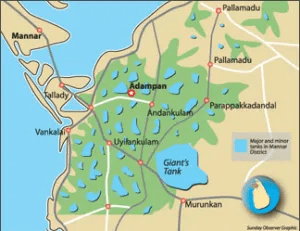
Exploring the Etymological Strands of the Word “Thiruketheeswaram”

Chandre Dharmawardana

The word stub “ket,”, கேத, in the place name:  Tiru-k-keteeswaram,  திருக்கேதீசுவரம்

In finding a meaning for the component –ket– in Tiru-ket-heesvaram, well known Engineer Thiru Arumugam has quoted an interpretation given in 1849 by Pridham which leans on a mythological tale of Vishnu’s exlir of mortality that fell into the hands of a demon. The demon was said to be cut into two and became Rahu and Ketu (.இராகு கேது) recognized in astrology.  Predham stretches his imagination very far to convert the Tamil -கேத- sound to கேது in finding  an “explanation” or rationalization for the stub  -கேத- found in the place name.

Continue reading

Leave a comment

Filed under ancient civilisations, architects & architecture, art & allure bewitching, centre-periphery relations, cultural transmission, demography, economic processes, ethnicity, heritage, Hinduism, historical interpretation, Indian religions, Indian traditions, island economy, landscape wondrous, life stories, literary achievements, pilgrimages, religiosity, self-reflexivity, Sinhala-Tamil Relations, sri lankan society, Tamil migration, the imaginary and the real, transport and communications, travelogue, world events & processes