Category Archives: IDP camps

From Tsunami Medical Logistics to IDP Camp Medical Aid, 2004-09; Q and A with Dr Herath

From Tsunami Medical Logistics to IDP Camp Medical Aid, 2004-09

Speaking at Adelaide Universityon one occasion the Australian Ambassador, French, stressed that an experienced disaster relief team from Australia played a critical role in coordinating information and logistics for the massive task of relief and recovery in Sri Lanka after the tsunami of 26 December 2004. I do not have those details. But I can now reveal to those interested how a central coordinating unit of medical personnel played a critical role in organising the medical relief work in the coastal regions of the southwest, south and east that were hit by the tsunami and thereafter directed the tasks associated with re-building the institutions and other medical services that had been destroyed by the waters.
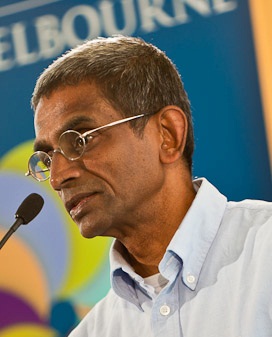
Dr. Hemantha Herath was assigned to the Health Desk of the Disaster Preparedness and Response Division (DPRD) of the Ministry of Health on 28 December 2004, while the Tsunami Rehabilitation Unit was also set up at about the same time with Dr. Thushara Ranasinghe as Coordinator, Planning) and Dr. Eeshara Vithana as Coordinator, Operations. The DPRD and TRU together directed the tsunami relief and re-establishment tasks. Their duties were extended in 2007-09 to handling the logistical requirements of drugs and equipment for the medical aid that was being provided to the Tamil refugees in the Eastern Province by personnel by local and foreign NGOs.

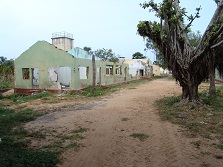
Kattankudy district hospital completely destroyed

Setting up a Field Hospital, Zone 2, 21 April 2009  –Pic by Donnie Woodyard

For a number of reasons Herath delayed his sabbatical leave till late 2008 when he eventually proceeded to UK. The unit was still functioning however (now downsized and housed within the offices of the Ministry of Health). The central point is that an experienced team of co-ordinators was at hand when the issue of Tamil IDPs from the north developed in late 2008/early 2009 after a large mass of people were assembled in the Menik Farm camps near Chettikulam over a period of time and especially in April-May 2009. They undertook the duties of (a) marshaling and organizing the erection of temporary health centres within the camps; (b) selecting and assigning doctors, nurses and other staff to service the camps; (c) distributing the equipment and drugs required for the medical centres; and (d) bolstering the pre-existing medical services within Vavuniya District so that they could assist the IDP camps in the handling of more serious cases. Continue reading
7 Comments

Filed under australian media, disaster relief team, IDP camps, life stories, Rajapaksa regime, reconciliation, rehabilitation, Sinhala-Tamil Relations, sri lankan society, Tamil civilians, Tamil migration, tamil refugees, unusual people, welfare & philanthophy, world events & processes

Melbourne hosts Mental Health Practitioners from Vietnam and Sri Lanka

The Centre for International Mental Health is hosting 29 delegates from Sri Lanka and Vietnam to participate in the 10th International Mental Health Leadership Program1 from 5th-30th September2011 as part of mental health system development programs in both countries. These lectures will  highlight the impressive work of our colleagues. It is open to the public via previous arrangement. This gathering will be held at 12 – 26 September 2011 at the Centre for International Mental Health, Melbourne School of Population Health Basement Theatre 1, School of Population Health,207 Bouverie St, Carlton.

Pic = Daya Somasundaram

Programme:

Monday 12 September 2011, 5.30–6.30 pm Friday 16 September 2011, 5.30–6.30 pm

Dr To Xuan Lan (National Psychiatric Hospital No.1,Vietnam)An overview of Vietnam Mental Health System

Friday 16 September 2011, 5.30–7.30 -pm 

Dr Prasantha De Silva (Ministry of Health, Sri Lanka): A review of implementation of the Sri Lankan National Mental Health Policy and its way forward

Wednesday, 21 September 2011, 5.30–6.30

Mrs Thi Thu Thao Nguyen (from VVAF) :   VietnamVeterans of America Foundation and the expanding role of NGOs in Vietnam Continue reading

2 Comments

Filed under accountability, IDP camps, reconciliation, rehabilitation, Sinhala-Tamil Relations, sri lankan society, Tamil civilians, unusual people, voluntary workers, welfare & philanthophy, world events & processes

Lost in Transportation: Tamil Refugees in India and their Dangerous Gambles

Ben Doherty, in Tamilnadu, India,  from the Sydney Morning Herald, 11 Sept. 2011

Pic by Kate Geraghty

On the broad sands of southern India’s beaches lie thousands of wooden dhows and fibre glass skiffs, plied in trades, legitimate and otherwise, in the Bay of Bengal. On one of these boats, from one of these beaches, two years ago, Rathidevi’s son Dhuuaragan leftIndia, and his life in a refugee camp, bound for Australia. She has not heard from him since. She does not know whether he is alive or dead. Four months after her son left in October 2009, she received a phone call from a number and a voice she did not recognise, telling her her son was in an Indonesian jail. The line then dropped out. ”I do not know who called me.”

Brindha

Alex

Dhuuragan’s family invested everything in his trip. ”We had to pay 1½ lakhs [$A3100],” Rathidevi says. ”We sold all the jewellery we had, all the gold that I had. We sold everything to pay that money.”

With the end of Sri Lanka’s civil war two years ago, the movement of Tamil asylum seekers across the globe has slowed. But at least three times in the past three months, groups of Tamil asylum seekers have been arrested by authorities trying to leave for Australia, in one case caught standing on a beach in the early hours of the morning waiting for their boat. Last month, 147 men, women and children were arrested in Andhra Pradesh, about to meet their ”migration agent”. Continue reading

7 Comments

Filed under asylum-seekers, australian media, Eelam, IDP camps, liberation tigers of tamil eelam, life stories, LTTE, news fabrication, people smugglers, prabhakaran, propaganda, Sinhala-Tamil Relations, Tamil civilians, Tamil migration, terrorism, truth as casualty of war, unusual people, wikileaks

Mental Health Facilities for the Tamils at the IDP Camps and Now for Those Being Resettled … Reports from Manori Unambuwe

Michael Roberts, 9 September 2011

When I was shown round the health facilities at some of the IDP camps – “detention centres” as they were in my view up to 1 December 2009 — in the Menik Farm area in early June 2010 by Dr. Safras [who had worked there from April 2009], he happened to mention the fact that one of the Psycho-Social units he was in the process of showing me had been set up with the aid of a friend in Colombo, namely Manori Unambuwe, who had rustled up the monies required.

Psycho-Social Centre at midiay – Pic by Roberts

The hard work done by all sorts of agencies in alleviating the life of some 280,000 Tamil civilians[i]in these camps has hardly been revealed to the outside world in Colombo and beyond by anyone – not even by the government media outfits who follow His Majesty’s Command; though one report on this particular branch of welfare was presented in 2009 by the Sunday Leader [which is ranged against the government].

My uncovering of these dimensions of welfare philanthropy involving body, time and money has only been of the flimsiest character; but something is better than nothing …. … or SILENCE. I know little of the work done by the military personnel overseeing and running the camps; or that of the civilian government functionaries tasked to work alongside them’; or the many camp inmates who undertook tasks – sometimes as paid employees and sometimes as unpaid voluntary workers. Again, my reviews of the NGO activity have only embraced a few agencies.[ii] Hopefully, this partial tale will raise questions about the gross fabrications and/or exaggerations about the camps peddled by Western acolytes of the Tamil migrant lobby, such as David Feith, and other Tamil hands such as Niromi de Soyza.  

9 Comments

Filed under accountability, anton balasingham, australian media, IDP camps, liberation tigers of tamil eelam, life stories, LTTE, propaganda, reconciliation, rehabilitation, Sinhala-Tamil Relations, sri lankan society, Tamil civilians, Tamil migration, unusual people, voluntary workers, welfare & philanthophy

Media and the suffering of the Tamil people — Noel Nadesan’s Open Letter to Australians

Noel Nadesan, courtesy of the Daily Mirror, 14 July 2011 — republished here because of its relevance. Also visit www.transcurrents.com to review wide-ranging and sometimes virulent comments, Web editor

As a Tamil domiciled in Australia I served the Tamil community by editing the only Tamil community newspaper, UTHAYAM. I ran it for 14 years My experiences in dealing with the Tamil community, both inAustraliaand inSri Lanka, make me feel sad about the callous way in which the media is exploiting the suffering of our Tamil people for self-serving ends. I think I could speak as an independent voice with no allegiances to the politics of either community or political parties. My main concern has been to help our Tamils inSri Lankawho had to face the brunt of all attacks from the Indians soldiers, Sri Lankan forces and, above all, the so-called Tamil liberators, the LTTE. I have just completed building a small hospital in the island of Eluvaitivu, in which I grew up and, sooner or later, I plan to go back to serve our Tamil people who are desperately in need of help.
It is against this background that I thought of forwarding my comments to you after viewing the re-broadcast of Channel 4 programme, The Killing Fields of Sri Lanka. I must confess I felt depressed and I could not sleep that night. I have recovered since then and I feel I must send you my comments for your consideration because I feel that you aired it to exploit the suffering of our people whose need of the hour is not to rake up the bloody past but to find a way out of the past Continue reading

8 Comments

Filed under accountability, asylum-seekers, australian media, authoritarian regimes, Eelam, Fascism, IDP camps, Indian Ocean politics, liberation tigers of tamil eelam, life stories, LTTE, military strategy, news fabrication, power politics, power sharing, prabhakaran, Rajapaksa regime, reconciliation, Sinhala-Tamil Relations, sri lankan society, Tamil civilians, Tamil migration, terrorism, truth as casualty of war, unusual people, war crimes, world events & processes

Resettlement of Tamil Refugees in India within Lanka in process

Chamikara Weerasinghe, in the Daily News, 1 September 2011

Also SEE the note circulated by an NGO friend of mine re the bureaucratic process of settling land rights in the Northern and Eastern Provinces which has been appended at the end of this item. Web editor.

With the resettlement process in the North reaching its final-phase, the Ministry of Resettlement has stepped up its resettlement drive by making moves to bring back to this country Displaced Sri Lankans living in some 31 camps in Tamil Nadu. Resettlement Ministry Secretary Uthpala Basnayaka yesterday said the Sri Lankan High Commission inNew Delhiis currently working with the concurrence of the Indian authorities to bring back the Sri Lankan Displaced living in camps in Tamil Nadu.The Sri Lankan Deputy High Commissioner’s office in Chennai has been asked to speed up their repatriation by organizing the necessary documents. They will be issued with non-machine readable passports as a means to expediting the returning process, he said. The United Nations High Commission for Refugees(UNHCR) inColombois assisting the repatriation process and the Ministry’s efforts to resettle them in the North, said Basnayaka. UNHCR sources in Colombo said a number of foreign governments have provided financial support to the UNHCR’s important work in Sri Lanka this year. Continue reading

5 Comments

Filed under accountability, asylum-seekers, IDP camps, life stories, LTTE, Rajapaksa regime, reconciliation, Sinhala-Tamil Relations, Tamil civilians, Tamil migration, welfare & philanthophy, world events & processes

A “Negative Peace” for some Tamil Tiger families in Sri Lanka

Kate Mayberry for Al-Jazeera, 29 August 2011, with different title = In Sri Lanka, a ‘negative peace’ prevails

Seriously injured in a shell attack, his Tamil Tiger comrades dead, Mano (pseudonym) tried to end his own life by biting on the cyanide pill that, like all hardened fighters, he wore around his neck. But an elderly woman nearby rushed to give him water and he survived. Alone, he languished on the sand for six days, surrounded by the bodies of his friends and the ruins of war. “There wasn’t anybody there, not a drop of water. I was just lying there in the sun,” he said as he recalled the final days of the fighting between the Liberation Tigers of Tamil Eelam (LTTE) and the Sri Lankan military. “Then I heard voices and, 200m away, saw soldiers advancing. They took me away.”

More than 11,000 people were detained [1] by the Sri Lankan authorities at the end of the war on suspicion of being members of the Tamil Tigers, who fought a 26-year battle for an independent Tamil homeland. Some gave themselves up, but no detainees have access to lawyers and few are charged, their families left to find out for themselves the location of their loved ones. More than two-thirds have now been released, but amid a pervasive military presence many struggle to resume a normal life. “A sense of impunity and that the worst can happen is still prevalent,” said Jehan Perera, Executive Director of the National Peace Council in the Sri Lankan capital, Colombo. Continue reading

2 Comments

Filed under historical interpretation, IDP camps, life stories, LTTE, Rajapaksa regime, reconciliation, rehabilitation, Sinhala-Tamil Relations, Tamil civilians, Tamil Tiger fighters, terrorism, welfare & philanthophy

Working with Children through Art at the IDP Camps in 2009 et seq

Kumudini Hettiarachchi,  in the Sunday Times, 30 August 2009

I came across this item by accident and reproduce it here because I had been shown one of the Psycho-social units by Dr. Safras when he showed me round two ot the Menik Farm camps in 2010 around mid-day when the tent for children’s art play was empty because it was still school time. This tale -mostly unknown except for the odd nws report like this one by Hettiarachchi, is relevant becasue of the continuous misrepresentatiosn by the Tamil migrants abroad, one recent example being the author who has chosen the nom de plume Niromi de Soyza. Web Editor

No words are needed. Their colourful and vibrant paintings speak volumes…..and it is important to take heed, for in most instances they are the unheard voices in any situation. These are the voices through art of children ranging from as tiny as four years old to that vital teen-age of 15 years old. Clearly and visually their thoughts and innermost feelings have been put on paper, being made possible by an ‘Art Camp’, the first of its kind to be held among the children who have lost home and hearth but found some semblance of stability in the camps for the internally-displaced in Vavuniya. The Art Camp was held in Zone 4 in two open tents on August 16.

Three Pics taken by Roberts in June 2010–click to enlarge

It had a two-pronged objective, the Sunday Times learns. It was an attempt to do something different to enable the channelling of the children’s creative energies while also making art a form of therapy to identify children whose mental wellbeing had been affected by what they had gone through. It all began with a first visit to the camps by IT specialist Manori Unambuwe in late April soon after the “mass exodus” of men, women and children to Vavuniya in the last phase of the war. Continue reading

3 Comments

Filed under citizen journalism, cultural transmission, historical interpretation, IDP camps, life stories, LTTE, reconciliation, Tamil civilians, unusual people, welfare & philanthophy, world events & processes

Another Demidenko? Niromi de Soyza as a Tiger Fighter

Michael Roberts, 21 August 2011

Niromi de Soyza

I began reading de Soyza’s Tamil Tigress in a relaxed moment while at tennis and was captivated by its readability and the author’s capacity to create atmosphere. I was fascinated by its casting, that is, her skill in crafting the work. De Soysa begins with a striking incident where she is introduced to the world as a neophyte fighter in an incident marked as “Ambush” – where she is lucky to survive even while ten comrades, including platoon leader Muralie, perished. De Soysa then plunges her readers back in time by moving to her autobiographical family history and its various ethnic, intra-ethnic and caste tensions. Each chapter ends on a note of suspense and/or moment of change in life world, so that the readers are kept on their toes so to speak.

 Tiger fighters — source unknown

Niromi de Soysa (generally a Sinhalese name) is a nom de plume – as she has indicated during radio interviews on ABC. She told Margaret Throsby that it was adopted in honour of Richard de Zoysa,[i] a TV personality who was murdered by state agents during the Premadasa regime. She herself is a child of a love marriage between a Jaffna Tamil gentleman from the north and a lady from a merchant family from the Malaiyaha Tamil (that is Indian Tamil) peoples of the central regions of Lanka, a cross-community connection that created intra-familial tension according to her autobiographical account. This was a Catholic family, a background that is of considerable significance in the story line because she tells us she attended a Catholic school inJaffna and then again inIndia after she managed to secure her release from the ranks of the LTTE at some point in 1988. Continue reading

22 Comments

Filed under australian media, historical interpretation, IDP camps, life stories, LTTE, Rajapaksa regime, reconciliation, Sinhala-Tamil Relations, Tamil civilians, Tamil migration, Tamil Tiger fighters, terrorism, war crimes, world events & processes

Evaluating the “Churnalism” from Channel 4 and the Moon Panel

Padraig Colman

EXTRACTS from a long review by an Irishman who now lives in Sri Lanka and has engaged in high journalese in the West. He is relatively non-partisan and his fuller version is well worth careful perusal. See  http://pcolman.wordpress.com/2011/08/12/channel-4-news-and-sri-lankan-war-crimes/    Michael Roberts.

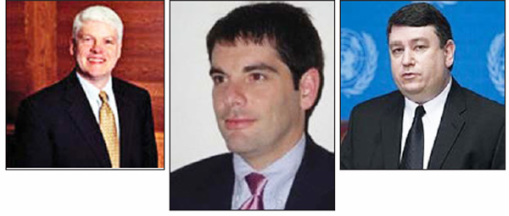
Pic of so-called UN “experts”

The main charges covered in the programme are:

  • The Sri Lanka army and air force targeted hospitals and civilians in the NFZs (no-fire zones) leading to 40,000 civilian deaths (there is a great deal of ambiguity about figures but 40,000 is frequently quoted).
  • Withholding of food and medical supplies from the north
  • Summary execution of prisoners
  • Rape of female combatants and civilians
  • Imprisoning of Tamil civilians in concentration camps.

…. BBC journalist Waseem Zakir coined the neologism ‘churnalism’. …  In his book, Flat Earth News, Nick Davies, the award-winning Guardian reporter who has a distinguished record in investigative journalism and has recently been the scourge of Murdoch, presented an overwhelming weight of evidence that the British press lies, distorts facts and breaks the Continue reading

25 Comments

Filed under australian media, citizen journalism, historical interpretation, IDP camps, life stories, LTTE, news fabrication, Rajapaksa regime, reconciliation, Sinhala-Tamil Relations, Tamil civilians, terrorism, welfare & philanthophy, world events & processes