Category Archives: governance

A Thoughtful Assessment of THE CEYLON JOURNAL

Dhanuka Bandara, in The Daily Mirror, 15 August 2025 … where the  title reads “The Ceylon Journal III: A Review,”  while the title here and the  highlighting are  the imprint of The Editor, Thuppahi

 The third installation of the bi-annual periodical The Ceylon Journal certainly continues the success of the two previous issues. Edited by Avishka Mario Senewiratne, The Ceylon Journal was first launched in July 2024. This unique journal, which in turn draws inspiration from Young Ceylon, a 19th-century Sri Lankan journal published by Charles Lorenz Ambrose and his friends, continues to publish immensely readable, yet well-researched and informative articles on a wide range of topics.


Continue reading →

Leave a comment

Filed under ancient civilisations, art & allure bewitching, British colonialism, Buddhism, centre-periphery relations, commoditification, cultural transmission, Dutch colonialism, economic processes, ethnicity, governance, heritage, historical interpretation, Indian Ocean politics, island economy, Kandyan kingdom, landscape wondrous, law of armed conflict, life stories, literary achievements, modernity & modernization, nationalism, patriotism, photography, politIcal discourse, population, power politics, religiosity, security, self-reflexivity, sri lankan society, transport and communications, unusual people, world events & processes

Facing A Tsunami & A Civil War

Dennis  M. McGilvray, in an  article  pubd in 2006 in the India Review, vol. 5, nos. 3–4, July/October, 2006, pp. 372–393 Copyright © Taylor & Francis Group, LLC  …. ISSN 1473-6489 print; 1557-3036 online DOI:10.1080/14736480600939132 … one bearing this title:  “Tsunami and Civil War in Sri Lanka: An Anthropologist Confronts the Real World

Recent calls for a new “public anthropology” to promote greater visibility for ethnographic research in the eyes of the press and the general public, and to bolster the courage of anthropologists to address urgent issues of the day, are laudable although probably also too hopeful. Yet, while public anthropology could certainly be more salient in American life, it already exists in parts of the world such as Sri Lanka where social change, ethnic conflict, and natural catastrophe have unavoidably altered the local context of ethnographic fieldwork. Much of the anthropology of Sri Lanka in the last three decades would have to count as “public” scholarship, because it has been forced to address the contemporary realities of labor migration, religious politics, the global economy, and the rise of violent ethno-nationalist movements. As a long-term observer of the Tamil-speaking Hindu and Muslim communities in Sri Lanka’s eastern coastal region, I have always been attracted to the classic anthropological issues of caste, popular religion, and matrilineal kinship. However, in the wake of the civil wars for Tamil Eelam and the 2004 tsunami disaster, I have been forced to confront (somewhat uneasily) a fundamentally altered field- work situation. This gives my current work a stronger flavor of public anthropology, while providing an opportunity for me to trace older matrilocal family patterns and Hindu-Muslim religious traditions under radically changed conditions.

 BEACHFRONT HOME DESTROYED BY TSUNAMI, MARUTHAMUNAI. AUGUST 2005

Continue reading →

Leave a comment

Filed under accountability, atrocities, authoritarian regimes, centre-periphery relations, charitable outreach, communal relations, counter-insurgency, demography, disaster relief team, economic processes, Eelam, ethnicity, governance, historical interpretation, human rights, insurrections, island economy, landscape wondrous, life stories, LTTE, military strategy, Muslims in Lanka, politIcal discourse, racist thinking, rehabilitation, religiosity, security, self-reflexivity, Sinhala-Tamil Relations, sri lankan society, Tamil civilians, the imaginary and the real, the tsunami 2004, transport and communications, truth as casualty of war, voluntary workers, war crimes, war reportage, welfare & philanthophy, world events & processes

UNHRO Calls for Investigation of Past Killings in Lanka


Tamil and Sinhala versions attached

Sri Lanka has opportunity to break from past – Türk

GENEVA (13 August 2025) – A report published today by the UN Human Rights Office calls on Sri Lanka’s Government to seize the historic opportunity to break with entrenched impunity, implement transformative reforms, and deliver long-overdue justice and accountability for serious violations and abuses committed in the past, including international crimes.

Continue reading →

1 Comment

Filed under accountability, atrocities, authoritarian regimes, centre-periphery relations, communal relations, demography, Eelam, ethnicity, governance, historical interpretation, landscape wondrous, life stories, LTTE, migrant experiences, military expenditure, military strategy, parliamentary elections, patriotism, photography, political demonstrations, politIcal discourse, population, power politics, racism, Rajapaksa regime, security, self-reflexivity, Sinhala-Tamil Relations, social justice, sri lankan society, suicide bombing, Tamil civilians, Tamil migration, tamil refugees, Tamil Tiger fighters, the imaginary and the real, trauma, truth as casualty of war, vengeance, violence of language, war crimes, world events & processes, zealotry

Turbines at Mannar are A Threat to Vital Bird Corridor

Dilum Alagiyawanna, in Daily Mirror,  August 2025

Local-based renewable projects, unlike Adani’s mega 5.2 MW high-efficiency turbines, show that cleaner energy is possible, without harming Sri Lanka’s sensitive bird habitat. 


The Central Asian Flyway is one of the most significant bird migration corridors globally, stretching from Siberia and Central Asia to the Indian Ocean.

Continue reading →

5 Comments

Filed under accountability, animal world, energy resources, governance, island economy, landscape wondrous, marine life, protecting wild lifeways, self-reflexivity, sri lankan society, travelogue, world events & processes

How to ‘Tweak’ Trump’s Tariff Programme to Benefit Lanka

 Darini Rajasingham-Senanayake,  whose preferred title is “Opportunity in Trump’s Tariff Shock: Diversify Products, Markets, and Industrialize”

Real and staged crises present opportunities to reorient, innovate and think outside the box.  Trump’s tariff ‘shock’ presents Sri Lanka’s business sector and national policy makers with an opportunity for short, intermediate and long term economic and industrial policy shifts out of the current neocolonial, services heavy, economic model.

At this time, the focus of discussion should be on Development of New Products and New Markets by businesses and entrepreneurs, in partnership with state agencies like the Board of Investment of Sri Lanka (BOI), in order to grow the economy out of the Eurobond- USD debt trap and International Monetary Fund bailout business.

Continue reading →

Leave a comment

Filed under accountability, american imperialism, centre-periphery relations, economic processes, governance, island economy, life stories, modernity & modernization, politIcal discourse, world events & processes

Neelan Tiruchelvam: An Appreciation of His Mediatory Politics

Kagusthan Ariaratnam in Groundviews, 8 August 2025, where the title  reads “Neelan Unsilenced …” while highlights here have been added by The Editor, Thuppahi

Photo courtesy of Pitasanna Shanmugathas

NEELAN: UNSILENCED is a compelling and vital documentary that successfully situates the life of Dr. Neelan Tiruchelvam within the turbulent history of the Sri Lankan conflict. Its greatest achievement is providing a nuanced entry point into the war by focusing on the non-violent, intellectual and pluralistic dimensions of Tamil resistance – a perspective often eclipsed by the narrative of armed struggle. By foregrounding Neelan’s journey, the film illuminates a leader who dedicated his life to constitutional reform and reconciliation.

   Photo courtesy of Pitasanna Shanmugathas

Continue reading →

1 Comment

Filed under accountability, anti-racism, centre-periphery relations, communal relations, democratic measures, economic processes, education, Eelam, electoral structures, ethnicity, governance, historical interpretation, human rights, Indian Ocean politics, landscape wondrous, language policies, Left politics, legal issues, life stories, modernity & modernization, nationalism, NGOs, patriotism, performance, politIcal discourse, power politics, power sharing, reconciliation, self-reflexivity, Sinhala-Tamil Relations, social justice, sri lankan society, unusual people

About Sharika Thiranagama ……. Today

Rohan Gunaratna  in  FACEBOOK, August 2025

Rohan Gunaratna

nopordtesS43ag881f170i0ihg99ic5ay0ic8luml74u9m2l8 61t4Mct4a0 ·

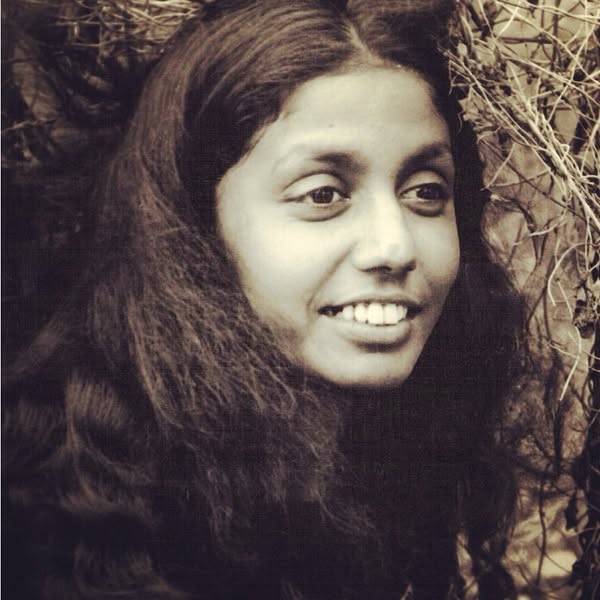
Congratulations to Sri Lankan-born American Anthropologist, Prof. Sharika Thiranagama, on winning the Davidson Prize at Cambridge University, where she was appointed a Scholar of St Johns.

Winner of Stanford University’s “Lifetime award for Academic achievement in Archaeology and Anthropology”, Sharika wrote “In My Mother’s House: Civil War in Sri Lanka” published by University of Pennsylvania Press in 2011.

Sharika

…Rajini Continue reading →

2 Comments

Filed under accountability, atrocities, authoritarian regimes, communal relations, Eelam, ethnicity, governance, historical interpretation, human rights, life stories, literary achievements, performance, politIcal discourse, refugees, self-reflexivity, Sinhala-Tamil Relations, sri lankan society, Tamil migration, tamil refugees, teaching profession, trauma, unusual people, war crimes, world events & processes, zealotry

Is Prabakaran NOT a Hitler! …. Goodness Gracious Me!

Shenali D. Waduge, whose slashing sarcastic essay is entitled “Let’s Celebrate Prabakaran & the LTTE’s Glorious Achievements!”  ... with the highlighting being that in  the original item

A tribute to the world’s most misunderstood mass murderer and his liberation-through-terror campaign.

They say greatness demands sacrifice—and Velupillai Prabakaran understood this better than most. He wasn’t content with speeches; he offered the world a blueprint: to build a homeland, first destroy the present; to claim justice, first silence every voice—especially your own people’s; to prove your worth, leave no witness behind. For over three decades, he led with unmatched precision: dismantling democracy, eliminating dissent, recruiting children, and bleeding civilians dry—all while demanding the world call it liberation. Some build nations through unity; he built his with bunkers, landmines, cyanide, and the bones of the innocent. And still, they light candles for him. They hold commemorations in universities. UN officials attend. Foreign parliamentarians give speeches. So, in the spirit of glorifying terror, let’s not just mourn Velupillai Prabakaran—let’s celebrate the man who redefined cruelty and called it Eelam, by honoring every child stolen, every right violated, and every drop of blood shed in his name.

Continue reading →

1 Comment

Filed under accountability, atrocities, authoritarian regimes, centre-periphery relations, chauvinism, Eelam, ethnicity, female empowerment, governance, historical interpretation, human rights, Indian Ocean politics, insurrections, law of armed conflict, life stories, LTTE, martyrdom, military strategy, nationalism, patriotism, politIcal discourse, power politics, prabhakaran, self-reflexivity, Sinhala-Tamil Relations, slanted reportage, sri lankan society, suicide bombing, Tamil civilians, Tamil migration, tamil refugees, Tamil Tiger fighters, terrorism, the imaginary and the real, truth as casualty of war, unusual people, vengeance, war crimes, war reportage, world events & processes

Global Economics & Sri Lanka over the Recent Centuries

Sunil Bastian: “Sri Lankan state in a changing global context”  … a 2025 article presented  here with highlights  imposed by The Editor,  Thuppahi.**

This short article emphasises the need to analyse the Sri Lankan state by placing it in the global context. This means not confining our minds within the borders of the Sri Lankan state. To emphasise this point I would like to point out that the formation of the Sri Lankan state itself was a product of a global phenomenon – British colonialism (see Bastian Sunil (2025) State formation and Conflicts in Sri Lanka. London: Bloomsbury Academic for an analysis of Sri Lankan state formation).

Under British colonialism the entire geographic space of the island was covered by a single unit of territorial power. To administer the territory, the island was divided into spatial units using the directions of a compass. In this way cartography became an instrument of British colonialism. Other techniques of state formation were establishing an administrative structure, a judicial system, a system to collect taxes, regular census and the coercive power of the state to cover the entire island.

Continue reading →

1 Comment

Filed under Americna imperialism, authoritarian regimes, British imperialism, centre-periphery relations, China and Chinese influences, commoditification, economic processes, ethnicity, foreign policy, governance, historical interpretation, Indian Ocean politics, land policies, life stories, modernity & modernization, nationalism, politIcal discourse, power politics, security, sri lankan society, transport and communications, world events & processes

Deciphering Patriotic Devotion: The Japanese in the 1940s & the Lankan Tamil People For the LTTE

Michael Roberts reproducing an article presented in a popular website during the final stages in Eelam War IV in 2008/09 within the context TODAY of a horrendous war-situation in Palestine and its environs — the website being GROUNDVIEWS: …………….. https://groundviews.org/2009/04/21/ltte-and-tamil-people-i-preamble/ ….. This article was just the first essay in a four-part enterprise.**

“LTTE and Tamil people, I: preamble,” http://www.groundviews.org, 21 April 2009.

This set of essays on “LTTE and Tamil People” submitted to Groundviews is a sequel to the four articles on “Suicidal Political Action” reproduced in http://www.transcurrents.com from 2 April onwards. Both sets of essays are interconnected and involve a measure of repetition because they are set out as separate articles. All of them are a product of a comparative survey that I embarked on about five years ago: namely, reviewing the cultural ingredients which have motivated the projects of the jihadists (holy warriors) and mujahideen (fighters for cause) on the one hand and, on the other, the

Continue reading →

Leave a comment

Filed under accountability, atrocities, centre-periphery relations, Eelam, ethnicity, governance, heritage, human rights, island economy, landscape wondrous, legal issues, life stories, LTTE, martyrdom, military strategy, nationalism, Pacific Ocean issues, patriotism, political demonstrations, politIcal discourse, power politics, psychological urges, self-reflexivity, Sinhala-Tamil Relations, sri lankan society, Tamil civilians, tamil refugees, Tamil Tiger fighters, trauma, unusual people