
Category Archives: Dutch colonialism

Deciphering the Work of Caste in Sri Lanka’s Lifeworld

Thuppahi is delighted to present a new research venture in keeping with its own spirit — with TUDOR SILVA in Lanka and MARK BALMFORTH in Canada in command.

CASTE: A Global Journal on Social Exclusion …..  Call for Submissions ….. with a Focus on Sri Lanka

Deadlines for Submissions: ….. Abstract: June 15, 2024 …… Full Paper: September 30, 2024

Compared to the expanding body of literature on caste in the Indian subcontinent, caste in Sri Lanka has received only sporadic academic attention and has been largely ignored in policy debates and social development interventions on the island. This can partially be explained by a widespread, public belief in Sri Lanka that despite its past importance, caste is no longer a vital social institution. While open discussion on the topic is largely absent, this does not mean that caste is dead or dying. Rather, caste remains hidden in much of Sri Lankan social life (Jiggins 1979; Silva, Sivapragasam, & Thanges 2009a). Reports from the north and east of the country indicate a certain resurgence of caste issues in post-war society, and new research findings suggest that caste plays a role in social, economic, and political dynamics that affect access to limited resources such as land, drinking water, employment, and political power (Thanges 2015; Hashmi and Kuganathan 2017; Kadirgamar 2019; Silva 2020; Tiruchandran 2021). Caste also continues to play an important role in the social life of south and central Sri Lanka through marriage partner selection, land tenure, temple rituals, politics, economic relations, and the performing arts (Silva, Sivapragasam, & Thanges 2009b; Reed 2010). Recent dissertation work, particularly in overseas universities, suggests that a body of new Sri Lankan caste-related evidence is just on the horizon (Räsänen 2015; Aimee 2017; Thanges 2018; Balmforth 2020; Esler 2020; Pathmanesan 2020).
Continue reading

Leave a comment

Filed under accountability, British colonialism, Buddhism, caste issues, centre-periphery relations, chauvinism, commoditification, communal relations, cultural transmission, democratic measures, demography, discrimination, Dutch colonialism, economic processes, education policy, electoral structures, ethnicity, female empowerment, governance, heritage, historical interpretation, Indian traditions, island economy, language policies, Left politics, legal issues, life stories, plantations, plural society, politIcal discourse, power politics, racist thinking, self-reflexivity, social justice, sri lankan society, Tamil civilians, tolerance, unusual people, working class conditions, world events & processes

The School Thombos in Dutch Ceylon: Their Purpose

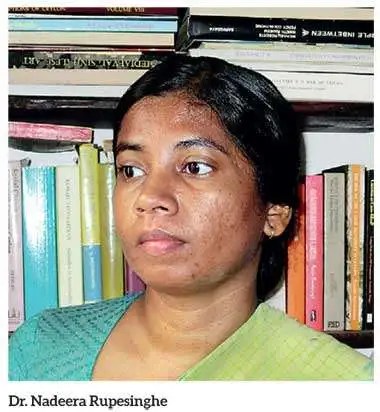
Bente de Leede & Nadeera Rupesinghe, whose article appeared in the  Law and History Review Volume 41 Issue 3 , August 2023 , pp. 501 – 521 …. DOI: https://doi.org/10.1017/S0738248022000499 ……. with the full title of the article being thus:  “Registering and Regulating Family Life: The School Thombos in Dutch Sri Lanka”

An Abstract: In eighteenth-century, colonial Sri Lanka, the Dutch church kept extensive registers of the local population. These “school thombos” contain individual registration of baptism, marriage, school attendance and death. This article argues that the school thombos reveal moral control over family life by the Dutch East India Company and the Dutch Reformed Church, while offering locals a legal and religious identity to employ in negotiating the Dutch colonial bureaucracy. These rarely studied registers shed new light on Sri Lankan family history and the practices of Dutch colonialism. What do they tell us about conjunctures of locals with colonial religion in eighteenth-century Sri Lanka? The school thombo was an instrument used to register and regulate family life, with specific functions and uses by different actors. This article explores the format, objectives and use of the school thombo. Why was the school thombo created and who were registered in these sources? What were the micro practices of drawing up the school thombo? The article is supported by several case studies that illustrate how the school thombo found its way into family life while demonstrating the value of written identities.

Continue reading

Leave a comment

Filed under accountability, British colonialism, cultural transmission, demography, Dutch colonialism, economic processes, education, governance, heritage, historical interpretation, island economy, legal issues, life stories, modernity & modernization, politIcal discourse, self-reflexivity, sri lankan society, travelogue, unusual people, world events & processes

Bala reviews Upali Wickremeratne’s Book on Colonial Rule

P. Balakrishnan, reviewing Upali Wickremeratne’s Book on Colonial European Rule in Sri Lanka, in Daily Mirror, 26 March 2024, in item entitled Sri Lanka’s European rulers doggedly retained traditional structures”


In his book The Conservative nature of the British rule of Sri Lanka”  (Vijitha Yapa 2014), Dr. Wickremeratne says that even conversion to  Catholicism under the Portuguese or the Dutch Reformed Church under the  Dutch did not alter the culture, values, thought and social structure of  the Sinhalese and the Tamils.

“There would otherwise only be a very remote possibility of finding out  everything that was happening and of which it was also important to be  aware.” …. Ryckloff van Goens

Continue reading

2 Comments

Filed under accountability, authoritarian regimes, British colonialism, centre-periphery relations, cultural transmission, Dutch colonialism, economic processes, ethnicity, governance, historical interpretation, island economy, life stories, politIcal discourse, Portuguese imperialism, power politics, sri lankan society, world events & processes

Ancestral Genealogy and the DBU’s Marvellous Service

Nick Van Der Hoeven, whose choice of title was “The Dutch Burgher Union “………………  while highlights have been imposed by The Editor, Thuppahi …………………………………………………………………………… snSpedtoorh3fi1c80a115m1h307g3u8i82016f0i28a6c396l64390307fi  ·

I have been reflecting on how lucky we are (as a group) to have such incredible access to the history of our ancestors. Yes, its very interesting: the diverse biological backgrounds (Dutch, British, Prussian, French, Portuguese, local etc). I am, however, a second generation Australian-born Burgher on my father’s side (plus Hungarian on mothers) and no doubt have a different reading history than those who ‘lived it’ back in Ceylon for those 500 years of colonisation.


For me the greatest gift is knowing the names and some of the stories of ancestors dating back 22 generations — regardless of where they are from. This is unique and is in my opinion one of the greatest legacies of the DBU. The shipping manifests, the Dutch churches, the British churches, the various journals and off course the DBU records themselves. Continue reading

Leave a comment

Filed under accountability, architects & architecture, centre-periphery relations, Colombo and Its Spaces, cultural transmission, Dutch colonialism, economic processes, education, ethnicity, European history, heritage, historical interpretation, landscape wondrous, life stories, patriotism, politIcal discourse, self-reflexivity, sri lankan society, travelogue, unusual people

The Roberts Mss at Adelaide University Library

Michael Roberts

Recent Email Exchanges with Jane Russell of UK, who has one foot in England and two feet in island Sri Lanka, and a revived focus on  George E De Silva (1870-1950) reminded me of the George E. Mss Memoirs in typescript which Jane had given me long ago. This led me to a long list which amounts to a treasure trove for those addressing a variety of topics in the history of Sri Lanka. I present the details before. Those wishing to pursue specifics must write to the Head of the Special Collections at the Barr Smith Library Adelaide University, not to me: samantha.farnsworth@adelaide.edu.au

It is my conjecture that the same corpus of material (or parts thereof) will also be part of the Roberts Collection at the National Library Services Board along Torrington Rd (beside the National Archives) in Colombo. They could initially seek specifics from Mr Welimuni Sunil who heads the institution: viz …

Welimuni Sunil … sunilnldsb@gmail.com

Continue reading

Leave a comment

Filed under accountability, British colonialism, Buddhism, caste issues, chauvinism, Colombo and Its Spaces, colonisation schemes, commoditification, communal relations, counter-insurgency, cultural transmission, demography, Dutch colonialism, economic processes, education, Empire loyalism, ethnicity, governance, heritage, historical interpretation, insurrections, irrigation, island economy, Kandyan kingdom, land policies, life stories, literary achievements, LTTE, modernity & modernization, Muslims in Lanka, nationalism, parliamentary elections, patriotism, photography, pilgrimages, plantations, political demonstrations, politIcal discourse, Portuguese in Indian Ocean, power politics, riots and pogroms, Royal College, Sinhala-Tamil Relations, social justice, Sri Lankan cricket, sri lankan society, suicide bombing, Tamil migration, terrorism, transport and communications, unusual people, war reportage, women in ethnic conflcits, working class conditions, world events & processes, World War II and Ceylon

The “Butterfly Bridge” in Galle

Michael Roberts


Dulip Karunaratne of St. Aloysius (as a boarder) sent this to me. As a resident of Galle Fort and a frequent visitor to the playing fields in front of the Fort, this bridge over a canal leading to the Municipal Park was a familiar sight. Perhaps so familiar as to be taken for granted.

Continue reading

Leave a comment

Filed under Africans in Asia, architects & architecture, authoritarian regimes, centre-periphery relations, commoditification, cultural transmission, demography, Dutch colonialism, economic processes, ethnicity, heritage, historical interpretation, island economy, landscape wondrous, life stories, modernity & modernization, Muslims in Lanka, photography, politIcal discourse, sri lankan society, transport and communications, Uncategorized, world events & processes

Pictorial Colombo in its Prime: Hodi-Heleyi Helleyi-aaahhhh

An Advertisement …. with highlights imposed by Thuppahi

The Great Days of Colombo is by far the most comprehensive work on the City of Colombo. This profusely illustrated work running to over 800 pages tells the story of how Colombo originated from very humble beginnings as a simple Moorish port to become what it is today, a bustling city full of life and colour.

Continue reading

Leave a comment

Filed under architects & architecture, British colonialism, centre-periphery relations, Colombo and Its Spaces, communal relations, cultural transmission, demography, Dutch colonialism, economic processes, ethnicity, heritage, historical interpretation, island economy, landscape wondrous, life stories, modernity & modernization, photography, population, sri lankan society, transport and communications, travelogue, working class conditions, world events & processes

Revelations within Colonial Photographs of Ceylon: “Veins of Influence”

Veins of Influence: Colonial Sri Lanka (Ceylon) in Early Photographs and Collections, by Shalini Amerasinghe Ganendra

 [This book is a pioneering monograph that brings a rich array of early and previously unpublished images of Sri Lanka (Ceylon) into the global discourse of photography, pairing a striking lens of visual appreciation with distinctly humanizing perspectives.


Continue reading

Leave a comment

Filed under accountability, architects & architecture, art & allure bewitching, British colonialism, Buddhism, commoditification, Dutch colonialism, economic processes, ethnicity, female empowerment, governance, heritage, Hinduism, historical interpretation, island economy, landscape wondrous, life stories, modernity & modernization, photography, photography & its history, plantations, Portuguese imperialism, power politics, religiosity, sri lankan society, Tamil civilians, the imaginary and the real, tourism, transport and communications, unusual people, wild life, working class conditions

The Dutch Fort in Gurunagar, Jaffna

MAR Manukulasooriya, in the Sunday Observer, 1 October 2023 with this title “A distinctive Dutch archaeological site in South-East Asia”

The Jaffna Fort is near the coastal village of Gurunagar [within the Jaffna Peninsula]. It was built by the Portuguese in 1619 under Phillippe de Oliveira as a four-sided garrison with ramparts, corner bastions and moats following the Portuguese invasion of Jaffna.


Continue reading

Leave a comment

Filed under accountability, architects & architecture, art & allure bewitching, centre-periphery relations, communal relations, cultural transmission, Dutch colonialism, heritage, historical interpretation, landscape wondrous, life stories, LTTE, politIcal discourse, security, Sinhala-Tamil Relations, world events & processes

François Valentijn’s Description of Ceylon

Thiru Arumugam in The Ceylankan Vol 26/3, August 2023, where  the title reads “François Valentijn wrote a 462 page ‘Description of Ceylon’ 300 years ago … Part 2” ……… Part 1 having appeared in The Ceylankan J 102 Vol 26(2) May 2023, pp 24-25. …..  also by Thiru Arumugam

First and Second Chapters [Geography] For his sources of information about the geography and history of Ceylon up to the Portugueseperiod, Valentijn relies on the Portuguese writer Diogo do Couto’s Ceylon section of his books Decadas da Asia (Decades of Asia)5. Couto was Chief Keeper of the Records in Goa from 1595 to 1616. Goa was the Asian headquarters of the Portuguese. Valentijn also took information from the Dutch writer Father Philippus Baldeus6, who lived in Jaffna from about 1656 to 1665. For the description of the interior of Ceylon he relies on Robert Knox7, as the Portuguese and Dutch had limited access to these areas. There was a pirated Dutch translation of Knox’s book by S de Vries published in Utrecht in 1692 and Valentijn would have used this translation. Valentijn plagiarised freely, sometimes copying entire sections from these books. In those halcyon pre-copyright days, the printed word was considered public property!

Continue reading

4 Comments

Filed under authoritarian regimes, centre-periphery relations, Colombo and Its Spaces, Dutch colonialism, economic processes, ethnicity, heritage, historical interpretation, Indian Ocean politics, island economy, landscape wondrous, life stories, military expenditure, politIcal discourse, sri lankan society, transport and communications, travelogue, unusual people, VOC, world events & processes