Category Archives: demography

Gross Ignorance displayed by USA’s Parliamentarians

Daya Gamage, whose chosen title runs thus: “US lawmakers ignorance of civilian casualties in Lanka’s war on terrorism”

Declaring that the government of Sri Lanka, while combating ‘Tamil Organizations’ which were fighting for a Tamil Homeland in the North-East, committed genocide against the Tamil people, a resolution was tabled in the US House of Representatives, on May 15, 2024, to coincide with the 15th anniversary of the conclusion of the LTTE’s terrorist war; it states, “Recognizing the hundreds of thousands of lives lost during Sri Lanka’s almost 30-year armed conflict, which ended 15 years ago on May 18, 2009, and ensuring nonrecurrence of past violence, including the Tamil Genocide, by supporting the right to self-determination of Eelam Tamil people and their call for an independence referendum for a lasting peaceful resolution”.

Continue reading

Leave a comment

Filed under accountability, american imperialism, atrocities, authoritarian regimes, centre-periphery relations, communal relations, demography, disparagement, doctoring evidence, Eelam, ethnicity, historical interpretation, legal issues, life stories, military strategy, patriotism, photography, politIcal discourse, power politics, prabhakaran, propaganda, security, self-reflexivity, Sinhala-Tamil Relations, slanted reportage, sri lankan society, suicide bombing, Tamil civilians, Tamil migration, tamil refugees, Tamil Tiger fighters, trauma, truth as casualty of war, unusual people, vengeance, war crimes, war reportage, world events & processes, zealotry

The School Thombos in Dutch Ceylon: Their Purpose

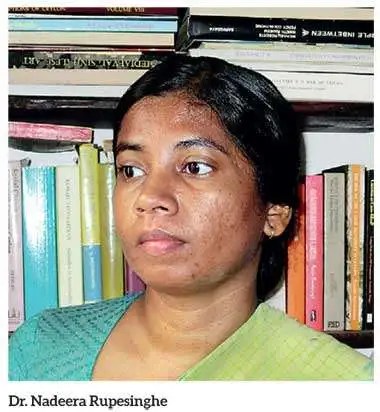
Bente de Leede & Nadeera Rupesinghe, whose article appeared in the  Law and History Review Volume 41 Issue 3 , August 2023 , pp. 501 – 521 …. DOI: https://doi.org/10.1017/S0738248022000499 ……. with the full title of the article being thus:  “Registering and Regulating Family Life: The School Thombos in Dutch Sri Lanka”

An Abstract: In eighteenth-century, colonial Sri Lanka, the Dutch church kept extensive registers of the local population. These “school thombos” contain individual registration of baptism, marriage, school attendance and death. This article argues that the school thombos reveal moral control over family life by the Dutch East India Company and the Dutch Reformed Church, while offering locals a legal and religious identity to employ in negotiating the Dutch colonial bureaucracy. These rarely studied registers shed new light on Sri Lankan family history and the practices of Dutch colonialism. What do they tell us about conjunctures of locals with colonial religion in eighteenth-century Sri Lanka? The school thombo was an instrument used to register and regulate family life, with specific functions and uses by different actors. This article explores the format, objectives and use of the school thombo. Why was the school thombo created and who were registered in these sources? What were the micro practices of drawing up the school thombo? The article is supported by several case studies that illustrate how the school thombo found its way into family life while demonstrating the value of written identities.

Continue reading

Leave a comment

Filed under accountability, British colonialism, cultural transmission, demography, Dutch colonialism, economic processes, education, governance, heritage, historical interpretation, island economy, legal issues, life stories, modernity & modernization, politIcal discourse, self-reflexivity, sri lankan society, travelogue, unusual people, world events & processes

Caste Issues in Sri Lanka: A Partial Bibliography

Michael Roberts

I came across this undated list in my computer files — one drawn up quite sometime back, maybe 20 years back. Though I would seem to have been part of the enterprise, some spellings suggest the involvement of others; while Iranga Silva of the ICES Kandy also seems to have been one of the compilers. It will, nevertheless, interest some readers & scholars and could assisit budding researchers. The items or authors presented in black were part of the File I found. I have taken the liberty of deploying a colour scheme, with red indicating rare items that I have not seen/studied; blue some highly important studies; ….

Continue reading

2 Comments

Filed under British colonialism, caste issues, centre-periphery relations, communal relations, cultural transmission, demography, discrimination, economic processes, ethnicity, governance, heritage, historical interpretation, island economy, landscape wondrous, life stories, politIcal discourse, revenue registers, sri lankan society, working class conditions

Seismic Shifts in World Power Balance as Xi and Putin Consolidate Ties

Lakshman Gunasekara in Daily News, 21 May 2024, where the title reads thus: “China-Russia summit: pointer to world’s future?” …. with highlighting imposed by The Editor, ThuppahiMo

The sudden death of Iran’s conservative President on Sunday hardly stirred the world community’s focus on Gaza where humanity undergoes a shattering collective experience as never before. Iran’s 63-year-old cleric-President is understood to have died in a sudden, weather-induced helicopter crash while returning from an official programme in Iran’s far western borderlands near Azerbaijan.

Continue reading

Leave a comment

Filed under accountability, american imperialism, authoritarian regimes, centre-periphery relations, China and Chinese influences, demography, economic processes, ethnicity, governance, historical interpretation, military strategy, modernity & modernization, nationalism, Palestine, politIcal discourse, power politics, security, world events & processes

“Walk Like An Elephant” …. Being Laleen Jayamanne’s Engagement with the “Aragalaya”

Walk Like an Elephant: The Island Essays 2022-2023′
These are 22 essays written by Laleen Jayamanne during the time of the Aragalaya/Struggle/Paroattam in 2022 and in the aftermath. These writings  work at the intersection of art and politics within the context of Sinhala Buddhist Ethno-Nationalism as it affected the Arts and Fine Arts Education policy since 1958. I use theoretical and philosophical ideas from Critical Theory familiar to left intellectuals at least since May ’68 in Paris. It is written for a Lankan Left intelligentsia; but as its for a daily paper I have crafted an accessible prose.

Continue reading

Leave a comment

Filed under accountability, authoritarian regimes, centre-periphery relations, citizen journalism, Colombo and Its Spaces, cultural transmission, democratic measures, demography, disparagement, economic processes, electoral structures, governance, historical interpretation, landscape wondrous, Left politics, legal issues, life stories, patriotism, performance, politIcal discourse, power politics, Rajapaksa regime, self-reflexivity, social justice, sri lankan society, the imaginary and the real, unusual people, vengeance, world events & processes

Be Tamil Bibliography…….For Sri Lanka 2003/04

Michael Roberts

 About the time that I retired from my teaching duties at the Anthropology Department at Adelaide University in 2003/04, the topic of “suicide terrorism” was attracting a lot of attention in academic circles through books and articles. As I dwelt on this topic within the alternative title of “Sacrificial Devotion,” I also had, perforce, to dwell on the grievances espoused by the Sri Lanka Tamils.

Through happenchance, today, I came across an old Word File entitled “Be Tamil Bibliography.” Its entries suggest that it was drafted circa 2003/04so the temporal sweep is restricted. It lists academic books and articles on the ethnic contretemps in Sri Lanka as well as the Tamil world of Sri Lanka and India. Thus, the authors marked include such personnel as Zvelebil, Schalk, Kenneth David and Hellmann-Rajanayagam as well as the local Tamils Chelliah Manogaran, Valentine Daniel, Sivathamby, Somasundaram and Sivaram …. to name a few.

Tamil demonstrators invade the pitch during a Cricket World Cup, Group B, match between Australia and Sri Lanka at the Oval, London, 11th June 1975. Australian opening batsman Alan Turner (foreground) turns his back on the protest while his teammate Rick McCosker looks on. Australia won the match by 52 runs..Photo by Dennis Oulds/Central Press/Hulton Archive/Getty Images


Continue reading

Leave a comment

Filed under atrocities, centre-periphery relations, communal relations, counter-insurgency, cultural transmission, demography, discrimination, disparagement, doctoring evidence, ethnicity, fundamentalism, governance, heritage, historical interpretation, immolation, Indian Ocean politics, insurrections, landscape wondrous, language policies, law of armed conflict, LTTE, martyrdom, military strategy, nationalism, patriotism, photography, politIcal discourse, power politics, power sharing, prabhakaran, propaganda, racist thinking, religiosity, self-reflexivity, Sinhala-Tamil Relations, slanted reportage, social justice, sri lankan society, suicide bombing, Tamil civilians, Tamil migration, tamil refugees, Tamil Tiger fighters, terrorism, truth as casualty of war, unusual people, vengeance, world events & processes, zealotry

“Colonization and Ethnic Conflict in the Dry Zone of Sri Lanka” – Article in 1990

Patrick Peebles in a refereed article in The Journal of Asian Studies, Vol. 49, No. 1 (Feb., 1990), pp. 30-55 …. which John De Silva in Melbourne, my Aloysian sporting mate, has worked on to make it feasible for me to present it in the Thuppahi format-style. The supporting Maps & Diagrams are presented via web-references, while the web-reference to the article as a whole is placed herein in pdf format.

Sri LANKA’S INABILITY to contain ethnic violence as it escalated from sporadic terrorism to mob violence to civil war in recent years has disheartened observers who had looked to the nation as a success story of social and political development. In retrospect, Sri Lanka lacked effective local institutions to integrate the society, and the Sinhalese elite relied on welfare and preferential policies for the Sinhalese majority to maintain power. These alienated the minorities and resulted in Tamil demands for a separate state. 1

Continue reading

1 Comment

Filed under authoritarian regimes, British colonialism, centre-periphery relations, chauvinism, colonisation schemes, cultural transmission, demography, economic processes, ethnicity, governance, heritage, island economy, land policies, landscape wondrous, language policies, Left politics, life stories, plural society, politIcal discourse, power politics, racism, self-reflexivity, Sinhala-Tamil Relations, sri lankan society, Tamil civilians, transport and communications, working class conditions, world events & processes

Introducing Tambiah’s 1992 Book: “Buddhism Betrayed?”

Item in Tamil Nation ……………………………………… https://tamilnation.org/books/eelam/buddhismbetrayed

Given Buddhism’s presumed non-violent philosophy, how can committed Buddhist monks and laypersons in Sri Lanka today actively take part in the fierce political violence of the Sinhalese against the Tamils?

Stanley Jeyaraja Tambiah’s Buddhism Betrayed? seeks to answer this question by looking closely at the past century of Sri Lankan history and tracing the development of Buddhism’s participation in such ethnic conflict and collective violence. Tambiah analyses the ways in which this participation has, over time come to alter the very meaning of Buddhism itself as a lived reality.

Continue reading

Leave a comment

Filed under anti-racism, British colonialism, centre-periphery relations, communal relations, cultural transmission, demography, discrimination, disparagement, economic processes, education policy, electoral structures, ethnicity, fundamentalism, governance, heritage, historical interpretation, language policies, legal issues, life stories, nationalism, parliamentary elections, political demonstrations, politIcal discourse, power politics, racist thinking, riots and pogroms, self-reflexivity, Sinhala-Tamil Relations, sri lankan society, Tamil civilians, trauma, truth as casualty of war, vengeance, working class conditions, world events & processes, zealotry
Demographic Trends in the World: A Muslim Predominance

Web-Reference sent to me by Richard Hermon

A Thuppahi thought arising from the graphic illustrations in this Video TALE: Where affluence and the search for security has led most of the non-Muslim world to deviate from the practices of their forefathers so that the capacity of Islamic families TODAY to bear and sustain large families [in the manners past] has worldwide ramifications.

Leave a comment

Filed under accountability, centre-periphery relations, cultural transmission, demography, life stories, performance, politIcal discourse, religiosity, self-reflexivity, working class conditions, world events & processes

Pictorials: Roman Szechowycz in the Dry Zone in the 1950s

Michael Roberts

Dr Roman Szechowycz and  his brother served the newly independent island of Ceylon in its hydraulic agriculture projects in the Dry Zone in the period 1950 to 1961 …. mostly from a base at Inginiyagala in the Eastern Province where the Gal Oya Tank was constructed. We are fortunate to have some photographic ‘asides’ of a “personnel nature” — so to speak — associated with this work  The detailed descriptions presented elsewhere in TPS: viz.; …..

Experiences: Working on the Gal Oya Project in Ceylon, 1950-61

Continue reading

2 Comments

Filed under accountability, ancient civilisations, architects & architecture, British colonialism, centre-periphery relations, colonisation schemes, commoditification, demography, economic processes, ethnicity, governance, heritage, historical interpretation, irrigation, island economy, land policies, landscape wondrous, life stories, modernity & modernization, nationalism, patriotism, photography, politIcal discourse, population, self-reflexivity, sri lankan society, transport and communications, unusual people, welfare & philanthophy, world events & processes