Category Archives: demography

Noel Nadesan’s Critical Reflections on the Sri Lankan Tamils’Armed Struggle

Rajeswary Balasubramaniam, reviewing Odyssey of War by Noel Nadesan **

The ‘Odyssey of War’, a novel by Dr. Noel Nadesan published by Sarasavi Publishers, reflects the struggle for the liberation of Tamils in Sri Lanka (1977-2009) and the failure of interwoven world politics. The novel illustrates how upper-class Tamils overcame caste, religion, and regions and united for the liberation of Tamils, but went beyond the spirit of liberation, migrated, and eventually made the liberation struggle of Tamils a profitable business.

Continue reading

1 Comment

Filed under accountability, anti-racism, asylum-seekers, atrocities, authoritarian regimes, centre-periphery relations, communal relations, constitutional amendments, counter-insurgency, demography, discrimination, Eelam, ethnicity, governance, historical interpretation, Indian Ocean politics, insurrections, language policies, life stories, LTTE, military strategy, patriotism, politIcal discourse, power politics, prabhakaran, refugees, security, self-reflexivity, Sinhala-Tamil Relations, sri lankan society, Tamil migration, tamil refugees, Tamil Tiger fighters, terrorism, trauma, truth as casualty of war, unusual people, vengeance, war reportage, world events & processes

Articles by Michael Roberts presented in Edited Books

ITEM presented in reverse chronological order by Sophia Corfield …  a postgrad at Adelaide University when this list was compiled, circa 2012

  1. Sri Lanka: The power of cricket and the power in cricket. In S. Wagg (Ed.), Cricket and National Identity in the Post-Colonial Age: Following On (pp. 132-158). London: Routledge.

  1. Submerging the People? Post-Orientalism and the Construction of Communalism. In G. Berkemer (Ed.), Explorations in South Asian History. Festschrift for Dietmar Rothermund on the Occasion of his 65th Birthday (pp. 311-323). New Delhi: Manohar.

Continue reading

Leave a comment

Filed under accountability, authoritarian regimes, British colonialism, demography, devolution, economic processes, ethnicity, European history, governance, heritage, historical interpretation, insurrections, island economy, Kandyan kingdom, landscape wondrous, language policies, Left politics, life stories, modernity & modernization, nationalism, plantations, plural society, politIcal discourse, power politics, racist thinking, self-reflexivity, Sinhala-Tamil Relations, sri lankan society, welfare & philanthophy, world events & processes

The Transformations in Colombo Over the Last 150 Years

Nihal Perera, whose chapter 16 is entitled  “From colonial outpost to indigenous kleptocratic city”

 ABSTRACT : This chapter maps out the trajectory of the production, reproduction, and transformation of Colombo through colonial, post-colonial, neoliberal, and kleptocratic periods. Created as part of a European-imperial system of cities, Colombo’s identity is tied to larger systems of cities. Using the threshold between the city and outside to look from inside, the chapter approaches the story of Colombo more from indigenous and local people’s vantage points and perspectives, acknowledging and adapting significant local interpretations. The discussion focuses the neoliberal and kleptocratic periods. The neoliberals transformed the city’s form to attract foreign investment, shifting the purpose of planning to finding sites for investors, and enabling growth. Replacing investment for development with growth for investment, the kleptocrats intensified the movement of money and intercepted the circuits at the state level, via the government. They allow individual projects to shape the city. Colombo’s subjects have incrementally transformed it, by living and familiarising it. The layers of society and space created by these processes contest, cooperate, and entangle with each other in the form of cascades, generating new elements.

Figure 16.1 Colombo as part of the Portuguese Indian-ocean space .... Source: Perera (1998), drawn by Ashra Wickramathilaka.

Continue reading

Leave a comment

Filed under architects & architecture, British colonialism, centre-periphery relations, Colombo and Its Spaces, commoditification, demography, economic processes, historical interpretation, island economy, life stories, modernity & modernization, politIcal discourse, population, sri lankan society, transport and communications, working class conditions, world events & processes

Of All Places! Lankan Asylum Seekers stranded in Diego Garcia

News Item in The Island , 23 July 2024 … where the title reads Urgent request to relocate Lankan asylum seekers from Diego Garcia amid escalating crisis”

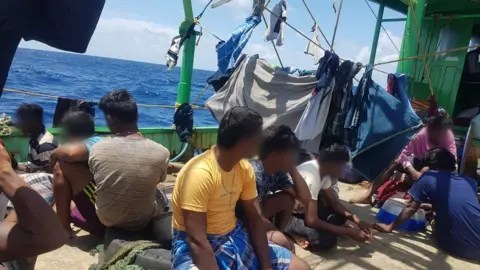
Facing an urgent and escalating threat of harm to migrant children detained on Diego Garcia, British Foreign Secretary David Lammy requested their relocation to the UK on July 16th, as reported in the Solicitors Journal. This request to Home Secretary Yvette Cooper follows a warning from the British Indian Ocean Territory (BIOT) Commissioner, who reported severe living conditions and recent suicide attempts among the detainees....visit The Island web-ref for  photo of  this cluster of refugee boat people

Continue reading

1 Comment

Filed under accountability, anti-racism, asylum-seekers, Britain's politics, centre-periphery relations, charitable outreach, communal relations, demography, disparagement, economic processes, ethnicity, governance, historical interpretation, life stories, politIcal discourse, refugees, security, self-reflexivity, slanted reportage, sri lankan society, trauma, travelogue, world events & processes

Let’s Remove the Colonial Tropes in the Writings on Sri Lanka

Darini Rajasingham-Senanayake, whose preferred title is  “Decolonizing July 1983’s Fiction and History for a Post-Ethnic Sri Lanka: Tropes of Violence and Cold War at the end of the American Century”

 “Fair is foul and foul is fair”William Shakespeare, Macbeth

 !@#$!!!! …. The Editor’s efforts to insert appealing cartoons and/or pictures of Macbeth were defeated by the digital world’s capitalist principles & demands for payment

Why are there no Booker Prize-winning novels about mundane multicultural families that inter-married for generations, shared religion/s, language/s and co-existed for centuries, while living in relative harmony in Ceylon/ Sri Lanka? Is the trope of dark natives engaged in endless chaotic violence an international literature prize-winning bestseller that masks white mischief, including sanitized, techno-scientific AI guided drone warfare? Susan William’s brilliant and brave book “White Malice” is subtitled, “The CIA and the Covert Recolonization of Africa’.

Continue reading

1 Comment

Filed under accountability, anti-racism, authoritarian regimes, British colonialism, chauvinism, communal relations, cultural transmission, democratic measures, demography, economic processes, governance, heritage, historical interpretation, Indian Ocean politics, island economy, language policies, Left politics, life stories, modernity & modernization, parliamentary elections, patriotism, politIcal discourse, power politics, self-reflexivity, Sinhala-Tamil Relations, social justice, sri lankan society, world events & processes

Sri Lankan ‘Outposts’ on Thursday Island in Colonial Times

Á Booklet by Stanley J. Sparkes and Anna Shnukal entitled The Sri Lankan Settlers of Thursday Island …. presented by …………….. httpsy ://www.elanka.com.au/the-sri-lankan-settlers-of-thursday-island-by-stanley-j-sparkes-and-anna-shnukal/

... I regret that the pictorial illustrations with this text proved obdurate and refused replication; while the whole process of reproduction was difficult”–Thupahiyaa

Introduction

The dismantling of the White Australia Policy in the early 1970s, allied with periodic civil strife in their homeland, brought significant numbers of Sri Lankan immigrants to Australia. Few Australians, however, are aware that, a century before, hundreds of mostly male ‘Cingalese’ (as Sri Lankans were then called),2 mainly from the southern coastal districts of Galle and Matara in the British colony of Ceylon, came as labourers to the British colony of Queensland.3 The first of these arrived independently in the 1870s to join the Torres Strait pearling fleets, but larger numbers were brought to Queensland a decade later as indentured (contract) seamen on Thursday Island and, shortly thereafter, as farm workers for the cane fields around Mackay and Bundaberg, where many of their descendants still live. The arrival of the first batch of 25 indentured Sri Lankan seamen on Thursday Island in 1882 coincided with the importation of ‘Malays’ and Japanese. Yet, unlike the latter, comparatively little has been published on their origins, lives and destinies, nor their contributions to the business, social and cultural life of Thursday Island. Some of those first arrivals demonstrated a remarkable entrepreneurial flair, taking up employment as ‘watermen’ (boatmen), ferrying passengers and cargo from ship to shore and subsequently taking out licences as small businessmen: boarding-house keepers, billiard-room proprietors, shopkeepers, pawnbrokers, boat-owners, gem and curio hawkers and commercial fishermen.

VISIT THIS SITE FOR MAP etc https://en.wikipedia.org/wiki/Thursday_Island

Continue reading

3 Comments

Filed under Australian culture, British colonialism, centre-periphery relations, commoditification, communal relations, cultural transmission, demography, discrimination, economic processes, ethnicity, heritage, historical interpretation, island economy, landscape wondrous, life stories, Pacific Ocean issues, population, religiosity, self-reflexivity, sri lankan society, transport and communications, travelogue, Uncategorized, unusual people, working class conditions, world events & processes

The Work of Anthropologists from Sri Lanka: Reviewing the World Scenario in 1987

Presenting an academic article published in Contributions to  Indian Sociology , n.s, Vol 21, 1-25 also reproduced subsequently in Sri Lanka in 1989 as No, 10 within the SSC Pamphlet Series marshalled by the late Ana Chittambalam, Willa Wickremasinghe , Hari hulugalle and Michael Roberts

Elizabeth Nissan: “The work of Sri Lankan anthropologists: A bibliographic survey”

 Introduction: Although many of the studies included in this essay are concerned with Sri Lanka, this is not a bibliographic essay on the anthropology of that country. It is, instead, a survey of the work of Sri Lankan anthropologists, wherever they may have carried out their research.

Continue reading

Leave a comment

Filed under Aboriginality, accountability, art & allure bewitching, authoritarian regimes, British colonialism, Buddhism, caste issues, centre-periphery relations, Colombo and Its Spaces, colonisation schemes, commoditification, communal relations, cultural transmission, democratic measures, demography, discrimination, disparagement, Dutch colonialism, economic processes, education, ethnicity, fundamentalism, governance, hatan kavi, heritage, historical interpretation, immigration, Indian Ocean politics, Indian traditions, irrigation, Islamic fundamentalism, island economy, landscape wondrous, language policies, Left politics, life stories, literary achievements, modernity & modernization, nationalism, performance, pilgrimages, plantations, plural society, political demonstrations, politIcal discourse, Portuguese in Indian Ocean, power politics, racism, religiosity, religious nationalism, riots and pogroms, self-reflexivity, Sinhala-Tamil Relations, social justice, sri lankan society, Tamil civilians, terrorism, the imaginary and the real, travelogue, vengeance, violence of language, welfare & philanthophy, working class conditions, world events & processes, zealotry

Us/Them Semantics in Sinhalese Confrontations with Other Forces Over Time

Michael Roberts presenting the Synopsis of an Article published after a refereeing process in the journal NATIONALISM and ETHNIC POLITICS  Vol 9/3 Summer 2003, pp. 75-102

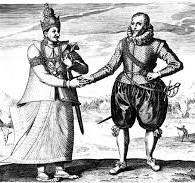
The collective identity of Sinhala-speakers over four centuries dating from the 1590s is analyzed with due attention to the structural form of (a) the Kingdom of Kandy and (b) the British colonial regime that took control of the whole island by 1815/18. The analysis dwells on the modes of oral, visual-iconic and written forms of cultural transmission that pre-dated print technology, while drawing attention to the relative uniformity of the Sinhala language in both geographical and temporal scale. A semantic pattern of political alliances based on the opposition of inside to outside which works contextually like a nestling Chinese-box is one dimension of this linguistic order. This supported the tendency of Sinhalese representations to adopt an associational logic which merged past enemies (the wicked Tamils) with contemporary enemies (the Portuguese, the English) during the liberation struggles of the Kandyan state and its militia in the pre-1818 period. Such tendencies and the continuation of disparaging epithets coined during the period of Portuguese imperial intrusion into the vocabulary of the twentieth century must inform any theoretical efforts to distinguish the collective consciousness of the Sinhalese after the substantial transformations initiated under the British from that which is expressed so powerfully in the war poems of the pre-British period. 
VISIT this Digital-Reference:
https://www.semanticscholar.org/paper/Language-and-national-identi ty%3A-the-Sinhalese-and-Roberts/003324e5fbcdd
Special ADDITIONS for TPS …. The “US vs THEM” Phenomenon

Leave a comment

Filed under authoritarian regimes, British colonialism, centre-periphery relations, communal relations, cultural transmission, demography, Dutch colonialism, economic processes, ethnicity, governance, hatan kavi, heritage, historical interpretation, Indian Ocean politics, island economy, Kandyan kingdom, language policies, law of armed conflict, life stories, literary achievements, nationalism, patriotism, politIcal discourse, population, Portuguese imperialism, power politics, racism, security, self-reflexivity, Sinhala-Tamil Relations, Sri Lankan scoiety, transport and communications, world events & processes, zealotry

Deciphering the Work of Caste in Sri Lanka’s Lifeworld

Thuppahi is delighted to present a new research venture in keeping with its own spirit — with TUDOR SILVA in Lanka and MARK BALMFORTH in Canada in command.

CASTE: A Global Journal on Social Exclusion …..  Call for Submissions ….. with a Focus on Sri Lanka

Deadlines for Submissions: ….. Abstract: June 15, 2024 …… Full Paper: September 30, 2024

Compared to the expanding body of literature on caste in the Indian subcontinent, caste in Sri Lanka has received only sporadic academic attention and has been largely ignored in policy debates and social development interventions on the island. This can partially be explained by a widespread, public belief in Sri Lanka that despite its past importance, caste is no longer a vital social institution. While open discussion on the topic is largely absent, this does not mean that caste is dead or dying. Rather, caste remains hidden in much of Sri Lankan social life (Jiggins 1979; Silva, Sivapragasam, & Thanges 2009a). Reports from the north and east of the country indicate a certain resurgence of caste issues in post-war society, and new research findings suggest that caste plays a role in social, economic, and political dynamics that affect access to limited resources such as land, drinking water, employment, and political power (Thanges 2015; Hashmi and Kuganathan 2017; Kadirgamar 2019; Silva 2020; Tiruchandran 2021). Caste also continues to play an important role in the social life of south and central Sri Lanka through marriage partner selection, land tenure, temple rituals, politics, economic relations, and the performing arts (Silva, Sivapragasam, & Thanges 2009b; Reed 2010). Recent dissertation work, particularly in overseas universities, suggests that a body of new Sri Lankan caste-related evidence is just on the horizon (Räsänen 2015; Aimee 2017; Thanges 2018; Balmforth 2020; Esler 2020; Pathmanesan 2020).

Continue reading

Leave a comment

Filed under accountability, British colonialism, Buddhism, caste issues, centre-periphery relations, chauvinism, commoditification, communal relations, cultural transmission, democratic measures, demography, discrimination, Dutch colonialism, economic processes, education policy, electoral structures, ethnicity, female empowerment, governance, heritage, historical interpretation, Indian traditions, island economy, language policies, Left politics, legal issues, life stories, plantations, plural society, politIcal discourse, power politics, racist thinking, self-reflexivity, social justice, sri lankan society, Tamil civilians, tolerance, unusual people, working class conditions, world events & processes

Facing Fortress Australia: Ceylonese Migrants in the 1950s & 1960s

Earlson Forbes, whose title in THE CEYLANKAN, vol 27/2, May 2024 is Fortress White Australia: What early Ceylonese migrants [1949 t0 1969] were up against” … [now … with most of the author’s documentary illustrations]

The Six Australian Colonies came together on the 1st  of January 1901 to form the independent Nation of the Commonwealth of Australia.  From 1788 (First Fleet arrival at Sydney Cove) to the time of Federation, Australia was populated by convict and free settlers almost exclusively from Britain.  The 1901 census put the population at 3.7 million.   Aboriginals were not counted in this census. A small percentage of the population was made up of Pacific Islanders and Chinese.  The Chinese entered Australia in the second half of the 19th century at the time of the Gold Rush in Australia (mid-19th century) and in the years following. Between 1851 and 1870 about 50,000 Chinese were estimated to have entered Australia. Pacific Islanders had been brought to Australia in the second half of the 19th century as labourers.

From its inception the Nation of Australia embarked on a highly protective policy regarding entry into the country.  Within one year of formation of the Nation, the Australian Parliament passed two Acts limiting immigration.  These two Acts were The Immigration Restriction Act 1901, and the Pacific Islander Labourers Act 1901.  The Pacific Islander Labourers Act aimed specifically at putting a stop to admission of persons from this region.  The Act stated, ‘No Pacific Island Labourer shall enter Australia on or after the thirty first day of March one thousand nine hundred and four’.

Continue reading

Leave a comment

Filed under accountability, Australian culture, australian media, centre-periphery relations, charitable outreach, communal relations, cultural transmission, demography, discrimination, disparagement, economic processes, education, ethnicity, governance, heritage, historical interpretation, immigration, island economy, landscape wondrous, language policies, legal issues, life stories, patriotism, plural society, politIcal discourse, racist thinking, self-reflexivity, social justice, sri lankan society, taking the piss, transport and communications, travelogue, unusual people, world events & processes