Category Archives: cultural transmission

Galle Fort Featured in Striking Desk Top Calendar for 2023

Desktop Calendar with Scenic Shots of Galle Fort in Sri Lanka …. 11.5X6.5 inches, wire bound, 14 printed pages, 180 gsm, gloss finish, in colour

Order by 25th December 2022 to P L Ariyananda (pariyananda@gmail.com). Payment instructions will then be notified.

Price: In Sri Lanka Rs 3,500 (courier charges inclusive); Overseas USD 15 plus courier charges

Continue reading

2 Comments

Filed under architects & architecture, art & allure bewitching, cultural transmission, Dutch colonialism, heritage, landscape wondrous, photography, sri lankan society, travelogue

An Ethnological Introduction to the Tamils of Sri Lanka

 Karthigesu Sivathamby

 This item now presented in Thuppahi is the first part of a book in pdf format entitled The Tamils of Sri Lanka. In converting the pdf the whole text went haywire and the paragraph divisions were all over the shop. I cannot guarantee that my painstaking editorial reconstruction stuck to Siva’s original design. I have refrained from inserting any highlighting emphasis on the text: so the highlighting you see is there in the original… As far as I could work out, this work was finalized in 1989, but that point is subject to correction ………….. Michael Roberts Continue reading

4 Comments

Filed under ancient civilisations, art & allure bewitching, caste issues, centre-periphery relations, cultural transmission, demography, economic processes, education, ethnicity, heritage, historical interpretation, Indian traditions, island economy, landscape wondrous, language policies, life stories, patriotism, politIcal discourse, power politics, Saivism, self-reflexivity, Sinhala-Tamil Relations, sri lankan society, Tamil civilians, Tamil migration, unusual people, working class conditions, world events & processes

Encountering Dilshan in Melbourne: Danger!

Errol Fernando in Email Note to Darragh O’Donovan, 14 December 2022  

Yes, Darragh, I did turn up at last Saturday  and watch Dilshan hit the ball all over Sydney Pargeter Reserve. At the ripe old age of 46 he can still get a game for Sri Lanka!  Fours and sixes all over the place!

However, I had one extremely close call.  I was busy chatting with Nuwan Ranasinghe, a Sri Lankan media man, and took my eye off the game for a moment. Suddenly Nuwan shouted at me to duck and I looked up to see the ball heading towards me and it crashed into the tree behind me. It is no exaggeration to say that the ball missed my head by  no more than a couple of inches ! Nuwan was far more shattered than I was !

Continue reading

Leave a comment

Filed under accountability, art & allure bewitching, Australian culture, cricket for amity, cultural transmission, ethnicity, landscape wondrous, life stories, patriotism, performance, self-reflexivity, Sri Lankan cricket, sri lankan society, unusual people

Disappearing Burgher Surnames in Island Lanka

“Disappearing Burgher Surnames in Island Lanka” …. Author and location unknown at present … and not to be confused with Careem’s article on “Disappearing Burgher & Malay Surnames in Island Lanka”at… https://thuppahis.com/2017/01/30/disappearing-burgher-and-malay-surnames-i

Pix of Burgher Tennis Club in the Fort of Galle in 1928 inserted here courtesy of David Colin-Thome … for names: visit https://thuppahis.com/2017/06/29/burgher-tennis-club-in-galle-circa-1928/


Some of the most colourful surnames that once stood as a beacon to help distinguish the ethnic backgrounds of locals have now gone into abeyance. The ethnographers are of the opinion that the frequent intermarriages with members of the prominent ethnic groups and the death of male line descendants have gradually airbrushed the identities of many minorities. However, it is unmistakably clear that many of the Lankan patronymics and surnames have European roots. The Ceylon Burgher Community is the finest exponent of this European Onomatology in Sri Lanka, as the members of the community carry some of the World’s rarest surnames, several of which at present verge on extinction. The ancestors of the Dutch Burghers were not necessarily Dutch by ethnic origin as the Dutch East India Company installed hundreds of mercenaries from all parts of Europe who later reached the shores of Lanka to strengthen the Dutch garrisons on the Island.

Continue reading

6 Comments

Filed under accountability, art & allure bewitching, communal relations, cultural transmission, demography, Dutch colonialism, economic processes, education, ethnicity, European history, heritage, historical interpretation, island economy, landscape wondrous, life stories, literary achievements, modernity & modernization, politIcal discourse, Portuguese in Indian Ocean, self-reflexivity, sri lankan society, teaching profession, travelogue, unusual people, world events & processes

Standing Forth as Ceylonese in the Early 19th Century

Michael Roberts  …. presenting the first section in Chapter X of People Inbetween (1989) pp 140-47. … The chapter is entitled “Standing Forth as Ceylonese, 1850s” *++*

Introduction

We need to begin by reaching back into the Maritime Provinces of Ceylon during the first decades of British rule after their seizure of these territories in 1795-96. We shall first recapitulate some of the points made in previous chapters.

We saw that the distinction between VOC officialdom and the Burghers quickly disappeared under the British; that the Hollandsche and even the Tupass of yesteryear were defined as Europeans in some British regulations. We also saw that there was some measure of social interaction between the British and creole families of respectable status during the early decades of British rule (supra: 50ff). In both social intercourse and collective designation, however, the old distinction between the Hollandsche and the Tupass persisted in the form of the opposition between the “Burgher Inhabitants” (or its equivalent, for example, “Dutch”) and the “Portuguese” (or Tupass, Topaz, Mestizos, Mechanics) when people used the English language; and in Sinhala between “lánsi” on the one hand and “tuppáhi” or “párángi” or sinno on the other.[1]

Continue reading

1 Comment

Filed under British colonialism, British imperialism, cultural transmission, demography, discrimination, disparagement, economic processes, education, ethnicity, governance, heritage, historical interpretation, landscape wondrous, life stories, modernity & modernization, nationalism, patriotism, politIcal discourse, racism, self-reflexivity, sri lankan society, travelogue, unusual people, world events & processes

The Power of Privilege: Illegitimate Progeny in the Plantations of Ceylon and Beyond

An EMAIL MEMO from RICHARD HERMON to His Good Friend ERROL FERNANDO, Circa 9 December 2022*++*

Dear Errol,

As a Eurasian myself on both sides, since both my Grandfathers were Brits and both my Grandmothers were Sinhalese: one Kandyan from Welimada, and one Low-Country from Baddegama to whom both my grandfathers were married.


Continue reading

1 Comment

Filed under accountability, anti-racism, British colonialism, centre-periphery relations, communal relations, cultural transmission, economic processes, ethnicity, heritage, historical interpretation, island economy, landscape wondrous, life stories, plantations, politIcal discourse, racism, self-reflexivity, sri lankan society, tolerance, unusual people, welfare & philanthophy, world events & processes

Working on the Book PEOPLE INBETWEEN

Michael Roberts

The ‘discovery’ of the Lorenz Cabinet in the Royal Asiatic Society in the 1980s led me to combine with Percy Colin-Thome[1] and Ismeth Raheem in working up this material into a plan envisaging a  set of books (four volumes).[2] The first in this projected series was drafted by me and came out in 1989 courtesy of Sarvodaya Publishing Services (within the limitations of book production in that period).[3] This book, People Inbetween,  has been out of print for quite a while.


Continue reading

Leave a comment

Filed under architects & architecture, British colonialism, centre-periphery relations, Colombo and Its Spaces, communal relations, cultural transmission, economic processes, education, Empire loyalism, ethnicity, governance, heritage, historical interpretation, island economy, landscape wondrous, life stories, martyrdom, patriotism, performance, politIcal discourse, self-reflexivity, sri lankan society, the imaginary and the real, travelogue, unusual people, world events & processes

Glenquarry Farm: In The Steps of Don Bradman

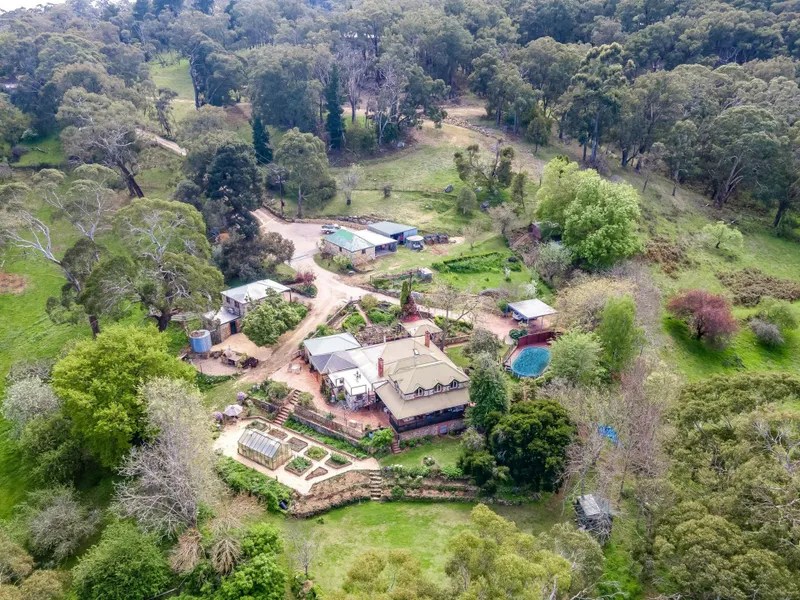
If so motivated and financially capable, one can rent out Glenquarry Farm at 117 Sheok Rd, Crafers West, off Adelaide, for only (!@#!) …. and bask in the imaginary footsteps of the one and only Don Bradman.


Continue reading

2 Comments

Filed under architects & architecture, Australian culture, australian media, commoditification, cultural transmission, economic processes, heritage, landscape wondrous, life stories, performance, travelogue, unusual people

The Malay Pioneers of Cricket in British Ceylon

Michael Roberts

The Thuppahi item on “The Malays of Sri Lanka” ……………………………… (https://thuppahis.com/2022/12/04/the-malays-of-sri-lanka-a-new-book/#more-68598) encourages me to elaborate, albeit inadequately, on the pioneering role of Malay personnel in the development of cricket in British times in the 19th century. On this issue my own work in the 1980s which led to the book People Inbetween (Colombo, Sarvodaya, 1989) can be supplemented by the information compiled by two indomitable cricket historians of yesteryear: SP Foenander and SS ‘Chandra’ Perera.

SP Foenander with Don Bradman in Colombo, 1930


Continue reading

2 Comments

Filed under British colonialism, communal relations, cricket for amity, cricket selections, cultural transmission, ethnicity, heritage, historical interpretation, island economy, landscape wondrous, life stories, patriotism, performance, Sri Lankan cricket, sri lankan society, unusual people, world events & processes

Two Sri Lankans in Victoria’s Cricket XI …Hallelujah!

Michael Roberts

Two players of Sri Lankan parentage are presently playing for Victoria in their Sheffield Shield game. The 31 year-old medium-pace bowler Ruwantha Prasad Kellepotha has joined  Chandrasinghe  in the Victorian Eleven

 Kellepotha is aged 31 years and was born in Kandy but educated at S. Thomas College, Matale. He is primarily a leg-break bowler.

Ashley Philip Chandrasinghe is just about 21 years of age  … birthday coming up on December. He is primarily a left-hand opening batsman, thoug h he can bowl leg-breaks and googlies. His entry into the Victorian squad at sucha young age suggests great expectations in the Victorian cricket community.

Russell Gould’s article below provides several interesting sidelights.

Continue reading

Leave a comment

Filed under accountability, Australian culture, australian media, charitable outreach, cricket for amity, cricket selections, cultural transmission, ethnicity, heritage, landscape wondrous, life stories, patriotism, performance, self-reflexivity, unusual people