Category Archives: cultural transmission

Sri Lankan Dissidents: Their Work Commemorated via Their Archives

Fr Tissa Balasuriya


VISIT THIS SITE: https://dpul.princeton.edu/sae_sri_lanka_dissidents?fbclid=IwAR0r_CuHdd9OwgkvjStbaGXlscmQ7hwkI1uJRt1uETMLIebFoVq1bPr40vY

This collection documents the activity of a generation of Sri Lankan radical activists who, in their different ways, attempted to escape the claims of rival ethno-nationalisms and build alternative political and development projects, drawing on Marxism, Christian socialism, and feminism, among other inspirations.

Fr Yohan Devananda 

Fr Michael Rodrigo & Fr Paul Caspersz

Continue reading

Leave a comment

Filed under atrocities, communal relations, cultural transmission, education, heritage, historical interpretation, human rights, landscape wondrous, legal issues, life stories, performance, plural society, politIcal discourse, power politics, press freedom & censorship, religiosity, self-reflexivity, Sinhala-Tamil Relations, sri lankan society, the imaginary and the real, tolerance, truth as casualty of war, unusual people, welfare & philanthophy, women in ethnic conflcits, working class conditions, world events & processes

An Exploration: Discerning How a Sinhalayā in Kandyan Times BECAME Sinhala

Michael Roberts, reproducing here an old draft that is entitled “Becoming Sinhala” ***

Preamble

The scene is somewhere early in 1984 and the location is the building housing the Social Scientists’ Association on the road to Nawala off Narahenpitiya in Colombo. The late Charlie Abeysekera and the late Newton Gunasinghe are reflecting gloomily on the pogrom of July 1983 that had victimised Tamils living in the capital and elsewhere in the south. Charlie is one of the founder members of MERGE and both are among the few personnel in Colombo who had taken an active stand in public forums against the atrocities that had occurred.* Now, in the gathering dusk, Charlie looks at Newton and asks: “what makes you think that you are a Sinhalese?” Newton immediately grasps the serious import and analytical purpose behind this question. He considers the issue gravely before venturing upon an answer.

Continue reading

2 Comments

Filed under ancient civilisations, authoritarian regimes, British imperialism, caste issues, centre-periphery relations, cultural transmission, disparagement, economic processes, ethnicity, heritage, historical interpretation, island economy, Kandyan kingdom, landscape wondrous, life stories, literary achievements, patriotism, pilgrimages, politIcal discourse, population, Portuguese imperialism, power politics, religiosity, self-reflexivity, sri lankan society, the imaginary and the real, transport and communications, Uncategorized, unusual people, world events & processes

Yanis Varoufakis reads China for The Benefit of an American Simpleton

See … Hear…. YOU TUBE entitled “Don’t Worry So Much About China – Professor Yanis Varoufakis – May 2018 = https://www.youtube.com/watch?v=PBgbYQ5QAM0″

…. 29,015 views ….. Jun 22, 2018

A Note from “Fair Dikum,” 29 April 2021

“Here, the former economic minister of Greece talks about his experiences negotiating with China  and why China is not militaristic, and has never used the Western imperialist approach in dealing with countries in Europe and Africa. This is the narrative absent in the West. He also criticises the Chinese Government,  for good reasons, but not in the way the West does.
Yanis Varoufakis has a more balanced understanding of the world the the entire US and UK put together.”
 “I have  deleted the word “Professor” that is part of the Google description of Yanis Varoufakis.” THAT is part of my general programme. Content not title is WHAT counts.”
ALSO VISIT
https://www.youtube.com/watch?v=nGt82RFfg3U  ….. “Yanis Varoufakis blows the lid on Europe’s hidden agenda,”
1,501,445 views
May 5, 2017
BASIC BIO-DATA
Yanis Varoufakis is a Greek-Australian ….. See https://en.wikipedia.org/wiki/Yanis_Varoufakis

Leave a comment

Filed under accountability, american imperialism, authoritarian regimes, centre-periphery relations, China and Chinese influences, commoditification, cultural transmission, governance, growth pole, historical interpretation, human rights, Indian Ocean politics, land policies, landscape wondrous, life stories, modernity & modernization, politIcal discourse, power politics, power sharing, the imaginary and the real, transport and communications, truth as casualty of war, welfare & philanthophy, working class conditions, world affairs, world events & processes

Covid Spreading in Lanka! Apey Moda Väda!

Dr B. J. C. Perera, in Island, 29 April 2021, with this title “Covid-19: Perhaps final warning for Sri Lankans”

Be warned, our dear countrymen and women. The die is cast…, well and truly. In addition to all our woes in this resplendent isle, as far as COVID-19 goes, things are getting totally out of control. We will have to pay for our sins. Whom do we blame now? Here are some facts and some well-considered thoughts.

Continue reading

Leave a comment

Filed under accountability, coronavirus, cultural transmission, island economy, life stories, patriotism, population, self-reflexivity, sri lankan society, the imaginary and the real, trauma, working class conditions, world events & processes

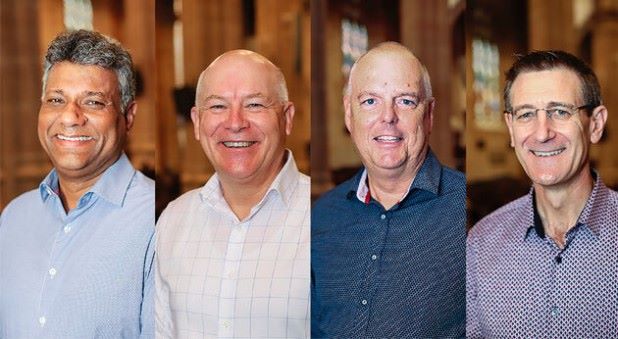
Revd Kanishka Raffel in Line to be Archbishop of Sydney

Item in https://sydneyanglicans.net/news/four-in-line-for-archbishops-election …. referred to Thuppahi by Leon Keegal of Adelaide

When nominations closed on Tuesday, March 23, three bishops and the Dean of Sydney, Kanishka Raffel, had been entered in the nomination process for the post of Archbishop of Sydney.The bishops are Chris Edwards, Peter Hayward and Michael Stead.

Continue reading

1 Comment

Filed under accountability, Australian culture, cultural transmission, governance, heritage, landscape wondrous, life stories, religiosity, self-reflexivity, unusual people

A Tale of Resistance: The Story of the Arrival of the Portuguese

Michael Roberts

An ABSTRACT of an article that appeared in print in Ethnos, 1989, vol 54: 1 & 2,  pp. 69-82…. available online for payment to Taylor & Francis.

This essay decodes a sixteenth century folktale which records the Sinhalese reaction to the arrival of the first Portuguese. Where the historiography has interpreted this tale as benign wonderment in the face of exotica, a piecemeal deconstruction of the allegorical clues in the ‘story is utilised to reveal how the Sinhalese linked the Portuguese with demons and with Vasavarti Mārayā, the arch enemy of the Buddha. In this fashion the Portuguese and the Christian sacrament of communion were represented as dangerous, disordering forces.

Continue reading

6 Comments

Filed under accountability, ancient civilisations, cultural transmission, disparagement, economic processes, ethnicity, hatan kavi, heritage, historical interpretation, Indian Ocean politics, landscape wondrous, life stories, patriotism, politIcal discourse, Portuguese in Indian Ocean, power politics, security, self-reflexivity, sri lankan society, the imaginary and the real, travelogue, unusual people, war reportage, world events & processes

Designing Peradeniya Campus

Thuppahi’s recent presentation of a striking photograph unearthed by Gerald Peiris which depicts world-famous dignitaries on their way to formally declare the University of Peradeniya open for the business of study and play has  attracted pleasure as well as information on the hands that may have been at work on this design. The debate on the choice of site for a new University branch is a separate and complicated issue. The focus here is on the architectural and landscaping designs.  As I indicated, Shirley De Alwis [also spelt D’Alwis?] was the principal architect (and we require bio-data on this man). But, what else can we gather? Here are some preliminary responses. The Editor, Thuppahi

Continue reading

1 Comment

Filed under architects & architecture, art & allure bewitching, British colonialism, centre-periphery relations, cultural transmission, education, education policy, governance, heritage, historical interpretation, landscape wondrous, life stories, performance, photography, politIcal discourse, self-reflexivity, sri lankan society, teaching profession, the imaginary and the real, travelogue, unusual people, welfare & philanthophy, world events & processes

Shirley De Alwis: The Hand behind Peradeniya University’s Designs

KNO Dharmadasa**

Shirley D’Alwis, the first University Architect, died in harness. He was working day and night to complete the job entrusted to him – the preparation of the buildings he had designed and started constructing – for the university to be shifted to its intended site in Peradeniya. After a long and protracted “battle of the sites” fought in the legislature and in the media, the State Council had finally decided in September 1938 that the proposed University of Ceylon was to be a unitary and residential university and that it should be sited in the land to be acquired from the New Peradeniya Estate, a tea and rubber plantation on the lower Hantana range on the banks of Mahaveli Ganga. It was a picturesque site with the tree clad hilly terrain sloping down from the Hantana range to the river bank.

Continue reading

9 Comments

Filed under accountability, ancient civilisations, architects & architecture, art & allure bewitching, British colonialism, centre-periphery relations, cultural transmission, economic processes, education, governance, heritage, historical interpretation, Indian traditions, island economy, landscape wondrous, life stories, modernity & modernization, nationalism, patriotism, performance, photography, politIcal discourse, self-reflexivity, sri lankan society, teaching profession, the imaginary and the real, travelogue, unusual people, world events & processes

Lord Soulbury, Queen Elizabeth and Prince Philip at Peradeniya University

This striking and rare photograph from 20th April 1954 shows Lord Soulbury leading the young Queen Elizabeth and Prince Philip on their way to inaugurate the formal opening of the University of Peradeniya at its “Senate Building” — whereupon Prince Philip displayed acumen in deploying the original words –“more open than usual” when verbally administering the opening. What apt words!

This Pix has been sent to me by Gerald Peiris.

Continue reading

8 Comments

Filed under accountability, British colonialism, centre-periphery relations, constitutional amendments, cultural transmission, democratic measures, education, governance, heritage, historical interpretation, Indian Ocean politics, landscape wondrous, life stories, performance, photography, politIcal discourse, power politics, self-reflexivity, sri lankan society, unusual people, war reportage, world events & processes, World War II and Ceylon

Where Cricketers outshine Politcoes …. In Every Field

Lakshman Kadirgamar

“Ladies and Gentlemen, let me see whether politics and cricket have anything in common. Both are games. Politicians and cricketers are superficially similar, and yet very different. Both groups are wooed by the cruel public who embrace them today and reject them tomorrow.

Continue reading

2 Comments

Filed under accountability, centre-periphery relations, communal relations, conspiracies, cultural transmission, education, ethnicity, governance, heritage, historical interpretation, landscape wondrous, life stories, LTTE, politIcal discourse, power politics, self-reflexivity, Sinhala-Tamil Relations, sri lankan society, Tamil civilians, terrorism, the imaginary and the real, unusual people, vengeance, war crimes, world events & processes