Category Archives: cultural transmission

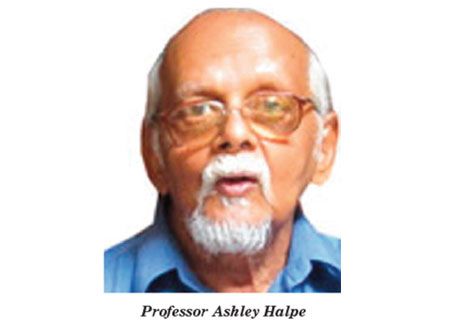
The Power of Poetry: Learning from Ashley Halpé

Aparna Halpé, in The Island, 23 May 2021, where the title reads  “Learning from My Father, Five Years After his Passing”

I was mingling with the audience at a poetry reading in Toronto, where I had been reading some of my new poems, when I was approached by an audience member. He asked me a question that I’ve encountered before in some form or another throughout my entire artistic and professional career… “Excuse me, are you by any chance related to Professor Ashley Halpé?” When I answered that I was his youngest daughter, the gentleman proceeded to tell me this story.

Continue reading

2 Comments

Filed under accountability, coronavirus, cultural transmission, education, heritage, historical interpretation, landscape wondrous, language policies, life stories, literary achievements, patriotism, performance, plural society, politIcal discourse, riots and pogroms, self-reflexivity, Sinhala-Tamil Relations, sri lankan society, tamil refugees, trauma, travelogue, unusual people, world events & processes

Deadly Covid Abyss looms in Si Lanka: Two Grounded Essays by Peiris versus Peiris

The recent article presented by medical specialists Malik Peiris and Kamini Mendis  has led to informed ethnographic set of comments by Gerald Peiris of Kandy**.…a nd drawn a Response from Dr Malik Peiris that is exrtemely disconcerting. The situation in Sri Lanka is DIRE …  and going to plunge to further depths.


Continue reading

Leave a comment

Filed under accountability, coronavirus, cultural transmission, economic processes, life stories, medical puzzles, meditations, security, self-reflexivity, sri lankan society, the imaginary and the real, tourism, trauma, unusual people, world events & processes

Percy Colin-Thomé and the Composition of the Book People Inbetween

Michael Roberts

Percy Colin-Thomé was born in Galle and his initial learning roots were at Richmond College. His genealogical roots derived from the Swiss personnel of the de Meuron Regiment in the service of the VOC in the 1790s who stayed on in Sri Lanka in British times when the colonial lands on the coast of Ceilao were taken over by the expanding imperial power known as Britain. These lineages became one strand in the mixed/race “Burgher” ethnic group in the island once the whole arena had been unified as colony by Britain between 1815 and 1818. Largely urban in background and increasingly English-speaking at home, these Burgher people became an influential segment of the local “middle-class” fulfilling intermediary roles in the British colonial service.[1]

Continue reading

9 Comments

Filed under architects & architecture, art & allure bewitching, British colonialism, centre-periphery relations, commoditification, communal relations, cultural transmission, economic processes, education, ethnicity, heritage, historical interpretation, island economy, landscape wondrous, life stories, modernity & modernization, patriotism, performance, photography, politIcal discourse, religiosity, self-reflexivity, sri lankan society, travelogue, Uncategorized, unusual people, welfare & philanthophy, world events & processes

The Burgher Elite and the British Raj

Michael Roberts 

   George F Nell, Louis Nell, C. A. Lorenz,  James Alwis and Charles Ferdinands moving anti-clockwise

Preamble:[1] In locating the Burghers in ‘social space’ the book People Inbetween deploys statistical detail, text and quotation to place them within the Ceylonese middle class of British Ceylon.[2] The socio-political clout which accrued to the Burgher segment of the middle class is further illustrated by indicating the complex ways in which they fulfilled intermediary roles between the mass of the people and the British rulers and/or between powerful segments of the majority community, the Sinhalese. The extract printed below is a section of Chapter 6 [in People Inbetween] devoted to this purpose and is reproduced without citations.

Continue reading

3 Comments

Filed under accountability, British colonialism, British imperialism, centre-periphery relations, commoditification, cultural transmission, economic processes, education, ethnicity, heritage, historical interpretation, island economy, life stories, literary achievements, nationalism, patriotism, politIcal discourse, power politics, self-reflexivity, sri lankan society, transport and communications, unusual people, world events & processes

Appreciating Sunil De Silva: Urbane Master of Many Trades

Hugh Karunanayake, in an Obituary Appreciation in THE CEYLANKAN, Vol XXIV/2, May 2021 **

My acquaintance with Sunil De Silva was mainly after he migrated to Australia in the early 1990s when I encountered him at a Sri Lanka Association dinner which he attended in formal attire replete with a curved pipe, (ala Sherlock Holmes) firmly placed in his mouth. We immediately acknowledged each other, he  recognizing me as a senior student from his old school and as a fellow denizen of a small town in Colombo called Pamankade.

Continue reading

2 Comments

Filed under accountability, Australian culture, cultural transmission, education, heritage, life stories, patriotism, performance, politIcal discourse, self-reflexivity, sri lankan society, travelogue, unusual people, world events & processes

In Appreciation of Ashley Halpe: A Man for All Seasons

Tissa Jayatilaka, in The Island, 19 May 2021, where the ttitle runs: “Remembering Professor Ashley Halpe”

As we mark the fifth anniversary of Professor Halpe’s passing, we remember him with gratitude and continue to celebrate his life and work. He was a teacher for over 50 years both at home and overseas. He also enriched us by his research, poetry, paintings and translations; as well as by his labours as a chorister, actor, director of plays and administrator. In addition, he was a guide, philosopher and friend to generations of students, many of whom have distinguished themselves in diverse fields of activity.

Continue reading

3 Comments

Filed under accountability, art & allure bewitching, cultural transmission, education, heritage, life stories, literary achievements, performance, self-reflexivity, sri lankan society, tolerance, unusual people

Deaths. Turmoil. Flights from India’s Covid …. and Lisa’s Mental Anguish

Lisa Sthalekhar, in The Australian, 18 April 2021, where the ttile runs thus: ‘I weep for India, and those left behind’

The past three weeks have changed me. Never again will I be the same person. I will never see India in the same light, once a place of excitement, vibrancy and opportunity. Its people are hurting at depths we will never understand. In my heart I may never forgive myself for what I’ve done.

Continue reading

2 Comments

Filed under accountability, Australian culture, australian media, centre-periphery relations, charitable outreach, coronavirus, cultural transmission, ethnicity, heritage, historical interpretation, Indian traditions, life stories, self-reflexivity, the imaginary and the real, transport and communications, trauma, travelogue, unusual people, world events & processes

Gilbert Roberts: Barbadian-Lankan Virtuoso … and A Johnian

KKS Perera, in The Island, 27 February 2020, where the title reads G C Roberts, Barbadian 12th man in Windies became a Sri Lankan”

Continuing on ‘Nostalgic Memories of Windies’, I thank Lalith Fernando, “…my own native citizen unknown to me,” [quoting from his own letter…] for the correction on the day and date of 1967s 3-day match. Let me quote an extract from the last paragraph of my letter which appeared in these columns on Feb 4, 2016, under the popular series, four years ago on, “Kollo/Kello in Girl/Boys’ schools.”

Continue reading

3 Comments

Filed under art & allure bewitching, cricket for amity, cultural transmission, economic processes, education, ethnicity, heritage, historical interpretation, landscape wondrous, life stories, literary achievements, patriotism, performance, self-reflexivity, sri lankan society, teaching profession, travelogue, unusual people, world events & processes

Felix Dias Abeyesinghe: A Mentor without Peer and a Man for All Seasons

Dushy Perera 

“With malice towards none and charity to all” Abe Lincoln’s famous words from his inaugral address come to my mind when I reflect on the life and times of Uncle Felix, who passed away in Australia a few days before his 88th birthday which fell on 16th May. Hence, it was fitting that a Service of Thanksgiving was held at St. John’s Church, Nugegoda on 16th May, where Uncle Felix devotedly worshipped every Sunday.

Continue reading

1 Comment

Filed under cultural transmission, education, heritage, historical interpretation, life stories, Royal College, S. Thomas College, self-reflexivity, sri lankan society, unusual people, welfare & philanthophy

An US Combat Cameraman’s Film Journal of Ceylon in 1944-45

Ettoro Porecca: “A Soldier’s Film Journal of Ceylon (Sri Lanka) 1944-1945″ (HD) ……..Jun 17, 2016

  https://www.youtube.com/watch?v=6t9WPtqFciM .... Film and Narration by Ettore Porreca (1920-2013) 6,721 views

Ettore Porreca was a United States Army combat cameraman in World War II. In 1944 he was attached to the British army, and he was sent to Ceylon (now Sri Lanka) for a few months in the winter of 1944-1945. ….

Ettore aged 92 …. https://buffalonews.com/news/local/ettore-c-porreca-92-noted-wedding-photographer/article_37a79fbd-cc2e-56b0-87ad-deb7948867f3.html

Continue reading

Leave a comment

Filed under art & allure bewitching, British colonialism, charitable outreach, cultural transmission, ethnicity, heritage, historical interpretation, Indian Ocean politics, island economy, landscape wondrous, life stories, modernity & modernization, photography, politIcal discourse, slanted reportage, sri lankan society, the imaginary and the real, transport and communications, travelogue, unusual people, war reportage, world events & processes