Category Archives: communal relations

My Decision to leave Ceylon in 1981

Sachi Sri Kantha      

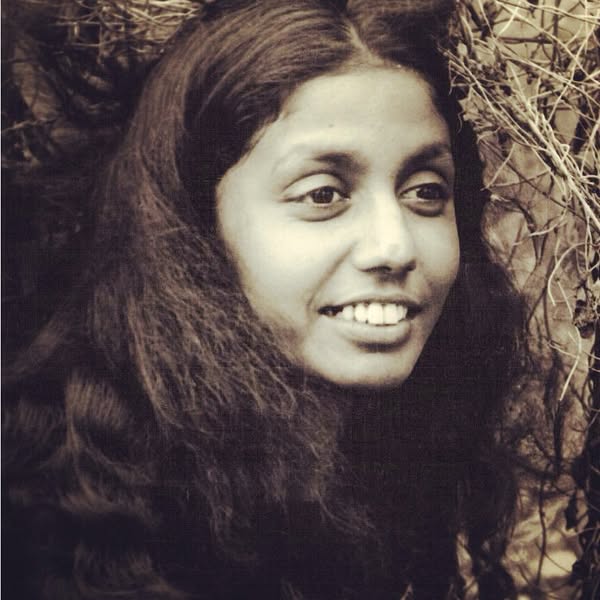
Sachi examining a winged bean pod in 1981

Prelude

Willingly, I opt to use the ‘Ceylon’ word, because I was born in the blessed island Ceylon in May 1953. The place of my birth was Chilaw, solely for the reason it was the then work location of my father Sachithanantham, then employed as a clerk in the hospital services of the Department of Health. He was 30, but my mother was only 17. My parents are from Point Pedro, and it was an arranged marriage among the kin in Point Pedro’s adjacent regions.

From 1961 to 1971, I had primary and secondly schooling at the Colombo Hindu College (Bambalapitiya, Ratmalana) and Aquinas University College. I entered the University of Sri Lanka (Colombo Campus) in January 1972, at the age of 18 years and 8 months. This entry was delayed by months, due to the JVP insurrection in April 1971. Ceylon was re-named as Sri Lanka in May 1972.

Continue reading

4 Comments

Filed under accountability, atrocities, centre-periphery relations, communal relations, cultural transmission, discrimination, economic processes, education, ethnicity, heritage, historical interpretation, language policies, life stories, nationalism, outmigration, politIcal discourse, racism, riots and pogroms, self-reflexivity, Sinhala-Tamil Relations, sri lankan society, Tamil civilians, Tamil migration, teaching profession, travelogue, unusual people, world events & processes

Facing A Tsunami & A Civil War

Dennis  M. McGilvray, in an  article  pubd in 2006 in the India Review, vol. 5, nos. 3–4, July/October, 2006, pp. 372–393 Copyright © Taylor & Francis Group, LLC  …. ISSN 1473-6489 print; 1557-3036 online DOI:10.1080/14736480600939132 … one bearing this title:  “Tsunami and Civil War in Sri Lanka: An Anthropologist Confronts the Real World

Recent calls for a new “public anthropology” to promote greater visibility for ethnographic research in the eyes of the press and the general public, and to bolster the courage of anthropologists to address urgent issues of the day, are laudable although probably also too hopeful. Yet, while public anthropology could certainly be more salient in American life, it already exists in parts of the world such as Sri Lanka where social change, ethnic conflict, and natural catastrophe have unavoidably altered the local context of ethnographic fieldwork. Much of the anthropology of Sri Lanka in the last three decades would have to count as “public” scholarship, because it has been forced to address the contemporary realities of labor migration, religious politics, the global economy, and the rise of violent ethno-nationalist movements. As a long-term observer of the Tamil-speaking Hindu and Muslim communities in Sri Lanka’s eastern coastal region, I have always been attracted to the classic anthropological issues of caste, popular religion, and matrilineal kinship. However, in the wake of the civil wars for Tamil Eelam and the 2004 tsunami disaster, I have been forced to confront (somewhat uneasily) a fundamentally altered field- work situation. This gives my current work a stronger flavor of public anthropology, while providing an opportunity for me to trace older matrilocal family patterns and Hindu-Muslim religious traditions under radically changed conditions.

 BEACHFRONT HOME DESTROYED BY TSUNAMI, MARUTHAMUNAI. AUGUST 2005

Continue reading

Leave a comment

Filed under accountability, atrocities, authoritarian regimes, centre-periphery relations, charitable outreach, communal relations, counter-insurgency, demography, disaster relief team, economic processes, Eelam, ethnicity, governance, historical interpretation, human rights, insurrections, island economy, landscape wondrous, life stories, LTTE, military strategy, Muslims in Lanka, politIcal discourse, racist thinking, rehabilitation, religiosity, security, self-reflexivity, Sinhala-Tamil Relations, sri lankan society, Tamil civilians, the imaginary and the real, the tsunami 2004, transport and communications, truth as casualty of war, voluntary workers, war crimes, war reportage, welfare & philanthophy, world events & processes

UNHRO Calls for Investigation of Past Killings in Lanka


Tamil and Sinhala versions attached

Sri Lanka has opportunity to break from past – Türk

GENEVA (13 August 2025) – A report published today by the UN Human Rights Office calls on Sri Lanka’s Government to seize the historic opportunity to break with entrenched impunity, implement transformative reforms, and deliver long-overdue justice and accountability for serious violations and abuses committed in the past, including international crimes.

Continue reading

1 Comment

Filed under accountability, atrocities, authoritarian regimes, centre-periphery relations, communal relations, demography, Eelam, ethnicity, governance, historical interpretation, landscape wondrous, life stories, LTTE, migrant experiences, military expenditure, military strategy, parliamentary elections, patriotism, photography, political demonstrations, politIcal discourse, population, power politics, racism, Rajapaksa regime, security, self-reflexivity, Sinhala-Tamil Relations, social justice, sri lankan society, suicide bombing, Tamil civilians, Tamil migration, tamil refugees, Tamil Tiger fighters, the imaginary and the real, trauma, truth as casualty of war, vengeance, violence of language, war crimes, world events & processes, zealotry

Neelan Tiruchelvam: An Appreciation of His Mediatory Politics

Kagusthan Ariaratnam in Groundviews, 8 August 2025, where the title  reads “Neelan Unsilenced …” while highlights here have been added by The Editor, Thuppahi

Photo courtesy of Pitasanna Shanmugathas

NEELAN: UNSILENCED is a compelling and vital documentary that successfully situates the life of Dr. Neelan Tiruchelvam within the turbulent history of the Sri Lankan conflict. Its greatest achievement is providing a nuanced entry point into the war by focusing on the non-violent, intellectual and pluralistic dimensions of Tamil resistance – a perspective often eclipsed by the narrative of armed struggle. By foregrounding Neelan’s journey, the film illuminates a leader who dedicated his life to constitutional reform and reconciliation.

   Photo courtesy of Pitasanna Shanmugathas

Continue reading

1 Comment

Filed under accountability, anti-racism, centre-periphery relations, communal relations, democratic measures, economic processes, education, Eelam, electoral structures, ethnicity, governance, historical interpretation, human rights, Indian Ocean politics, landscape wondrous, language policies, Left politics, legal issues, life stories, modernity & modernization, nationalism, NGOs, patriotism, performance, politIcal discourse, power politics, power sharing, reconciliation, self-reflexivity, Sinhala-Tamil Relations, social justice, sri lankan society, unusual people

About Sharika Thiranagama ……. Today

Rohan Gunaratna  in  FACEBOOK, August 2025

Rohan Gunaratna

nopordtesS43ag881f170i0ihg99ic5ay0ic8luml74u9m2l8 61t4Mct4a0 ·

Congratulations to Sri Lankan-born American Anthropologist, Prof. Sharika Thiranagama, on winning the Davidson Prize at Cambridge University, where she was appointed a Scholar of St Johns.

Winner of Stanford University’s “Lifetime award for Academic achievement in Archaeology and Anthropology”, Sharika wrote “In My Mother’s House: Civil War in Sri Lanka” published by University of Pennsylvania Press in 2011.

Sharika

…Rajini Continue reading

2 Comments

Filed under accountability, atrocities, authoritarian regimes, communal relations, Eelam, ethnicity, governance, historical interpretation, human rights, life stories, literary achievements, performance, politIcal discourse, refugees, self-reflexivity, Sinhala-Tamil Relations, sri lankan society, Tamil migration, tamil refugees, teaching profession, trauma, unusual people, war crimes, world events & processes, zealotry

In Memoriam: Vijaya Kumaratunga

DBS Jeyaraj in 2022 at https://dbsjeyaraj.com/dbsj/?p=67620 where the title reads “Vijaya Kumaratunga: Charismatic Actor-Politician May Have Changed Nation’s Destiny” …… Posted by Administrator on 21 February 2022, 1:11 am

The political landscape of Sri Lanka seems gloomy and desolate. Most of the actors who strut about the political stage posing as visionaries and leaders are in actuality empty vessels devoid of substance. Proverbial wisdom tells us that empty vessels make most sound. This is most apparent in the cacophony of voices currently prevalent in the polity. In the words of William Butler Yeats “ The best lack all conviction, while the worst Are full of passionate intensity.” The positive dream of Sri Lanka evolving into an inclusive, plural nation is slowly turning into a numerical majoritarian hegemonic nightmare.

 Vijaya Kumaratunga in Jaffna

Continue reading

1 Comment

Filed under accountability, anti-racism, art & allure bewitching, atrocities, authoritarian regimes, centre-periphery relations, chauvinism, communal relations, Eelam, ethnicity, historical interpretation, insurrections, JVP, language policies, Left politics, life stories, nationalism, patriotism, performance, political demonstrations, politIcal discourse, self-reflexivity, Sinhala-Tamil Relations, sri lankan society, unusual people, vengeance, zealotry

For Lankan Researchers: An Oral History Workshop


Image description

Image description

This interactive workshop, led by experienced oral historian Gaya Fernando, will introduce participants to the principles, practices, and power of oral history. Tailored for researchers, journalists, documentary producers, and writers, it will explore how personal narratives and community voices can enrich social and political research.


The formal session concludes at 12:30 PM, but participants who are interested are welcome to stay on for an informal discussion with Gaya until 3:30 PM.

15th August 2025


9.30 AM onwards


Leave a comment

Filed under caste issues, centre-periphery relations, communal relations, constitutional amendments, cultural transmission, democratic measures, demography, doctoring evidence, economic processes, education, ethnicity, female empowerment, foreign policy, fundamentalism, gender norms, governance, historical interpretation, human rights, Indian Ocean politics, land policies, language policies, law of armed conflict, Left politics, lettering--history, life stories, literary achievements, modernity & modernization, nationalism, politIcal discourse, power politics, religiosity, self-reflexivity, sri lankan society

In Appreciation of James T. Rutnam

Sachi Sri Kantha, whose preferred title is James T Rutnam (1905-1988): Noted Bibliophile and a Valued Mentor” with the highlighting in colour being impositions from The Editor Thuppahi

Introduction

My destiny to meet and interact with James T Rutnam came in the aftermath of the August 1977 anti-Tamil riots. Previously, I had written a little about the anti-Tamil riots that engulfed the island then, and my initial attempts to make a grade as a writer in English. [Please check this link. https://sangam.org/s-p-amarasingam-1977-anti-tamil-pogrom/].

I wrote to Mr. S.P. Amarasingam, the editor of the Tribune (Colombo). At that time, I was unaware that James Rutnam was an influential contributor to the Tribune, since its inception in 1954.

Continue reading

1 Comment

Filed under accountability, anti-racism, art & allure bewitching, authoritarian regimes, centre-periphery relations, citizen journalism, communal relations, cultural transmission, economic processes, education, electoral structures, ethnicity, historical interpretation, language policies, Left politics, legal issues, life stories, nationalism, politIcal discourse, power politics, racism, riots and pogroms, security, self-reflexivity, Sinhala-Tamil Relations, social justice, sri lankan society, tamil refugees, trauma, travelogue, unusual people

FIRE AND STORM analyses Sinhala-Tamil Confrontations Over the Decades

Neil Jayasekera introduces FIRE AND STORM by Michael Roberts … printed by Vijitha Yapa Publications in 2010 …. ISBN 978955-665-14-8  ….presenting 28 articles & an Amalgamated Bibliography …. Posted by  Feb 28, 2023 

Unique JewelsAnonymous Reviewer in Sunday Times, 21 July 2013 where the title runs Important contribution towards a dialogue on Lankan polity. Book facts”

When Michael Roberts left Peradeniya in the late seventies, he was part of an exodus of intellectuals from the University of Ceylon, Peradeniya, arguably one of the best universities at that time. The exodus of academics at that time was compelled by the economic difficulties faced by university dons. It was the second wave of such emigration that diminished the intellectual life of the university and country.

Unique Jewels

Pirapāharan and leading Tiger Commanders at the Indian sponsored training camp at Sirimalai in 1984

Continue reading

Leave a comment

Filed under accountability, atrocities, authoritarian regimes, centre-periphery relations, communal relations, counter-insurgency, disparagement, Eelam, electoral structures, ethnicity, governance, historical interpretation, Indian Ocean politics, insurrections, island economy, language policies, Left politics, legal issues, liberation tigers of tamil eelam, life stories, LTTE, martyrdom, military strategy, modernity & modernization, nationalism, parliamentary elections, patriotism, photography, pilgrimages, politIcal discourse, power politics, prabhakaran, propaganda, racist thinking, Rajapaksa regime, Rajiv Gandhi, religiosity, security, self-reflexivity, Sinhala-Tamil Relations, slanted reportage, social justice, sri lankan society, suicide bombing, Tamil civilians, Tamil migration, tamil refugees, Tamil Tiger fighters, terrorism, trauma, truth as casualty of war, unusual people, vengeance, violence of language, war crimes, war reportage, women in ethnic conflcits, zealotry

James T. Rutnam (1905-1988): A Radical Activist in Ceylon Politics

Sachi Sri Kantha, ... with highlighting imposed by The Editor, Thuppahi

 Introduction: Previously, I had studied the electoral performance of three prominent Sri Lankan Tamil politicians, namely Ganapathipillai Gangesar Ponnambalam (1901-1977), Appapillai Amirthalingam (1927-1989) and Murugesu Sivasithamparam (1024-2002). All three were electorally successful in most of their attempts, though suffering defeats intermittently.

E.W.-Abeyegunasekera-Rutnams-formidable-rival-in-1931-and-1936.jpg


Continue reading

Leave a comment

Filed under accountability, British colonialism, communal relations, demography, education, electoral structures, ethnicity, historical interpretation, language policies, Left politics, life stories, patriotism, performance, politIcal discourse, self-reflexivity, Sinhala-Tamil Relations, sri lankan society, Tamil civilians, Tamil migration, unusual people