
Author Archives: thuppahi

About thuppahi

Sri Lankan and Australian nationality; student of Sri Lankan society and politics; sociology of cricket;

Emily Howie’s digest of recent Australian action on asylum seekers

Emily Howie in email circular

BOB CARRForeign Minister announces 4 point plan to combat people smuggling in Sri Lanka
Statement by Australia’s Foreign Minister, Bob Carr
17 December 2012
Australia’s Foreign Minister announces a four point plan to combat people smuggling, including intelligence sharing, naval cooperation, public awareness and aid, which are designed to reduce people smuggling by “destroying the people smuggling business model.” “There is a message from these talks to people in Sri Lanka – by getting on that boat you risk your life, you’ll lose your money and you will be sent back home,” Senator Carr said. The plan includes provision of additional surveillance and electronic equipment to Sri Lanka, a joint training program to develop Sri Lanka’s intelligence expertise, $700,000 for advertising campaigns warning against travelling by boat, resources and training to expand Sri Lanka’s on water disruption activities and an aid program to ‘reduce demand’ for people smugglers’ business. Continue reading
Leave a comment

Filed under accountability, asylum-seekers, australian media, immigration, indian armed forces, world events & processes

The National Archives of Sri Lanka

Haris de Silva, in The Island, 18 December 2012**

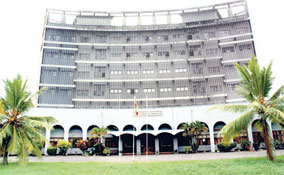
ARCHIVESThe New Wing of the National Archives, constructed adjacent to its present building, down Philip Gunawardena Mawata, Colombo 7, will be declared open today, the 18th December, 2012, at 1000 hrs, by President Mahinda Rajapaksa.. It will provide some badly needed extra space for some of its activities.

What are state archives? Records created or received by any state institution during the course of conducting its legitimate business, and held by it as evidence of its activities, when transferred to the National Archives, become state archives.  Such records/archives provide legal validity at judicial inquiries and provide primary historical evidence for the country’s history. However, in respect of legal validity, it is a requirement that the records should have had unbroken custody in the office which created/received them. Such records when transferred to the National Archives, in terms of legal requirements, continue to have that unbroken legal custody, as they are considered to be  maintained in the National Archives as if they were in the offices of origin. However, if, by chance, continuous custody of such records had not been maintained in the offices of origin they will not have the required legal validity, although their historical importance will remain. Continue reading

Leave a comment

Filed under cultural transmission, heritage, historical interpretation, sri lankan society

Aussies point fingers at Lankan criminals in people smuggling

Cameron Stewart and Paul Maley, in The Australian, 1 December 2012, with title reading: “Criminals moving in on asylum rackets” **

FOURFOLD increase in people-smuggler networks in Sri Lanka is driving the surge of boats that threatens to overwhelm Australia’s border protection regime.  Australian authorities have identified about 12 major people-smugglers operating in Sri Lanka – up from three a year ago. The expansion has been driven by criminal opportunists seeking to cash in on the lucrative trade by spreading false promises of jobs in Australia. However, the Gillard government believes it is now seeing early signs that its controversial policy of returning more than 700 arrivals to their homeland is making Sri Lankans, especially Sinhalese, reluctant to purchase a boat passage to Australia. Continue reading

Leave a comment

Filed under accountability, asylum-seekers, authoritarian regimes, discrimination, ethnicity, life stories, politIcal discourse, population, Rajapaksa regime, sri lankan society, tamil refugees, world events & processes

Asylum Seeker Ramifications: A ‘Missing’ Boat, A Soothsayer and Retribution

Rapti Siriwardane-de Zoysa, in Email Memo to Michael Roberts, 13 December 2012 **

Yesterday an ex-fisher/diver from Mullaitivu shared a curious tale of a recent act of ‘vengeance’ in a small kovil [at XYZ]…. 12 family members from the same area (XYZ district) had purchased a multi-day boat, pooled money from others who expressed interest in going [so that]  there were about 55 altogether. The engine had broken down midway (some 13 days after they set sail). The 12 family members were supposed to have locked themselves up in the cabin in order to ration the food supplies. The rest had been locked out. Rice gruel had been passed through the cabin once a day through a window, while the other passengers who were locked out felt that the 12 members were keeping themselves fed to their heart’s content. Among the 12 was a close family friend (the relative of the informant I was speaking with) who was among the ‘chosen. He had come out for a cigarette. Out of anger, the rest, who were vegetating outside, had lynched him; and then thrown him overboard. They had been like this for about a month.  Continue reading

3 Comments

Filed under accountability, asylum-seekers, atrocities, cultural transmission, life stories, people smugglers, sri lankan society, world affairs

Asylum Seekers from Lanka: No Solutions in Sight

Galle Literary Festival 2008 Michael Roberts

Beset by an upsurge of asylum-seekers arriving by boat from Sri Lanka, Australian government and media personnel continue to rely on the tired shibboleths of the past. Three shortcomings hinder their evaluations.  Let me stress three points briefly.

  1. The increase in migration is largely due to the snowballing effect of chain migration with Sri Lankan kinsfolk and friends who have migrated to the Western countries over the last forty years assisting aspirant relatives and friends to find the monies for the journeys (legal or illegal); while intra-familial dynamics encourage poorer relatives in Lanka to try and emulate their cousins in the West by getting across to the new Eldorado.[1]
  2. Contrary to Australian perceptions the journeys by boats are not inevitable death traps. If one excludes the instances of boats from Indonesia that have come a cropper, I know of only two or three from Sri Lanka that have run into real difficulties (as distinct from manufactured sinking within sight of big ships). I challenge people to provide contrary evidence in circumstances where the “boat people” have satellite phone connections.
  3. With reference to Tamil Sri Lankans the Australian evaluations are directed by the concept of “persecution” – with the alternative being “economic migration.” This is simpleton. As such, it is misleading. “Persecution” is a gross tool and does not allow for feelings that are short of terror. There is, for one, such a thing as “harassment.” There is also the possibility of “alienation” among the Tamils arising from a sense of marginalization (genuine, exaggerated or imagined). Continue reading

1 Comment

Filed under asylum-seekers, Australian culture, economic processes, historical interpretation, life stories, LTTE, politIcal discourse, Rajapaksa regime, rehabilitation, Sinhala-Tamil Relations, sri lankan society, Tamil civilians, Tamil migration, tamil refugees, truth as casualty of war, world events & processes

Justice Weeramantry clarifies the Rule of Law as he expresses Concern about the Undermining of the Judiciary’s Independence in Lanka

WeeramantryC. G. Weeramantry in what is a “Message to the Sri Lankan Nation”

As the senior-most retired judge in the country and as one who has been associated with the law both locally and internationally for 65 years I feel compelled to make some observations in regard to the current crisis facing the Sri Lankan Judiciary. It is a judiciary which has been a great pride to the country and has been highly esteemed both domestically and internationally.

The Independence of the Judiciary: An independent judiciary is vital to democracy, for without it citizens lack the basic protections, without which a democracy cannot exist. The concept of judicial independence is not a one way street depending on the judges alone. It needs not only strictly independent judges but also a commitment by the state to respect and protect the independence and security of tenure of judges. The independence of the judiciary and their security of tenure are hard won rights secured after centuries of struggle against authoritarian regimes. Such hard won rights need considered attention and protection by citizens and governments alike. An independent judiciary is the last bastion of protection of the rights and liberties and the equality and freedom of every citizen. Continue reading

Leave a comment

Filed under accountability, historical interpretation, legal issues, power politics, Rajapaksa regime, sri lankan society, terrorism, world affairs

Different Photographs in The Weekend Australian: Implications

Michael Roberts

I: A striking aspect of The Weekend Australian’s coverage of Sri Lanka and its asylum-seeker issue on 15/16 December 2012 is its deployment of two different photographs in its online and print versions. The online item by Bandula Jayasekara had this image from AFP: Tamil-tigers

The caption runs thus: “This 2009 photograph is said to be of troops walking among debris inside a Sri Lanka war zone during the conflict between government forces and the Tamil Tigers. Source: AFP.” Note that this image could easily be misread to indicate evidence of heavy shelling. The photograph is from a Ministry of Defence source and was part of their web imagery. The photo would have been taken on or around the 17/18th May 2009 when the Last redoubt of the LTTE had been overrun. What we see are the burning hulks of LTTE equipment which the Tigers, in the standard practice of armies worldwide, blew up as their backs were to the wall. This act of demolition was reported by news media in mid-May as it occurred and confirmed (to me anyway) by the Indian reporters Kanchan Prasad and Muralidhar Reddy who were at the rear of the battle lines and who entered the coastal strip every day from 14th to 18th May inclusively. Continue reading

Leave a comment

Filed under accountability, Australian culture, australian media, cultural transmission, historical interpretation, LTTE, politIcal discourse, power politics, Rajapaksa regime, reconciliation, Sinhala-Tamil Relations, sri lankan society, Tamil civilians, tamil refugees, truth as casualty of war, world events & processes

Tamil Tigers likely to dominate Sri Lankan asylum-seekers

Bandula Jayasekara, in The Weekend Australian, 15/16 December 2012 … see Editorial C0mment at end

THERE is a misconception among some Australians regarding the issue of Sri Lankan asylum-seekers because of a misinformation campaign carried out by parties with vested interests. I am given to understand that some Australians sympathise with the asylum-seekers without having a clear picture of the situation. However, their sympathy would be in the interest of only the minority of Liberation Tigers of Tamil Eelam supporters, who have a long-term agenda in Australia and other Western countries.There are many concerns about remnants of the LTTE (the terrorist group that tried to divide Sri Lanka through a violent struggle) still engaged in human smuggling. For a long time, these groups have operated beyond the shores of Sri Lanka, carrying out aggressive fundraising campaigns and engaged in human smuggling and transnational crimes. Continue reading

2 Comments

Filed under accountability, asylum-seekers, australian media, historical interpretation, immigration, Indian Ocean politics, LTTE, nationalism, people smugglers, power politics, prabhakaran, propaganda, reconciliation, Sinhala-Tamil Relations, sri lankan society, tamil refugees, Tamil Tiger fighters, truth as casualty of war, world events & processes

Longitudinal UNICEF Survey of Nutrition in the IDP Camps in 2009

ppt for rob

Michael Roberts

In the course of presenting a seminar on the topic “Humanitarian Work obscured by the Fires of Propaganda War: The IDP Camps, 2009-12” at the premises of ICES on 7th November 2012, I was met by a hostile challenge from Mirak Raheem of the Centre for Policy Alternatives  who raised three points of criticism – one based on empirical material that I had presented about a few IDPs who were bussed in from Nandikadal and the Vanni Pocket – a four-five hour journey I believe – being dead on arrival. Information from the UTHR report , from such individuals as Narendran Rajasingham (who met escaped IDPs in March-April) and the doctors at Manik Farm (e.g. Safras, Woodyard) reveal that there were a few IDPs who could best be described as “walking dead” (and some kin reported the trauma of leaving grandparents behind because they were not fit to move).

CHA photo 2 5828587480_f139405626_s  phoca_thumb_l_Children waiting to get kanchchi at TRO center.. phoca_thumb_l_vanni12 Despite the evocative photographs presented re the abnormal conditions encountered for several months by the Tamil populace corralled together in a revolutionary act of blackmail by the LTTE, Raheem had clearly NOT comprehended the abnormal circumstances of that moment in April-May 2009 and the looming possibility of a humanitarian disaster among the large clusters of IDPs assembled (some 250,000 all told) in the Vavuniya locality in numerous temporary schools-used-as-camps as well as the Mänik Farm Zones. This outstanding failure was – and remains — a measure of the ideological blindness located in advocacy circles in Colombo. It marks an obduracy that is founded upon (1) enclosure within air-conditioned cocoons in Colombo; and (2) a visceral hostility to the Rajapaksa regime that cannot allow for any good emanating from a range of official (and unofficial)  agencies. One can even envision the advocacy circles in Colombo as a cluster that has created its very own siege bunker in the morally righteous cloister way up in the clouds. Continue reading

7 Comments

Filed under accountability, citizen journalism, disaster relief team, IDP camps, life stories, LTTE, NGOs, politIcal discourse, propaganda, Rajapaksa regime, reconciliation, Sinhala-Tamil Relations, sri lankan society, welfare & philanthophy, world affairs

The Royal We: Sinhala Identity in the Dynastic State

Alan Strathern, reviewing Sinhala Consciousness in the Kandyan Period 1590s to 1815.By MICHAEL ROBERTS, Vijitha Yapa Publications, Sri Lanka, 2004. Pp.xx, 274.**

kANDYAN FIGHTERMichael Roberts’ writings have sometimes given the impression of a man who will write at the drop of a hat and at great speed: the subjects have been many and various; the approach as openly adversarial as many of the relationships he takes as his subject; the arguments occasionally advanced by death-defying conceptual leaps or obscure symbolic readings; the prose style quirky or impatient with the more conventional norms of academic prose. The latter is evident even in the present work, in fact the culmination of decades of reflection, where he refers openly to his own intellectual progress, to arguments with colleagues, even to his own ethnic category – Tuppahiyek, or ‘mongrel’ – and sees no cause for shame in routinely citing ‘personal communication’ or telephone conversations in is footnotes. Such considerations might induce the superficial reader to underestimate the importance of the arguments presented in this new monograph. In fact it deserves to be widely read by all those interested in the vigorous debates about ethnic sentiment, nationalism and the murky passage from one to the other. Continue reading

1 Comment

Filed under historical interpretation, military strategy, patriotism, sri lankan society, unusual people