
News Item at Financial Review, November 2026
…. https://www.afr.com/companies/financial-services/macquarie -s-departing-ceo-warns-comfort-risks-australia-s-future-20261106-p61bi3
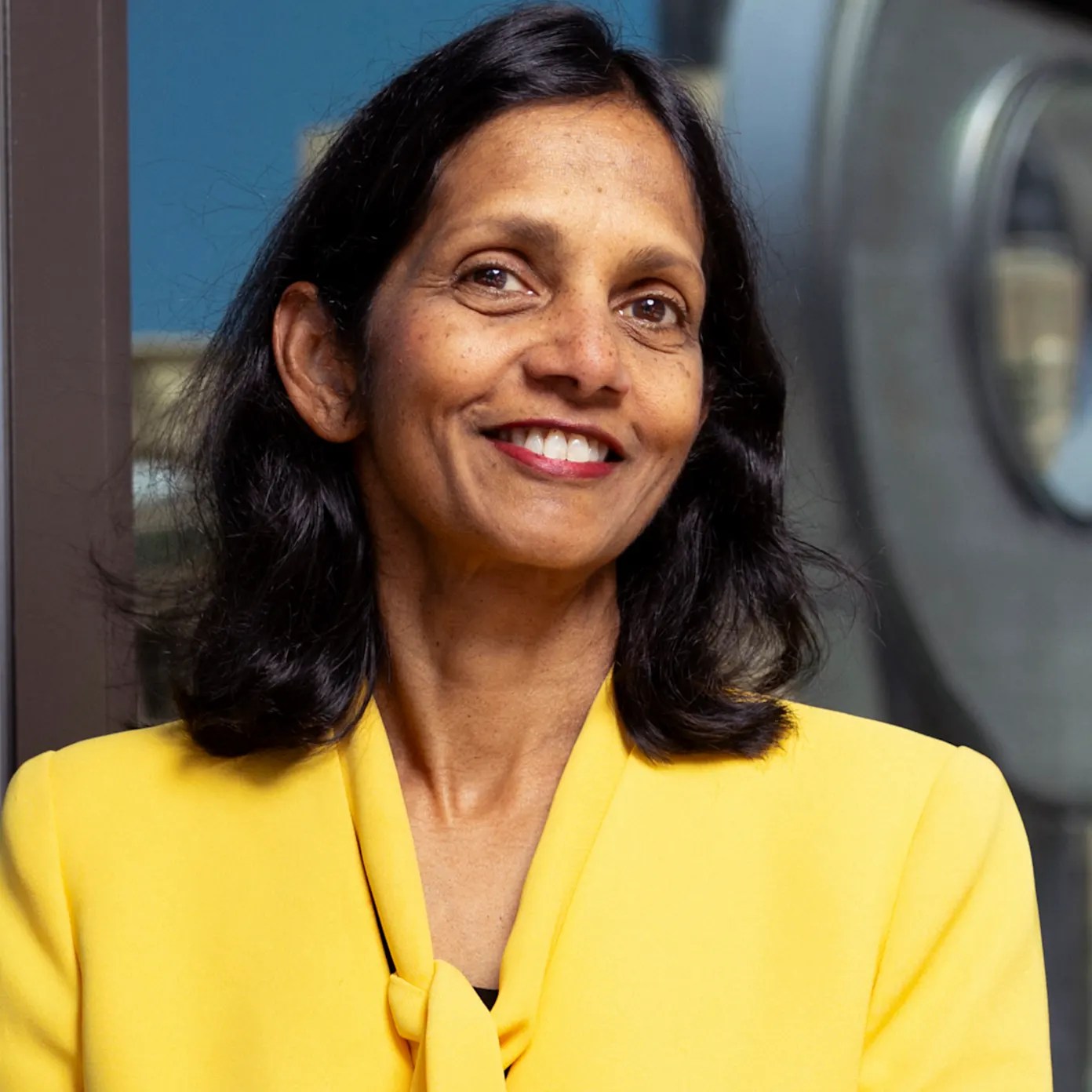
Wikramanayake says, like Canada, we’re blessed with land, resources and geopolitical stability. The big artificial intelligence companies want to come to Australia to build data centres, but we’re a bit too unsure about jobs and income for Australia to jump in with both feet. “It’s really, what is the plan?” she says.
“We tend not to be a very top-down country in saying these are our industries. We tend to give a level open playing field and let entrepreneurs respond. But at the moment approval times, permitting – if you talk to any chief executives – they’ll tell you that here they are relatively slower than the rest of the world because we haven’t got that empowering environment to the same extent as other countries.
“I’m not saying we shouldn’t have the downside protections, but I’m saying the balance, the pendulum feels like it’s in a situation where it’s swung to more downside protection.”
It is evolve or die for Australia – just as it is at Wikramanayake’s Macquarie. The company has evolved from big cash management trustee to stockbroker and currency trader, to investment bank, infrastructure investor, asset manager and commodities house globally as well as Australia’s fifth-biggest retail bank, after capitalising on Australia’s 30 years of strong economic growth and the rise of the $4.8 trillion superannuation savings system.
Wikramanayake’s been there for most of it. She joined what would become Macquarie Capital from law firm Blake Dawson Waldron, now Ashurst, as a slight and softly spoken 26-year-old in 1987. She finishes as Macquarie chief executive on Friday, the sixth person to hold the role, but won’t formally leave the bank until next July.
Her Darwinism “evolve or die” advice for Australia, delivered in her final sit-down interview with The Australian Financial Review, befits her career and partly explains how she rose to head a $96 billion bank and one of Australia’s biggest global companies.

Nicholas Moore, Wikramanayake’s predecessor as Macquarie chief executive, says Wikramanayake’s talent was obvious straight away.
They worked in different parts of Macquarie’s corporate services business for their first 10 or so years at the bank, but much more closely when its asset management, leasing and financing businesses were put together to create Macquarie Capital. It was the turn of the century and Macquarie Capital accounted for about two-thirds of group revenue.

“It was very clear she was very capable in terms of objectively assessing what needed to be done, but then also getting it done,” Moore says.
“And to do that, you need to have a good brain, but also you need excellent people skills. And she was always exceptional. She’s empathetic. She understands where other people are coming from, and she can work with people very effectively.”
Along the way, Wikramanayake had two children – a daughter and a son who are both now in their 20s – and she kept seeking change and challenges. She was named head of the Macquarie Funds group in 2008, where she oversaw the acquisition of Philadelphia-based asset manager Delaware Investments, which at the time she says was “the biggest cheque Macquarie had ever written, by daylight”. She became head of Macquarie Asset Management in 2015, Macquarie’s largest division until this decade, and then chief executive in December 2018.
In total, she has worked in nine cities and six countries, all while at Macquarie. She is married to Ed Gilmartin, a former Macquarie banker.
Wikramanayake is particularly proud of paying a pittance for the fund manager Delaware soon after the financial crisis. “If we were going to build a business at scale, we had to be in the US market,” she says. “We kissed a lot of frogs. We were long capital, even though the whole world was saying that we were in a mess.” She says Macquarie paid six times earnings, before interest, tax, depreciation and amortisation, for a business that should trade at more than 20 times, pouncing when other buyers were unable or too scared.
Wikramanayake isn’t one to boast about her achievements, but she clearly likes talking about her deals. She says the happiest she’s been in her career was when she was closest to the deals. “I like being in the action.”

“When you’re chief executive, you’ve got to accept that the biggest thing you need to do is create the environment to empower 20,000 other people who are close to the action to deliver to their fullest across geographies, across sectors, across their very diverse capabilities … and so for me, it’s become much more of a human resources job.”
While she sits in a very visible glass-walled office inside Macquarie’s new headquarters, she has struggled at times with the attention, and looks forward to the day soon when she can go to the grocery store without being outed as the Macquarie boss.
However, that spotlight has made her a champion for Australian women, particularly encouraging young women to consider working in technology and finance, and to become leaders.
“Shemara’s impact extends well beyond Macquarie,” Coles chief executive Leah Weckert says.
“For many women in business, myself included, seeing her lead one of Australia’s great companies with such courage and authenticity has been a really powerful demonstration of what’s possible.”
Most executives who know her talk about her warmth and people skills and assume she’s whip-smart. One top 100 listed company chief executive, hardly a recognisable figure in corporate Australia, couldn’t believe it when Wikramanayake chased him down at an investment conference to say hello, having met him only once before.
“She always found time to speak and had a memory like an elephant; she remembered the smallest details, which made every conversation feel personal,” he says. Khuda’s turned into one of Australia’s best networkers and salesmen in Asia, where Wikramanayake’s also keen to see Australian businesses grow.
Stonepeak co-founder Michael Dorrell, one of Australia’s wealthiest people who learned to invest in infrastructure while at Macquarie, says he’s known Wikramanayake for nearly 30 years.
“Ed Gilmartin, her husband, was my mentor at Macquarie when I first started in 1998,” he says. “I have heard her talked about admiringly by the highest profile names on Wall Street.”

It hasn’t been all smooth sailing. Wikramanayake had to get Macquarie and its people through the pandemic, the war in Ukraine, conflict in the Middle East, tariff tantrums and the 2019-20 Hong Kong protests. She’s also faced a number of serious regulatory issues, lost some long-tenured senior staff – including former commodities head Nick O’Kane and chief financial officer Alex Harvey – and aggressive incursions into Macquarie’s infrastructure heartland by global titans such as KKR and BlackRock and specialists such as Stonepeak.
The regulatory issues included a court-enforceable undertaking with the corporate regulator for failing to better protect customers who invested in the collapsed Shield Master Fund and repeated failures to fix a short-sales reporting problem in its Australian equities business.
Wikramanayake was docked $7 million, or 25 per cent of her profit share allocation, for the regulatory indiscretions last financial year, and Macquarie received its first-ever strike to a remuneration report in the 2025 financial year, an embarrassing and serious investor protest.
“The job as Macquarie chief executive is to be the pied piper of rapacious transactional self-interested deal junkies,” says Dean Paatsch, a director at governance firm Ownership Matters, which recommended clients vote against that remuneration report. “She seems to have worked out how to play the right tunes.”
The other thing she’ll be remembered for is her Macquarie shareholding.
Just the equity stake is enough to make her a Macquarie top-20 shareholder, while she should collect about $15 million in dividends this year. It is huge wealth creation for an employee, not a founder. She has retained all her Macquarie stock.
“How many executives have never sold a share in their company over a period of 40 years!” says BHP chairman Ross McEwan. “Shemara leaves Macquarie in excellent shape. Her track record of value is second to none over her eight years as chief executive.”
Wealth creation does count for a lot inside Macquarie, which, for all its Darwinism and evolution, remains an investment bank at heart. Its model is held together by its employee profit share program, with employees receiving 40 per cent of group income last financial year and 42.2 per cent the year before. Those that make the most money are the legends, and Wikramanayake has made plenty.

But you’d barely know it with Wikramanayake. She says she’d prefer to travel to Rwanda to see gorillas with her daughter than go shopping in Milan. She used to like going for lunchtime walks in nearby parks. She likes travelling but says she doesn’t have many other hobbies.
Of course, the even bigger numbers are the profits Macquarie has made on her watch. Wikramanayake has announced each of Macquarie’s eight biggest profits, which is as much a credit to her predecessors and Macquarie’s money-making model as anything. Analysts expect profit to be up another 4 per cent in the 2027 financial year, after she’s gone, which is a nice present for her successor Greg Ward.
Wikramanayake also delivered about 200 per cent total shareholder return, averaged 14.8 per cent annual return on equity; oversaw a 56 per cent increase in the bank’s international income; and increased headcount by 30 per cent. She says a few times that the bank is “in great shape”.
“When I joined, we made $12 million [profit]. The earnings have grown over 400 times in that 39 years, and it’s pretty steady growth,” she says.
Return on equity hasn’t, and it dropped in Wikramanayake’s tenure. It makes Macquarie a less efficient money-making machine than it once was, which is a bit of a story of Australia. Returns across Australia’s whole banking system are nowhere near what they used to be as regulatory standards tightened.
Ward’s job is to get return on equity back above 15 per cent; however, it’s hard now that Macquarie is so big and at a regulatory disadvantage to offshore rivals. The former chief financial officer has toured Macquarie’s operations globally and had 3½ months to prepare for the crown.
In terms of share price, Macquarie outperformed both the S&P/ASX200 and the financials index on Wikramanayake’s watch, but trailed big US investment bank rivals such as JPMorgan, Goldman Sachs and Morgan Stanley, which benefited from artificial intelligence deal activity, deregulation and relaxed capital standards. The latter two go back to Wikramanayake’s earlier comments about Australia’s regulation pendulum and risk appetite: do we even want it?
Where does that place Wikramanayake among Macquarie’s legendary chief executives? She didn’t have the once-in-a-generation opportunities enjoyed by her predecessor, Moore, an entrepreneur who capitalised on the federal government’s deposit and wholesale funding guarantee to secure cheap money after the global financial crisis, or by another former chief executive, Allan Moss, who drove Macquarie’s infrastructure push. Macquarie bankers also still talk about David Clarke as their best ever chief executive, but that is debatable.
Wikramanayake’s approach was to keep allocating capital to what was growing and working: Macquarie’s commodities and revamped Australian banking business, now its two bright spots, in particular. She did struggle with some of Macquarie Capital’s big renewable energy investments (including the UK’s Green Investment Bank, bought just before she started in 2017, which was later shifted into Macquarie Asset Management).
Macquarie chairman Glenn Stevens says he didn’t even consider appointing an outsider to replace her, which McEwan says is a credit to Wikramanayake. Those inside Macquarie think the model is still working.
What next for Shemara?
“It’s like when I went to New Zealand [for work],” she says. “If you’d said to me back then, ‘What next?’, I’d go, ‘I don’t know. I’m going to land there and figure it out’.”
Retirement’s the same. Except this time instead of walking between corporate towers chasing Kiwi airport privatisations and energy mergers, she can figure it out walking along a beach, barefoot and perhaps with no one watching.
But there is one final warning for her bankers still in the office, and the rest of us. “It’s a competitive world out there, and we need to keep moving if we’re going to stay competitive.”
Wikramanayake’s had a great run, as have Macquarie and Australia.
But only one on that list needs to slow down.
&&&&&&&&&&&&&&&&&&&&&&&&&&


A HISTORICAL NOTE from Michael Roberts, early November 2026:
Shemara’s father was, I think, residing within the Fort of GALLE in the mid-twentieth century and was a respected member of the middle class community of Galle — which means that he would have been a member of the Galle Gymkhana Club, a recreational centre for middle class gentlemen interested [in varying measures] in drink, bridge, tennis and gossip — an institution that was also involved in the race-meet at Boosa every December. As such, this ‘terrain’ was an indelible part of my early upbringing.
SHEMARA, clearly, has outpaced every one of the ladies and gentlemen generated in subsequent batches. Well Done! Hayi Hoyii! Kaala Beela Joli-karanna!