
ITEM entitled “False claims of Pauline Hanson TV special exposed as foreign disinformation,”
A wave of sensational social media posts claiming One Nation leader Pauline Hanson personally funded a $246,000 investigative television special has been comprehensively debunked by Australian fact-checkers.
 The posts, which spread rapidly across Facebook in mid-2026, alleged Hanson bankrolled a program titled “Seeking the Truth, Finding Justice” that supposedly racked up 2.5 million views within 12 hours.
According to the circulating narrative, the special featured unseen documents that placed 11 high-profile figures in legal jeopardy, with independent Senator Fatima Payman named as the first target.
AAP FactCheck investigated the claims and delivered a clear verdict: they are false. No record exists of any such documentary.
There is no mention of the program on One Nation’s official social media channels, no trailer, no distribution details, and no independent media coverage confirming its existence.
Facebook transparency data showed the pages pushing the story were managed by users in Vietnam.
At least eight foreign-run pages, including accounts named Civic Lens and 365 Daily News, circulated near-identical versions of the claim. The same template had previously been used with different celebrities’ names, including Tom Hanks and Whoopi Goldberg, all supposedly funding a documentary of the identical title for the same $246,000 sum.
The fabricated posts often featured a composite image of Hanson standing beside Payman and framed the non-existent special as preparation for a major lawsuit.
Political observers noted that the story exploited the polarising public profiles of both senators to maximise engagement and clicks.
In reality, Hanson has a documented history of personally supporting One Nation financially. Australian Electoral Commission disclosures showed she contributed approximately $245,000 to the party in 2024-25, described by the party as a commercial loan.
Payman and Hanson have occasionally found common cause on parliamentary issues, most recently joining forces to criticise staffing allocations for crossbench senators.
Both have argued that smaller parties and independents receive fewer adviser-level staff relative to their workload compared with larger parties.
Those genuine political disagreements stand in sharp contrast to the invented legal drama promoted in the disinformation campaign.
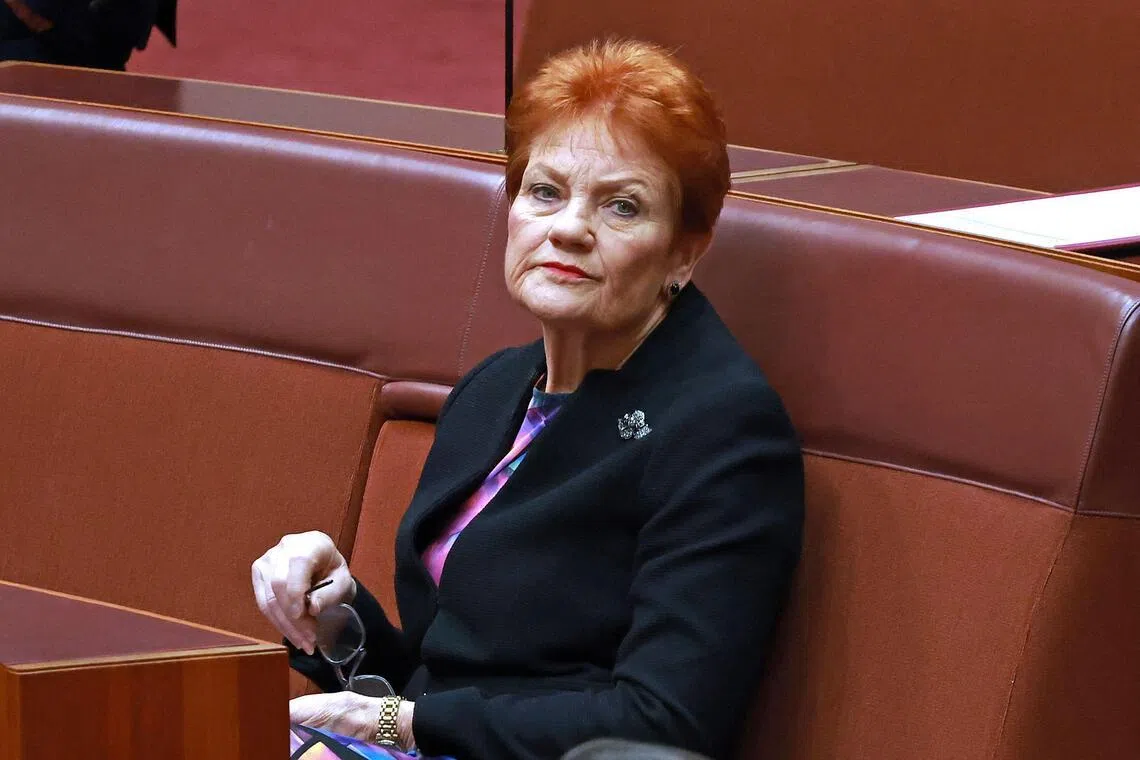
AAP FactCheck and other monitors emphasised that the absence of any primary evidence — no footage, no official statements, no court filings — rendered the entire story baseless.
The rapid accumulation of claimed viewership figures was similarly unverifiable and consistent with patterns seen in previous fabricated “viral documentary” hoaxes.
Australian media outlets treated the episode as a cautionary example of how foreign-operated pages can inject false narratives into domestic political discussion.
Experts in information integrity pointed out that attaching a recognisable local political figure to a dramatic but invented story increases the chance of organic sharing among partisan audiences.
The episode adds to a longer pattern of coordinated inauthentic behaviour targeting Australian politics with emotionally charged but fictitious content.
Fact-checkers urged the public to verify extraordinary claims against primary sources and established news outlets before amplifying them.
As of the latest assessments, no legal proceedings matching the description in the posts have been initiated, and no documentary matching the title or claimed impact has surfaced on any legitimate platform.
The case illustrates the continuing challenge of foreign disinformation operations that seek to exploit existing political tensions for engagement and potential influence.
Australian authorities and platforms continue to monitor such networks, while independent fact-checking organisations remain the primary defence against the rapid spread of fabricated political stories.
&&&&&&&&&&&&&

