
EFC LUDOWYK MEMORIAL LECTURE, Organized by the Richmond 60 Club, July 5th, 2025, at the OPA Auditorium
the AUTHOR = Austin Fernando
The President and members of the Richmond 60 Club, the former Principal of Richmond, Mr. E.M.S. Ekanayake, and friends. I consider it a singular honor to have been invited to speak about the late Prof. E.F.C. Ludowyk. I was not a student, colleague, or acquaintance of his. Hence, what you will hear from me today is what I have been able to glean from the literature I could access on Prof. Ludowyk, and I delved into during my preparation for this talk.

I have learned much from those who were his former students, and others who knew of Prof. Ludowyk and his career through their research into the life and times of the man. Of the former category, among others are Justice Percy Colin-Thome, H.A.I. (Ian) Goonetileke (both old Richmondites), Ashley Halpe, Fred Abeyesekere, Haig Karunaratne, Godfrey Gunatilleke, et al.
Of the latter category are Tissa Jayatilaka, who was a mentor to me, and in attendance today, then some who acted in the plays produced by Prof. Ludowyk and associated with him, for example, the late Prof. Osmund Jayaratne. A few members of the Richmond 60 Club also shared information on Ludowyk and his splendid career. I am indebted to all of them.
Tissa Jayatilaka delivered the 18th E.F.C. Ludowyk Memorial Lecture organized by the Department of English of the University of Peradeniya on the 17th of January 2018. It was titled, ‘The Legacy of Prof. E.F.C. Ludowyk and an Overview of the Promise and Performance of the University of Ceylon.’ In it, Jayatilaka, to use his words, “attempted to piece together a sketch of the life and career of Prof. Ludowyk” based on all that he “learned from some of his students and colleagues.’ Today, I follow Jayatilaka’s approach. In the process, I may repeat what some of you already know of Ludowyk, and my apologies in advance if I bore you thus!
Richmond days
Evelyn Frederick Charles Ludowyk (Lyn Ludowyk as he was widely known), the eldest son of Evelyn Frederick Christoffelz Ludowyk and Ida Mary Andree, was born in Galle on the 16th of October 1906. Ludowyk Senior taught briefly in Rangoon, Burma, joined the tutorial staff of Richmond College in 1908, was appointed its Headmaster by Principal Rev. W.J.T. Small in 1916, and retired in 1935 after a rewarding and fruitful career. Ludowyk Snr. was said to have been an unusually able teacher, a disciplinarian, a tireless worker, and a thoroughly loyal friend. Prof Ludowyk inherited these amiable qualities without exception.
Lyn Ludowyk attended kindergarten and primary school at Girls’ High School, Galle, later renamed Southlands, symbolically a part of Richmond, and entered Richmond College thereafter. Justice Colin-Thome, a childhood friend of Ludowyk Jr. in his Memoir, included in ‘Those Long Afternoons Childhood In Colonial Ceylon’, wrote of Ludowyk’s days at Richmond, in which, among other things, Colin-Thome quoted Ludowyk as saying that, ‘Richmond remembered is a kaleidoscope with a variety of patterns, settling not around places but persons’. He praised the Principal, Rev. W. J. T. Small, and spoke about E.F.C. Ludowyk Snr., Major Adihetty, A.W. Dissanaike, G.R.A. Fernando, G.R. Siriwardene et al.
Ludowyk further states: “All I can say is that I am glad I was at Richmond. It was a closed world, a limited world. But it was never a close or stuffy world. At all times, it was invigorated by a spirit– hope, conviction, illusion, the breadth of a tradition (call it what you will)– which proved that those who had built it had not labored in vain.”
I wonder how many present-day Richmondites know of Lyn Ludowyk, who has written so eloquently of Richmond’s spirit and of his being a beneficiary of the school’s devotion to the building of character in its students. I believe what Ludowyk spoke of Richmond of his time remains valid even today, as those of us who were fortunate to have been products of Richmond in later years can vouch for. My wish is that even a century from today, those who come out of Richmond would find our Alma Mater to be qualitatively the same as in Ludowyk’s and our times.
While preparing for this address, a thought flashed through my mind. Did President Oliver Guruge think of holding this event because Ludowyk’s name and reputation add lustre to Richmond than the other way around? When I reflect on the many laurels won by Ludowyk in his lifetime, I feel that he had given back to Richmond more than Richmond gave him. I say this not to deprecate Richmond but to emphasize the fact that men of Ludowyk’s caliber are a rare species, and it would be difficult, if not impossible, to easily find someone like him either at Richmond or at any of our schools.
Justice Colin-Thome tells us that Lyn was a prodigy at Richmond. By 1919, at the age of thirteen, he was the youngest King’s Scout in the British Empire. In 1918, he won the Queen’s Jubilee Scholarship for English Literature. In 1919, he won the Senior Parke Scholarship for Religious Knowledge and won it again the following year. In 1920, he obtained distinctions in English, Latin, Religious Knowledge, and History at the Cambridge Junior Examination. Excellent school career record.
Higher education
Lyn Ludowyk sat for his Cambridge Senior Examination in 1922, while at Wesley College. His father was keen that he should study Greek under the well-known scholar, Rev. Henry Highfield, ‘The Saint of Karlsruhe’, Principal of Wesley, after trying to study Greek with Rev Father FS Struther and Mr. CE de Voz in Galle. He received the highest aggregate marks at the University Entrance Examination.
In 1923, he won a scholarship to Ceylon University College. He secured a First Class in English from the University of London and, in 1928, was awarded the Government Scholarship to the University of Cambridge, where he obtained a First Class in the English Tripos and, in 1931, won the coveted Oldham Shakespeare Prize.
Great teacher
Ludowyk was appointed lecturer in English at the Ceylon University College in 1932 and obtained his PhD in English from Cambridge in 1936. Again in 1936, at thirty, he was appointed as the First Ceylonese Professor of English, a post he held until his premature retirement in 1956, and migrated to the UK. He served as the Dean of the Faculty of Arts in 1940.
As noted earlier, I did not have the good fortune of being a student of this great man, for I was from the first batch of vernacular students to enter Peradeniya in 1960, four years after Ludowyk had left. One of Richmond’s ‘old girls,’ Iranganie Haththotuwegama, sister of the famous dramatist, Kala Keerthi Gamini Haththotuwegama, was one of Ludowyk’s students. She remembers Ludowyk as a serious and demanding teacher who also had a fine sense of humor. Colin-Thome echoes her when he notes that:
As a teacher, Lyn was unique. His pupils were exhilarated listening to him read Shakespeare or recite poetry . . . at the same time, there was no feeling that he belittled you in any way. He was one of the few teachers who treated one absolutely as an equal.
Liyanage Amarakeerthi confirms Ludowyk’s approach, saying: ….. Professor Ludowyk used to read aloud plays with students at his office. “If you are free, come and let’s read a play,” he would say.
Godfrey Gunatilleke, in an essay titled ‘Ludowyk As Teacher Some Reflections On Literature As Knowledge,’ tells us more about Ludowyk’s teaching style and the depth of his knowledge of English Literature. Ashley Halpe has noted that Ludowyk was:
One of the most demanding and the most appreciative of tutors. He inspired in his students a deeply personal commitment to the experience of literature.
Ian Goonetileke has written of Ludowyk’s honesty, compassion, and attractive, often mischievous sense of humor. Ludowyk’s sense of humor is aptly demonstrated in two of Fred Abeyesekere’s anecdotes that Tissa Jayatilaka has referred to in his Ludowyk Memorial Lecture.
The first was about a fellow student of Abeyesekere who had used the words of Allen Tate, a reputed English poet, critic, biographer, and novelist, in a tutorial without due source acknowledgement. Ludowyk climaxed it, saying he was unaware until then that Mr. Allen Tate was in his class, and that Tate had scored an A+! Ludowyk’s gentle but firm put-down of the faulted student was to give him a naught, not even a D!
The second was about a few female admirers of Gregory Peck among Ludowyk’s students who had dared to cut a tutorial class, gone to get a glimpse of the dashing Hollywood actor Peck, who was shooting a film at the Peradeniya Royal Botanical Gardens. When the ladies returned late to the class, with a smile on his face and using sarcasm and wit, Ludowyk merely pronounced: “Ladies! One must choose between Lyn and Peck.” Of course, they picked Lyn!
Godfrey Gunatilleke’s autobiography, ‘Chaos and Pattern’, refers to an interview in which Prof. Ludowyk was an interviewer. Ludowyk had asked Gunatilleke the meaning of the French word ‘peignoir.’ Being uncertain, Gunatilleke had hazarded a guess and said, ‘comb.’ Ludowyk had responded, ‘Yes, robe, you are right.’ Gunatilleke had unhesitantly said, ‘No, Sir, I actually said, ‘comb.’ Despite this error, Gunatilleke was selected at the interview. Ludowyk, referring to this incident later, had said that he appreciated Gunatilleke’s honesty.
Such understanding was not limited to education. He understood the Sri Lankan students’ concerns, and so much so that when a student visited him in the UK, Ludowyk, more as a duty, piously handed over the travel costs to his visitor. It was not a Burgher, ‘going Dutch!’
H.A.I. Goonetileke, in his Preface to Ludowyk’s ‘Those Long Afternoons’, tells us that his Hampstead home, Ludowyk’s first home in the UK, provided “the agreeable environment for the productive phase of his exile”. Goonetileke then observes that Ludowyk’s moving away from urban Hampstead to Suffolk, a county in the east of England, was due to his disillusionment with “unbridled materialism, moral hypocrisy and rapid debasement of social values and political norms in the society in which he had made his new home – – trends which he observed had begun to menace and erode the underpinnigs of his Sri Lankan heritage as well”.
Ludowyk’s contribution to theatre
According to Justice Colin-Thome, Ludowyk’s contribution to Sri Lankan theatre was as impressive as his teaching of English. On his return from Cambridge, Ludowyk immersed himself in the local theatre scene. He worked closely with the YMCA Drama Club at this time (1930s), which had a group of talented and experienced players who rallied round and gave Ludowyk “enthusiastic support” when he produced Nikolai Gogol’s ‘Marriage’, which was his first major theatrical production.
In the YMCA Drama Club, there were such excellent actors as P.C. Thambugala, E.C.B. Wijeyesinghe, Christobel Leembrugen, Austin Jansz, V. Gnanapragasam, and H.C.N. de Lanerolle. Later, Ludowyk became intimately involved with the University Dramatic Society (DramSoc) and was responsible for twenty productions, beginning with ‘Where Women Rule’ by the Quinteros brothers in 1933 to Shaw’s ‘Androcles and the Lion’ in 1956.
Through his selection of plays for production, Ludowyk made it possible for Sri Lankan audiences to have a taste of modern European theatre. Thereby, Ludowyk introduced dramatists of the calibre of Bertolt Brecht (German),1934 Nobel Prize winner in Literature, Luigi Pirandello (Italian), Nikolai Gogol (Russian), and American playwright and Nobel laureate in literature Eugene O’Neill (father of Oona, who married Charlie Chaplin) to local audiences. In the process, he moulded actors and directors like Winston and Iranganie Serasinghe, Percy Colin-Thome, Osmund Jayaratne, and Denis Bartholemeusz, who enriched our theatre long after Ludowyk had left our shores.
In his Memoirs, the late Osmund Jayaratne recorded that during his undergraduate years and his years as an Assistant Lecturer in Physics, he acted in twelve of Ludowyk’s DramSoc productions, which he considered a record. I may mention that our old girl and later teacher, Iranganie Haththotuwegama, mentioned to me her acting in a Ludowyk play.
Ludowyk did not write original plays and produced plays written by other dramatists. These productions became popular social events of the day, and the Western-oriented, English-speaking members of society went in large numbers to King George’s Hall in Colombo, the Trinity College Hall, and other venues in Batticaloa and Jaffna. Osmund Jayaratne tells us about a grand dinner honoring Ludowyk that was once held in Jaffna. Iranganie Haththotuwegama remembers that Sidath Nandalochana and Ranjini Obeyesekere acted in certain productions of Ludowyk.
Ludowyk and Sinhala theatre
Significant and invaluable as Ludowyk’s contribution to English studies and theatre in Ceylon was, too little is known of his role in the furtherance of Sinhala drama and literary criticism. In this regard, it is worth quoting Tissa Jayatilaka’s assessment of Ludowyk:
I wish to focus on Ludowyk’s significant contribution to the nourishment of Sinhala studies in our country, especially to Sinhala literary criticism and Sinhala drama. The popular, or, more accurately, perhaps, the prejudiced view of ill-informed critics of the time was that Prof. Ludowyk and those of his background lacked roots in the native soil and that they were aloof from anything outside the Department of English.
Jayatilaka notes further that the superficial criticism of Ludowyk and of others who studied and taught English literature is lamentable. It is quite possible that some of the English-educated Sri Lankans may have displayed a degree of aloofness- the effect of Kulturism, as told then. The best of them, however, as exemplified by Prof. Ludowyk himself and those of his more sensitively intelligent students, like, Kenneth de Lanerolle, Douglas Walatara, Ian Goonetileke, Godfrey Gunatilleke, C.R (Dick) Hensman, R.C.L Attygalle, Izeth Hussein, Regi Siriwardene, Gananatha Obeyesekere, Ranjini Ellepola Obeyesekere, Ashley Halpe, Kamal de Abrew, Yasmin Gooneratne, and Thiru Kandiah, show that such aloofness was by no means the norm.
In the cross-fertilization of Sinhala and English literature, Ludowyk played a pivotal role. The fruitful academic collaboration of the young professors of English and Sinhala, Lyn Ludowyk and Dharmasiri Ratnasuriya, and their students tells its own story. Additionally, ‘Kapuwa Kapothi,’ the Sinhala version of ‘Marriage’ by Gogol, was co-directed by Ludowyk and Sarachchandra, which proved the rapport between those two. Osmund Jayaratne sealed Ludowyk’s contribution by writing, “He was the person responsible for the resurgence of artistic drama in our country.”
And of Ludowyk’s connection with the Sinhala theatre, Professor Sarachchandra opines in ‘Ludowyk and the Sinhala theatre’ that, in the annals of Sinhala theatre, ‘his [Ludowyk’s] is a name that cannot be left out.” Sarachchandra goes on to tell us:
One reason that people tend to forget (or just overlook) Ludowyk’s contribution to the Sinhala theatre is that his reputation in the English theatre overshadowed everything else. It was difficult for people to accommodate themselves to the belief that a professor of the English language, a Dutch Burgher by descent, could produce a play in Sinhala. But it was not widely known that Ludowyk assiduously studied classical Sinhala for a time and that he belonged to the Burghers of Galle who were more Sinhalese than the Sinhalese themselves (at least the Westernized class). Ludowyk not only understood spoken Sinhala but had a feel for its nuances, and, being a linguist, enjoyed the new opportunities he got in the course of play production, and of enlarging his knowledge of it.”
Ludowyk’s ‘He Comes From Jaffna’ was an adaptation of Sydney Grundy’s comedy, ‘A Pair of Spectacles’, which was enormously popular in England for ninety years. Grundy’s play was an adaptation of a French play. Ludowyk’s adaptation was performed by the YMCA Drama Club in 1934.
‘He Comes From Jaffna’ has continued to be performed in Sri Lanka under various producers and directors. The production of the play by Jith Pieris in the early nineties, it is believed, was at the request of President Ranasinghe Premadasa. Jith Pieris is on record as having said, ‘This is my contribution, to remind people of what we once used to be and of what we can be again in this great nation,’ which serves to enhance the usefulness of the play even today, when reconciliation is preferred.
Ludowyk and Ven. Walpola Rahula
The late Dr. Walpola Rahula Thera, referring to Ludowyk’s ‘The Footprint of the Buddha,’ observes that one can see how Ludowyk was touched by ‘the depth of the Buddha’s feelings for mankind.’ ‘Footprint of Buddha’ adds color to the knowledge of Buddhism in Ludowyk, in addition to being touched by Buddha’s feelings. The Thero confesses that his ‘What the Buddha Taught’ would never have seen the light of day if not for Ludowyk’s urgings. Rahula Thero has said:
Ludowyk insisted, persuaded, and even cajoled me to write. He read and edited the first chapter and encouraged me to continue. He impelled me to write all eight chapters. Those who read this book in the world should be grateful, not to me, but to Prof. E.F.C. Ludowyk.
Ludoyk’s publications
Ludowyk has to his credit the publications Marginal Comments (1945), The Footprint of the Buddha (London, 1958), The Story of Ceylon (London, 1962), Understanding Shakespeare (Cambridge, 1962), The Modern History of Ceylon (London, 1966), and Those Long Afternoons: Childhood in Colonial Ceylon (Colombo, 1989). The varied titles of the books – history, literature, Buddhism, sociology- and the efforts made to comprehend information prove the versatility of Ludowyk.
Since Ludowyk was a Dutch-Burgher-Christian and not a historian, I exceptionally value his book, ‘The Footprint of Buddha’. It discusses our Buddhist monuments, with photo presentations, exhibiting a distinctive and valuable portion of the art of the ancient and medieval world, tracing the development of artistic achievement, and placing them in the appropriate religious, philosophical, and historical context.
‘The Story of Ceylon’ incorporates many interesting historical events and absorbs the most relevant chronicles, unraveling a 2500-year history. His ‘Modern History of Ceylon’is a non-historian’s version of Ceylonese socio-economic and political history from 1795 to the 1960s.
Ludowyk’s politics
Much has been hinted at, but no proof exists of Ludowyk’s political convictions. It has been recorded that he was a close associate of Samasamajist Bernard Soysa. His farewell dinner in 1956, held at the Galle Face Hotel, was attended by almost all Lanka Sama Samaja Party (LSSP) stalwarts of the day- Drs. N.M Perera, Colvin R. de Silva, Comrades Leslie Goonewardena, Edmund Samarakkody, and Bernard Soysa.
We also know that Ludowyk’s wife, Edith, a Jew born in Hungary, a qualified psychoanalyst, helper for décor and costumes of Ludowyk’s plays, was a Communist and a radical in politics. According to information on Wikipedia, she had become a member of the LSSP in 1947. Whilst it is possible to surmise that Ludowyk may have had left-of-center political views, he was not a member of any political party. Here is what Tissa Jayatilaka has said on Ludowyk’s politics:
“Bernard Soysa, a close associate of his and a notable politician of an earlier period in our country when our Parliament was not so full of mediocrities and dishonest men and women of today, has written warmly of Ludowyk’s contribution to the national politics of the day. Ludowyk was too scrupulous and sufficiently fastidious as not to seek membership of any political party, but, on available evidence, one could conclude that he contributed to political causes he believed in, from his particular vantage point.”
Achiever Ludowyk!
Prof. Ludowyk’s career indicates that he was an extraordinarily successful student, academic, writer, and socio-political commentator. His achievements are phenomenal, and, to my mind, it is unlikely that any other Richmondite will scale the same heights in such varied academic fields as Ludowyk. As I said earlier, Ludowyk has given back to Richmond far more than Richmond gave him, and all of us Richmondites can bask in the glory that Ludowyk reflected.
That said, it must be mentioned that Richmond has honored Ludowyk by naming a hostel in his memory, which Principal Mr. Ekanayaka would happily recall, and today’s event is testimony to the gratitude and respect Richmond College has for Prof. Ludowyk. He may have gone away from our sight, but continues to live in our hearts.
Conclusion
I conclude my presentation quoting Justice Colin Thome, who sums up superbly who Lyn Ludowyk was:
Lyn had a brilliant intellect, yet he always remained a modest, unassuming person. His charm, affability, wit, good humor, and lively conversation made his company entertaining and stimulating. At the University, he had a deep concern for his charges, and he kept in touch with many of them even after he settled in England. He was a most loyal friend who will be remembered in Sri Lanka, not only for his enormous contribution to the teaching of English, his work in the theatre, and the important books he wrote, but also for innumerable, unrecorded acts of friendship and generous assistance to a wide circle.
My thanks once more to the Richmond 60 Club, and its dynamic President, Oliver Guruge, who more or less forced me to make this presentation, and planned and executed this event. I appreciate the presence of non-Richmondite invitees who remember and hold Ludowyk in affection. I hasten to specially mention Tissa Jayatilake, who found time for me, sans any reservation, in preparing my speech, in many ways.
I thank all of you for your patience.
&&&&&&&&&&&&&&&&&&&&&&&&&&
ALSO NOTE ………
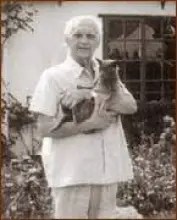 In Felicitation of EFC Ludowyk …. Galle, Richmond, Peradeniya & Ceylon | Thuppahi’s Blog

